
Recommended Free Tools
iTechGuides is reader-supported. When you buy through links on our site, we may earn an affiliate commission. As an Amazon Associate I earn from qualifying purchases. Learn more
To do bookkeeping as a small business, keep a complete record of business income and expenses, save the documents that support each transaction, and regularly compare your books with bank and payment-account statements. Choose a paper or electronic system that fits your business, use an accounting method consistently, and keep business finances separate from personal spending. The details below reflect U.S. federal IRS guidance; state, local, industry and business-specific requirements may differ.
Set up a bookkeeping system that fits your business
The IRS does not require one universal bookkeeping format for most businesses. Its guidance is: “You can choose any recordkeeping system suited to your business that clearly shows your income and expenses.” Keep a distinct, complete set of records for each separate business, and make sure the records can support your tax reporting as well as help you understand how the business is performing.


Before choosing a workflow, identify whether the business holds inventory, employs people, has many transactions, or uses a particular legal or tax structure. Those details can affect the records, tax forms and accounting-method rules that apply. The instructions here cover general U.S. federal principles, not every state, local or industry requirement.
Choose how to record transactions
- Single-entry: A simple receipts-and-disbursements workflow may suit a very small operation with straightforward activity. IRS Publication 583 describes examples such as daily cash-receipt records and monthly summaries of receipts and disbursements. It is not necessarily adequate for every business.
- Double-entry: Record transactions across accounts for income, expenses, assets, liabilities and equity. Each transaction has equal debit and credit entries, providing a balancing check and more account-level detail. It can be useful as transaction volume or complexity grows.
The choice is a trade-off between simplicity and account detail and controls; the IRS does not say one system is best for every business.
#1 Best Overall

- Income And Expense Log Book: This Income and Expense Record Book(8.5" x 10.5") is a necessary item for any small business owner or entrepreneur. It is an essential part of any business - helping you understand your overall earnings to determine if you are profitable.
- Daily Tracking and Weekly Overview: let our log tell you if you are profitable today! There are two pages per week to help you you track your income and expenses. At the end of each day or week, you can note whether you made a profit or a loss for the day.
- Clear P&L Statement For Your Business: This income and expense book makes it easy to see your expenses and how they fluctuate from time to time. This makes it easy for you to decide where you can cut back on expenses and assess your total annual net profit.
- Main Features: Expense Review + Income Review + Weekly Pages + Summary of The Year + Twin-Wire Binding + Waterproof Cover + Rounded corner design + Thicker paper
- Effective Organization: This budget book has a twin-wire binding and you can easily lay it flat at 180°. This effective design can help you work better and bring you great convenience in the process of using.
Choose paper or electronic records
Paper journals and ledgers and electronic accounting, point-of-sale or financial systems can all be used if they produce complete, accurate, legible and accessible records. Electronic tools do not replace the need to retain source documents, enter information correctly, review the books, and be able to retrieve records when needed.
Separate business finances and record transactions
- Use a business checking account. Route business income and expenses through it where possible. Avoid mixing personal spending with business costs. Record owner contributions, loans and withdrawals accurately; a personal withdrawal is not automatically a deductible business expense.
- Capture each transaction. Record the date, amount, customer or payee, business purpose, account or category, and the supporting document. Distinguish sales, purchases, payroll, expenses, deposits and financing so the money flow can be explained.
- Record activity regularly. The IRS says, “Generally, it is best to record transactions on a daily basis.” This is a recommendation, not a daily filing requirement. Regular entries make it easier to spot missing records and keep summaries current.
- Organize supporting documents. Keep invoices, receipts, paid bills, deposit slips, sales records, payroll records and relevant account statements. Arrange them by year and income or expense type, and store them securely.
For a journal-and-ledger workflow, the journal captures individual transactions from supporting documents; the ledger groups those entries into accounts. IRS Publication 583 gives examples of records that might be useful, including a business checkbook, cash-receipt summaries, a disbursements journal, depreciation worksheet and employee compensation records. These are examples, not a required checklist for every business.
Choose an accounting method and apply it consistently
Bookkeeping records the transactions; an accounting method determines when income and expenses generally count for tax purposes. The books and taxable-income method generally must match and clearly show income. The broad distinction is when transactions are recognized:
The Tool Desk
Outbyte PC Repair FREERepair Windows errors before they cause bigger problemsFix Now →Outbyte Driver Updater FREEScan for outdated or missing drivers - takes under a minuteDriver Scan →| Method | When income is generally reported | When expenses are generally reported | Key qualification |
|---|---|---|---|
| Cash | When received | When paid | Inventory and other facts may affect eligibility; do not assume every small business may use it. |
| Accrual | When earned | When incurred, even if payment happens in a different year | Inventory can affect the rules, though exceptions apply to certain small-business taxpayers. |
Choose a method that fits the business and use it consistently. Changing accounting methods generally requires IRS approval, so do not make a change casually. Inventory, business structure and current eligibility rules can make the decision fact-specific.
Keep evidence that supports the books and tax treatment
Source documents explain the transactions summarized in your records. Depending on the transaction, useful support can include cash-register tapes, deposit slips, receipt books, invoices, card slips, canceled checks, account statements, petty-cash slips and relevant Forms 1099. Keep records that show both how much you paid or received and the business nature of the transaction.
Proof of payment alone may not establish that a cost was incurred for the business or qualifies for the tax treatment claimed. Link the entry to the document that explains what the transaction was for, and retain payroll, property and other records relevant to your business.
Reconcile and review the books
- Compare book entries with business checking, credit-card and payment-account statements for the same period.
- Investigate differences such as missing transactions, duplicate entries, fees, timing differences or deposits recorded under the wrong source.
- Review income and expenses for errors, unusual changes and transactions that lack supporting documents.
- Prepare an income statement for a period to understand results, and a balance sheet as of a date when useful to understand the business’s financial position.
These summaries help with business decisions and tax preparation, but they are only as dependable as the records and review behind them.
What’s actually slowing this PC down?
Pick the symptom - the matching free tool is one click away.
Keep records for the applicable retention period
Keep records as long as they may be needed for tax administration. IRS Publication 583 describes general federal income-tax return limitation periods: generally three years under the ordinary rule, six years for certain substantial omissions of income, and no limit for a fraudulent return or a return that was not filed. Special periods apply to some refund claims and certain bad-debt or worthless-security claims.
Best Value
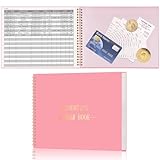
- Easy To Track Your Finances: HAUTOCO accounting ledger book keeps you on top of your expenses and income! Help you keep your money organized, spend well, and set and achieve financial goals
- Premium Material: The accounting ledger book has a total of 120 pages and 3,000 lines of entries. It is made of 100gsm thick paper to reduce ink leakage; it is equipped with a waterproof and sturdy PP cover to protect the inner pages
- Practicality: The expense tracker notebook measures 10.1 x 7.8'', and the large size gives you enough space to record each of your transactions; there are 2 PE large pockets at the back of the account book to store important tickets and loose items
- Manage Your Finances Effectively: Undated accounting books with number, date, description, account, payment or deposit amount, and total balance. You will be able to easily analyze your financial activities and quickly prepare accurate financial statements
- Ideal For Small Business or Personal Use: An accounting log journal can track your business or personal financial status. With a clear record of transactions, you can find unnecessary expenses or fraudulent charges
Those general federal periods are not a universal destruction schedule for every document. Employment, property, state, local and industry rules can require different retention. Keep records longer when another applicable rule or the business circumstances require it, and seek tax advice if you are unsure.
Sources and scope
This article is based on U.S. federal IRS guidance, including What kind of records should I keep?, How should I record my business transactions?, Publication 583, Starting a Business and Keeping Records, and Why should I keep records?. Tax rules and recordkeeping obligations depend on the business and jurisdiction; check current guidance or consult a tax professional for questions about eligibility, inventory, payroll or deductions.
Quick Recap
Product prices and availability are accurate as of the date/time indicated and are subject to change. Any price and availability information displayed on Amazon at the time of purchase will apply.

