
iTechGuides is reader-supported. When you buy through links on our site, we may earn an affiliate commission. As an Amazon Associate I earn from qualifying purchases. Learn more
Affiliate marketing keyword research works best when you start with a reader’s problem, then choose queries for which you can create a genuinely useful page and recommend a relevant offer. Search volume and advertising cost can help you investigate demand, but neither predicts organic rankings or affiliate income.
Start with a reader and a problem
Decide who the page is for, what they are trying to do, and what kind of product or service could genuinely help. A broad topic such as “fitness” is difficult to turn into a useful page. A specific need—such as choosing equipment for a small apartment—gives you a clearer audience, a more focused query, and a standard for judging whether a product recommendation belongs.



Keep the reader’s outcome ahead of the commission. If no relevant offer can help solve the problem, the query may still deserve coverage, but it is a weak fit for an affiliate article.
Build a seed list from real questions
Write down the words your audience uses, not just the terminology a marketer might use. Look at questions from reader conversations, support requests, product use cases, and niche communities. Include beginner and expert formulations: people with different levels of familiarity may describe the same problem differently. Google recommends anticipating variations in the words users might search, and says its language-matching systems can connect pages to queries without every exact variation appearing on the page (Google SEO Starter Guide).
#1 Best Overall
For each seed topic, note the problem behind it. For example, a seed such as “compact camera” could lead to questions about travel, low-light photos, or vlogging. Those are possible research directions, not verified search-volume findings; test them rather than assuming they have demand.
Expand seeds and collect demand evidence
Google Ads Keyword Planner can generate related keyword ideas and provide monthly-search estimates and advertising cost estimates. In Google Ads, use Discover new keywords to start with seed phrases and, when useful, a relevant website URL. You can also enter an existing keyword list to review search-volume and forecast estimates. Google describes Keyword Planner as a tool for Search campaign research (Google Ads Help: Use Keyword Planner).
Set the location and language to match the audience you intend to reach. Treat the resulting figures as estimates for advertising research, not as a promise of organic visits. Forecasts depend on campaign assumptions such as spend, and advertising performance can vary with factors including bids, budget, ad quality, location, product, and customer behavior. Account setup and billing requirements can also vary with account state and change over time.
Do these 3 things before closing this tab:
1Scan for outdated or missing drivers - takes under a minute2Repair Windows errors before they cause bigger problems3Fix the driver behind crashes, sound loss and screen glitchesCapture the source and settings alongside each estimate. That way, you can distinguish measured observations from a tool’s forecast and avoid comparing figures generated for different markets or assumptions as if they were equivalent.
Identify intent and the page that fits
Read each candidate query and inspect its live search results. Ask what a searcher appears to want: instructions, alternatives, an evaluation of one product, or a place to buy. Search results are evidence to interpret, not a guarantee of what every searcher wants or whether a page will convert.
Match the page format to that likely need:
- Instruction: explain how to complete a task, with steps and decision points.
- Alternatives or comparison: help readers distinguish options using criteria that matter to their situation.
- Review: assess a particular product or service with useful, substantiated information.
- Product recommendation: help readers choose an option when they are close to a purchase decision.
Group related queries only when one page can satisfy the underlying need. If two phrases imply different goals or require different evidence, separate them rather than forcing them into one article.
Prioritize keywords as a portfolio
Do not choose a target from one metric alone. Compare each candidate across these dimensions:
Outdated Drivers Are Slowing You Down
One free scan finds every outdated or missing driver and matches the right update for your exact hardware.Free scan · exact hardware matchWindows Errors? Fix Them Before They Spread
Repair common Windows errors and clear accumulated junk for a smoother, more stable PC - no reinstall needed.Free scan · no reinstall- Audience relevance: Does it address a real problem for the people your site serves?
- Demand evidence: What supports the case for interest, and is it an estimate, a forecast, or performance data from your own site?
- Achievable competition: Can your site produce a page with enough expertise and value to compete with the pages currently appearing?
- Page usefulness: Can you deliver a clear, distinct outcome rather than a thin variation on another page?
- Commercial fit: Is there an appropriate product or service that genuinely supports the reader’s goal?
Cost-per-click or advertiser interest can provide context about advertising activity, but does not establish affiliate conversion potential or organic ranking likelihood. There is no universal search-volume or cost threshold that makes a keyword a winner. A balanced plan can include several well-matched opportunities rather than betting on a single high-volume phrase.
Plan the page without stuffing in keywords
Give each article one clear reader outcome. Use natural wording in the title, main heading, and descriptive text so readers can tell what the page covers. Google’s guidance is to create helpful, reliable, people-first content; it also says excessive repetition is tiring and keyword stuffing violates its spam policies (Google Search Essentials; Google SEO Starter Guide).
Google does not use the meta keywords tag for Search. Spending time adding keyword variants to that tag is not a substitute for useful content or a clear page structure. Meeting Search Essentials does not guarantee that Google will crawl, index, or serve a page.
Independent reader supportYour contribution helps us test, update, and keep practical guides available for everyone.Check product relevance and affiliate rules
If you use Amazon Associates, search the marketplace or shopping app for a product that actually fits the reader’s need, then create a tagged link with a supported tool such as SiteStripe or Mobile Get Link. Marketplace listings, eligibility, and availability can change, so verify the current listing and the rules for the relevant marketplace before publishing (Amazon Associates product search help).
Recommended Free Tools
Check the current participation requirements before running paid search campaigns. Amazon’s rules restrict certain paid-search placements, including use of proprietary terms and advertisements that send users directly or through a redirect to Amazon (Amazon Associates Participation Requirements). Do not assume an organic-content strategy and a paid-search strategy have the same permissions.
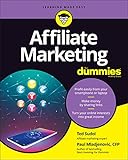
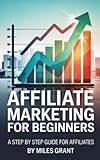
A handbook or manual can be a supplementary physical-product recommendation if it is genuinely useful. Search for a relevant title, then check the current edition, availability, and claims before linking; a query about a book is not proof that a suitable listing exists.
Review performance and revise the plan
After publication, use Google Search Console or other first-party performance data to see how your pages are appearing and what queries bring visitors. Google describes Search Console as a tool for understanding a site’s performance in Search (Google Search Central documentation overview). Use observed results to decide whether a page needs a clearer answer, a better-matched format, or a different focus. Keyword Planner is useful for discovery and advertising estimates; it is not a replacement for evidence from your own published pages.
Quick Recap
Product prices and availability are accurate as of the date/time indicated and are subject to change. Any price and availability information displayed on Amazon at the time of purchase will apply.
The Tool Desk
Outbyte PC Repair FREEClear out junk files and repair common Windows errorsFree Scan →Outbyte Driver Updater FREEFix the driver behind crashes, sound loss and screen glitchesFind Drivers →
