
Quick wins for a faster PC:
Fix the driver behind crashes, sound loss and screen glitchesFind Drivers →Repair Windows errors before they cause bigger problemsFix Now →Scan for outdated or missing drivers - takes under a minuteDriver Scan →iTechGuides is reader-supported. When you buy through links on our site, we may earn an affiliate commission. As an Amazon Associate I earn from qualifying purchases. Learn more
Compare prediction market platforms using the specific contract you might trade—not a platform’s headline fee, market count, or advertised payout. Check the total cost of a trade, whether the same event and terms are available, the market’s liquidity, how it settles, and whether you can use that venue from your location. Those details can differ by contract, order, entity, and date.
What makes a platform comparison fair?
Start with the event you actually care about and compare equivalent contracts on the same day. Two listings about the same subject may not be equivalent if they define the outcome differently, use different deadlines or resolution sources, or treat delays and ambiguous results differently.

Use the same assumptions for each venue: contract, outcome, price, order type, quantity, account location, and comparison time. Record a timestamp because prices, available size, spreads, market listings, and rules can change. A platform-wide claim such as “lowest fees” or “most markets” does not establish which venue is cheaper or more useful for your trade.
How do you compare total trading costs?
Include both fees and the spread
A displayed transaction fee is only part of what a trade costs. Compare the applicable fee with the bid/ask spread—the difference between the best price buyers offer and sellers request—and consider whether your order is likely to execute at the displayed price and size. A wide spread or insufficient size can make a trade more expensive even when its fee is low.
#1 Best Overall
For a fair comparison, note the price and quantity you intend to trade, whether your order would add liquidity or take an existing offer, and any applicable transaction fees, penalties, or other charges. Then compare the total expected cost under those same assumptions. Do not calculate a platform’s current total from an old fee figure: schedules and exemptions can change.
Check the current fee schedule rather than a headline
Kalshi’s Help Center, in an article dated March 17, 2026, says it makes money by charging a transaction fee on a contract’s expected earnings and directs users to its fee schedule. The official schedule available for this comparison did not provide readable current rate details, so a specific rate or worked cost comparison cannot be stated here. Check the live schedule and the terms that apply to your contract and order before calculating.
No directly comparable current fee table for Polymarket was established here either. That is not evidence that either venue is cheaper. To decide which costs less for your trade, use current official fee information for both venues and compare the same contract, quantity, order assumptions, and spread at a recorded time.
Rank #2

- MORE SPACE FOR REAL TRACKING: Designed with extra writing space compared to typical betting trackers—log bets, strategies, and insights instead of just numbers
- DISCIPLINED BETTING SYSTEM: Set limits, track units, and stay consistent. Build smarter habits and eliminate emotional betting with structured logging pages
- BUILT-IN WEEKLY & MONTHLY PROFIT CALCULATOR: Quickly see your performance with dedicated profit tracking pages. Analyze wins, losses, and trends to make smarter bets over time
- PROFESSIONAL LOGGING STRUCTURE: Organized pages feature betting summary, notes, and detailed logs—ideal for serious sports bettors and data-driven users
- PREMIUM QUALITY YOU CAN FEEL: Compact 6x9 size, 124 pages, smooth 120gsm paper, durable thick cover, and strong double metal coil—perfect for daily use anywhere
How do you compare markets and liquidity?
Confirm that the exact contract exists
Browse to the particular event and outcome on each venue. A broad category such as politics, economics, or sports is not proof that a platform lists the contract you want. The Commodity Futures Trading Commission (CFTC) describes event contracts in binary, multiple-choice, and range-based forms; these formats do not necessarily resolve in the same way.
Compare the contract’s full wording, including:
- What event or threshold determines each outcome.
- The deadline or observation period.
- The stated source used to determine the result.
- What happens if the event is delayed, the result is ambiguous, or the market is voided.
- How settlement is determined and whether a review or dispute process is described.
If any of these terms differ, mark the listings as non-equivalent rather than comparing their prices as if they were the same bet.
Look beyond the number of listings
Market inventory is live and can vary by topic and event. No reliable official cross-platform market-count figure was established for a general comparison, and a high category count would not show whether a particular event is listed or actively traded. Check the specific market you want on the day you are comparing platforms.
Rank #3
For that market, inspect the bid and ask, the quantity available at those prices, and the order-book depth beyond the best prices. A narrow spread with enough available size may matter more to your trade than a large number of unrelated listings. The CFTC notes that complex contract formats may draw fewer participants and have lower liquidity.
Free tools Windows power users keep installed
One-click scans. No signup required.
How do prediction market payouts work?
Read the settlement terms for the contract
There is no single payout rule that can safely be inferred from a platform’s general description. A binary yes/no contract may use an all-or-nothing payout structure, while a multiple-outcome contract or a range-based contract can distribute payouts differently. Some formats combine yes/no legs. Read the specific contract’s outcome definitions and settlement terms before trading.
The CFTC says customers are entitled to clear contract information, including payout and how and by whom settlement is determined. Treat the named resolution source, settlement timing, and exceptional-case rules as part of the contract—not as fine print to check only after an event.
Distinguish the market price from a promised probability or payout
A contract’s displayed price is market-derived: it reflects traders’ perceived probability and can change. It is not a guarantee that an outcome has that probability, nor does it replace the contract’s stated settlement rules. To understand what you could receive, check how the contract pays for each outcome and what happens if it is delayed, disputed, or voided.
How do location and regulation affect your choice?
Access depends on the venue entity and your jurisdiction. Do not assume that a brand name refers to one exchange with identical rules worldwide. Confirm current eligibility for your location, the entity offering the contract, and the applicable terms before opening an account or placing a trade.
Polymarket’s disclosures distinguish Polymarket US from Polymarket International and say the two have separate applicable rules, terms, and market-integrity standards. The company says U.S. users are prohibited from trading on its International platform and describes its U.S. exchange as a CFTC-designated contract market and clearing organization, fully launched since May 2026. These are the platform’s own descriptions; verify current eligibility and rules with the venue.
Best Value
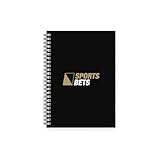
- CONVENIENT SIZE - Medium size (8.25" x 5.83")
- RECORDING AND PLANNING - Ideal for recording all your bets with a handy note section on each day page. Ideal for looking back when planning future bets
- SUITABLE FOR ALL SPORTS - Perfect for horse racing, football, tennis, cricket, baseball, basketball, ice hockey, etc
- CONVENIENT AND EASY TO USE - Convenient headlines to record all your betting activities
- Lying Flat The sturdy spiral binding allows the notebook to rotate 360 degrees, making it very convenient to complete the log
Regulatory status is not a guarantee against trading losses or misconduct. In a February 25, 2026 advisory, the CFTC described two Kalshi enforcement cases: one involving a political candidate trading on their candidacy, for which Kalshi imposed a $2,246.36 penalty and five-year suspension of direct or indirect exchange access; another involving a trader affiliated with a YouTube channel who likely had advance knowledge of video contents, for which Kalshi imposed a $20,397.58 penalty and two-year suspension. These are case-specific enforcement outcomes, not typical user fees or estimates of trading losses.
Independent reader supportYour contribution helps us test, update, and keep practical guides available for everyone.Can you exit a position before settlement?
Check whether the venue allows you to trade out before settlement and whether the specific market has enough liquidity for that exit. On CFTC-regulated markets, the CFTC says customers may trade out before settlement at the then-current market price, subject to market conditions. An available exit is not a guaranteed exit at your entry price: the market price and available size may have changed.
Also verify the current account funding and withdrawal process and any related charges in the venue’s terms. These can affect practical use, but they do not replace contract-level cost and settlement checks.
What’s actually slowing this PC down?
Pick the symptom - the matching free tool is one click away.
A practical checklist for comparing platforms
- Choose the event and your location. Search each venue for the outcome you want, then confirm you are eligible to use the relevant entity.
- Match the contract terms. Compare wording, deadline, resolution source, payout, and delay, ambiguity, or void treatment. Exclude contracts that are not genuinely equivalent.
- Capture market conditions. At the same time, record bid, ask, available quantities, and order-book depth for the quantity you expect to trade.
- Check current charges. Read the official fee schedule and applicable terms for each venue. Include fees and spread under the same order assumptions; do not substitute a brand-level fee claim for a calculation.
- Check settlement and exit terms. Identify who determines settlement, how the result is established, when settlement occurs, and whether an exit before settlement is possible under current conditions.
- Record the date and compare. Keep the comparison tied to its timestamp, contract, size, and location. Recheck the figures and eligibility when you are ready to trade.
The CFTC advises customers to understand contract rules, fees, and risks and to use only risk capital. Its guidance also warns that users may have little or no protection when dealing with unregistered entities operating outside the United States. Consider the venue’s status and your own risk tolerance alongside the contract comparison.
Quick Recap
Product prices and availability are accurate as of the date/time indicated and are subject to change. Any price and availability information displayed on Amazon at the time of purchase will apply.

