
iTechGuides is reader-supported. When you buy through links on our site, we may earn an affiliate commission. As an Amazon Associate I earn from qualifying purchases. Learn more
To check the maximum RAM speed your computer supports, identify its exact processor and motherboard—or exact laptop or prebuilt model—then compare the processor’s memory specification with the motherboard or computer maker’s manual and supported-memory list. Check the speed RAM is running separately: that is a current setting, not the platform’s maximum.
Maximum supported speed and current speed are different
A RAM kit’s advertised speed describes the module’s rating or available profile; it does not prove that the complete computer supports that speed. The processor, motherboard, memory generation, module arrangement, and firmware profile all affect what is supported and what can run. Intel and AMD direct users to check both processor and motherboard-specific information (Intel guidance; AMD guidance).
The speed shown in BIOS/UEFI or a system utility is the memory’s current operating reading. It does not by itself tell you the highest speed your system could support.
What’s actually slowing this PC down?
Pick the symptom - the matching free tool is one click away.
Find the exact computer components
For a desktop assembled from separate parts
Record the exact CPU and motherboard model. In Windows, open System Information to find motherboard manufacturer and model details; Intel’s instructions explain where to look (Intel: identify your motherboard). Check the motherboard itself or its documentation if the model is not clear.
#1 Best Overall

- Boosts System Performance: 32GB DDR5 RAM laptop memory kit (2x16GB) that operates at 5600MHz, 5200MHz, or 4800MHz to improve multitasking and system responsiveness for smoother performance
- Accelerated gaming performance: Every millisecond gained in fast-paced gameplay counts—power through heavy workloads and benefit from versatile downclocking and higher frame rates
- Optimized DDR5 compatibility: Best for 12th Gen Intel Core and AMD Ryzen 7000 Series processors — Intel XMP 3.0 and AMD EXPO also supported on the same RAM module
- Trusted Micron Quality: Backed by 42 years of memory expertise, this DDR5 RAM is rigorously tested at both component and module levels, ensuring top performance and reliability
- ECC Type = Non-ECC, Form Factor = SODIMM, Pin Count = 262-Pin, PC Speed = PC5-44800, Voltage = 1.1V, Rank And Configuration = 1Rx8
For a laptop or prebuilt PC
Use the complete product model or service/model number from the computer’s label or system information, then go to the manufacturer’s support page for that specific machine. A laptop or prebuilt may have memory limits that differ from what a processor specification alone suggests.
Look up the supported maximum
- Check the processor specification. Search the manufacturer’s official product page for your exact CPU. Intel’s product specifications list maximum memory speed, capacity, and channel information under Specifications (Intel’s lookup guidance). AMD provides processor specifications through its product resources (AMD’s memory guidance).
- Check the motherboard or computer support page. Confirm the supported DDR generation, memory speeds, capacity, module configurations, and BIOS requirements in the exact model’s specifications and manual. For a laptop or prebuilt, use the computer maker’s documentation.
- Check the qualified vendor list (QVL), if available. This list identifies memory modules or configurations the board maker has validated. MSI’s guide shows how to find its board’s supported-memory listing (MSI memory support guide).
- Compare the details, not just the largest number. Match DDR generation, module count and capacity, slot arrangement, and any required memory profile. The processor specification is one limit; motherboard support and the exact configuration also matter.
There is no single maximum RAM speed that applies to every computer. If the CPU and motherboard documentation appear to disagree, use the exact board or computer model’s guidance and ask its manufacturer to confirm support for the intended configuration. Intel likewise advises checking the motherboard manual or contacting its vendor about whether a specific memory model will work.
Rank #2

- Requires overclocking/BIOS adjustments. Maximum speed and performance depends on system components, including motherboard and CPU.
- G.SKILL Flare X5 Series DDR5 U-DIMM Memory Kit, Model: F5-6000J3636F16GX2-FX5
- Non-ECC, DDR5 U-DIMM, 288-pin, for Desktop PC & Gaming
- Includes JEDEC default profile, and AMD EXPO & Intel XMP 3.0 memory overclock profile
- Do not mix memory kits. Memory kits are sold in matched kits that are designed to run together as a set. Mixing memory kits will result in stability issues or system failure.
Check the speed RAM is running now
Use BIOS/UEFI
Restart the computer and enter BIOS/UEFI using the key shown during startup or in the computer manual. Look for a memory status, overclocking, or memory-profile page; labels and menu paths vary by manufacturer. The reported speed describes the current configuration.
The Tool Desk
Outbyte PC Repair FREEClear out junk files and repair common Windows errorsFree Scan →Outbyte Driver Updater FREEScan for outdated or missing drivers - takes under a minuteDriver Scan →Use a system utility
CPU-Z is an optional utility. Its Memory tab shows operating memory information, while its SPD tab reports module details and stored specifications. CPUID describes the information it reports here: CPU-Z.
Rank #3

- Capacity: 16GB(2 x 8GB)
- Tested Frequency Profile 1: PC5-48000 (6000MT/s)
- Tested Timings: 36-46-46-110
- Feature Overclock: XMP 3.0 & EXPO overclocking supported
- On-Die ECC
Some utilities may show the underlying memory clock, while product listings commonly give DDR’s effective data rate. If a reading looks roughly half the kit’s marketed DDR rate, check the utility’s terminology and memory type before concluding that the system is running incorrectly. Display conventions are not universal across tools.
If the current speed is below the kit rating
A lower reading does not automatically mean the RAM or computer is faulty. Memory may start at a default SPD setting instead of using its advertised performance profile. Intel’s support example contrasts a 3200-rated module with a 2400 default; those values illustrate that example only, not a general system limit (Intel guidance).
Rank #4
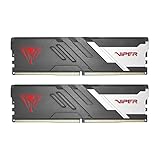
- Capacity: 32GB (2 x 16GB) 6000MHz
- Tested Timings: 30-40-40-76
- Feature Overclock: XMP 3.0 / EXPO overclocking supported
- Compatibility: Tested across latest DDR5 platforms for reliability on high performance
- Limited lifetime warranty
- Check that the modules are installed in the motherboard’s recommended DIMM slots, especially when using a matched pair.
- In BIOS/UEFI, see whether a supported memory profile is available and enabled. Profile names and controls vary by platform.
- Confirm the profile and speed are supported for your CPU, motherboard, memory kit, and module arrangement.
- Check the motherboard QVL and BIOS support information. AMD also recommends checking validated speeds, supported profiles, and recommended slots (AMD guidance).
Before changing firmware settings, consult the computer or motherboard manual. If a profile causes startup problems, use the manufacturer’s instructions to restore default BIOS/UEFI settings rather than repeatedly changing unrelated options.
When Windows and BIOS report different speeds
Compare the BIOS/UEFI reading, the operating-system display, and the specifications for the exact hardware. A reported value can vary by reporting layer: Microsoft documents a Windows Server issue where Task Manager may show a memory speed higher or lower than BIOS (Microsoft support article). That documented issue does not establish that every mismatch has the same cause. Check for model-specific reporting guidance before changing memory settings.
Best Value
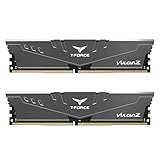
- Simple design to perfectly protect the cooling module
- High thermal conductive adhesive
- Supports Intel & AMD motherboards
- Selected high-quality IC, Supports XMP2.0
- Lifetime warranty
Before choosing faster RAM
There is no universal “best MHz” recommendation without knowing the system. Before buying a kit, compare its DDR generation, speed, total capacity, module count, and profile against the processor specification, motherboard or computer documentation, recommended slots, and QVL. A kit’s advertised rating alone does not guarantee the computer will run it at that rate.
Quick Recap
Product prices and availability are accurate as of the date/time indicated and are subject to change. Any price and availability information displayed on Amazon at the time of purchase will apply.

