
There is no single official Twitch tool for bulk-recording arbitrary live channels. The right workflow depends on what you are authorized to preserve: enable and export your own broadcasts as VODs, record your own stream locally while broadcasting, or use Twitch’s Clips API for clips from channels that have authorized the workflow. Twitch’s official broadcast guide explains how to send video to Twitch; it is not a general-purpose interface for capturing other channels’ live streams.
Choose the capture workflow that matches your permissions
“Capture Twitch streams” can mean three different jobs. Decide which one you have before building an archive: saving your own full broadcasts, recording your own stream as it happens, or creating and downloading clips with a broadcaster’s authorization. Twitch’s official features described here cover VOD management and clips. They do not establish an approved bulk-download workflow for unrelated channels.
| What you need to preserve | Appropriate starting point | Important boundary |
|---|---|---|
| Your own full broadcast after it ends | Enable Past Broadcast storage and export the VOD from Video Producer. | VOD availability is limited by storage settings, account category, retention, and deletion. |
| Your own broadcast as it happens | Use a local recording workflow alongside your broadcast software, if that software and setup support it. | The reviewed Twitch documentation establishes how to send a broadcast to Twitch, not a complete local-recording setup or exact encoder instructions. |
| Short clips from an authorized channel | Use Twitch’s Clips API with the required user token and channel eligibility. | This creates clips, not a full-stream recording. The broadcaster must be live and clips must be enabled. |
| Unrelated channels without permission | Do not treat scraping or unofficial bulk downloaders as Twitch-authorized methods. | Twitch’s Terms restrict downloading materials except where expressly permitted on Twitch Services and restrict data-mining or similar extraction methods. |
Preserve your own broadcasts as VODs
Enable storage before the stream
Turn on Past Broadcast storage before going live. If storage was disabled, the stream did not save, or Twitch’s retention period has elapsed, Twitch Support cannot recover that broadcast. This makes the setting a prerequisite, not a backfill option. Consult Twitch’s On-Demand Content on Twitch help page for the current account controls and retention details.
Export from Video Producer while the VOD is available
Saved broadcasts can be reviewed, clipped, highlighted, or downloaded from Video Producer. Make export part of your post-stream process rather than waiting until the end of the retention window. Twitch’s documented retention periods are 60 days for Partners, Prime, and Turbo users; 14 days for Affiliates; and 7 days for other broadcasters. These are the periods listed on Twitch’s help page accessed September 29, 2026, not a promise that each VOD will remain accessible until the final hour. Confirm availability in your account when planning an export.
Do these 3 things before closing this tab:
1Fix the driver behind crashes, sound loss and screen glitches2Repair Windows errors before they cause bigger problems3Scan for outdated or missing drivers - takes under a minute#1 Best Overall

- 【1080P 60FPS Video Capture Card】 This HDMI game capture card is based on USB3.0 high speed transmission port, input resolution up to 4K@30HZ, output resolution up to 2K@30Hz or 1920×1080@60Hz. Type c and USB interface can meet most of the devices in daily life. Easily meet the online capture, real-time recording, online meetings, live gaming and other functions, so you have a better visual enjoyment. Note: For capture use only; requires capture software to function and is not intended for direct screen casting to a monitor or TV
- 【Ultra Low Latency Screen Sharing】 HDMI capture card is made of good quality aluminum alloy with strong heat dissipation, allowing you to enjoy ultra low latency while live gaming or video recording or live streaming, avoiding blue screens and lag. This HDMI to USBC capture card supports easy recording of good quality audio or HD video and transferring it to your computer or streaming platform, allowing you to record 60 fps HD video directly on your hard drive and real-time preview
- 【Plug and Play, Easy to Carry】 This HDMI 1080P video capture card does not require any additional drivers or external power supply, just plug and play for fast capture. The capture card is small and lightweight, so you can put it in your bag for emergencies, making it very portable for outdoor live streaming. It's also a great way to share content in game recording, video conference, video recorder and online teaching
- 【Wide Compatibility USB Capture Card】 Easily streams to Facebook, Youtube or Twitch. With the connection, this HDMI to USB C/3.0 video capture devices can be working on several Operating Systems and various software: Windows 7/ 8/ 10, Mac OS or above, Linux, Android, Laptop, Xbox One, PS3/PS4/PS5, Camera, DVDs, Set Top Box, Webcame, DSLR, Switch/Switch 2, TV BOX, HDTV, Potplayer/VLC, ZOOM, OBS Studio etc.
- 【Package Content & Note】 1x HD Audio Capture Card , 1x USB 3.0 to USB C Adapter (A-side 3.0, B-side 2.0), 1x user manual. Please note that you need to restart the OBS Studio software after the audio setup is complete, otherwise it will result in no sound output. When using an adapter, if the device is recognized as USB 2.0, try using the other side with the USB-C port. Simply flip the capture card and reconnect it to be recognized as USB 3.0
For an archive, retain the downloaded file in storage you control and keep enough information to identify it later, such as the broadcast date, channel, and source VOD. Twitch documents the download feature, but does not specify a recommended storage device, archive capacity, or redundant-storage design. Calculate capacity from your own recorded hours, bitrate, number of channels, and how long you intend to keep the files; no universal capacity figure follows from Twitch’s documentation.
Record your own stream locally while broadcasting
A local recording can preserve a copy independently of Twitch’s VOD retention, but it is a separate workflow from sending a broadcast to Twitch. Twitch’s Video Broadcast documentation describes contribution: broadcasters send an RTMP stream to Twitch’s ingest system using software, console, or hardware encoders. That guide should not be mistaken for a bulk capture interface or a complete guide to configuring local recording.
If your broadcaster software or hardware supports simultaneous local recording and streaming, consult its own current recording documentation and verify the result before relying on it for an archive. Check that a test recording plays, has the expected audio and video, and is saved to the intended destination. The exact controls, resource requirements, and file output depend on the software and configuration; Twitch’s cited guide does not establish those specifics.
Rank #2

- 【1080P HD High Quality】Capture resolution up to 1080p for video source and it is ideal for all HDMI devices such as PS4, PS3, Xbox One, Xbox 360, Wii U, DVDs, DSLR, Camera, Security Camera and set top box. Note: Video input supports 4K30/60Hz and 1080p120/144Hz. Does not support 4K120Hz/144Hz. Output supports up to 2K30Hz.
- 【Plug and Play】No driver or external power supply required, true PnP. Once plugged in, the device is identified automatically as a webcam. Detect input and adjust output automatically. Won't occupy CPU, optional audio capture. No freeze with correct setting.
- 【Compatible with Multiple Systems】suitable for Windows and Mac OS. High speed USB 3.0 technology and superior low latency technology makes it easier for you to transmit live streaming to Twitch, Youtube, Facebook, Twitter, OBS, Potplayer and VLC.
- 【HDMI LOOP-OUT】Based on the high-speed USB 3.0 technology, it can capture one single channel HD HDMI video signal. There is no delay when you are playing game live.
- 【Support Mic-in for Commentary】Rybozen capture card has microphone input and you can use it to add external commentary when playing a game. Please note: it only accepts 3.5mm TRS standard microphone headset.
Automate authorized clips with Twitch’s Clips API
Meet the channel and authorization requirements
Creating a clip requires a user token with the clips:edit scope. The broadcaster must be live, clips must be enabled, and channel restrictions can limit which creators are eligible to create clips. A valid token alone does not override those channel conditions. Review the current requirements in Twitch’s Clips API documentation before deploying an integration.
The Tool Desk
Outbyte Driver Updater FREEFix the driver behind crashes, sound loss and screen glitchesFind Drivers →Outbyte PC Repair FREEClear out junk files and repair common Windows errorsFree Scan →Understand what the live endpoint captures
The live clip endpoint attempts to capture a window of up to 90 seconds around the API request, from which the resulting clip is 5 to 60 seconds long. Near the beginning or end of a stream, Twitch may return less than the full attempted window. Clip creation is asynchronous, so a successful creation request is not the same as a completed, downloadable clip. This endpoint is a clip workflow, not a full-stream recorder.
Build a job around completion and prompt retrieval
- Authorize for the intended channel. Obtain the proper user token and scope, and confirm that the broadcaster is live, clips are enabled, and your account is eligible under the channel’s restrictions.
- Submit the clip creation request. Store the resulting clip identifier and the time of the request so the job can be reconciled later.
- Wait for completion. Treat creation as asynchronous and check the returned status using the documented API flow; do not assume the media is ready immediately.
- Retrieve and persist the media promptly. Twitch’s clip download URLs are temporary and expected to expire. Download the media to storage you control and treat the URL as a short-lived retrieval link, not as the archive record.
- Record enough metadata to recover the job. Keep identifiers, timestamps, channel association, and final storage location. This is operational advice for traceability, not a Twitch-mandated schema.
The Clips API supports pagination, but Twitch’s reference says that multiple requests return approximately 1,000 results at most before you need narrower time windows. Divide collection into bounded time ranges, preserve the cursor and time-range state for each job, and reconcile overlapping windows by clip ID if your implementation queries adjacent ranges. The API reference also limits the Get Clips Download endpoint to 100 requests per minute. Queue retrieval work and pace it against that documented limit; do not let a large batch of clip creation jobs turn into an uncontrolled download burst.
Rank #3
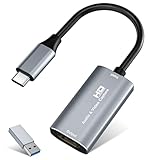
- 【4K HDMI Input, 2K@30Hz Recording】Powered by a true USB 3.0 high-speed interface, the capture card supports up to 4K@30Hz HDMI input and records at 2K@30Hz or 1080P@60Hz. Perfect for gamers, streamers, and professionals who need crisp, smooth video for live streaming, gameplay recording, or online meetings.
- 【Ultra Low Latency Screen Sharing】Built with a premium aluminum alloy shell and advanced chipset for stable heat dissipation, ensuring ultra-low latency transmission. Capture high-quality video and dual-channel audio in real time—no lag, no frame drop—ideal for Twitch, YouTube, or OBS streaming.
- 【Easy Plug and Play, Compact & Portable】No driver or external power required—just plug and play via USB 3.0 or Type-C connection to your Windows or macOS computer. Lightweight and compact design makes it easy to carry for outdoor streaming, live shows, or mobile recording setups.
- 【Wide Compatibility & Multi-Device Support】Compatible with Windows 7 8 10 11, macOS, Linux,Android and supports most popular software such as OBS, Zoom, VLC, Twitch Studio, and more. Works seamlessly with PS4, PS5, Xbox, Switch, DSLR cameras, TV boxes, and other HDMI-output devices for streaming to YouTube, Twitch, etc.
- 【What You Get】Includes: HDMI Capture Card, USB 3.0 to USB-C Adapter, User Manual. Tips: Make sure your tablet’s OTG function is enabled before connecting. Test your HDMI device with a monitor first to confirm video and audio output, then connect to the Video Capture Card for recording.
For current clip list and download behavior, use the official Clips API reference. For broadcaster VOD management, Twitch also documents its Videos API. Verify endpoint parameters, token requirements, pagination behavior, and response fields against those references when implementing, since they can change.
Plan for scale without assuming a throughput guarantee
“At scale” could mean a few channels, a long retention period, or a large authorized clip queue; Twitch’s cited documentation does not give a universal channel limit, capture throughput, or archive cost. Design around the actual workload and the documented constraints rather than extrapolating a rate from a test or a single successful request.
- Separate source types. Track VOD exports, local recordings, and API-created clips as different assets. A clip is not a replacement for a full broadcast archive.
- Bound API collection. Use time windows for large clip searches when you approach the approximately 1,000-result pagination ceiling. Persist cursors and completed ranges so an interrupted job can resume without blindly restarting the whole archive.
- Queue download work. Keep Get Clips Download requests within the documented 100-per-minute limit and retrieve temporary URLs promptly.
- Calculate storage from real inputs. Estimate from the hours captured, actual file sizes or bitrate, channel count, and retention term. Add your own allowance for redundant copies and recovery; Twitch does not prescribe those quantities.
- Keep an archive index. Store source channel, capture date, VOD or clip ID, completion state, and the location of the persisted media. Avoid relying on a temporary URL as the durable reference.
- Test failures and recovery. Check that incomplete jobs can be detected, retried carefully, and marked complete only after the file has been stored and verified in your own workflow.
Common problems and fixes
| Symptom | Likely explanation | What to do |
|---|---|---|
| A broadcast is missing from Video Producer. | Past Broadcast storage may have been off, the broadcast may not have saved, or the VOD may have passed its retention period or been deleted. | Check storage settings for future streams; Twitch says it cannot recover VODs that were not saved or are no longer available. |
| A clip creation request is rejected or produces no usable clip. | The token may lack clips:edit, the broadcaster may not be live, clips may be disabled, or channel restrictions may make the account ineligible. |
Check authorization and channel eligibility, then consult the current Clips API error details. |
| The clip is shorter than the expected capture window. | The endpoint produces a 5–60 second clip from an attempted window of up to 90 seconds, and stream boundaries can shorten the available capture. | Plan around the actual clip length limits; do not use the endpoint as a full-stream recording method. |
| A clip download link no longer works. | The URL is temporary and expected to expire. | Retrieve completed clip media promptly and persist it in storage you control. |
| A large clip listing seems to stop returning older results. | Paginated requests return approximately 1,000 results at most before the query needs narrower time windows. | Split the search range, save progress by range, and reconcile results by identifier. |
| Clip download jobs are being throttled. | Get Clips Download is limited to 100 requests per minute. | Queue and pace requests within the documented limit, then retry carefully according to the current API response. |
Keep capture within Twitch’s permitted workflows
Twitch’s Terms of Service, marked last modified August 12, 2026, restrict “downloading (except page caching) of any portion of the Twitch Services, the Materials, or any information contained in them, except as expressly permitted on the Twitch Services” and also restrict data-mining or similar extraction methods. Use the official VOD and Clips features for content you control or have permission to process, and do not present scraping or third-party bulk downloading of unrelated channels as an endorsed Twitch workflow. This is a summary of the cited Terms, not jurisdiction-specific legal advice. Read the Twitch Terms of Service for the applicable language.
Rank #4

- High-Quality Video Capture, 4K HDMI Capture Card Ready: Capture smooth and vibrant video with this 4K HDMI capture card, engineered for gamers and content creators who demand crisp 1080P 60FPS video quality. Whether you're streaming to Twitch or recording gameplay for YouTube, your footage will look professional and detailed
- Plug-and-Play USB Capture Card, No Drivers Needed: Designed as a USB capture card for streaming, this device works instantly out of the box, just plug into your PC or laptop and start capturing. Fully compatible with popular software like OBS Studio, Streamlabs, and XSplit, making setup quick and stress-free for beginners and pros alike
- Universal Compatibility PS5, Xbox, Switch & More: Stream or record gameplay from virtually any HDMI-enabled device including Nintendo Switch, PS5, Xbox Series X, DSLR cameras, and PCs. The video capture card for gaming supports seamless passthrough so you can play without lag while your audience watches every frame in real time
- Low-Latency Performance for Smooth Streaming: This capture card for streaming minimizes delay between gameplay and broadcast, so you get reliable, low-latency capture that works well for competitive gaming, live broadcasts, and podcast sessions. Suitable for those building their channel with high-quality, engaging content
- Compact & Portable Design for Content Creators: Lightweight and portable, this USB 3.0 capture card works well for creators who travel or switch gaming setups often. Throw it in your bag and stream or record wherever you are, at home, events, LAN parties, streaming or studio sessions
Or skip the browser setup
ScreenshotNeo is a website screenshot API, not a Twitch stream recorder: it can capture a still image of a channel webpage, but it cannot archive a live video stream or replace VOD export, local recording, or the Clips API. If you need a clean screenshot of a webpage as a companion to an authorized archive, one GET request returns an image or PDF. Its cookie/consent-banner handling also removes 60+ known consent platforms, newsletter popups, and chat widgets before capture; each step can be turned off. Bot checks, blank pages, timeouts, failed loads, and cache hits cost nothing, and responses identify page verdict and billing status in headers. It also offers an MCP server with take_screenshot, get_page_info, and capture_pdf tools for AI agents. The free plan includes 1,000 shots per month with no card, and paid plans start at $5 for 3,000 shots.
curl -G "https://api.screenshotneo.com/v1/shot" -d access_key=YOUR_API_KEY --data-urlencode url=https://www.twitch.tv/ -o shot.webp
See the ScreenshotNeo API documentation for setup and parameters. ScreenshotNeo is an option for webpage screenshots, not video capture. Sign up for 1,000 free screenshots a month with no card.
Crashes, No Sound, or Screen Glitches?
Random freezes, missing sound and display glitches usually trace back to one bad driver. Find and replace yours safely.Free scan · under a minutePC Slower Than It Used to Be?
A free scan shows the junk files, broken settings and background clutter dragging Windows down - then fixes them in one click.Free scan · Windows 10 & 11Frequently Asked Questions
Can Twitch’s Clips API archive an entire live stream?
No. It creates short clips from a limited capture window; it is not a full-stream recorder.
Can I use a temporary clip download URL as a permanent archive link?
No. Persist the downloaded media and keep your own durable reference to it.
Quick Recap
Product prices and availability are accurate as of the date/time indicated and are subject to change. Any price and availability information displayed on Amazon at the time of purchase will apply.

