
iTechGuides is reader-supported. When you buy through links on our site, we may earn an affiliate commission. As an Amazon Associate I earn from qualifying purchases. Learn more
Build from the experience you want players to have, not from a favorite game’s checklist of features. Study what an admired game makes players feel and the choices it enables; then design a different world, premise, activity loop, and expressive content to deliver an experience of your own. That is a creative process, not a legal formula or a guarantee against disputes.
Start with the experience, not a feature list
Write one plain-language sentence describing what players repeatedly do and why it matters. Focus on the activity and its emotional promise, rather than naming mechanics borrowed from other games. Is discovery driven by navigation, social choices, environmental change, risk, or something else? The answer gives you a design target against which to judge features.
For example, “Players learn to read a changing landscape so they can choose when to take a dangerous shortcut” describes a player experience. It does not dictate a specific map, character, or visual style. Your premise and constraints should determine those.
Quick wins for a faster PC:
Repair Windows errors before they cause bigger problemsFix Now →Fix the driver behind crashes, sound loss and screen glitchesFind Drivers →Clear out junk files and repair common Windows errorsFree Scan →Study influences by asking what they accomplish
For each game you admire, identify the design problem it solves. How does it invite exploration? Teach a system? Let players approach an objective in different ways? Connect an activity to a theme? Write down the player-facing result separately from the specific implementation that produces it.
#1 Best Overall

- Think You're Smart? Prove It! — Wit's End is a challenging trivia and brain-teasing board game where players battle wits in four mind-bending categories of smart trivia. Four uniquely designed categories engage your powers of deduction as well as your knowledge:
- Teaser — Can you crack the riddle? — These fun and tricky rhyming riddles will have you scratching your head as you try to deduce the answer.
- Odd-1-Out — Which one doesn’t belong? — You’ll be given four terms, but only three share something in common. Your job is to spot the odd-one-out.
- Sequence — What’s the order? — Organize movies by release date, cities by distance, historical events by year, animals by size, and more in this logic-based challenge.
- Wild Card — Antything Goes! — This unpredictable category throws surprises like Brain Trivia, Word Whiz, True or False, Memory Lane, and more! You never know what’s coming your way!
Then invent an implementation that fits your own premise. Avoid copying distinctive expression such as names, characters, story beats, dialogue, music, artwork, or a recognizable combination of those elements. The goal is not to disguise a borrowed design; it is to understand why a design works and answer the same broad creative question differently.
Make the world serve the central interaction
Choose terrain, landmarks, traversal, encounters, and activity density to support the experience you promised. If route-finding is central, the world needs readable choices and consequences for choosing a route. If social decisions drive discovery, locations and activities should give those decisions room to matter.
Rank #2

- CODE BREAKERS: simple yet fun. Get ready to test kids & adults guessing skills and strategic thinking. Set a secret color code and your opponent will have up to 30 times to guess your code!
- 2-PLAYERS GAME: challenge someone and take turns to set and to guess the codes. Play as many times as you want or until a player spent their 30 shots to guess the color codes.
- STEM EDUCATIONAL: helps boost kids logical thinking and reasoning abilities, whether they are guessing or setting the 5 colors secret code, the learning opportunities are endless. PLUS, with more than 2000+ possible codes, crack a different code every time.
- FAMILY TIME: the game helps promote family time and parent-child interaction. It's challenging enough to keep adults and kids entertained, but not frustrating, which invites them to continue playing again and again.
- EASY STORING: The board measures just 14x6x1 and, features a built-in storage tray that helps to keep the pegs secured and makes it easier to carry and store away. The code breaker is suitable for kids 8+ ages and up.
One documented approach is described in GDC’s 2026 session page for Baby Steps: a very small team made a vast world, with exploration and curation of randomly generated terrain contributing to route-finding and climbing challenges. That is a useful case study, not evidence that procedural terrain is right for every project. Read the session description.
Recommended Free Tools
Test activities from different approaches
Open-world players may reach an objective in different orders, from different directions, and with different knowledge. Test whether an activity still makes sense when players arrive from another side or after learning a system you expected them to discover later.
Rank #3
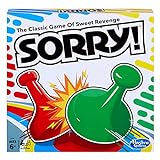
- GAME OF SWEET REVENGE: Enjoy classic Sorry! gameplay with this Sorry! board game for kids. It's an edge-of-your-seat race to home, so hurry up and get there first
- FIRST ONE HOME WINS: Who will be the first player to get all 3 of their pawns to the home space? But watch out! Players can get "sweet revenge" by sending each other's pawns back to the starting point
- SO MANY POSSIBILITIES: Slide, collide, and score to win the Sorry! game. This family game for kids and adults features so many possibilities depending on the card picked up and strategy chosen
- CLASSIC SORRY! GAMEPLAY: Remember playing the original Sorry! game as a kid? Bring back memories of playing the Sorry! game with family members and introduce it to a new generation
- FAMILY GAME NIGHT FAVORITE: A go-to game for family time or anytime indoor fun, the Sorry! game for kids is one of the best family games for game night
GDC Vault’s 2016 listing for a “360 approach” to open-world mission design describes attention to gameplay focus, difficulty progression, and emotional themes. Treat those topics as prompts for your own tests: does the challenge fit the intended feeling, and can the objective accommodate plausible approaches? The listing is a case study, not a universal mission-design recipe. See the session listing.
Prototype the interactions that make your game distinct
When a design depends on systems affecting one another, prototype those interactions before scaling up the world or content. Test whether combinations create meaningful choices, rather than complexity for its own sake. A traversal system, for instance, may be interesting alone but only become distinctive when it changes how players assess risk or interact with the environment.
Rank #4

- VIBRANT COLOR GAME: Challenge friends and family to connect words with colors in the engaging Hues and Cues, featuring 480 colorful hues for limitless fun!
- FUN FOR ALL AGES: Perfect for family game nights, parties, or casual play, this game brings players of all ages together with simple rules and exciting gameplay.
- UNIQUE EXPERIENCE: No two rounds are the same! Hues and Cues provides a new and unique experience with each playthrough, keeping the fun fresh and engaging.
- CREATIVE AND INNOVATIVE: Use just one or two word clues to guide others to the right hue, sparking creative thinking and fostering fun team interaction.
- QUICK TO LEARN: Hues and Cues offers fast-paced action with easy rules, making it enjoyable for both casual players, and gaming enthusiasts.
GDC Vault’s 2015 listing for Insomniac Games’ Sunset Overdrive session describes adapting workflows and prototyping for large, overlapping gameplay systems in a shared gameplay space. It supports the value of examining workflow when systems interact; it does not prescribe a particular tool or pipeline. Read the session listing.
Compare approaches against your project’s needs
When you have more than one plausible design direction, compare them using questions tied to the game you want to make—not a supposed originality score. These are practical synthesis questions, not a standardized published rubric.
Best Value

- Play a card from your hand, and place a chip on a corresponding space on the game board - when you have five in a row, it’s a SEQUENCE
- Each player or team tries to score the required number of five-card SEQUENCES before their opponents
- Easy enough for children, challenging for adults!
- Exciting gameplay develops STEM skills like strategy
- Includes 1 Folding Game Board (19.75" x 15.25"), 2 Decks of SEQUENCE Playing Cards (2.25" x 3.5"), 135 Playing Chips (50 Green, 50 Blue, 35 Red), and Complete Instructions
- Player experience: What meaningful choice, discovery, tension, or expression does this approach create?
- System interaction: Do systems combine to create useful possibilities, or merely add complexity?
- World support: Do terrain, routes, landmarks, and activities reinforce the intended play?
- Progression and emotional shape: Can the experience work across different approaches and player order? Does the challenge support the theme?
- Team and production fit: Can your team prototype, author, and maintain this approach at the scale you intend?
Review similarity and scope separately
Compare your prototype with its influences. Ask whether the resemblance is a broad genre convention or whether it reproduces particular expressive material or a distinctive arrangement of details. Revise elements that feel borrowed until their premise, world logic, activities, and expression make sense on their own terms.
Separately, ask whether each system earns its production cost by contributing to the promised player experience. The cited design sessions offer examples of approaches and constraints, but they do not establish a standard team size, budget, world scale, or measure of originality.
What U.S. copyright guidance does—and does not—say
This is a general summary of U.S. Copyright Office and statutory material, not legal advice. The U.S. Copyright Office says, “The idea for a game is not protected by copyright. The name or title given to the game and the methods for playing it are not protected by copyright.” It also says sufficiently expressive parts of a game may be protected, including game-rule text and artwork. See the Copyright Office’s games guidance.
The Tool Desk
Outbyte Driver Updater FREEFix the driver behind crashes, sound loss and screen glitchesFind Drivers →Outbyte PC Repair FREERepair Windows errors before they cause bigger problemsFix Now →U.S. copyright law likewise excludes ideas, procedures, processes, systems, methods of operation, concepts, principles, and discoveries from copyright protection. Read 17 U.S.C. § 102(b). That boundary is not a blanket assurance that anything described as a “mechanic” is safe to reproduce: a specific work can contain protectable expression, and applying the law depends on the material, jurisdiction, and context.
The Copyright Office explains that copyright applies to original works of authorship fixed in tangible form and that independent creation means creating without copying. Copyright exists automatically in an original work once fixed. Read the Copyright Office’s general explanation. If a particular legal risk matters, consult a qualified lawyer familiar with the relevant jurisdiction and facts.
Quick Recap
Product prices and availability are accurate as of the date/time indicated and are subject to change. Any price and availability information displayed on Amazon at the time of purchase will apply.

