
Choose the automation route based on where the workflow should run: use a Chrome extension to act on a page a person is viewing, Playwright or Selenium for repeatable end-to-end workflows, and the Chrome DevTools Protocol (CDP) for specialized browser-level control. Start with the least powerful option that can complete the task, then verify the visible result rather than assuming a click or form submission worked.
Choose the right way to automate Chrome
These approaches differ mainly in execution context and control. An extension runs as part of a user’s installed Chrome; Playwright and Selenium control a browser from a separate test or automation process; CDP exposes lower-level browser instrumentation. The right choice depends on whether you need to help a user on the page they are viewing, run a repeatable workflow, or inspect and control the browser itself.
| Approach | Where it runs | Best suited to | Key trade-off |
|---|---|---|---|
| Chrome extension | Inside the user’s Chrome, with page interaction handled by extension components | A user-facing feature that acts on the current page | Requires careful permission design and extension deployment |
| Playwright | A separate test or control process connected to a browser | Repeatable end-to-end workflows and tests | Runs as an automation setup rather than as a feature inside a user’s existing browsing session |
| Selenium | A separate WebDriver-based automation process | Repeatable browser workflows and tests | Requires a WebDriver automation setup |
| Chrome DevTools Protocol (CDP) | A client communicating with the Chromium-based browser’s debugging protocol | Specialized instrumentation, debugging, network inspection, or performance work | Lower-level control is more complex than user-facing locators and actions |
Chrome’s extension testing guidance recognizes Playwright, Puppeteer, and Selenium for end-to-end testing. Playwright documents connections to Chromium-based browsers through CDP, while Selenium documents WebDriver and WebDriver BiDi. Selenium describes WebDriver BiDi as “the W3C standard bidirectional protocol for browser automation.” These options are related, but they are not interchangeable: CDP is a browser protocol, while Playwright and Selenium provide higher-level automation interfaces.
Automate a page from a Chrome extension
Use an extension when automation should be available in the user’s own Chrome—for example, a page enhancement that operates on the tab the user has chosen. Chrome content scripts run in the context of web pages and can read or modify the page DOM. They do not directly receive every privileged extension API; extension components communicate through message passing when privileged work is needed.
Do these 3 things before closing this tab:
1Fix the driver behind crashes, sound loss and screen glitches2Repair Windows errors before they cause bigger problems3Scan for outdated or missing drivers - takes under a minute#1 Best Overall

- Compact Mouse: With a comfortable and contoured shape, this Logitech ambidextrous wireless mouse feels great in either right or left hand and is far superior to a touchpad
- Durable and Reliable: This USB wireless mouse features a line-by-line scroll wheel, up to 1 year of battery life (2) thanks to a smart sleep mode function, and comes with the included AA battery
- Universal Compatibility: Your Logitech mouse works with your Windows PC, Mac, or laptop, so no matter what type of computer you own today or buy tomorrow your mouse will be compatible
- Plug and Play Simplicity: Just plug in the tiny nano USB receiver and start working in seconds with a strong, reliable connection to your wireless computer mouse up to 33 feet / 10 m (5)
- Better than touchpad: Get more done by adding M185 to your laptop; according to a recent study, laptop users who chose this mouse over a touchpad were 50% more productive (3) and worked 30% faster (4)
Plan the extension’s boundary
- Define the one user-visible workflow and what a successful result looks like.
- Keep page reading and interaction in the content script. Put privileged operations in the appropriate extension component, such as the service worker, and connect the components with messages.
- Request only the site access the feature needs. Prefer
activeTabor optional permissions where they are sufficient instead of requesting broad access in advance. - Make the user initiate or understand the action, and test that the expected page change is visible.
This division matters for both design and privacy. A content script can work with page content, but it is not a substitute for extension APIs. Avoid giving the page-facing code more access than its task requires.
Permission and data rules
Chrome Web Store policy says to request “the narrowest set of permissions necessary” for the product’s features or services. Access to sites can allow an extension to read or modify pages, and browsing activity and page content are user data. Limit collection and transmission to the disclosed purpose, explain data practices even when processing is local, and transmit sensitive data securely. Do not ship remote executable logic in an extension package unless it is covered by a documented permitted API. If the extension handles user data, publish an accurate privacy policy.
Rank #2
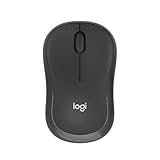
- Pair and Play: With fast, easy Bluetooth wireless technology, you’re connected in seconds to this quiet cordless mouse —no dongle or port required
- Less Noise, More Focus: Silent mouse with 90% reduced click sound and the same click feel, eliminating noise and distractions for you and others around you (1)
- Long-Lasting Battery Life: Up to 18-month battery life with an energy-efficient auto sleep feature, so you can go longer between battery changes (2)
- Comfortable, Travel-Friendly Design: Small enough to toss in a bag; this slim and ambidextrous portable compact mouse guides either your right or left hand into a natural position
- Long-Range: Reliable, long-range Bluetooth wireless mouse works up to 10m/33 feet away from your computer (3)
Use Playwright or Selenium for repeatable workflows
Choose an external framework when a workflow needs to be run repeatedly as a test or controlled process: navigate to a page, locate controls, click or type, and assert that the expected outcome appears. Prefer stable, user-facing locators and explicit waits over brittle timing assumptions. A fixed delay can happen to work on one run while failing when a page or network responds more slowly; an explicit wait should correspond to the condition the workflow actually needs.
Build the workflow around outcomes
- Describe the same sequence a user follows, including the starting page and the final visible state.
- Choose locators that reflect stable, user-facing page elements rather than incidental implementation details.
- Wait for a meaningful condition before the next action, such as the relevant element becoming available.
- After each consequential action, assert a visible outcome. A successful click call alone does not establish that the page accepted the action.
- Run the flow under the conditions it is meant to handle, including expected navigation or loading, and investigate failures rather than extending timeouts blindly.
Chrome’s extension-testing guidance recommends basing integration tests on what is visible to the user rather than depending on internal extension state. That principle is useful for browser workflows generally: a test should verify the result a person cares about, not merely that an automation command returned without error.
Recommended Free Tools
Rank #3

- 【Dual Mode Wireless Bluetooth Mouse】: Switch easily between two devices—connect one via Bluetooth (BT5.2/3.0) and the other using a 2.4G USB receiver. No drivers needed; just plug and play. Enjoy a reliable connection up to 33 feet. Note: You can't use both modes simultaneously; the USB receiver is stored in the mouse.
- 【Rechargeable Wireless Mouse】: Equipped with a 500mAh lithium-ion battery, it charges in 2 hours for over 7 days of use and 30 days on standby. The mouse sleeps after 5 minutes of inactivity to save power and can be woken with any click.
- 【Colorful LED Breathing Light】: Features 7 colorful LED lights that change randomly, adding a fun atmosphere to your workspace.
- 【Portable Mouse】Compact size (4.4 x 2.3 x 1.1 inches) makes it easy to fit in your laptop bag. Lightweight and ergonomic, it's perfect for travel. Contact us anytime for support.
- 【Wide Compatibility】: Works with laptops, PCs, tablets, and smartphones across various operating systems, including Android, Windows, and Mac. Ideal for home, office, and travel.
Use Playwright or Selenium’s higher-level browser controls for ordinary navigation and interaction. Use their documented protocol connections only when the workflow genuinely needs a lower-level capability. If the task is only to instrument the browser or inspect protocol-level behavior, CDP may be a better fit than building the workflow around ordinary page locators.
Use CDP for browser-level instrumentation
The Chrome DevTools Protocol is a low-level interface for instrumenting, inspecting, debugging, and profiling Chromium, Chrome, and other Blink-based browsers. Its domains include DOM, Debugger, and Network. This makes CDP appropriate when you need browser-level controls such as network inspection, debugging, or performance instrumentation—not simply because you need to click a button.
Rank #4

- Your hand can relax in comfort hour after hour with this ergonomically designed mouse. Its contoured shape with soft rubber grips, gently curved sides and broad palm area give you the support you need for effortless control all day long.
- You’ve got the control to do more, faster. Flipping through photo albums and Web pages is a breeze, especially for right-handers—with three standard buttons plus Back/Forward buttons that you can also program to switch applications, go full screen and more. And side-to-side scrolling plus zoom gives you the power to scroll horizontally and vertically through your music library, maps and Facebook feeds, and zoom in and out of photos and budget spreadsheets with a click.* * Requires Logitech SetPoint software (Windows) or Logitech Control Center software (Mac OS X)
- Two years of battery life practically eliminates the need to replace batteries. ** The On/Off switch helps conserve power, smart sleep mode extends battery life and an indicator light eliminates surprises. ** Battery life may vary based on user and computing conditions.
- The tiny Logitech Unifying receiver stays in your laptop. There’s no need to unplug it when you move around, so there’s less worry of it being lost. And you can easily add compatible wireless mice and keyboards to the same wireless receiver.
Chrome extensions can access a higher-level form of CDP through the chrome.debugger API. That does not remove the need to limit permissions or protect page data. If an extension only needs to interact with visible page elements, a content script is usually the more direct boundary; reach for debugger access only when its additional control is needed.
A safe sequence for designing browser automation
- Specify the task. Record the starting state, user-visible actions, expected completion state, and what counts as failure.
- Select the least powerful route. Use an extension for a feature inside a user’s Chrome, Playwright or Selenium for repeatable end-to-end flows, and CDP for specialized browser instrumentation.
- Minimize access. For an extension, request narrow host permissions and use
activeTabor optional permissions where possible. For any route, avoid collecting or transmitting page data the task does not require. - Wait on conditions, not guesses. Use explicit waits tied to the page state instead of assuming a fixed delay will always be enough.
- Assert what the user can see. Check the resulting page or other visible outcome after important actions.
- Review data handling. Disclose collection and transmission clearly, secure sensitive data, and keep the extension’s functionality understandable to users and reviewers.
Troubleshooting common automation failures
| Symptom | Likely cause | What to check |
|---|---|---|
| The extension cannot interact with the page | The content script is not running in the relevant page context, or the extension lacks the needed site access | Confirm the intended page is covered by the granted permission and that page interaction is handled in the content script. |
| The page interaction works, but a privileged operation does not | Page-context code is attempting to use an extension capability it does not directly receive | Route the privileged work through an extension component and use message passing between contexts. |
| A click or form action appears to do nothing | The automation may have acted before the page was ready, targeted the wrong element, or failed to verify the resulting state | Use a stable user-facing locator, wait for the relevant condition, and assert the visible result. |
| A workflow passes sometimes and fails other times | It may depend on a fixed timing assumption or a transient page detail | Replace arbitrary sleeps with explicit condition-based waits and inspect which user-visible state is missing on failed runs. |
| A test is tightly coupled to extension internals | The test checks implementation state rather than the behavior a user experiences | Base the integration test on visible outcomes, as Chrome recommends. |
| An extension asks for broad access users do not expect | The permission request exceeds what the feature needs | Reduce site access to the narrowest necessary set; consider activeTab or optional permissions. |
Performance, reliability, and cost considerations
The sources for these automation approaches establish capabilities and policy requirements, not comparative speed, reliability rates, or operating costs. Those outcomes depend on the workflow and deployment, so do not assume one framework is universally faster or cheaper. In practice, reduce unnecessary actions and waits, make readiness checks match the actual page condition, and diagnose the specific failure before increasing timeouts or permissions. CDP’s extra control is useful when instrumentation is required, but it also means working at a lower level than ordinary page interaction.
What’s actually slowing this PC down?
Pick the symptom - the matching free tool is one click away.
Best Value

- 【Plug and Play for Home/Office/School】The wireless computer mouse features 2.4GHz connectivity, delivering a stable, interference-free connection up to 32ft. Designed for 𝐦𝐞𝐝𝐢𝐮𝐦 𝐭𝐨 𝐥𝐚𝐫𝐠𝐞 𝐬𝐢𝐳𝐞𝐝 𝐡𝐚𝐧𝐝𝐬, it ensures comfortable use all day. Simply plug in the USB-A receiver for instant pairing—no drivers needed. 📌📌 If the mouse isn’t suitable, place the USB receiver in the battery compartment and return both.
- 【3 Levels Adjustable DPI】This travel USB mouse offers 3 adjustable DPI settings (800, 1200, 1600), allowing you to customize sensitivity for precise design work. Effortlessly switch to match your task and elevate your productivity. 📌 Please remove the film at the bottom of the mouse before use.
- 【Effortless Browsing】Equipped with forward and backward buttons, this computer mice streamlines your workflow, making it easy to navigate through web pages and files with a simple click. 📌Side button does not work on Mac.
- 【Visible Indicator Light】 The pc mouse features a visual indicator for DPI levels and low battery alerts. The red light flashes once for 800 DPI, twice for 1200 DPI, and three times for 1600 DPI. When the battery level is below 10%, the light flashes red until the mouse is completely out of power.
- 【Click to Wake】With smart sleep mode, it saves power by standby after 10 inactive minutes, just 2-3 clicks to wake. This efficient design delivers 3x longer battery life than motion-wake mice. Engineered for durability, its buttons and scroll wheel are tested for 10 million clicks, ensuring long-term reliability and consistent performance.
For extensions, permission scope and data handling are part of the operating cost: broad access increases user concern and the consequences of mishandling page data. For external automation, plan for the separate browser-control process and the conditions under which it will run. Validate each workflow in its intended context instead of treating a successful run in one context as a guarantee in another.
Or skip the browser setup
If the task is to capture a page rather than click controls or fill forms, ScreenshotNeo is a website screenshot API and MCP server—not a replacement for interactive browser automation. One GET request can return a PNG, JPEG, WebP, or PDF. Its clean-shot options accept cookie or consent banners like a visitor and remove more than 60 known consent platforms, newsletter popups, and chat widgets; each cleanup step can be turned off. Bot checks and CAPTCHAs, blank pages, timeouts, failed loads, and cache hits cost nothing, with the response identifying the page verdict and billing status in headers. AI agents can use its MCP server tools: take_screenshot, get_page_info, and capture_pdf.
cURL:
curl -G "https://api.screenshotneo.com/v1/shot" -d access_key=YOUR_API_KEY --data-urlencode url=https://stripe.com -o shot.webpPython:
import requests
r = requests.get("https://api.screenshotneo.com/v1/shot", params={"access_key": "YOUR_API_KEY", "url": "https://stripe.com"}, timeout=90)
open("shot.webp", "wb").write(r.content)
Node.js:
const q = new URLSearchParams({ access_key: 'YOUR_API_KEY', url: 'https://stripe.com' });
const res = await fetch(`https://api.screenshotneo.com/v1/shot?${q}`);
See the ScreenshotNeo API documentation for request options. The service includes full-page screenshots with lazy images loaded, CSS-selector element capture, device presets and custom viewports, dark mode, PDF settings, HTML/CSS-to-image, custom CSS and JavaScript, selector waits, delays and network-idle waits, request and resource blocking, custom headers, cookies, user agent and Authorization, geolocation and timezone, caching, signed image links, async jobs, bulk capture, usage API, and OpenAPI spec. It supports parameter names used by other screenshot APIs to make switching easier. All features are on every plan: Free includes 1,000 shots per month without a card; paid plans start at $5 for 3,000 shots. Yearly billing gives two months free. Sign up for ScreenshotNeo’s free plan: 1,000 screenshots a month with no card.
FAQ
Can I automate Chrome without installing an extension?
Yes. Playwright or Selenium can control a browser from a separate automation process, and CDP offers low-level browser control. Pick the route that matches whether the workflow belongs inside a user’s browser or in a separate test or control process.
Should I use CDP instead of Playwright or Selenium?
Use CDP when you need protocol-level instrumentation, debugging, network inspection, or profiling. For ordinary repeatable page workflows, a higher-level framework is generally the more direct approach.
Can a screenshot API fill in forms or click buttons?
No. Screenshot capture is for returning an image or PDF of a page; it is not the same as automating interactive actions such as clicking or filling a form.
Quick Recap
Product prices and availability are accurate as of the date/time indicated and are subject to change. Any price and availability information displayed on Amazon at the time of purchase will apply.

