
The Tool Desk
Outbyte Driver Updater FREEFix the driver behind crashes, sound loss and screen glitchesFind Drivers →Outbyte PC Repair FREERepair Windows errors before they cause bigger problemsFix Now →If you regularly run commands that modify protected files, services, disks, or system settings, you can make a dedicated administrator launcher instead of selecting Run as administrator every time. The best method depends on what you use:
- Windows Terminal: set
"elevate": trueon a specific profile. - Command Prompt or Windows PowerShell: enable Run as administrator in the shortcut’s advanced properties.
- Windows 11 24H2 or later: use
sudowhen only one command needs elevation.
These methods start a new elevated process. They do not turn an already-open ordinary console into an administrator console.
First, check whether a console is already elevated
An elevated Command Prompt or PowerShell window normally shows Administrator in its title bar. In Windows Terminal, the entire window is either elevated or unelevated: administrator and non-administrator tabs cannot be mixed in one Terminal window.
Windows Terminal is the host application, not a shell. cmd.exe is Command Prompt, while PowerShell is a separate command-line application. On current Windows 11 installations, both commonly open inside Windows Terminal because Terminal became the default console host in Windows 11 version 22H2.
Do these 3 things before closing this tab:
1Fix the driver behind crashes, sound loss and screen glitches2Clear out junk files and repair common Windows errors3Scan for outdated or missing drivers - takes under a minute#1 Best Overall

- All-day Comfort: The design of this standard keyboard creates a comfortable typing experience thanks to the deep-profile keys and full-size standard layout with F-keys and number pad
- Easy to Set-up and Use: Set-up couldn't be easier, you simply plug in this corded keyboard via USB on your desktop or laptop and start using right away without any software installation
- Compatibility: This full-size keyboard is compatible with Windows 7, 8, 10 or later, plus it's a reliable and durable partner for your desk at home, or at work
- Spill-proof: This durable keyboard features a spill-resistant design (1), anti-fade keys and sturdy tilt legs with adjustable height, meaning this keyboard is built to last
- Plastic parts in K120 include 51% certified post-consumer recycled plastic*
Always elevate a Windows Terminal profile
Windows Terminal has an elevate profile property. Set it to true for an administrator-only Command Prompt or PowerShell profile.
1. Open the Terminal settings file
- Open Windows Terminal.
- Open the tab menu using the arrow beside the + button.
- Select Settings.
- Choose Open JSON file if you are editing the raw configuration.
Add administrator profiles to the profiles.list array. For example:
{
    "profiles": {
        "list": [
            {
                "name": "Command Prompt (Admin)",
                "commandline": "%SystemRoot%\System32\cmd.exe",
                "elevate": true
            },
            {
                "name": "PowerShell (Admin)",
                "commandline": "%SystemRoot%\System32\WindowsPowerShell\v1.0\powershell.exe",
                "elevate": true
            }
        ]
    }
}
Keep your existing profiles. Insert these objects into the existing list rather than replacing the whole file. In valid JSON, every object except the last one needs a comma.
2. Launch the administrator profile
Save the file, then open the Terminal tab menu. Select Command Prompt (Admin) or PowerShell (Admin). Windows will request UAC approval.
What’s actually slowing this PC down?
Pick the symptom - the matching free tool is one click away.
If you select an elevated profile from an ordinary Terminal window, Windows Terminal opens a new elevated window. If the current Terminal window is already elevated, the profile opens as a new tab in that elevated window. This separate-window behavior is expected, not a configuration failure.
Make every Terminal profile elevated
To apply the setting by default, put "elevate": true under profiles.defaults:
{
    "profiles": {
        "defaults": {
            "elevate": true
        },
        "list": [
            {
                "name": "PowerShell",
                "source": "Microsoft.PowerShell"
            },
            {
                "name": "Command Prompt",
                "commandline": "%SystemRoot%\System32\cmd.exe"
            }
        ]
    }
}
This makes all profiles elevate unless an individual profile overrides the default with "elevate": false. A more selective setup is usually safer: leave your everyday profile ordinary and create clearly named administrator profiles for system work.
Rank #2

- KEYBOARD: The keyboard works for Windows with hot keys that enable easy access to Media, My Computer, Mute, Volume up/down, and Calculator
- EASY SETUP: Experience simple installation with the USB wired connection
- VERSATILE COMPATIBILITY: This keyboard is designed to work with multiple Windows versions, including Vista, 7, 8, 10 offering broad compatibility across devices.
- SLEEK DESIGN: The elegant black color of the wired keyboard complements your tech and decor, adding a stylish and cohesive look to any setup without sacrificing function.
- FULL-SIZED CONVENIENCE: The standard QWERTY layout of this keyboard set offers a familiar typing experience, ideal for both professional tasks and personal use.
The property accepts only true or false, and its default is false.
Always run Command Prompt as administrator with a shortcut
A shortcut can be configured to request elevation every time it is launched. This works for a dedicated Command Prompt shortcut, including one pinned to the desktop or taskbar.
- Create or locate a shortcut to
cmd.exe. - Right-click the shortcut and select Properties.
- Open the Shortcut tab.
- Click Advanced….
- Enable Run as administrator.
- Click OK, then Apply, then OK.
Rename the shortcut to something obvious, such as Command Prompt (Admin). The name is only a label; it does not cause elevation. The important setting is Advanced… → Run as administrator.
When you launch that shortcut, Windows displays a UAC prompt. Accept it to start an elevated cmd.exe process.
Always run Windows PowerShell as administrator with a shortcut
The same shortcut method works for the built-in Windows PowerShell 5.1 console.
- Create a shortcut with
powershell.exeas its target. - Right-click the shortcut and select Properties.
- Select Shortcut → Advanced….
- Tick Run as administrator.
- Select OK → Apply → OK.
Name it PowerShell (Admin) so it is not confused with an ordinary PowerShell shortcut.
PowerShell does not automatically ask UAC to elevate an individual command. If you open ordinary PowerShell and run a command that requires administrator rights, the command may fail with an access-denied error rather than prompting you. Start PowerShell through the elevated shortcut, or use Windows sudo where supported.
Rank #3

- Reliable Plug and Play: The USB receiver provides a reliable wireless connection up to 33 ft (1), so you can forget about drop-outs and delays and you can take it wherever you use your computer
- Type in Comfort: The design of this keyboard creates a comfortable typing experience thanks to the low-profile, quiet keys and standard layout with full-size F-keys, number pad, and arrow keys
- Durable and Resilient: This full-size wireless keyboard features a spill-resistant design (2), durable keys and sturdy tilt legs with adjustable height
- Long Battery Life: MK270 combo features a 36-month keyboard and 12-month mouse battery life (3), along with on/off switches allowing you to go months without the hassle of changing batteries
- Easy to Use: This wireless keyboard and mouse combo features 8 multimedia hotkeys for instant access to the Internet, email, play/pause, and volume so you can easily check out your favorite sites
To check which PowerShell you are using, run:
$PSVersionTableWindows PowerShell 5.1 is included with supported Windows versions. PowerShell 7 is a separate, newer product and may have a different shortcut or executable. Configure the shortcut for the particular PowerShell installation you intend to use.
Use the Start menu for a one-time elevated launch
If you do not need a permanent administrator launcher:
Recommended Free Tools
- Open Start.
- Search for Command Prompt, Windows PowerShell, or Windows Terminal.
- Choose Run as administrator from the result’s available actions or context menu.
- Approve the UAC prompt.
For a keyboard-driven method, press Windows key + X, then select Windows Terminal (Admin). You can also right-click the Windows Terminal taskbar icon, right-click the Windows Terminal entry in the jump list, and select Run as administrator.
If the signed-in account is not an administrator, Windows displays a credential prompt instead of a simple Yes/No confirmation. Enter the credentials of an account that is a local administrator.
Elevate only one command with Windows sudo
Windows 11 version 24H2 and later includes Sudo for Windows. It is useful when the shell should remain ordinary but one command needs administrator rights.
Enable sudo
- Open Settings.
- Go to System → Advanced.
- Set Enable sudo to On.
Then prefix the command with sudo:
sudo netstat -ab
sudo notepad C:WindowsSystem32driversetchosts
sudo diskpart
sudo elevates the command after it. It does not turn the entire current PowerShell or Command Prompt session into an administrator console, and it does not currently run programs as another user.
Choose sudo’s behavior
The default and recommended mode is forceNewWindow. You can configure it from Settings → System → Advanced, or from an elevated console:
Rank #4
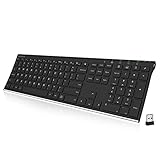
- Easy Setup: Simply insert the nano USB receiver into your computer and use the keyboard instantly. Arteck 2.4G Wireless Keyboard Stainless Steel Ultra Slim Full Size Keyboard with Numeric Keypad for Computer/Desktop/PC/Laptop/Surface/Smart TV and Windows 10/8/ 7 Built in Rechargeable Battery
- Ergonomic design: Stainless steel material gives heavy duty feeling, low-profile keys offer quiet and comfortable typing.
- 6-Month Battery Life: Rechargeable lithium battery with an industry-high capacity lasts for 6 months with single charge (based on 2 hours non-stop use per day).
- Ultra Thin and Light: Compact size (16.9 X 4.9 X 0.6in) and light weight (14.9oz) but provides full size keys, arrow keys, number pad, shortcuts for comfortable typing.
- Package contents: Arteck Stainless 2.4G Wireless Keyboard, nano USB receiver, USB charging cable, welcome guide, our 24-month warranty and friendly customer service.
sudo config --enable forceNewWindow
sudo config --enable disableInput
sudo config --enable normal| Mode | Behavior |
|---|---|
forceNewWindow |
Runs the elevated command in a new window. This is the default. |
disableInput |
Runs it in the current console while preventing input to the elevated process. |
normal |
Runs it inline with normal input and output behavior. |
Microsoft warns that normal mode has an input-security risk: an unelevated process may potentially send input to or read output from the elevated process in the same console. Use the default new-window mode unless you specifically understand the trade-off.
Which method should you use?
| Requirement | Best choice | Reason |
|---|---|---|
| Occasional administrator command | Start menu or sudo |
No permanently elevated shell is left open. |
| Dedicated administrator Command Prompt | Shortcut to cmd.exe |
Simple, visible, and independent of Terminal settings. |
| Dedicated administrator PowerShell | Shortcut to powershell.exe |
Starts the required shell elevated every time. |
| Command Prompt and PowerShell inside Terminal | Terminal profile with elevate: true |
Provides clearly named administrator profiles. |
| All Terminal profiles elevated | profiles.defaults.elevate: true |
Applies elevation globally, but increases the chance of running commands unnecessarily as administrator. |
Important limitations and failure cases
The shortcut still opens normally
Renaming a shortcut to “Admin” is not enough. Reopen its properties and verify Shortcut → Advanced… → Run as administrator is enabled. Also make sure you are launching that shortcut, not a separate Start menu or taskbar shortcut.
An elevated Terminal profile opens another window
That is normal when the profile is launched from an unelevated Terminal window. Windows Terminal cannot place elevated and unelevated tabs together in the same window.
Outdated Drivers Are Slowing You Down
One free scan finds every outdated or missing driver and matches the right update for your exact hardware.Free scan · exact hardware matchPC Slower Than It Used to Be?
A free scan shows the junk files, broken settings and background clutter dragging Windows down - then fixes them in one click.Free scan · Windows 10 & 11PowerShell launches other programs with administrator rights
Programs started from an elevated PowerShell process generally inherit elevated execution. That can include editors, scripts, installers, and other child applications. For this reason, keeping PowerShell permanently elevated is less safe than elevating only the commands that need it.
You changed the console host
To switch from Windows Terminal back to the legacy Windows Console Host, use Start → Settings → System → Advanced → Terminal → Windows Console Host. Alternatively, open Windows Terminal settings and choose Startup → Default terminal application → Windows Console Host. This can cause compatibility issues for applications that combine graphical elements with text-mode console behavior, so changing the host is not normally required to obtain administrator rights.
Remote PowerShell work behaves differently
Local elevation and remote authorization are separate. An elevated local PowerShell window is not generally required simply to perform a remote operation. The account and permissions on the remote computer determine whether that operation is authorized.
FAQ
Does pinning PowerShell to the taskbar make it permanently run as administrator?
No. Pinning creates a launcher, but it does not automatically enable elevation. Configure the shortcut through Properties → Shortcut → Advanced… → Run as administrator, or use a Windows Terminal profile with "elevate": true.
Best Value

- A plug-and-play USB connection with Low-profile keys give you a quiet, comfortable typing experience
- Simple Wired USB Connection,You will enjoy a comfortable and quiet typing experience
- The keyboard for business and office working is the budget-friendly keyboard that is built for longer use
- Low profile keys for a more comfortable and quiet keystroke, desktop-centric design, splash resistant
Can I turn an existing Command Prompt or PowerShell window into an administrator window?
No. Elevation applies when the process starts. Open a new elevated console using the configured shortcut, Terminal profile, Start menu action, or sudo.
Is Windows Terminal the same thing as Command Prompt?
No. Windows Terminal is the graphical host. Command Prompt runs as cmd.exe inside it, and PowerShell is another shell that can run inside it.
Why does Windows ask for administrator credentials instead of showing a Yes/No prompt?
The signed-in account is not an administrator. Enter credentials for an account that is a local administrator. Organizations may also apply policies that change how UAC prompts appear.
Can I set Windows Terminal to elevate only PowerShell?
Yes. Add "elevate": true to the PowerShell profile only. Leave other profiles unchanged, or explicitly set their property to false.
Does Windows sudo work on Windows 10?
The built-in Windows Sudo feature is included with Windows 11 version 24H2 or later. On unsupported versions, use an elevated shortcut or launch the console with Run as administrator.
The Bottom Line
For a permanent administrator launcher, configure a shortcut to cmd.exe or powershell.exe with Advanced → Run as administrator. For Windows Terminal, create a clearly named profile with "elevate": true. Avoid making every shell elevated unless you genuinely need that behavior: an elevated shell also gives administrator rights to applications it launches. On Windows 11 24H2 or later, sudo is usually the safer choice when only one command needs elevation.
Quick Recap
Product prices and availability are accurate as of the date/time indicated and are subject to change. Any price and availability information displayed on Amazon at the time of purchase will apply.

