
iTechGuides is reader-supported. When you buy through links on our site, we may earn an affiliate commission. As an Amazon Associate I earn from qualifying purchases. Learn more
In the UK, supermarket prices are measured using both direct price collection and aggregated retailer sales data. The Office for National Statistics (ONS) is introducing grocery scanner data alongside prices collected in stores and online. Those methods capture different things: a shelf check records a price at a particular time, while transaction data can show the average price shoppers paid across many purchases.
What grocery price surveys measure
A price survey gathers observations that help statisticians estimate how prices change over time. The observations are not, by themselves, the published inflation rate. Statisticians select and combine prices and quantities using an index method designed to represent spending across products and outlets.
The UK example below describes ONS methods and figures available through January 2026. It is not a universal description: statistical agencies in other countries use different mixes of sampled prices and transaction data.
Outdated Drivers Are Slowing You Down
One free scan finds every outdated or missing driver and matches the right update for your exact hardware.Free scan · exact hardware matchWindows Errors? Fix Them Before They Spread
Repair common Windows errors and clear accumulated junk for a smoother, more stable PC - no reinstall needed.Free scan · no reinstallHow the UK combines store collection and scanner data
ONS uses two broad approaches during its transition. Price collectors continue to record prices in stores and online for parts of the grocery market. For other parts, retailers provide aggregated scanner records derived from sales. A record can summarize a product’s expenditure and quantity sold at a particular outlet over a period, often a week; it does not contain personal customer records.
#1 Best Overall
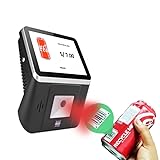
- 【8-Inch Responsive Touchscreen】Features an 8-inch capacitive touchscreen with clear display quality and smooth touch response, providing an easy and efficient user experience for retail stores,
- 【Android 11 System with RK3568 Processor】Powered by the RK3568 Quad-core Cortex-A55 processor up to 2.0GHz and running Android 11, delivering stable performance and compatibility with various retail, POS, and commercial applications.
- 【Built-in 1D/2D Barcode Scanner】Integrated high-speed barcode and QR code scanner supports automatic recognition of 1D and 2D codes, helping improve efficiency in retail price checking, inventory inquiry, warehouse management, and self-service applications.
- 【2GB RAM + 32GB Storage & Multiple Connections】Equipped with 2GB RAM and 32GB internal storage for daily commercial tasks. Supports WiFi connection and RJ45 Ethernet for stable networking and reliable data communication.
- 【Commercial Wall-Mount Kiosk Design】Compact all-in-one commercial terminal with wall-mount support for space-saving installation. Ideal for use as a price checker, self-service information terminal, product inquiry machine, or retail kiosk in supermarkets and convenience stores.
ONS’s 28 January 2026 overview said scanner data initially covered around 50% of the UK grocery market. It contrasted approximately 300 million scanner-derived price points, based on sales of over a billion units per month, with about 25,000 prices collected directly each month. Manual collection continues for the remaining market. These are ONS figures for the UK rollout, not a fixed scale used by every country or agency. See ONS’s January 2026 overview.
ONS had also described its regular scanner feeds in its 2025 methodology as representing over a billion units sold per month and about half of the grocery market. These dated descriptions indicate the scale of the UK transition, not a claim that every product, retailer, or transaction is covered. ONS’s 2025 methodology explains the approach.
How a scanner record becomes an average price
For a product, a basic transaction-based unit value is its observed expenditure divided by the quantity sold. If some shoppers buy it at full price and others use a promotion, the result reflects their average paid price over the data period. It is not necessarily a price any one shopper saw on a shelf.
Do these 3 things before closing this tab:
1Repair Windows errors before they cause bigger problems2Fix the driver behind crashes, sound loss and screen glitches3Clear out junk files and repair common Windows errorsRank #2

- MAKES LEARNING MATH FUN: This interactive toy register helps children practice addition, subtraction, and counting through hands-on grocery store pretend play and cashier scenarios
- WORKING FEATURES: Solar-powered kid calculator, drawer with ka-ching sound, card scanner, receipt pad, and play store checkout create an engaging pretend play experience for kids
- COMPLETE SET INCLUDED: 73 piece set and a kids credit card for pretend shopping
- DEVELOPS ESSENTIAL SKILLS: Beyond math toys fun, children build fine motor abilities, social interaction skills, vocabulary, and creative thinking through imaginative pretend play for toddlers 3-5
- DURABLE CHILD-FRIENDLY DESIGN: This simple register is built from sturdy, high-quality materials to withstand enthusiastic play with large buttons sized for little fingers and small hands
Pack sizes also matter. ONS adjusts for product size so that comparisons can be made on a common basis, such as price per gram, rather than assuming that every pack or can contains the same amount. Its method considers weight type, distinguishes supermarket from convenience-store observations, and includes processes for relaunches that may change recipe, packaging, quality, or quantity.
Why the collection period matters
ONS uses the first three full weeks of each month for grocery scanner data. Weekly records that cross a month boundary cannot be assigned cleanly, so using full weeks gives retailers a consistent monthly definition and allows time to scrutinize the data. This schedule is specific to ONS’s grocery method; it should not be assumed for other agencies.
How prices become an inflation measure
Statisticians aggregate price changes using an index, rather than taking a simple average of all observed shelf or transaction prices. ONS’s scanner-data method uses a GEKS-Törnqvist multilateral index over a 25-month window, with a mean splice for the published extension. In plain language, the multilateral approach compares products across overlapping periods and can accommodate products entering or leaving the market, reducing the need to make a manual replacement decision for every disappearing or new item. ONS explains the approach in its article on multilateral index methods and its documentation on alternative price aggregates.
Rank #3

- Pretend cash register and grocery store play set with over 150 songs, sounds and phrases for interactive shopping role play
- 20 play pieces, including bread, cheese, eggs, strawberries, box of crackers, box of cookies, sandwich, carton of milk/juice, 11 pieces of money, 1 credit card
- 3 Smart Stages learning levels introduce numbers & counting, the alphabet, colors, shapes, cause & effect, greetings, sharing and taking turns
- Press 15 buttons or “scan” for songs and sounds; cash out customers with slot-through money drawer
- Helps toddlers practice dexterity and fosters communication skills during pretend play for preschool kids ages 2 years and older
This distinction matters: a change in the average price level is not the same as the inflation rate, which measures how prices change between periods. The index weights and comparison method help determine how individual observations contribute to that rate.
Do loyalty discounts and multi-buy offers count?
They can be reflected in scanner-based average prices when the retailer data include those transactions. ONS says its traditional local collection can capture discounts when the collector knows the price paid, but it has not generally included loyalty-card or multi-buy offers when the proportion of shoppers paying each price is unknown. Aggregated sales data can show the average transaction price across purchases, including those offers.
Including more discounted transactions does not automatically lower measured inflation. The effect depends on how those transaction prices change relative to other prices, and scanner results also differ from local collection in timing, store coverage, and the breadth of product observations. These factors can affect results together, so a difference cannot necessarily be attributed to discount treatment alone.
Rank #4

- Wooden Cash Register with Shopping Cart: The wooden cash register features realistic buttons, a functional calculator, and a smooth-rolling shopping cart, enhancing imaginative play and teaching basic math skills. With a shopping cart, this pretend play for toddler make the shopping experience more real. What’s more, kids cash register comes with a real calculator, plus a light-up scanner with fun sound effects-perfect for pretend grocery store games.
- Educational Toys For Kids: The cash register toy for kids 3-5 comes with a real calculator, encouraging children to learn basic math skills. Counting money, and scanning food toys through scanner and calculating, just like grocery store pretend play, allows your darling to learn subtraction multiplication skills,which is a nice learning toy for kids, it is good for preschool education.
- Ideal Gift for Kids: Made from wood with smooth edges, this cash register is both kid-safe and durable. This is the perfect cash register toy for toddlers ages 3, 4, 5, 6, 7, 8 and up. It is a nice toys for 4 5 6 7 8 9 year old girls as a birthday/Christmas/party/Halloween gift, it’s a fantastic gift that combines learning and fun.
- Easy to Install & Rich Accessories: Easy to assemble shopping cart, kids can play without any hesitation. Comes with 2 menus (including 4 categories: drinks, fast food, vegetables, dessert) 1 shopping cart, 2 credit cards, 1 hamburger, 1 pair of chicken wings, 1 box of fries, 1 bottle of Coke, 5 kinds of vegetables and fruits, 1 fish, 3 bottles of drinks, 2 ice creams, 2 donuts, 40 cash and 18 coins. The scanner beeps and lights up like a real checkout, while buttons produce fun sound effects—making it the ultimate pretend play set for kids ages 4-8!
- Go Shopping Now: This grocery pretend play store game set includes a cash register with a scanner and sound effects. Children can be able to simulate shopping through 2 payment modes, the cash register comes with a scale and coins of different denominations, a credit card, some play food, drinks, and a pretend shopping cart. Kids can enjoy a happy pretend supermarket trip.
How other statistical agencies collect grocery prices
The UK approach is one design among several. In the United States, the Bureau of Labor Statistics (BLS) describes a sampled-item approach: it selects geographic areas, outlets based on where households shop, and representative items within categories. For example, a particular apple variety and grade may represent apples at a supermarket. Price changes are weighted by items’ importance in consumer spending; food-at-home prices are collected monthly, and specialists review changes that may reflect size or quality. This is a comparison with ONS, not a description of UK practice. See the BLS Consumer Price Index FAQ.
Australia’s Bureau of Statistics says supermarket scanner data are among the sources used for grocery prices. Its methodology describes monthly collection scheduling and weekly transaction data, but this does not mean scanner feeds capture every Australian grocery price. See the ABS Consumer Price Index, Australia methodology, May 2026.
What’s actually slowing this PC down?
Pick the symptom - the matching free tool is one click away.
| Feature | Direct price collection | Retailer scanner data |
|---|---|---|
| What is observed | A recorded price for a sampled product at a collection point | Aggregated expenditure and quantity sold by product, outlet, and period |
| Price meaning | A price observed at a particular time; known discounts may be recorded | An average paid price across recorded transactions, potentially including loyalty and multi-buy offers |
| Coverage and scale | Sampled outlets and items; ONS reported about 25,000 directly collected prices per month in its January 2026 overview | Retailer feeds can cover many sales; ONS reported about 300 million scanner-derived price points and over a billion units sold per month in that same overview |
| Pack and product changes | Changes in size or quality require review and comparable-item treatment; BLS describes such review for its US system | ONS adjusts for size and has processes for product relaunches, including changes in recipe, packaging, quality, or quantity |
| Collection timing | Depends on the agency’s sampling schedule; BLS says US food-at-home prices are collected monthly | ONS uses the first three full weeks of each month for grocery data |
| Index treatment | Varies by agency; BLS describes weighting by spending importance | ONS uses GEKS-Törnqvist over a 25-month window, with a mean splice for the published extension |
The comparison reflects the methods described by ONS, BLS, and ABS in the linked documentation. The numbers in the ONS coverage row are UK figures from January 2026, not directly comparable counts of equivalent observations across countries.
Best Value

- Interactive Register Play: This 26-piece toy cash register with scanner brings checkout play to life with a light-up beeping scanner, beeping buttons, a pretend microphone, movable conveyor belt, and a lockable cash drawer for hands-on shopping fun.
- Complete Shopping Set: Includes 1 cash register, 1 toy key, 3 coins, 15 paper bills, 1 pretend credit card, 1 shopping basket, 1 green pepper, 1 lemon, 1 tomato, and 1 onion for pretend grocery store and checkout role play.
- Working Calculator Feature: Kids can ring up items and total purchases on a cash register that doubles as a real working calculator, adding counting and money recognition to pretend cashier and customer play at home or in the playroom.
- Ready Right Away: The cash register comes fully assembled and includes 2 x AA (1.5V) batteries, so kids can start using the lights and sounds as soon as playtime begins. Warning: small parts; not suitable for children under 3 years.
- Giftable Pretend Play Toy: A fun birthday or holiday gift for kids ages 3 years and up who enjoy shopping games, cashier role play, play money, pretend groceries, and hands-on store adventures with interactive lights, sounds, and accessories.
What the data do not settle on their own
Scanner data broaden the number of transactions represented, but their results depend on which retailers supply data, which products and outlets are represented, the time period covered, and how products are matched as they change. ONS identifies coverage, timing, discounts, and index method as factors that can jointly distinguish scanner estimates from locally collected prices.
Refund records are not consistent across scanner suppliers. ONS says refunds are a very small share of grocery expenditure and expects their effect on the index to be negligible, while noting that returned goods are outside the conceptual scope of a consumer price index. This is a qualification about data handling, not evidence that every supplier records refunds in the same way.
Quick Recap
Product prices and availability are accurate as of the date/time indicated and are subject to change. Any price and availability information displayed on Amazon at the time of purchase will apply.
Free tools Windows power users keep installed
One-click scans. No signup required.

