
Quick wins for a faster PC:
Clear out junk files and repair common Windows errorsFree Scan →Fix the driver behind crashes, sound loss and screen glitchesFind Drivers →iTechGuides is reader-supported. When you buy through links on our site, we may earn an affiliate commission. As an Amazon Associate I earn from qualifying purchases. Learn more
Satellite internet can connect rural schools and homes that terrestrial networks do not reach reliably, opening access to online lessons, learning platforms, digital libraries, and teacher resources. But a connection is only one part of remote learning: devices, electricity, teacher preparation, maintenance, affordability, and sustained funding determine whether access turns into useful instruction. The deployments documented so far show practical use, not proof that satellite internet alone raises student achievement.
How satellite internet can help rural students learn remotely
Satellite broadband can serve locations that are difficult or expensive to reach with terrestrial infrastructure, such as fiber, fixed wireless, or mobile networks. At a school or home, an outdoor antenna communicates with a satellite; indoor equipment and a local network then distribute the connection to computers, tablets, and other devices. The ITU and UNESCO describe this ground-antenna arrangement for low Earth orbit (LEO) connectivity in The State of Satellite Broadband 2025.
With a working connection, teachers and learners may use online research, digital libraries, learning portals, virtual lessons, and digital teaching resources. A school may also connect devices and reach students learning from home. These uses address a connectivity barrier; they do not replace good teaching, suitable content, or the support needed to keep technology working.
What satellite connectivity does—and does not—prove
Getting a school online is not the same as improving learning outcomes. In its 2024 State of Broadband report, the ITU/UNESCO Broadband Commission notes that teacher digital skills and school maintenance can lag behind technology deployment. Teacher confidence, ICT skills, leadership, and repair capacity influence whether a connection becomes part of regular instruction.
#1 Best Overall
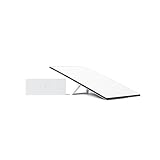
- Starlink provides reliable high-speed, low-latency, internet wherever you live
- Service plan required, activate STARLINK by selecting a service plan that is customized to meet your personal needs
- Select from plans suited for households or travel
- Get online in minutes, set up STARLINK with just 2-steps, plug it in and point at the sky
- STARLINK comes with everything needed to get online including a kickstand, gen 3-router, cables and power supply
Global connection rates show why access remains an issue, but they must be read in context. UNESCO reported that in 2023, 40% of primary schools, 50% of lower-secondary schools, and 65% of upper-secondary schools worldwide were connected to the internet. These figures, reported in the ITU/UNESCO 2024 report, are not specific to rural schools or satellite connections, and do not indicate connection quality, affordability, home access, or instructional use.
The published examples below document deployments and reported educational activity. They do not provide independent causal evaluations of sustained academic gains attributable specifically to satellite internet.
Rank #2

- Bundle Includes: STARLINK - Mini Kit AC Dual Band Wi-Fi System - White
- FAST SATELLITE INTERNET ANYWHERE: Access high-speed, low-latency internet even in and rural areas using the global Starlink satellite network. Designed by SpaceX, the Starlink Mini Kit provides dependable connectivity without wired infrastructure, making it ideal for travel, camping, work, off-grid cabins, RV setups, and locations with no traditional broadband options.
- COMPACT AND PORTABLE DESIGN: The Starlink Mini is small enough to carry in a backpack yet powerful enough for daily use. Its portable, all-in-one design includes an integrated Wi-Fi router, DC power input, and rugged housing suitable for on-the-go applications. Whether at a campsite, construction site, or temporary location, Starlink Mini offers quick deployment and reliable performance.
- EASY TWO-STEP SETUP: Get online in minutes—simply plug in the Mini, point it at the sky, and connect. The kit includes everything needed for installation, including a kickstand, pipe adapter, power cable, and power supply. Use the Starlink app to find a clear sky view, check obstructions, explore mounting options, and manage your Starlink account and hardware settings.
- BUILT-IN ROUTER WITH WI-FI 5: The Starlink Mini includes an integrated dual-band Wi-Fi 5 router for strong wireless coverage and stable speeds. A built-in ethernet port provides wired connectivity for routers, mesh systems, gaming devices, or network hardware. Average power consumption of 25–40 watts supports efficient operation in off-grid or mobile power setups.
Examples of satellite internet in rural education
Tanzania: connectivity as part of a broader school program
The UK Space Agency’s iKnowledge case study describes a program intended to equip up to 250 rural and underserved schools with ICT infrastructure, including satellite broadband, teacher ICT training, and classroom educational content. A later UK Government case study reports that the project delivered internet access to more than 250 schools and describes its focus on teacher development, educational resources, and community access. Because this was an integrated effort, its intended benefits should not be attributed to the satellite connection alone.
Free tools Windows power users keep installed
One-click scans. No signup required.
Ojo Encino and Mist, New Mexico and Oregon: provider-reported school use
In its education case study, Starlink says teachers at a Navajo Nation preschool in Ojo Encino, New Mexico, used the connection to access learning materials, conduct virtual lessons with students at home, and connect more than a dozen devices. The same provider account says Cuba Independent School District later chose to extend connectivity to more than 300 student homes.
Rank #3

- Gen 3 Satellite Dish: Third-generation antenna delivers a stronger, more stable signal and faster performance.
- Wi-Fi 6 Router: Modern router technology supports faster speeds, increased device capacity, and better efficiency.
- Extra 150FT Cable Included: Extended reach for more flexible installation in large spaces or hard-to-access locations.
- High-Speed, Low-Latency Internet: Stream HD content, video conference, or work remotely with confidence.
- Ideal for Rural and Remote Areas: Perfect for homes, cabins, RVs, boats, and off-grid setups where wired internet isn’t available.
Starlink also describes a rural school in Mist, Oregon, whose previous connection could not reliably support its educational tools. The company attributes this statement to Aaron Miller, superintendent of Vernonia School District: “This school went from slow, ineffective connectivity for even 2-3 computer stations, to having high speed internet where all 36 of our children can have effective internet connectivity simultaneously. It has been a class-changing event for our teachers and students.” This is a quotation and account published by the provider, not an independently verified performance measurement.
Ghana: provider-reported reach
Starlink says its service reached 85 remote schools in Ghana, giving more than 22,000 students access to online learning in mathematics and English. Those figures come from the company’s provider case study; they are deployment claims, not an independent audit or an evaluation of student outcomes.
Rank #4

- 🚀 Next-Generation Connectivity: Enjoy lightning-fast, low-latency internet powered by SpaceX’s Standard Dish — ideal for homes, farms, and rural or remote areas.
- 📶 Enhanced Wi-Fi 6 Router: Includes the latest dual-band Wi-Fi 6 router delivering stronger coverage, faster speeds, and improved reliability for multiple connected devices.
- ⚡️ Easy Plug-and-Play Setup: Simple installation with all required cables and mounts included — connect, power on, and get online in minutes.
- 🌦️ Rugged & Weather-Resistant Design: Built to perform in extreme environments — rain, snow, or high winds — for year-round connectivity.
- 🏕️ Residential & Remote-Area Ready: Perfect for off-grid living, cabins, RVs, and rural households seeking a dependable high-speed internet solution.
What a school needs to make satellite internet useful
Before deployment, assess the whole learning setup rather than choosing on a headline speed alone. The antenna and connection must be accessible, distributable across the school, affordable to operate, and supported by people who can use and maintain the system.
The Tool Desk
Outbyte PC Repair FREERepair Windows errors before they cause bigger problemsFix Now →Outbyte Driver Updater FREEScan for outdated or missing drivers - takes under a minuteDriver Scan →- Service availability at the exact location: Confirm that service can be installed at the school or home, and check current eligibility and terms locally.
- Site and antenna placement: Identify a suitable outdoor antenna location, and check local installation rules and exposure to weather.
- Total cost and continuity: Account for equipment, installation, recurring service, maintenance, and a reliable funding source. The cited sources do not establish a universal price or cost comparison.
- Power and local distribution: Plan for electricity and the indoor network or Wi-Fi equipment needed to reach classrooms and devices.
- Capacity and reliability for actual lessons: Consider how many students may connect at once and whether performance will support the intended activities, including live interaction where relevant. Verify suitability locally; the cited sources do not provide a universal performance comparison.
- Devices, training, and support: Provide appropriate student and teacher devices, teacher preparation, troubleshooting, repairs, and ongoing technical support.
- Alternatives and resilience: Where available, compare satellite with fiber, fixed wireless, and mobile broadband for local availability, cost, capacity, reliability, latency, support, and value. A terrestrial option may better suit a particular school.
A satellite kit is only the antenna equipment, not the complete service or school network. Equipment selection does not replace a site assessment, service plan, classroom distribution, or maintenance plan.
Best Value
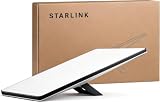
- 🚀 Ultra-Fast Satellite Internet Anywhere Enjoy high-speed, low-latency connectivity even in remote locations where cellular service fails. Stream, work, game, and video-call with stable performance powered by the advanced satellite network.
- 📡 4th Gen Phased-Array Antenna for Maximum Performance The compact Mini device uses cutting-edge phased-array technology to deliver stronger signals, faster speeds, and improved reliability—ideal for RV travel, camping, boating, and off-grid living.
- ⚡ Quick & Easy Setup in Minutes Just power it on, connect through the app, and you’re online. No tools, no technicians, no complicated installation—perfect for travelers, remote workers, and emergency situations.
- 🌦️ Built for Outdoor Adventure – Weather & Heat Resistant Designed for real-world conditions with durable construction that withstands rain, sun, dust, and harsh environments. Stay connected during your outdoor trips, marine activities, field operations, and more.
- 🎒 Ultra-Portable, Lightweight & Travel-Ready Compact form factor makes it easy to carry in a backpack or RV drawer. Ideal for digital nomads, campers, boaters, remote teams, and anyone who needs dependable internet on the go.
How to judge whether a deployment is working
Evaluate access and educational use separately. First establish whether the system is available and dependable for the school’s schedule; then assess whether teachers and students can use it for planned learning activities. Useful local checks include:
- Whether the intended classrooms and devices can connect during lessons.
- Whether teachers have training and suitable digital materials for the curriculum.
- Whether power, repairs, and recurring costs are handled without frequent interruption.
- Whether students who need to join from home can actually access devices and service.
- Whether the school can track instructional use and learning measures over time, rather than treating a new connection as evidence of improved achievement.
The 2024 SDG 4 Scorecard progress report addresses national benchmarks for school internet connectivity. Such connectivity measures are useful for tracking access, but a connection rate alone does not establish quality, affordability, home access, teaching use, or student learning.
Quick Recap
Product prices and availability are accurate as of the date/time indicated and are subject to change. Any price and availability information displayed on Amazon at the time of purchase will apply.

