
Do these 3 things before closing this tab:
1Fix the driver behind crashes, sound loss and screen glitches2Repair Windows errors before they cause bigger problems3Scan for outdated or missing drivers - takes under a minuteiTechGuides is reader-supported. When you buy through links on our site, we may earn an affiliate commission. As an Amazon Associate I earn from qualifying purchases. Learn more
Salesforce Data 360 Data Graphs give an AI agent a prepared, structured view of related customer information to use as context. Instead of asking the agent to repeatedly join fragmented records during each interaction, teams can model and assemble relevant data ahead of retrieval. The approach can make context more coherent, but it depends on graph design, data quality, permissions, and the agent’s access pattern; it is not an automatic guarantee of correct identity or authorization.
How do AI agents get trusted customer context?
An agent does not inherently know who it is helping, which account or tenant applies, what products that customer has, or what cases and history matter. Those facts may sit in many systems and use different identifiers. For an agent to respond in a grounded way, its runtime needs a reliable way to retrieve the right customer-specific information.
In Salesforce’s Help Agent example, Data Graphs handle joins, aggregation, relationships, and business logic in advance, forming a cohesive data product. At runtime, the agent can supply a tenant ID and retrieve related context rather than issue multiple queries and perform mappings for every conversation. Salesforce describes the goal as: “The mission is to close the context gap for agents.” Salesforce AI Engineering’s account of the Help Agent architecture is an implementation example, not proof that every Data 360 deployment will produce the same outcomes.
What is a Data Graph in Salesforce Data 360?
A Data Graph is a prepared representation of related data that can be retrieved as a coherent object. Salesforce Trailhead describes a Data Graph record as a flattened JSON view of related information. The JSON structure preserves relationships—for example, customer details alongside relevant cases or engagement—so an agent can consume context without reconstructing those relationships from separate records at every turn.
#1 Best Overall

- Built for Local AI Development: AMD Ryzen AI Halo is designed for local AI development and inference, featuring 128GB unified memory and support for up to 200B parameter models to build and run intensive AI workloads locally.
- 128GB Unified Memory: Features 128GB LPDDR5x unified memory at 8000 MT/s with 256 GB/s memory bandwidth, providing a shared memory pool across the CPU, GPU, and NPU to support larger AI models.
- AMD Ryzen AI Max+ 395 Processor: Features 16 cores, 32 threads, and Zen 5 architecture, paired with AMD Radeon 8060S integrated graphics featuring 40 RDNA 3.5 compute units and an AMD XDNA 2 NPU with up to 50 TOPS.
- Linux AI Developer Platform: Purpose-built for Linux-based AI development with full AMD ROCm software support and preloaded tools, models, and workflows optimized for local AI development.
- Compact, Connected Design: Includes a 2TB M.2 SSD, 10GbE LAN, Wi-Fi 7, Bluetooth 5.4, USB-C connectivity, and HDMI 2.1b.
Salesforce says Data Graphs can bring together CRM data and external lake data through Zero Copy, retaining relationships in JSON without an ensemble retriever. “Data Cloud” is the former name of Data 360; some Salesforce surfaces and documentation may still use the older name during the transition. Trailhead’s overview of Data Cloud and Agentforce notes the rebrand to Data 360 on October 14, 2025.
How do Data Graphs ground Agentforce prompts?
Salesforce Prompt Builder can reference an active Data Graph as a grounding resource. During testing, teams can preview graph data in JSON; Salesforce says sensitive data is masked before it is sent to the large language model (LLM). The feature has configuration and eligibility constraints, so a graph’s existence alone does not mean it can be used as a prompt resource.
- The supported graph data is based on Data Model Objects (DMOs) associated with CRM data streams for Salesforce standard or custom objects.
- Prompt Builder supports whole graphs, not subgraphs.
- The DMO associated with the object input must be the graph root or connect to a Unified Profile DMO at the root.
- Edition, permission-set, and setup requirements apply; confirm the current requirements for the target Salesforce org in Salesforce Help’s Prompt Builder grounding documentation.
These rules shape which graph can be grounded and how it connects to the prompt input. They do not replace the need to decide which users, agents, or workflows should be allowed to access the underlying data.
Windows Errors? Fix Them Before They Spread
Repair common Windows errors and clear accumulated junk for a smoother, more stable PC - no reinstall needed.Free scan · no reinstallCrashes, No Sound, or Screen Glitches?
Random freezes, missing sound and display glitches usually trace back to one bad driver. Find and replace yours safely.Free scan · under a minuteHow does an agent know which customer or tenant it is helping?
The runtime needs a reliable identifier—such as the tenant ID in Salesforce’s Help Agent example—to select the relevant customer context. Identity matching and access isolation are related but separate design problems: matching a person or account to the right records does not, by itself, authorize every use of those records.
Rank #2

- EVOLUTION AMD RYZEN AI MAX+ 395 MINI PC - GMKtec EVO-X2 is the next evolution in AI mini PC Ryzen Strix Halo series. Thanks to AMD Simultaneous Multithreading (SMT) the core-count is effectively doubled, to 32 threads. Ryzen AI Max+ 395 has 64 MB of L3 cache and can boost up to 5.1 GHz, depending on the workload. The Ryzen AI Max+ 395 is currently rated as the "most powerful x86 APU" on the market for AI computing.
- AI NPU with XDNA 2 ARCHITECTURE - Powered by 16 “Zen 5” CPU cores, 50+ peak AI TOPS XDNA 2 NPU and a truly massive integrated GPU driven by 40 AMD RDNA 3.5 CUs, the Ryzen AI MAX+ 395 is a transformative upgrade and delivers a significant performance boost over the competition. The Ryzen AI Max+ 395 excels in consumer AI workloads like the llama.cpp-powered application: LM Studio. Shaping up to be the must-have app for client LLM workloads, LM Studio allows users to locally run the latest language model without any technical knowledge required and unleash their creativity and productivity.
- AMD RADEON 8090S iGPU GAMING PC - The AMD Radeon RX 8060S offers all 40 CUs with up to 2.9 GHz graphics clock and uses the new RDNA 3.5 architecture. The powerful iGPU is positioned between an RTX 4060 and 4070 laptop GPU and therefore enables gaming in FHD at maximum details in most demanding games. The 8060S can also utilize the full 64GB pool, which is perfect for running LLMs such as Deepseek 32B, which runs comfortably on this machine.
- EIGHT CHANNEL LPDDR5X - LPDDR5X is a new ground breaking memory small form factor installed on-board. With blazing speeds up to to 8000MT/s, it runs 1.5x faster than the DDR5 SODIMMs; 90% better performance over DDR5 SODIMMs in video conferencing and photo editing; 30% better performance in productivity apps; 4% better performance in digital content workloads.
- QUAD SCREEN 8K DISPLAY SUPPORT - EVO-X2 AI Mini PC support 4-screen 4K/8K output via HDMI 2.1 (8K@60Hz), DisplayPort 1.4 (4K@60Hz), and dual USB 4 40Gbps Transfer speed (supporting PD3.0/DP1.4/DATA). Ideal for gaming, video editing, and multitasking, it provides expansive and crisp multi-display support.
In the engineering example, Salesforce keeps the broader identity graph in a separate data space and exposes a filtered customer-success view in another data space for specific agent-context and outreach scenarios. That partitioned design limits what those use cases see; the graph does not automatically provide authorization. Organizations still need to define and enforce suitable access controls for their own architecture.
How should teams shape graphs for agent retrieval?
Salesforce’s engineering account says graph design should start with the questions and access patterns agents need to support. The team can then decide which related information belongs together, whether to use one graph or several, and what to index for relevant retrieval rather than scanning complete tables.
- Too large: an oversized graph can impair performance and include more context than a particular retrieval needs.
- Too small: splitting related information too narrowly can force joins back into runtime retrieval, undermining the prepared-context approach.
- Right-sized: organize graphs around actual agent questions, tenant or customer identifiers, and the relationships those questions require; index the information needed to find relevant context.
Graph design is therefore a trade-off between useful breadth and efficient retrieval, not simply a goal of putting all available data into one graph. Salesforce Engineering’s description explains that access patterns, graph size, and indexing influence the implementation.
Recommended Free Tools
Can a Data Graph give an agent real-time customer behavior?
Salesforce Help documents a Web Connector SDK example in which a website session is captured and an IndividualId is passed to the agent. The agent queries a Data Graph, which returns a structured behavioral profile into the agent’s context variables. The example groups catalog engagement, cart engagement, and agent engagement beneath an Individual entity.
Rank #3
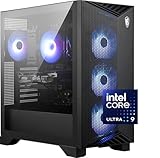
- Intel Core Ultra 9 285 Processor: Newly developed cores deliver ultra-smooth and responsive gameplay. AI accelerators prepare users for the next era of gaming on an AI PC.
- Simplistic Design: Enjoy the latest generation of Windows 11 Home for your everyday needs. *MSI recommends Windows 11 Pro for business use.
- NVIDIA GeForce RTX 5070 Ti GPU
- Cool While Gaming: In conjunction with an RGB CPU Air Cooler, the Aegis RS features four system cooling fans; three in the front and one in the rear to pull in cool air and push heat out of the PC.
- Turn on the Bright Lights: With the built-in RGB lighting, take your gaming experience to the next level by pressing the MSI LED button to cycle through lighting options. Customize lighting even further with MSI Center software.
This shows a documented real-time pattern, not a default freshness guarantee for every graph. Whether an agent can access recent behavior depends on the data path and implementation. See Salesforce Help’s context-aware agent example for the described flow.
Independent reader supportYour contribution helps us test, update, and keep practical guides available for everyone.How fast are Salesforce Data Graph queries?
Salesforce AI Engineering reported that live monitoring for its personalized Help Agent context path showed P50 performance below 200 milliseconds. The same account says an earlier benchmark was about 400 milliseconds. These are Salesforce-reported figures for that implementation; the account does not provide workload or methodology details, and the figures are not an independent benchmark or a general platform SLA. Other deployments may differ with their data, graph shape, indexes, and runtime workload. The engineering account provides the attribution and implementation context.
When is a Data Graph a better fit than Agentforce Data Library?
The choice depends on whether the need is a quick-start document retrieval setup or a more structured, multi-source context layer. Salesforce describes Agentforce Data Library as a preconfigured retrieval-augmented generation (RAG) option that automatically sets up a vector data store, search index, and retriever. Its documented comparison notes one data source per library and no real-time or Zero Copy capabilities. A fuller Data 360 setup takes more work—such as ingestion, modeling, identity resolution, and graph design—but offers broader source and transformation options and more retrieval control.
| Consideration | Agentforce Data Library | Full Data 360 and Data Graph setup |
|---|---|---|
| Setup | Preconfigured quick-start RAG setup. | Requires more implementation work, including data ingestion, modeling, identity resolution, and graph setup. |
| Data reach | Limited to one data source per library, according to Salesforce’s documented comparison. | Supports broader sources and transformed or harmonized data; Salesforce describes a Zero Copy example involving CRM and external lake data. |
| Freshness and retrieval | Salesforce’s comparison lists no real-time or Zero Copy capability for the Library. | Can support real-time retrieval in the documented behavioral example and offers more retrieval control; freshness depends on the implementation. |
| Context form | Uses document search and a retriever. | Can provide related records as a structured JSON graph. |
The distinction is useful when deciding whether document search is enough or the agent needs connected, customer-specific records. Salesforce’s comparison and setup discussion are in Trailhead’s guide to trusted agents.
Quick Recap
What does a Data Graph not guarantee?
- Correct identity by itself: the runtime still needs a reliable identifier and sound identity-resolution design.
- Authorization by itself: a graph is a data structure, not an access policy. Salesforce’s example uses partitioning and filtered views for isolation.
- Perfect or complete answers: graphs can only provide the context represented in the connected, modeled data; data quality and coverage remain important.
- Real-time freshness everywhere: real-time behavior is shown in a specific documented example, not promised for every Data Graph.
- Uniform query speed: the reported latency applies to Salesforce’s implementation, not every org or workload.
Product prices and availability are accurate as of the date/time indicated and are subject to change. Any price and availability information displayed on Amazon at the time of purchase will apply.

