
iTechGuides is reader-supported. When you buy through links on our site, we may earn an affiliate commission. As an Amazon Associate I earn from qualifying purchases. Learn more
IoT connects devices and collects information; Physical AI uses information to perceive conditions, decide what to do, and act through a physical system. The bridge is a feedback loop: sense the world, interpret observations in context, choose an authorized response, carry it out, then measure what changed.
That loop can span device, edge and cloud computing. A digital twin can help connect incoming data to an asset, task and operating limits, but a digital representation alone neither makes a decision nor changes the physical world.

What changes from IoT to Physical AI?
IoT provides connected things, data collection and communication. AIoT adds AI capabilities to that connected infrastructure: models may infer conditions, learn from data or support decisions. Physical AI describes AI-enabled systems that interact with the physical environment and can execute actions through a body or other physical mechanism.
The terms overlap, but they emphasize different things. AIoT is an architecture for distributing AI and IoT functions. Embodied AI emphasizes AI integrated into a physical system that interacts with its environment. Physical AI is used in the cited standards and research material for AI at the interface with physical environments. The cited sources do not establish one universally controlling definition.
#1 Best Overall

- Dual-Core Performance Up to 240 MHz: Run sensor processing, wireless communication, automation logic and connected-device tasks on a 32-bit dual-core ESP32 platform designed for responsive embedded and IoT projects
- Built-in Wi-Fi and Bluetooth 4.2: Connect to 2.4 GHz Wi-Fi networks or use Bluetooth Classic and BLE for wireless sensors, smart devices, remote controls, home automation and other connected projects
- Flexible Power-Saving Modes: ESP32 power-management features support dynamic clock scaling and low-power operating modes, helping developers reduce energy use in compatible sensing, monitoring and connected-device applications, suitable for battery-powered Internet of Things (IoT) devices.
- USB-C Programming with CP2102: Connect through USB-C for power, sketch uploads and serial monitoring, while GPIO, UART, SPI and I2C interfaces support sensors, displays, motor drivers and other modules (USB-C cable not included)
- Over-the-Air Update Support: Configure OTA functionality through a compatible ESP-32 software framework to update deployed firmware over Wi-Fi without reconnecting the board by USB for every revision
The important shift is from connected observation to a system that can influence what it observes. If an AI only analyzes sensor readings and displays a recommendation, it supports a physical process but does not itself complete the action loop.
How does the intelligence loop work?
- Sense: Sensors and devices measure or observe the environment—for example, a pump’s vibration and flow.
- Move and prepare data: Device software can filter or preprocess observations. Depending on compute, bandwidth and connectivity constraints, it may send selected information to an edge node or cloud service.
- Contextualize: A model, edge system or digital twin relates the measurements to an asset, task and operating limits. A vibration reading, for example, is more useful when associated with the correct pump and its expected operating range.
- Decide: Local or remote AI evaluates the situation and proposes a response, such as a maintenance check or an operating adjustment.
- Authorize and act: A person, agent or machine carries out an action that is permitted and validated for the situation. The system needs a defined authority model, not merely a technically possible command.
- Observe the result: New measurements show whether the action changed conditions as intended. Those observations feed the next decision and can inform process or model adjustments.
This six-part sequence is an explanatory synthesis of ITU-T’s device-edge-cloud model and the Digital Twin Consortium’s system layers; it is not a quoted definition from a single standard. The loop is closed only when the system observes the result of an authorized physical action.
Rank #2

- Certified & Future-Ready: Espressif-certified ESP32-WROOM-32E ensures full hardware compatibility and lifetime firmware support. Upgraded 8MB Flash handles IoT data and OTA updates.
- Dual-Core Speed: 240MHz dual-core processor runs Wi-Fi/BLE and sensors 2x faster. 38 GPIO pins (10 RTC) support SPI/I2C/UART for LCDs, motors, and industrial sensors.
- Plug & Play Dev: USB-C driver pre-installed: upload code instantly on Windows/Mac/Linux. Works with Arduino IDE, MicroPython, and Espressif IDF.
- All-Environment Ready: Run Wi-Fi smart switches (Home Assistant) and BLE tracking on one board. Industrial-grade stability (-40°C~85°C) for outdoor/automated systems.
- Advantages: The ESP32 development board offers high performance, low power consumption, and rich wireless connectivity, making it suitable for developers of all levels, especially beginners.
Where should sensing, inference and control run?
There is no single placement that fits every task. ITU-T Y.4618 (June 2026) describes AI and data functions across devices, edge nodes and cloud systems. Distributing work lets implementers balance response time, privacy, bandwidth, compute capacity and lifecycle needs.
| Location | Possible role | What to weigh |
|---|---|---|
| Device | Local preprocessing, lightweight AI or machine learning, closed-loop inference and autonomous control. | Local processing can support time-sensitive behavior and limit data movement, but the device has constrained compute and needs appropriate validation and control. |
| Edge node | Contextual inference, model deployment and coordination near connected devices. | It can place processing closer to the physical system than a remote cloud, while still depending on the design’s connectivity and compute arrangements. |
| Cloud | Large-scale storage, global model training and lifecycle management. | Centralized resources can support broader data and model operations, but system designers must account for network dependence, data governance and task-specific response needs. |
These are architectural roles, not a ranking of products or a guarantee of a particular response time. The cited sources provide no common benchmark for comparing deployments. For a specific use case, establish which functions must keep working during a connection loss and which data can leave the device.
Rank #3
What does a digital twin add—and what does it not do?
A digital twin can provide a structured representation of a physical asset or system, so incoming observations can be interpreted in relation to that asset and its operating context. ISO/TS 25271:2026 defines an industrial digital twin interface architecture involving a digital twin, a physical twin and the interface between them. ISO says the edition was published in August 2026 and covers architecture and typical use cases; detailed applications are outside its scope.
The Digital Twin Consortium’s August 2026 Digital Twin System Framework describes four operational layers: Data, Context, Decision and Process Orchestration, and Actuation, supported by a Digital Thread. It allows actuation through people, autonomous agents or machines. The distinction matters: the twin can help organize data and context, while decision orchestration and actuation are separate capabilities.
Rank #4

- 2.4GHz Dual Mode WiFi + Bluetooth Development Board
- Support LWIP protocol, Freertos
- SupportThree Modes: AP, STA, and AP+STA
- Ultra-Low power consumption, Compatible with Arduino IDE
- ESP32 is a safe, reliable, and scalable to a variety of applications
The consortium illustrates the framework with a water-treatment pump. Vibration and flow data are mapped to a pump model and operating envelope; orchestration weighs evidence and authority; a maintenance order, rescheduling action or pump-speed change may follow. This is a consortium example, not an independently audited deployment case.
Free tools Windows power users keep installed
One-click scans. No signup required.
What safeguards does physical action require?
An incorrect inference can have consequences beyond a bad dashboard reading when it leads to a machine, vehicle or industrial process changing state. Architecture and governance should therefore treat the decision and the action as distinct steps.
Best Value
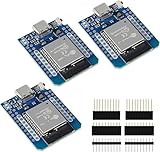
- D1 Mini NodeMCU Type-C ESP32 WLAN WiFi Bluetooth IoT Development Board 5V Compatible for Arduino
- Designed with ultra-low power technology, it offers the full range of performance and features of the ESP32 chip. The pin arrangement provides compatibility with the modules developed for the D1 Mini ESP8266 while also offering fast WLAN, enhanced GPIO, Bluetooth functionality, and with its higher performance, a wider range of applications.
- 100% compatible with Arudino IDE, Lua and Micropython, it shows robustness, versatility, and reliability in a wide variety of applications and power scenarios.
- All I/O pins have interrupt, PWM, I2C and one-wire capability, except the pin DO.
- Designed with ultra-low power technology, it offers the full range of performance and features of the ESP32 chip. The pin arrangement provides compatibility with the modules developed for the D1 Mini ESP8266 while also offering fast WLAN, enhanced GPIO, Bluetooth functionality, and with its higher performance, a wider range of applications.
- Match processing to urgency: Put time-sensitive processing close to the device when the task requires it, and account for privacy and connectivity limits.
- Validate before execution: Check proposed actions against operating constraints and use a suitable validation step before issuing physical commands.
- Define authority: Specify whether a person, agent or machine may approve each action and under what conditions. Separate model reasoning from action execution where the risk calls for it.
- Keep intervention possible: Provide an appropriate human override or emergency stop, and define how agents defer to safety hierarchies.
- Preserve traceability: Record relevant decisions, authorizations, commands and observed outcomes so incidents can be examined.
The Digital Twin Consortium identifies governance laws that include several of these considerations. IEEE P4501’s active manufacturing project includes reliability under industrial conditions, secure data governance and human-system interaction in its planned scope. These are framework and project statements, not evidence that every deployed system follows them or meets a particular safety level.
Independent reader supportYour contribution helps us test, update, and keep practical guides available for everyone.Which standards cover the different pieces?
The documents below address related but distinct scopes. As of October 7, 2026, they do not amount to one standard governing every Physical AI system.
| Document | Status and date | Scope relevant to this topic |
|---|---|---|
| ITU-T Y.4618 | Published June 2026 | AIoT reference model and requirements spanning device, edge and cloud. |
| ITU-T F.748.66 | Published December 2025 | Embodied AI system framework and requirements. Its framework includes basic, functional and application layers; the basic layer covers foundation models, a cloud-edge-device platform and a physical body with sensors, computing units and execution mechanisms. |
| ISO/TS 25271:2026 | Edition 1 published August 2026 | Industrial digital twin interface architecture involving the physical twin, digital twin and their interface; detailed applications are outside its scope. |
| IEEE P4501 | Active project; project approval shown as May 14, 2026 | A planned manufacturing Physical AI framework and requirements. It is not a published standard. |
For an organization selecting a framework, the scope matters as much as the label: one document addresses AIoT architecture, another embodied AI, another industrial digital twin interfaces, and the active IEEE project is focused on manufacturing Physical AI.
Recommended Free Tools
How to assess a Physical AI use case
Use these questions to test whether a proposed system actually connects software decisions to controlled physical outcomes:
- Where do sensing, inference and control run: on-device, at the edge, in the cloud, or across more than one location?
- What response time and connectivity does the task require, and what must continue to function if the network is unavailable?
- What data leaves the device, and how are privacy and data governance handled?
- What physical action follows an inference, and what operating limits constrain that action?
- Does a digital twin or another context model represent the relevant asset and its limits, or is the system acting on measurements without enough context?
- Who validates and authorizes actions, how can a person intervene, and what is recorded about decisions and outcomes?
These questions expose design choices; they do not provide a standardized score for comparing systems. The cited sources offer no cross-sector performance statistic suitable for ranking deployments, so claims about latency reduction, reliability, productivity or energy savings need evidence specific to the system and conditions being described.
Quick Recap
Product prices and availability are accurate as of the date/time indicated and are subject to change. Any price and availability information displayed on Amazon at the time of purchase will apply.

