
Recommended Free Tools
A GST notice under the Central Goods and Services Tax Act, 2017 (CGST Act) can be served through several statutory methods. Section 169(1) expressly includes email to the address supplied at registration or later amended, and making the communication available on the Common Portal; it does not require every notice to arrive on paper. Whether a particular notice was validly served depends on the method used and the notice-specific facts.
What counts as service under CGST Act section 169?
Section 169(1) says that a decision, order, summons, notice or other communication under the Act or its rules may be served by “any one” of six listed methods. The GST Council reproduces the provision and discusses electronic service in its 52nd GST Council Meeting material.
- Direct giving or tendering: To the addressee or taxable person, or to specified recipients such as an authorised representative, advocate or tax practitioner, a person regularly employed in connection with the business, or an adult family member residing with the taxable person.
- Post or courier: Registered post, speed post or courier with acknowledgement due, addressed to the person or representative at the last known place of business or residence.
- Email: To the email address provided at registration or amended from time to time.
- Common Portal: By making the communication available on that portal.
- Newspaper publication: In a newspaper circulating in the relevant locality where the person is last known to have resided, carried on business or personally worked for gain.
- Affixation, as a fallback: If none of the preceding methods is practicable, by affixing a copy at a conspicuous place at the last known business or residence. If that is also not practicable, a copy may be affixed to the notice board of the concerned issuing office or authority.
The statutory list includes electronic and physical routes. It does not make physical delivery the only valid channel, and affixation is conditional rather than an ordinary first choice.
Can a GST notice served on the portal or by email be valid?
Yes. Section 169 expressly lists both email to the registered or subsequently amended address and making a communication available on the Common Portal. The GST Council material identifies these as statutory service methods. A taxpayer’s not seeing an electronic communication does not, by itself, establish that service was invalid: legal service and actual awareness are related but distinct questions.
#1 Best Overall

- PORTABLE SCANNER FOR USE ON-THE-GO — The fastest and lightest mobile single-sheet-fed compact document scanner in its class¹
- QUICK DOCUMENT SCANNING ― This Epson ultra-fast scanner scans a single page as quickly as 5.5 seconds²; Windows and Mac compatible
- VERSATILE PAPER HANDLING ― Portable scanner scans documents up to 8.5 x 72 in; Also easily digitizes receipts and ID cards to make accounting, bookkeeping, and organizing simpler
- INTUITIVE, HIGH-SPEED SOFTWARE — Epson ScanSmart Software³ is a smart tool allowing you to easily scan, review, and save; Stay organized easily with the help of this Epson scanner
- EASY SETUP — USB-powered connect to your computer for quick and simple scanning; No batteries or external power supply required to operate portable document scanner; Standard Connectivity: USB 2.0
That general rule does not prove that a particular notice was uploaded, sent to the correct address, or issued in accordance with all requirements. CBIC’s GST Registration Rules page describes electronic filing on the Common Portal and electronic issuance of notices, certificates and orders under those rules. The applicable procedure still depends on the communication and its governing rules.
When is a notice deemed served?
Section 169(2), as reproduced by the GST Council, says a communication is deemed served on the date it is tendered, published or affixed in the manner provided by subsection (1). Its wording does not set out a detailed technical timestamp rule for every portal or email event. For an electronic notice, examine the relevant records and procedural requirements rather than assuming that a particular email-delivery or portal timestamp is conclusive in every case.
Rank #2

- FAST SPEEDS - Scans color and black and white documents a blazing speed up to 16ppm (1). Color scanning won’t slow you down as the color scan speed is the same as the black and white scan speed.
- ULTRA COMPACT – At less than 1 foot in length and only about 1. 5lbs in weight you can fit this device virtually anywhere (a bag, a purse, even a pocket).
- READY WHENEVER YOU ARE – The DS-640 mobile scanner is powered via an included micro USB 3. 0 cable allowing you to use it even where there is no outlet available. Plug it into you PC or laptop and you are ready to scan.
- WORKS YOUR WAY – Use the Brother free iPrint&Scan desktop app for scanning to multiple “Scan-to” destinations like PC, Network, cloud services, Email and OCR. (2) Supports Windows, Mac and Linux and TWAIN/WIA for PC/ICA for Mac/SANE drivers. (3)
- OPTIMIZE IMAGES AND TEXT – Automatic color detection/adjustment, image rotation (PC only), bleed through prevention/background removal, text enhancement, color drop to enhance scans. Software suite includes document management and OCR software. (4)
How to check how a specific notice was served
Use the notice and the available records to identify the service route and assess it against the statutory wording. This is a practical fact-check, not a determination that a notice is valid or invalid.
- Identify the mode claimed. Is the record of service direct delivery, registered or speed post, courier with acknowledgement due, email, Common Portal availability, newspaper publication or affixation?
- Check the recipient or destination. For postal or courier service, compare the address with the last known business or residence address. For email, check the address supplied at registration or amended later. For direct service, identify the recipient and their relationship to the taxpayer or business.
- Locate evidence of the relevant event. Depending on the method, look for evidence of tender, dispatch and acknowledgement, the email destination, portal availability, publication or affixation. The relevant records and what they establish can differ by service method.
- Check requirements for that notice type. Section 169 sets out service methods, but other applicable rules may govern the notice’s form, accompanying documents or issuing authority.
- Record dates and response deadlines. Note the event date shown in the records and any response or appeal deadline stated in the communication. If the service date or a procedural defect is disputed, obtain advice on the specific notice and applicable law.
A dispute about one of these details cannot be resolved from the general service rule alone. The governing central or state law, applicable procedural requirements, authority and the circumstances of delivery may matter; this general explanation does not determine a litigation outcome.
Do these 3 things before closing this tab:
1Fix the driver behind crashes, sound loss and screen glitches2Repair Windows errors before they cause bigger problems3Scan for outdated or missing drivers - takes under a minuteRank #3
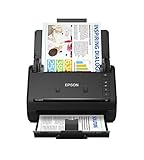
- FAST DOCUMENT SCANNING — Document scanner with feeder allows you to speed through stacks with a 50-sheet Auto Document Feeder (ADF); Efficient office scanner to help you scan more productively
- INTUITIVE, HIGH-SPEED SOFTWARE — Quickly scan with this desktop document scanner; Epson ScanSmart Software lets you easily preview scans, email files, upload to the cloud, and more; Plus, automatic file naming saves even more time
- SEAMLESS INTEGRATION — Easily incorporate your data into most document management software with the included TWAIN driver; Office document scanner integrates seamlessly with business workflows
- EASY SHARING — Duplex scanner allows you to scan straight to email or popular cloud storage2 services like Dropbox, Evernote, Google Drive, and OneDrive for simple storage and sharing
- SIMPLE FILE MANAGEMENT — Scanner allows the creation of searchable PDFs with Optical Character Recognition (OCR) and convert scans to editable Word or Excel files effortlessly; Designed for home and office document scanning
Official GST information
The GST Council’s section 169 material reproduces the statutory service provision and discusses taxpayers missing electronic communications. CBIC’s registration rules page explains the electronic filing and issuance context. CBIC also maintains a Tax Information Portal, whose content it says is continuously updated and expanded. Check the current official statute and applicable rules when assessing a notice.
Quick Recap
Best Value

- OUR MOST ADVANCED SCANSNAP. Large touchscreen, fast 45ppm double-sided scanning, 100-sheet document feeder, Wi-Fi and USB connectivity, automatic optimizations, and support for cloud services. Upgraded replacement for the discontinued iX1600
- CUSTOMIZABLE. SHARABLE. Select personalized profiles from the touchscreen. Send to PC, Mac, mobile devices, and clouds. QUICK MENU lets you quickly scan-drag-drop to your favorite computer apps
- STABLE WIRELESS OR USB CONNECTION. Built-in Wi-Fi 6 for the fastest and most secure scanning. Connect to smart devices or cloud services without a computer. USB-C connection also available
- PHOTO AND DOCUMENT ORGANIZATION MADE EFFORTLESS. Easily manage, edit, and use scanned data from documents, receipts, photos, and business cards. Automatically optimize, name, and sort files
- AVOIDS PAPER JAMS AND DAMAGE. Features a brake roller system to feed paper smoothly, a multi-feed sensor that detects pages stuck together, and skew detection to prevent paper damage and data loss
Rank #4

- Scanner type: Document
- Connectivity technology: USB
- With Auto Scan Mode, the scanner automatically detects what you're scanning
- Digitize documents and images
Product prices and availability are accurate as of the date/time indicated and are subject to change. Any price and availability information displayed on Amazon at the time of purchase will apply.

