
Free tools Windows power users keep installed
One-click scans. No signup required.
Hybrid Vision Sensors (HVS) combine conventional image frames with event-based sensing in one sensor. That lets an AI vision system use detailed images to understand a scene and fast event signals to detect changes—potentially reducing redundant processing when motion matters. In 2026, HVS is a promising design approach, not a proven across-the-board replacement for ordinary cameras: the performance and savings depend on the workload, integration, and software.
What is a Hybrid Vision Sensor?
A conventional camera captures frames at set intervals. Each frame records the scene at that moment, including areas that have not changed. An event sensor instead reports changes in pixel brightness as they occur, producing sparse, time-stamped motion information rather than a complete image at every instant.
An HVS combines these outputs: frames provide spatial detail and scene context, while events describe changes with fine temporal resolution. AlpsenTek’s explanation uses the shorthand “Scene State” for image data and “Scene Change” for events. Because the two signals come from the same vision system, they may be easier to relate in time and space than outputs from separate cameras that must be aligned after capture.
How HVS differs from a pure event camera
| Approach | What it outputs | Potential advantage | Main consideration |
|---|---|---|---|
| Frame-based camera | Images captured at intervals | Familiar, detailed visual data for recognition and scene interpretation | Repeatedly captures unchanged pixels, and fast motion can fall between frames |
| Event camera | Pixel-level changes over time | Sparse motion cues and fine temporal information | Does not provide the same conventional image output on its own |
| HVS | Conventional images plus events | Combines scene detail with motion cues in one sensing system | Requires a suitable sensor, processing pipeline, and algorithms to use both outputs effectively |
HVS is therefore not simply another name for an event camera. Its defining idea is retaining ordinary image capture while adding event output; whether that combination is better than a frame camera or a separate frame-and-event setup depends on the application.
#1 Best Overall

- Ultra High Definition 8000x6000 Lightburn Camera for Laser Engraver, USB2.0 Machine Vision Industrial Camera for Computer,Raspberry Pi
- Super Image reality, real color reproduction, ultra crystal shooting image. The camera works like human eye, get sharp image and accurate color reproduction in every detail
- 5-50mm Zoom Lens, Pro industrial grade 12mp ultra hd optical zoom lens, manual focus, iris and zoom. Pefect for close-ups and quality inspection
- USB Plug & Play, UVC compliant usb camera, just connect the camera to PC, laptop, Android device or Raspberry Pi with the included USB cable without extra drivers to be installed.
- Wide Applications: Well used for industrial camera, Medical device, Quality Inspection, Scientific research and development, image processing, computer and machine vision.
What could change for AI machine vision?
In a conventional pipeline, a system may repeatedly move and analyze full frames even when much of the scene is static. With HVS, events could act as a rapid motion trigger: the system detects a change, then uses image data for richer tasks such as identifying an object or interpreting the scene. This could reduce unnecessary data movement, latency, and power use in workloads where sparse changes are useful.
Those are architectural advantages, not independently verified benchmark results. An HVS system still has to process its event stream, interpret the image output, and coordinate both in software. It may not save resources if the task requires continuous detailed image analysis or if integration overhead outweighs the avoided processing.
Rank #2

- 2MP Global Shutter & 90fps High Frame Rate: This camera features a 2MP global shutter sensor and up to 90fps high-speed frame rate, effectively eliminating motion blur and distortion. It delivers stable and clear images for fast-moving objects, ideal for high-speed capture, motion detection and industrial applications.
- 2.8-12mm 4X Manual Varifocal Zoom Lens: Equipped with a 2.8‑12mm varifocal CS mount lens supporting 4X manual zoom. You can freely adjust focal length, focus and field of view to meet various needs from wide viewing to close‑up detail capture.
- Strong System & Device Compatibility: UVC compliant plug‑and‑play design with no driver required. Fully compatible with Windows, Linux, Jetson Nano and embedded systems, supporting stable long‑time working for industrial and daily use.
- Wide Software Support: Perfectly works with Lightburn, OpenCV, machine vision software, live streaming tools and video monitoring programs. Great for laser engraving monitoring, machine vision, production detection and live broadcast.
- Versatile Wide Applications: Widely used in industrial inspection, machine vision, Lightburn monitoring, USB video microscope, live streaming, high-speed recording, security monitoring and embedded projects.
In a 2026 EE Times interview, AlpsenTek described its sensors as having an equivalent frame rate of about 1,000 fps and a dynamic range of 120 dB. These are company-reported sensor figures, not independent comparisons or guarantees for an end-to-end AI system. The interview also stresses trade-offs among frame rate, dynamic range, pixel size, power, data volume, and cost; a high figure in one dimension does not establish overall superiority.
Where HVS could matter
Automotive and active safety
Fast event cues could flag a moving object or changing scene in challenging light, prompting frame-based analysis for more detail. The proposed benefit is quicker access to a motion cue and less redundant data—not a certified braking result or proof of improved road safety.
Rank #3

- Day/Night Vision: IR-CUT Filter switched in and out automatically based on light condition (only visible light during the daylight and infrared sensitivity during the night with 850 IR LEDs on)
- HD Resolution: This camera adopts 2MP OV2710 sensor for sharp image, Max. resolution: 1920*1080
- High Frame Rates: 30fps@320*240, 352*288, 640*480, 800*600, 1024*768, 1280*720, 1280*960, 1280*1024, 1920*1080; YUY2 30fps@320*240 15fps@640*480 20fps@800*600 10fps@1024*768, 1280*720; 5fps@1280*960,1280*1024,1920*1080; High speed USB 2.0 interface.
- Plug&Play: UVC-compliant, just connect the camera to PC, laptop, Android device or Raspberry Pi with the USB cable without extra drivers to be installed.
- Applications: this mini 38mmx38mm camera board can be installed in most hidden and narrow position for a home surveillance system, wildlife photography, dashcam, baby camera, etc.
Robotics and physical AI
Robots interacting with moving objects need timely feedback. Sparse motion information could help a robot react without processing a continuous stream of full images at maximum detail. The value depends on whether event cues fit the task and whether the robot’s perception software can combine them reliably with image data.
Smartphones and computational photography
Motion references from events could support deblurring, HDR, frame interpolation, metering, focus, and temporal consistency in video or AI editing. These are potential imaging uses; the sensor architecture alone does not guarantee that a phone will deliver better photos or video.
Rank #4

- 1) Camera transfer speed is fast.
- 2) Provide SDK, easy to use and convenient.
- 3) Support external trigger and flash.
- 4) SDK supports Windows and Linux systems.
- 5) SDK supports VC/C++, VB6, VB.NET, Delphi, C#, JAVA, Python, OpenCV.
XR, smart homes, traffic, and security
These are target or reported deployment categories for low-power, feature-extracted edge sensing. Event output may be useful when a device needs to notice changes locally instead of continually sending or analyzing complete frames. Specific product deployments and comparative savings are not established by the available company statements.
Action cameras and rapid sensing
AlpsenTek describes its APX-series devices for high-speed sensing, where event information can complement normal images. The practical advantage would be capturing motion cues that conventional sampling might miss while retaining image context.
Best Value
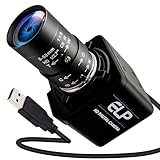
- Global Shutter 90fps High Speed Camera: Equipped with global shutter technology and up to 90fps high frame rate, effectively eliminates motion blur and distortion, perfect for capturing fast-moving objects in golf swing analysis, 3D printing monitoring and high-speed motion recording.
- 5-50mm Varifocal Lens with 10X Zoom: Features a 5-50mm adjustable varifocal lens, providing 10X manual zoom for flexible viewing distance and frame adjustment, allowing you to get clear and detailed images without changing lenses.
- UVC Compliant & Plug and Play : Adopts standard UVC video protocol, no extra driver required. Simply plug into the USB port to use instantly, saving time and effort for quick setup on various devices and applications.
- Wide Compatibility for Multi Devices: Works seamlessly with laptops, Android devices, Raspberry Pi and more industrial or DIY platforms, ideal for machine vision, industrial monitoring, computer vision projects and home experimental applications.
- Stable Performance for Professional Scenarios: Built for long time continuous operation, delivering stable video output and clear imaging for golf swing analysis, 3D printer monitoring, industrial inspection and other high speed capture tasks.
What HVS products and operating modes exist?
AlpsenTek introduced the APX003, previously called ALPIX-Eiger, as its first mass-produced HVS in 2023. The company also shows the APX014 as a 1.3-megapixel hybrid sensor with a global shutter and monochrome output. These are industrial sensor components, not evidence that a consumer camera or phone using them is broadly available.
The company describes three operating modes:
- Image mode: conventional image output.
- Event mode: event-based output describing changes.
- Hybrid mode: image and event sensing together.
AlpsenTek’s roadmap discusses adding distance and spectral modalities over time, extending the approach toward more multidimensional sensing. That is a stated direction, not confirmation that those capabilities are already present in the named sensors.
What to expect from HVS in 2026
AlpsenTek founder and CEO Jian Deng said, “We expect 2026 and 2027 to be a period of rapid growth.” That is the company’s outlook, not an independent market forecast. The same EE Times interview says AlpsenTek sensors are already shipping in wearables, AIoT, smart transportation, and security applications. The available material does not establish independent market-share figures, named customer deployments, or controlled third-party benchmarks.
For buyers and system designers, the central question is system economics: can one hybrid sensor reduce synchronization, compute, storage, and power costs enough to justify a new sensor and software stack? Evaluate a candidate system against the actual task, rather than relying on a single headline specification.
Recommended Free Tools
- Motion response: How quickly does the system detect and act on relevant changes?
- Image quality and dynamic range: Are conventional images detailed enough for the recognition task, including under the required lighting?
- Temporal-spatial alignment: How well do event cues correspond to image information, and what calibration or synchronization is still required?
- Data and power: Does the combined pipeline reduce total data movement and energy under representative conditions?
- Integration: Are event-aware algorithms, tools, and downstream interfaces available for the intended application?
- Cost and physical constraints: Do sensor cost, pixel size, and implementation complexity fit the product?
For consumers, the named APX devices are industrial components, and broad retail availability was not established. The more immediate 2026 story is the potential for HVS to influence specialized vision systems and future products, rather than a confirmed general-purpose camera upgrade.
Quick Recap
Product prices and availability are accurate as of the date/time indicated and are subject to change. Any price and availability information displayed on Amazon at the time of purchase will apply.

