
Recommended Free Tools
Gallium-nitride (GaN) power FETs can help a self-driving car’s LiDAR transmitter produce shorter, higher-current laser pulses, and can make some vehicle power-conversion stages smaller or more efficient. Those are component-level benefits: GaN does not make a sensor perceive its surroundings by itself, and it cannot guarantee that a LiDAR system will see farther. The outcome depends on the laser, optics, receiver, signal processing, safety limits and the rest of the circuit.
Where GaN fits in a self-driving car sensor
Autonomous vehicles use multiple kinds of sensors rather than relying on one device. NVIDIA’s autonomous-driving reference architecture, for example, combines cameras, radar, LiDAR and ultrasonic sensors. GaN is relevant to the electronics that drive or power some of those sensors; it is not a replacement for the sensors or the perception software that interprets their data.
The clearest application is the LiDAR transmitter. A gate driver and power FET switch current through a laser diode to create a brief optical pulse. The FET’s switching behavior affects how precisely the circuit can shape that pulse. GaN devices are also positioned for power conversion and 48-V distribution that can supply vehicle electronics, including sensor systems.
What GaN can improve in a LiDAR transmitter
Shorter, better-controlled pulses
GaN power FETs can switch quickly, making them useful when a transmitter needs a narrow, high-current pulse. Texas Instruments lists a 1.25-ns minimum input pulse width for its LMG1025-Q1, along with 2.6-ns rising and 2.9-ns falling propagation delay. These are product specifications for the driver, not a guarantee that every complete LiDAR transmitter will produce an optical pulse with those exact timings. TI describes the part as intended for LiDAR, time-of-flight applications and high-frequency automotive power conversion.
#1 Best Overall

- Designed to translate various signals to trigger alerts of nearby objects
- Some GM Genuine Parts may have formerly appeared as ACDelco GM Original Equipment (OE)
- GM Genuine Parts are designed, engineered and tested to rigorous standards, and are backed by General Motors
- GM regularly updates production and service part designs to integrate new materials and technologies
EPC describes its automotive eGaN EPC2206 and EPC2212 devices as suitable for LiDAR, radar, ultrasonic sensors and 48-V distribution. EPC says the EPC2212’s short trigger capability can support high current with very short pulse widths. In LiDAR, a shorter pulse can contribute to better range resolution: the system has a more precise timing event from which to estimate the distance to a reflecting object.
Peak optical output and eye-safety constraints
In a 2018 white paper, TI explains that low input and high capacitance characteristics in its illustrated approach enable higher peak optical output in a shorter pulse, with the aim of higher-resolution imaging while maintaining eye safety. That is a design objective, not permission to exceed the applicable laser safety limits. The transmitter still has to meet those limits in its intended operating conditions.
Does GaN make LiDAR see farther?
Not by itself. EPC says that higher pulse current can help a LiDAR system discern objects at greater distances, while shorter pulses can improve resolution. Those are potential system benefits, not a guaranteed range increase from swapping one transistor. Range also depends on the laser and optics, receiver sensitivity, target reflectivity, atmospheric conditions, signal processing and the system’s permitted optical output. A designer must evaluate the complete transmitter and receiver rather than infer vehicle-level performance from a FET’s switching speed or current rating.
Rank #2
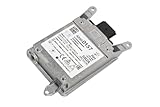
- Designed to translate various signals to trigger alerts of nearby objects
- Some GM Genuine Parts may have formerly appeared as ACDelco GM Original Equipment (OE)
- GM Genuine Parts are designed, engineered and tested to rigorous standards, and are backed by General Motors
- GM regularly updates production and service part designs to integrate new materials and technologies
GaN and silicon MOSFETs: what changes?
GaN is most compelling when fast switching and compact power stages matter. Silicon MOSFETs remain an alternative, and the better choice depends on the full circuit, operating conditions, qualification needs, layout and cost. The evidence available for the parts and examples discussed here supports the following comparison; it does not establish a universal winner or a direct, controlled comparison against a particular silicon design.
Outdated Drivers Are Slowing You Down
One free scan finds every outdated or missing driver and matches the right update for your exact hardware.Free scan · exact hardware matchWindows Errors? Fix Them Before They Spread
Repair common Windows errors and clear accumulated junk for a smoother, more stable PC - no reinstall needed.Free scan · no reinstall| Design consideration | GaN power FETs | Silicon MOSFETs |
|---|---|---|
| Switching speed and pulse shaping | Well suited to fast switching and short-pulse designs. TI specifies a 1.25-ns minimum input pulse width for the LMG1025-Q1 driver; that figure is not a direct FET-to-MOSFET comparison. | Performance depends on the selected MOSFET, driver and circuit. The cited product information does not establish a comparable silicon pulse-width value. |
| Conduction and switching losses | Vendors position GaN for efficient, high-frequency power conversion. Actual losses depend on the device, switching frequency, load, gate drive and circuit implementation. | Actual losses likewise depend on the chosen device and implementation. No directly comparable silicon loss measurement is established here. |
| Power density and magnetics | TI reported in 2020 that an integrated-driver automotive GaN family could deliver twice the power density, 99% efficiency and 59% smaller power magnetics than existing solutions. These are TI’s application claims, not universal vehicle results. | The cited TI comparison does not identify a particular silicon MOSFET design or provide conditions sufficient to treat those figures as a universal GaN-versus-silicon benchmark. |
| Thermal design and cooling | Thermal performance depends on device losses, packaging, board design and cooling. Fast switching does not remove the need to manage heat. | Thermal performance is also design-specific. The cited sources do not establish a general cooling advantage for either technology. |
| EMI and PCB layout | Fast switching edges make gate-loop inductance, timing, layout and electromagnetic-interference control especially important. | Layout and EMI still matter; the sources do not establish a universal comparative EMI result. |
| Automotive qualification | Qualification is specific to the part. TI lists AEC-Q100 for the LMG1025-Q1; EPC cites AEC-Q101 for its eGaN devices. | Qualification is also specific to the part. No particular silicon device or qualification claim is established in the cited material. |
| Gate drivers and total system cost | Driver compatibility and total cost depend on the circuit and sourcing. EPC positions GaN for improved efficiency, smaller size and lower system cost in 48-V systems, but those outcomes are design-dependent. | Driver availability and total system cost depend on the selected components and design. No directly comparable cost figures are established. |
What the published figures do—and do not—show
The named figures come from different products and application examples, so they should not be combined into a single performance claim for an automotive sensor.
| Published figure | What it describes | Publisher and qualification |
|---|---|---|
| 80 V, 2.2 mΩ and 390 A pulsed current | EPC2206 device specifications. | EPC, 2018. The pulsed-current figure is not a continuous-current rating or a LiDAR system output figure. |
| 100 V, 13.5 mΩ and 75 A pulsed current | EPC2212 device specifications. | EPC, 2018. The pulsed-current figure is not a continuous-current rating or a LiDAR system output figure. |
| 48 V / 10 A at 98.5% efficiency | An illustrated three-stage inverter operating at 100 kHz. | TI, 2018. This is an illustrated application result, not an efficiency guarantee for a complete vehicle or sensor power system. |
| Twice the power density, 99% efficiency and 59% smaller power magnetics | TI’s reported comparison for an integrated-driver automotive GaN family versus existing solutions. | TI, 2020. These are vendor-reported application claims; the cited summary does not establish that the figures apply to every design or production vehicle. |
Device ratings, an inverter example and a vendor’s family-level comparison describe different things. A design team still has to measure or calculate performance in the actual circuit, at its real load and operating conditions.
Rank #3

- Direct replacement - this NOx sensor module matches the fit and function of an original module on specified vehicle years, makes and models
- Ideal solution - resolves trouble codes or poor operation caused by a broken or failed NOx module
- Durable construction - this module is made of quality materials for reliable service
- Trustworthy quality - backed by team of product experts in the United States and more than a century of automotive experience
- Ensure fit - to make sure this part fits your exact vehicle, input your make, model and trim level into the garage tool
What engineers need to manage
Gate loop, timing and board layout
Fast edges make parasitic inductance and circuit geometry more consequential. The gate-drive loop, component placement, return paths and timing need to be designed together. Poor layout or mistimed switching can undermine pulse control and create unwanted electrical noise. A fast FET is not a substitute for careful PCB design.
Thermal behavior and operating conditions
High efficiency can reduce some losses, but it does not eliminate heat. Engineers need to account for conduction and switching losses, pulse repetition, peak-current duration, package and board thermal paths, and the system’s cooling conditions. A pulsed-current rating must not be treated as a continuous operating rating.
What’s actually slowing this PC down?
Pick the symptom - the matching free tool is one click away.
EMI and system integration
Fast switching edges can make electromagnetic-interference control more challenging. The sensor transmitter must be assessed in the context of the vehicle’s wiring, power distribution and other electronics. Actual EMI depends on the layout, switching behavior and surrounding system, so it cannot be inferred from a component name alone.
Rank #4

- Includes 1 (One) Nitrogen Oxide (NOx) Sensor Module
- Fits N/A of vehicles in image gallery fitment chart
- Exceptional Quality and Performance: This OE replacement nitrogen oxide (nox) sensor module is designed to meet, if not exceed, the performance and quality standards of the original equipment installed on your vehicle. Experience the same high-level performance as your original parts with this nitrogen oxide (nox) sensor module.
- Direct Replacement, No Fuss: This OE replacement nitrogen oxide (nox) sensor module is meticulously designed for your specific vehicle's make and model, promising a direct fit. Installation is as straightforward as it gets - no fuss, no complications. Experience a seamless replacement process, made to match the original part perfectly.
- Perfect Compatibility: Compatibility is key. Make sure to check our product specifications (in image gallery) to confirm that this OE replacement nitrogen oxide (nox) sensor module matches your vehicle's requirements. Get the perfect fit and optimal performance every time with our replacement parts.
Part-specific automotive qualification
Automotive qualification applies to particular components, not to every device made from GaN. TI lists AEC-Q100 for the LMG1025-Q1, while EPC cites AEC-Q101 for its eGaN devices. Those are different qualification designations attached to specific products; verify the qualification and operating requirements for the exact part under consideration rather than generalizing from the technology.
Independent reader supportYour contribution helps us test, update, and keep practical guides available for everyone.What GaN means for 48-V vehicle systems
EPC positions GaN devices such as the EPC2206 for 48-V bus systems, where higher efficiency and reduced size and weight may benefit power distribution. A smaller or more efficient conversion stage could help deliver power to sensor electronics, but that does not mean the LiDAR transmitter itself operates directly from the vehicle bus. The needed voltage rails and conversion stages depend on the vehicle and sensor design.
TI’s 2018 illustrated 48-V, 10-A, 100-kHz three-stage inverter reached 98.5% efficiency in that example. TI’s 2020 figures for an integrated-driver automotive GaN family are separate vendor-reported application claims. Neither result should be read as a measured efficiency or size reduction for a complete production car.
Best Value

- Compatibility: This blind spot radar module fit for 2015-2016 F150.
- Direct Replacement: This product includes 1 x Blind Spot Sensor Module, directly replacing OEM numbers FL3T-14C689-AC, FL3T14C689AC.
- Powerful Functionality: This Blind Spot Radar Module Sensor is manufactured strictly according to Ford original specifications and is a core component of the BLIS (Blind Spot Information System). It can operate stably in adverse weather conditions such as rain, fog, and darkness. Unlike systems that rely on cameras, radar sensors are not limited by light or visibility, maintaining reliable detection performance in complex weather and road conditions.
- Durability: This product is manufactured using weather-resistant materials and sealing technology, resisting rain, mud, road debris, and temperature changes. Radar waves can penetrate the plastic bumper and are unaffected by normal weather conditions. After installation, please keep the sensor area clean to prevent mud and snow accumulation, which can degrade performance.
- [Note]: This product needs to be programmed after installation before it can be used, otherwise it will be incompatible!!!
How to judge a GaN design for a sensor
For a LiDAR transmitter or its supporting power stage, assess the complete circuit rather than choosing by transistor material alone. Useful questions include:
- Does the driver and FET combination support the pulse timing and peak current the laser circuit requires?
- Are pulse duration, repetition rate and optical output compatible with the intended imaging performance and eye-safety requirements?
- What are the actual conduction and switching losses at the design’s bus voltage, load and switching frequency?
- Can the PCB layout control gate-loop inductance, switching noise and EMI?
- Does the thermal path handle the real operating profile, including peak and recurring loads?
- Is the exact component qualified for the intended automotive use, and does the full system meet its reliability requirements?
- Do the efficiency, size and cost advantages persist when the gate driver, magnetics, thermal solution and other system components are included?
GaN’s strongest case is a design that benefits from very fast, controlled switching or a compact, efficient power stage and can manage the resulting layout, EMI and thermal demands. Whether it beats a silicon MOSFET in a particular vehicle sensor remains a system-level engineering decision.
Quick Recap
Product prices and availability are accurate as of the date/time indicated and are subject to change. Any price and availability information displayed on Amazon at the time of purchase will apply.

