
Quick wins for a faster PC:
Fix the driver behind crashes, sound loss and screen glitchesFind Drivers →Clear out junk files and repair common Windows errorsFree Scan →Scan for outdated or missing drivers - takes under a minuteDriver Scan →iTechGuides is reader-supported. When you buy through links on our site, we may earn an affiliate commission. As an Amazon Associate I earn from qualifying purchases. Learn more
I can’t help build a drone jammer or recommend parts for one. Jamming disrupts authorized radio communications and can create legal and aviation-safety risks. In the United States, respond to a suspicious drone by observing and reporting it; leave detection and any mitigation to appropriately authorized entities.
What does a drone jammer do?
A jammer interferes with radio communications. The interagency advisory issued by the DOJ, FAA, DHS, and FCC says, “Jamming technologies are designed to block or interfere with authorized radio communications.” In a drone context, interference may affect signals used to control or navigate an aircraft. It can also disrupt other communications, including cellular, Wi-Fi, or Bluetooth connections, rather than affecting only the drone.
That is why a jammer is not a harmless way to make an unwanted aircraft leave. What signals are affected depends on the circumstances, and interference can have consequences beyond the intended target. Read the interagency advisory on UAS detection and mitigation technologies.
Is it legal to jam a drone in the United States?
Do not assume that jamming a drone is lawful simply because the aircraft appears unsafe, unauthorized, or intrusive. The 2020 interagency advisory discusses federal laws that may apply to interference with communications, protected computers, satellite transmissions, and radio spectrum. Which laws apply depends on the facts; the advisory also recognizes that specific statutory authority and exceptions exist. It is not a case-specific legal opinion.
#1 Best Overall
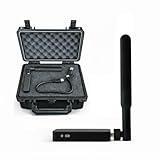
- REAL-TIME PRESENCE AWARENESS Track drones as soon as they enter your airspace with instant detection alerts. Know when and where an unmanned aircraft shows up — not hours later.
- DIARY LOG & HISTORICAL RECORDS The Bridge Kit logs every detection. Keep a searchable timeline of drone activity — perfect for reporting incidents to law enforcement, HOA boards, security teams, or legal documentation.
- PRECISE REMOTE ID STREAMING Supports Remote ID reception to capture both drone location and operator coordinates (when available). Connects directly to mobile apps for easy situational context.
- EASY SETUP + DAILY USE Portable and simple to deploy — just power and place. Ideal for both fixed site monitoring or traveling missions. Works with recommended companion apps for visual tracking.
- Backed by a Veteran-Owned U.S. Company: Trusted by teams across the country looking for affordable, effective counter-drone solutions without the complexity.
The FAA separately warns that counter-UAS systems can interfere with aircraft navigation and air navigation services. In its airport-context statement, the agency said it does not support their use by entities other than federal departments with explicit statutory authority, and noted that extensive coordination with the FAA is required to mitigate safety risks. That statement concerns airport use; it is not a complete account of every authority or jurisdiction. See the FAA’s statement on UAS detection systems at airports.
What should you do about a suspicious drone?
Do not try to jam, seize, or physically intercept the aircraft. If there is an immediate danger, contact local authorities or emergency services. Otherwise, prioritize safety and give authorities useful observations rather than confronting the operator.
Rank #2
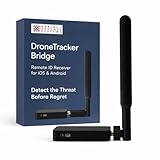
- REAL-TIME PRESENCE AWARENESS Track drones as soon as they enter your airspace with instant detection alerts. Know when and where an unmanned aircraft shows up — not hours later.
- DIARY LOG & HISTORICAL RECORDS The Bridge Kit logs every detection. Keep a searchable timeline of drone activity — perfect for reporting incidents to law enforcement, HOA boards, security teams, or legal documentation.
- PRECISE REMOTE ID STREAMING Supports Remote ID reception to capture both drone location and operator coordinates (when available). Connects directly to mobile apps for easy situational context.
- EASY SETUP + DAILY USE Portable and simple to deploy — just power and place. Ideal for both fixed site monitoring or traveling missions. Works with recommended companion apps for visual tracking.
- Backed by a Veteran-Owned U.S. Company: Trusted by teams across the country looking for affordable, effective counter-drone solutions without the complexity.
- Assess the situation. Note where and when the drone is operating and whether it appears to create an immediate danger.
- Look for the operator from a safe location. FAA public-safety guidance advises law-enforcement personnel to try to locate and identify the operator. Do not put yourself or others at risk to do so.
- Observe and document. Record the aircraft’s appearance, location, direction of travel, and activity, along with the time and place. Avoid actions that could endanger people or interfere with an investigation.
- Report the incident. Contact the relevant local authority when appropriate, and use the FAA reporting channels applicable to the incident. The FAA’s guidance for public-safety personnel covers assessment, operator identification, documentation, public safety, and reporting. Consult the FAA public-safety toolkit.
How can drones be detected without jamming them?
Detection and mitigation are different: a sensor may help identify or track an aircraft without interfering with its signals. FAA airport guidance describes these detection modalities:
- Radar: uses radio waves to detect aircraft.
- Radio-frequency sensing: detects relevant radio-frequency activity.
- Electro-optical sensing: uses visible-light imaging.
- Infrared sensing: detects infrared energy.
- Acoustic sensing: listens for sound associated with an aircraft.
Systems may use one modality or combine several. The FAA cautions that detection alone cannot determine an operator’s intent or establish the level of threat. A sensor reading is therefore not, by itself, a legal or safety determination. The FAA page describes approaches in the airport context, not consumer product rankings or performance benchmarks. Review FAA guidance on airport detection and response.
Rank #3

- 【𝐔𝐩𝐠𝐫𝐚𝐝𝐞𝐝 𝐁𝐞𝐞𝐩𝐞𝐫 𝐅𝐞𝐚𝐭𝐮𝐫𝐞】The R111S drone remote id module includes a built-in beeper, making it easier to locate lost aircraft. This enhancement provides added convenience when retrieving your drone from challenging locations, adding another layer of safety and control to the flying experience.
- 【𝐅𝐢𝐧𝐝 𝐓𝐡𝐞 𝐋𝐨𝐬𝐭 𝐀𝐢𝐫𝐜𝐫𝐚𝐟𝐭】This remote id module for drone can be used as a GPS tracker for FPV drones, RC gliders, RC helicopters, RC jet fighters, fixed-wing aircraft, fixed-wing helicopters, multirotors, flapping-wing drones, paragliding drones, etc. By integrating the aircraft's original positioning function with the module's app, it enables precise real-time tracking within a range of 500-1000 meters for dual positioning, enhancing the safety and reliability of your flight adventures.
- 【𝐅𝐀𝐀 𝐂𝐨𝐦𝐩𝐥𝐢𝐚𝐧𝐭】Ruko R111S remote id module can ensure all drones over 250g comply with FAA regulations. It is applicable to all Ruko drones and various other brands/models such as DJI Mini 2 SE, Mini 4K, Mini 3, Mini 3 Pro, Mini 4 Pro, Air 2S, Air 3, Mavic 3, Mavic 3 Pro, Avata 2, FPV, Spark, Phantom 2, Phantom 3, Phantom 3 SE, Phantom 4, Inspire 1, Inspire 2, Inspire 3, Matrice 210, Matrice 350, Matrice 600, Matrice 600 Pro; F7/F7GB2; ATOM, ATOM SE, etc.
- 【𝐂𝐨𝐦𝐩𝐚𝐜𝐭 𝐃𝐞𝐬𝐢𝐠𝐧】It only weighs 13.5g (0.48oz) with a size of 1.3*1.1*0.5 inch, more compact than other modules, and has almost no impact on drone flight.
- 【𝐋𝐨𝐧𝐠 𝐁𝐚𝐭𝐭𝐞𝐫𝐲】A full charge of R111S only takes 40 minutes and can last up to 3 hours of constant use when the buzzer is off and up to 2.5 hours when the buzzer is on, so can assist a drone for 5-6 flights. The built-in battery does not need to be replaced and can be charged directly by plugging it into the Type-C charging cable included in the package.
What authority can take further action?
U.S. rules and authority depend on the situation. The interagency advisory discusses the legal concerns surrounding detection and mitigation, while the FAA describes aviation-safety risks and the need for coordination in airport settings. If an incident calls for further action, report it to the appropriate authorities rather than attempting signal interference yourself.
This legal and safety overview is specific to U.S. federal sources and does not determine the law in other countries or resolve an individual case. Laws and agency policies can change; consult current requirements and qualified authorities for a particular situation.
Quick Recap
Product prices and availability are accurate as of the date/time indicated and are subject to change. Any price and availability information displayed on Amazon at the time of purchase will apply.
Recommended Free Tools

