
iTechGuides is reader-supported. When you buy through links on our site, we may earn an affiliate commission. As an Amazon Associate I earn from qualifying purchases. Learn more
A digital blanking interval is the part of a video timing sequence outside the active picture area. It separates active image data and carries timing and synchronization information. It has two directions: horizontal blanking between lines and vertical blanking around a field or frame transition.
What is the active video area?
The active video area is the portion of a frame in which pixel data represents the picture. In AMD’s AXI4-Stream video guide, the active area is the region where both HBlank and VBlank are inactive; outside it, those signals identify blanking periods. The exact boundaries depend on the video format and interface.
What are horizontal and vertical blanking?
Horizontal blanking
Horizontal blanking separates one active line of picture data from the next. In traditional scanning terminology, it is the time for the scan to return from the right edge to the left before another line begins. Digital systems may represent this boundary through timing signals or format-specific sample ranges rather than a physical retrace. Synchronization occupies part of the interval.
What’s actually slowing this PC down?
Pick the symptom - the matching free tool is one click away.
Vertical blanking
Vertical blanking occurs around the transition between fields or frames. Traditional terminology describes it as time for a scan to return from the bottom of the image to the top. Digital timing descriptions commonly specify a vertical sync pulse, front porch, and back porch; together, these timing parameters make up what is commonly called the vertical blanking interval. Sync therefore is part of the timing structure, not a synonym for the entire interval.
#1 Best Overall
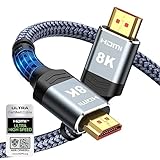
- Top Technology--8K@60HZ: This 8K Ultra-High Speed 2.1 HDMI Cable uses the most cutting-edge technology, which is compatible with 8K@60HZ,4K@240HZ and 4K@120HZ clearly displays every particle, and accurately processes every signal source.
- Upgrade Revolution: Highwings Ultra High Speed HDMI Cable 2.1 8K supports 48Gbps (6GB/s) which can will no longer be stuck or dropped frames when watching video. It is also backward compatible with HDMI 2.0b/2.0a/1.4/1.3/1.2/1.1 versions.
- For Game Enthusiasts: This 8K Ultra High Speed HDMI Cable 2.1 can achieve a super smooth picture of 4K@120HZ. Its latest game mode supports variable refresh rate, maximizes the value of the graphics card and CPU to obtain a smoother and more detailed picture.
- Reinforced high-quality materials: This 8K HDMI Cord uses Highwings' most popular classic style. The tail's anti-bending design has been upgraded to make it more durable. The military grade tensile nylon material also greatly extends its life.
- The ultimate perfectionist: Highwings every parts of the cable has been put through rigorous the performance tests in the laboratory. After we've combined every flawless part into a perfect 8K cable and it can be presented to you.
Why is blanking used in digital video?
Blanking marks where active picture samples stop and resume while preserving the timing needed to locate lines and frame transitions. It is not necessarily an empty physical pause: interfaces can encode timing and data validity as signals, and some broadcast systems use portions of vertical blanking to carry services or related data. SCTE specifies carriage of VBI services in MPEG-2 transport streams, but that does not mean every digital blanking interval contains ancillary data.
Are blanking intervals the same in every format?
No. The duration and boundaries are format-specific. For example, ARIB STD-B32 Part 1 v3.9-E1 lists a horizontal blanking duration of 10.70 microseconds for its 525/59.94/2:1 timing case. SMPTE 244M-2003 gives digital horizontal blanking as samples 768 through 909 inclusive in the specified digital composite format, outside digital vertical blanking. Neither value is a universal digital-video rule.
Rank #2

- Certified UHD 8K HDMI 2.1 Cable: Highwings Certified Ultra High Speed UHD HDMI 2.1 Cable uses the most cutting-edge technology, is compatible with10K, 8K 60Hz, 4K 240Hz 120Hz, clearly displays every particle, and accurately processes every signal source
- Upgraded Revolution-HDMI 2.1: Highwings UHD HDMI Cable 6ft conforms to the standard HDMI 2.1 version, it has a qualitative leap from 18Gbps to 48Gbps (6GB/s) directly for the transmission speed , there will no longer be stuck or dropped frames when watching video
- High-Quality Materials: Highwings 6ft UHD HDMI Cable uses the most popular classic style, the upgraded strength of the aluminum alloy shell and the tail's anti-bending design make it more durable.The military grade tensile nylon material greatly makes it last longer
- Design For Game Enthusiasts: This UHD HDMI CORD can achieve a super smooth picture of 4K@120Hz, 8K@60Hz and 10K. Its latest game mode supports variable refresh rate, maximizes the value of the graphics card and CPU, elevate gaming experience to a whole new level
- The Ultimate Perfectionist: Each UHD HDMI cable even every part has been put through rigorous tests. We've combined every flawless part into a perfect 8K HDMI cable, after pass the performance tests in the laboratory and you get a perfect HDMI cable 2-pack
When comparing timing modes, check active dimensions, horizontal and vertical blanking extents, sync placement and polarity, total timing, and pixel-clock requirements together. A single blanking number is not enough to establish whether two modes are compatible.
Do these 3 things before closing this tab:
1Fix the driver behind crashes, sound loss and screen glitches2Repair Windows errors before they cause bigger problems3Scan for outdated or missing drivers - takes under a minuteHow does digital blanking differ from the older analog idea?
The term comes from scanning systems, where blanking time allowed a display beam to retrace between lines or fields. Digital video retains the timing concept, but it is often defined operationally through sync, porch, and data-valid signals. A digital blanking interval should therefore not be understood as requiring a CRT-style physical retrace.
Quick Recap
Best Value

- Superior Display, Swift Connectivity: Elevate your viewing experience to unparalleled clarity with 8K@60Hz, and enjoy smoother visuals and reduced lag with support for 4K@120Hz and 4K@60Hz.
- Quick and Seamless Video Transfer: With the latest HDMI technology, stream or transfer videos without interruptions, and witness the power of up to 48 Gbps in bandwidth, ensuring consistently clear content.
- Lasts Longer, Performs Stronger: This cable is designed to withstand up to 1,000 bends throughout its lifespan, meaning fewer replacements and continuous peace of mind.
- One Cable, Many Solutions: Whether you're connecting tablets, laptops, HDMI devices, projectors, or desktop screens, this cable effortlessly connects them all.
- What You Get: HDMI Cable (6 ft, 8K), welcome guide, 18-month warranty, and our friendly customer service.
Rank #4

- IMPORTANT: This cable is not USB-A compatible. Signal direction is one-way only: DisplayPort (computer) → HDMI (display)
- IN THE BOX: DisplayPort to HDMI 6-foot display cable
- CONNECTIVITY: Unidirectional passive cable, connects DisplayPort-enabled computer to an HDMI display. Supports Dual-Mode DisplayPort (DP++). Does not support LVDS signal sources such as audio/video players; NOT compatible with a USB port
- PERFORMANCE: Supports uncompressed digital audio channels (7.1, 5.1, or 2) and video resolutions up to 1920x1200 and 1080p (Full HD)
- USES: Transmits audio and video from computer to HD display; great for showing movies on a big-screen HDTV, presenting work on a projector, or configuring a second monitor or mirrored displays
Rank #3

- Certified HDMI Cable: The package has an official HDMI certification label. HDMI Officially Certified Fully compliant with the HDMI Forum’s strict requirements as specified in HDMI
- It supports the latest features: 0.01ms, low EMI, SBTM, 48Gbps Bandwidth, ALLM, VRR, QMS, QFT, Dynamic HDR, HDR10+, CEC, HDCP 2.2 & 2.3, VESA DSC 1.2a
- Resolution & Deep Color: 10k@60Hz 12-bit, 8K@60Hz 4:4:4 12-bit, 5k@144Hz 120Hz 90Hz 4:4:4 12-bit, 4K@240Hz 120Hz 144Hz 12-bit, 2k@360H 240Hz 165Hz,1080p@360Hz, 720p, 480p
- Digital Audio Video Format Support: The latest high-bitrate audio formats are supported including eARC, ARC, DTS Master, DTS:X, Dol-by TrueHD, Dol-by Vision, Dol-by Atmos and more
- Wide Compatibility: Gaming PC, FreeSync, G-SYNC, All GeForce RTX 40&30 series, Soundbar, PS5 PS4 PS3, Xbox Series X, Xbox Series S, All Apple TV+, All OLED TV, All Mac-book, laptop, Projector, Monitor, Netflix, Fi-re TV, Ro-ku TV, SHIELD TV
Sources
- AMD, HDMI 2.1 Transmitter Subsystem Product Guide PG350, Native Video Input Interface
- Analog Devices, Video Basics
- AMD, AXI4-Stream Video IP and System Design Guide UG934, Description of Timing Variables
- SMPTE 244M-2003 text reproduced in an analogue-video-specifications archive
- SCTE, ANSI/SCTE 21 2017 (R2022), Standard for Carriage of VBI Data in Cable Digital Transport Streams
- ARIB, STD-B32 Part 1 v3.9-E1
Product prices and availability are accurate as of the date/time indicated and are subject to change. Any price and availability information displayed on Amazon at the time of purchase will apply.

