
Cynlib was a C++ hardware-modeling and simulation environment that Netrake used to explore its product’s architecture before refining it in RTL. The model let the startup analyze transactions across the whole product; contemporary trade reporting says Netrake went on to working silicon with Cynlib.
What was Cynlib?
Cynlib, also styled CynLib, was software for describing and simulating hardware—not a processor chip or a consumer product. Its C++ class library provided ways to represent hardware modules, concurrent processes, event synchronization, and bit-oriented data. A simulation kernel ran compiled models as executable simulations of the described system.
Those abstractions made it possible to explore a design as a functioning system before committing to a detailed RTL implementation. Cynlib also supported Verilog co-simulation, allowing a C++ model and Verilog components to participate in simulation together.
How did Netrake use Cynlib?
Netrake, an IC startup, built a high-level model of an entire product in Cynlib. It used that model for transaction-level functional analysis: designers could examine how the architecture handled transactions and investigate design choices before refining the system in RTL.
Do these 3 things before closing this tab:
1Scan for outdated or missing drivers - takes under a minute2Repair Windows errors before they cause bigger problems3Fix the driver behind crashes, sound loss and screen glitches#1 Best Overall
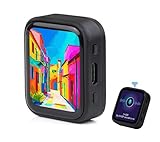
- ESP32-S3R8 Processor--- Equipped with ESP32-S3R8 Xtensa 32-bit LX7 dual-core processor, up to 240MHz main frequency. Supports 2.4GHz W-i-F-i (802.11 b/g/n) and Blue--tooth 5 (LE), with onboard antenna. Built in 512KB of SRAM and 384KB ROM, with onboard 8MB PSRAM and an external 16MB Flash memory.
- AMOLED Touch Screen--- Onboard 1.8inch AMOLED display for clear color picture display, 368 x 448 resolution, 16.7M color, 178° wide viewing angle. Compared to those traditional LCD displays, the AMOLED screen features precise light-control capability, representing more delicate colors, more picture details, and more vivid video image.
- Onboard Audio Codec---Supports high-quality audio processing, providing clear and high-quality audio input and output. Supports Offline Speech recognition and AI Speech Interaction---Allows access to online large model platforms to support more AI application scenarios.
- For Various Smart Devices---Suitable For Various Smart Devices Development, Can Realize Human-Computer Interaction Function. Supports installing ba|tte|ry inside the case for independent operation. (Note: this version doesn't include ba|tte|ry ) Dedicated Black Case---with removable back cover for easy embedded into the projects and DIY design.
- Sensor and Chip---Onboard QMI8658 6-axis IMU (3-axis accelerometer and 3-axis gyroscope) for detecting motion gesture, counting steps, etc. Built-in SH8601 display driver and FT3168 capacitive touch chip, using QSPI and I2C communication respectively, effectively saving the IO resources.
The distinction matters: the account describes Cynlib as an early architectural modeling and analysis environment. It does not establish that Netrake synthesized the Cynlib model itself into the finished chip. Contemporary trade reporting does say that Netrake reached working silicon with Cynlib in its design process.
Was Cynlib a replacement for Verilog?
Not in the sense of replacing RTL design or eliminating Verilog. Cynlib offered a higher-level C++ view for architectural exploration, while its Verilog co-simulation support provided a way to connect that view with Verilog models. The available accounts do not establish a universal synthesis flow from Cynlib models to hardware, so it is more accurate to describe it as a modeling and simulation approach than as a drop-in Verilog replacement.
Rank #2

- 2.4GHz Dual Mode WiFi + Bluetooth Development Board
- Support LWIP protocol, Freertos
- SupportThree Modes: AP, STA, and AP+STA
- Ultra-Low power consumption, Compatible with Arduino IDE
- ESP32 is a safe, reliable, and scalable to a variety of applications
How did Cynlib differ from Verilog and SystemC?
| Dimension | Cynlib | Verilog | SystemC |
|---|---|---|---|
| Role described in the historical accounts | C++ modeling and simulation for architectural exploration | Could participate in co-simulation with Cynlib; the accounts do not give a broader comparison of Verilog’s role | The later standardized alternative that gained ecosystem value |
| Modeling features | Classes for modules, concurrent processes, events, and bit-oriented variables, run by a simulation kernel | Not specified in enough detail for a feature-by-feature comparison | Kevin Kranen described Cynlib as “kind of a subset of SystemC” |
| Interoperability | Verilog co-simulation was supported | Could be co-simulated with Cynlib | The available accounts do not specify interoperability details |
| Standardization and long-term ecosystem | Did not retain the strategic advantage of a standard ecosystem | Not compared on this point in the available accounts | Its standardization gave it broader ecosystem value, according to Cynlib proponent John Sanguinetti |
The historical accounts do not provide a sufficiently documented benchmark for a reliable speed comparison, nor do they establish current tool availability or a complete synthesis-path comparison.
Why did designers move from Cynlib to SystemC?
The key advantage was standardization, not a claim that Cynlib’s approach was inherently inferior. John Sanguinetti, a CynApps/Forte executive, said: “The only real change we made was in going from Cynlib to SystemC. While we felt that Cynlib was more elegant than SystemC, the value of a standard is undeniable.”
Quick wins for a faster PC:
Fix the driver behind crashes, sound loss and screen glitchesFind Drivers →Repair Windows errors before they cause bigger problemsFix Now →Scan for outdated or missing drivers - takes under a minuteDriver Scan →Rank #3

- 2.4GHz Dual Mode WiFi + Bluetooth Development Board
- Support LWIP protocol, Freertos;ESP32 is a safe, reliable, and scalable to a variety of applications
- SupportThree Modes: AP, STA, and AP+STA
- Ultra-Low power consumption, Compatible with Arduino IDE
- 1PCS 30Pin ESP32 Development Board 2.4GHz WiFi Dual Cores Microcontroller Integrated with Antenna RF Low Noise Amplifiers Filters
A common standard can make a modeling approach more useful across organizations and tools than a mature but less widely standardized alternative. Cynlib’s proponents could therefore regard it as elegant and mature while still moving toward SystemC for the ecosystem benefits of a standard.
Independent reader supportYour contribution helps us test, update, and keep practical guides available for everyone.What happened to Cynlib?
Cynlib’s historical significance is as an early C++ hardware-modeling environment and as a predecessor to work that continued in SystemC. The historical accounts discussed here do not establish a current Cynlib release or an actively maintained commercial product. They support its role in Netrake’s design work and its loss of strategic ground as SystemC’s standard ecosystem grew, but not a definitive account of when or how every Cynlib offering ended.
Quick Recap
Best Value

- 2.4GHz Dual Mode WiFi + Bluetooth Development Board
- Ultra-Low power consumption, works perfectly with the Arduino IDE
- Support LWIP protocol, Freertos
- SupportThree Modes: AP, STA, and AP+STA
- ESP32 is a safe, reliable, and scalable to a variety of applications
Rank #4

- Powerful Processor: Equipped with ESP32-S3R8 Xtensa 32-bit LX7 dual-core processor, up to 240MHz main frequency. Supports 2.4GHz Wi-Fi (802.11 b/g/n) and Bluetooth 5 (LE), with onboard antenna. Built-in 512KB of SRAM and 384KB ROM, with onboard 8MB PSRAM and an external 16MB Flash memory.
- Driver and Touch LCD: Onboard 1.83inch IPS Capacitive Touch Display, 240 × 284 resolution, 65K color. Built-in ST7789P display driver and CST816D capacitive touch chip, using SPI and I2C communication respectively, effectively saving the IO resources. Adopts Type-C port to improve user convenience and device compatibility.
- Supports Offline Speech recognition and AI Speech Interaction: Allows access to online large model platforms such as ChatGPT, DeepSeek, Doubao, etc. Onboard ES8311 audio codec chip and ES7210 echo cancellation circuit to meet daily audio application scenarios.
- Multifunctional Sensor: Onboard QMI8658 6-axis IMU (3-axis accelerometer and 3-axis gyroscope) for detecting motion gestures, counting steps, etc; PCF85063 RTC chip connected to the battry via the AXP2101 for uninterrupted power supply; Onboard PWR and BOOT programmable buttons for easy custom function development.
- Rich Peripheral Interface: Reserved 1 × I2C, 1 × UART and 1 × USB pads for external device connection and debugging, enabling flexible peripheral configuration. Onboard TF card slot for extended storage and fast data transfer, suitable for applications such as data recording and media playback, simplifying circuit design.
Product prices and availability are accurate as of the date/time indicated and are subject to change. Any price and availability information displayed on Amazon at the time of purchase will apply.

