
Quick wins for a faster PC:
Fix the driver behind crashes, sound loss and screen glitchesFind Drivers →Clear out junk files and repair common Windows errorsFree Scan →Scan for outdated or missing drivers - takes under a minuteDriver Scan →Canada does not license a spaceport as a facility. Instead, a launch operator seeking to launch from Canadian territory applies to the Minister of Transport for permission. The proposed site, vehicle, flight profile, and safety controls are reviewed together; there is no single setback or safety-zone radius that applies to every launch.
How does the Canadian launch-site approval process work?
- The operator proposes a site and mission. The application describes the launch site, vehicle, flight profile, and related pre- and post-flight ground operations. The requirements cover uncrewed commercial launch vehicles and experimental rockets, but not amateur rockets. See Transport Canada’s Commercial space launches in Canada overview and application requirements.
- Transport Canada reviews safety and public interest. The Minister considers whether a launch is in the public interest and unlikely to affect aviation safety. Transport Canada consults federal partners and the relevant provincial or territorial government. Its current overview says it will work with up to 15 other federal departments to review an application.
- The operator demonstrates that the site and operation can be managed safely. The application addresses site safety, access control, ground hazards, flight-safety analysis, and surveillance and notification for relevant hazard areas. An authorization may include conditions.
Transport Canada’s overview identifies proximity to populated places, compliance with environmental laws, national-security risks, and possible effects on air and marine traffic as factors in the Minister’s review. These considerations are assessed in relation to the proposed mission, not as a published ranking of Canadian sites.
What makes a proposed location suitable?
The applicant must show that the site can safely accommodate the proposed vehicle. A key boundary criterion links the distance from the launch point to the nearest site boundary to the vehicle’s debris dispersion radius: the boundary must be at least that far away. The operator must support the proposed radius with evidence based on the maximum debris travel distance from a worst-case launch-vehicle failure in the launch area.
That is a vehicle- and weight-class-specific assessment, not a standard distance for all sites. Mission geometry matters too: the application analyzes the flight profile, including trajectories, ground tracks, impact locations, and contingency profiles. A location that works for one vehicle or trajectory cannot automatically be assumed suitable for another.
The Tool Desk
Outbyte PC Repair FREEClear out junk files and repair common Windows errorsFree Scan →Outbyte Driver Updater FREEFix the driver behind crashes, sound loss and screen glitchesFind Drivers →#1 Best Overall

- BEGINNER MODEL-ROCKET LAUNCH SET: The Tandem-X rocket-model launch set offers adults and kids ages 10+ hours of fun during the holidays as they complete and launch our Amazon and Crossfire ISX rocket models. This set includes the easy-to-assemble Amazon model parts, the Crossfire ISX model parts, parachutes, and the launch pad system. It requires rocket engines, Starters, Recovery Wadding, and 4 high-quality 1.5-volt AA alkaline batteries for launch use (sold separately).
- 2 SOARING ALTITUDE HEIGHTS: Our Tandem X set offers a high-performing power duo with our giant 30-inch Amazon model (600-foot projected altitude with a C6-5 rocket engine) and our streamlined 15.6-inch Crossfire ISX model (1,150-foot projected altitude with a C6-7 rocket engine). Other compatible Estes model-rocket engines for Amazon model: B4-2, B4-4, B6-2, B6-4, C5-3, and C6-3. Other compatible engines for Crossfire ISX: A8-3, B4-4, B6-4, and C6-5. All engines sold separately.
- READY TO ASSEMBLE: Our beginner model-rocket launch set comes with 2 build options. The precolored Amazon model features plastic fins and self-stick graphics and can be built in an hour. The Crossfire ISX model comes with laser-cut wood fins, self-stick decals, and aerodynamic parts. Pair the rockets with the included Porta Pad II Launch Pad and Electron Beam Launch Controller for a hands-on educational activity or a unique Christmas gift for a budding scientist or a space aficionado.
- SAFETY FIRST, FUN ALWAYS: Our rockets and rocket launch accessories are designed to be used with the NAR (National Association of Rocketry) model-rocket safety code. Always ensure you have an appropriate launch site, stand back at least 15 ft., insert the safety key, issue a countdown, and then you can let your rocket fly!
- WE IGNITE IMAGINATIONS: Since 1958, Estes has created educational rocket kits and displays designed for an unforgettable aerospace experience. As a family-owned company, we have grown to offer exciting STEM products that engage aspiring rocketeers and the future minds of aerospace.
In practical terms, a proposed site is assessed against factors such as:
- Nearby communities, public access, and the ability to keep people and property safe.
- Whether debris hazards can be contained within appropriate boundaries and controls.
- Exposure of air and marine traffic to the proposed trajectory and hazard areas.
- Flight-path and contingency geometry, including impact locations.
- Environmental-law compliance, security concerns, and potential effects on critical assets.
- The ability to survey, notify, control, or evacuate relevant hazard areas when needed.
These are useful comparison factors, not an official scoring rubric. The cited Transport Canada material does not establish a shortlist or ranking of named Canadian launch sites.
Rank #2

- BEGINNER MODEL ROCKET LAUNCH SET: The Estes Alpha III launch set lets kids ages 10+ and hobbyists easily build and launch this iconic model rocket. The model rocket kit includes rocket parts, engine mount, decals, a parachute, a launch pad system, and instructions. For blastoff, you’ll need Estes rocket engines, Starters, Recovery Wadding, and 4 high-quality 1.5-volt AA alkaline batteries (not included).
- SOARS UP TO 1,150 FT.: Our Alpha III model rocket is designed for first-time STEM kit builders and climbs up to a projected altitude of 1,150 ft. (351 m). It’s compatible with 1/2A6-2, A8-3, A8-5, B4-4, B6-4, B6-6, C6-5, or C6-7 Estes rocket engines (sold separately).
- READY TO ASSEMBLE: Rocket building sparks creativity and a love for science and outer space! This beginner Alpha III model kit is easily put together with 1 hour of preparation and includes decals. It comes with a Porta-Pad II Launch Pad and Electron Beam Launch Controller for an unforgettable blastoff for first-time rocketeers.
- SAFETY FIRST, FUN ALWAYS: Our rockets are designed to be used with the NAR (National Association of Rocketry) model-rocket safety code. Always ensure you have an appropriate launch site, stand back at least 15 ft., insert the safety key, issue a countdown, and then you can let your rocket fly!
- ESTES EDUCATION: Since 1958, Estes has created educational rocket kits designed for an unforgettable launch experience. As a family-owned, US-based company, we offer exciting and engaging STEM products for all interests, skills, and power levels.
Does Canada license spaceports or launch operators?
Transport Canada states: “Transport Canada doesn’t license spaceports.” Spaceports are privately owned and operated; the permission process described by the Department applies to the operator seeking to launch. The operator applies to the Minister of Transport under the Interim Commercial Space Launch Program, with the application requirements setting out what must be demonstrated for launch authorization.
Legislation may change this framework. On April 21, 2026, Transport Canada announced that the Minister had introduced the Canadian Space Launch Act, describing it as intended to establish authorities for safe oversight of launch and re-entry from Canadian territory. That announcement confirms introduction, not passage, commencement, or replacement of the interim process. The cited consultation page records a consultation period that closed in 2026, but does not establish its outcome or later regulatory changes. Check the latest official authorization instructions and legislative status before relying on a subsequent development: Transport Canada’s overview, application requirements, and consultation page.
Rank #3

- INTERMEDIATE MODEL-ROCKET-BUILDING KIT: This Estes model rocket kit bulk pack offers kids ages 10+ the chance to build and blast our high-flying 1754 Wizard model rocket during holidays and special occasions. Each intermediate building kit includes the model parts, an engine mount, design decals, a recovery parachute, and instructions. Each requires rocket engines, a launch pad system, Starters, Recovery Wadding, and 4 high-quality 1.5-volt AA alkaline batteries for launch (sold separately).
- SOAR UP TO 1,600 FT.: Our spellbinding 1754 Wizard rocket model was made for wind-drift studies or flight competitions. It has a projected altitude of 1,600 ft. (488 m) on a C6-7 Estes model-rocket engine (sold separately) and is also compatible with 1/2A6-2, A8-3, A8-5, B4-4, B6-4, B6-6, or C6-5 rocket engines.
- READY TO ASSEMBLE: Rocket-building kits are creative, educational gift ideas for Christmas or special-occasion surprises! Our intermediate-level rocket-building bulk pack comes with ready-to-build rockets that each require approximately 1 hour of assembly time. Add the included decals and pair the rockets with the right engines, Porta-Pad II Launch Pad, and Electron Beam Launch Controller (sold separately) for a memorable blastoff.
- SAFETY FIRST, FUN ALWAYS: Our rockets are designed to be used with the NAR (National Association of Rocketry) model-rocket safety code. Always ensure you have an appropriate launch site, stand back at least 15 ft., insert the safety key, issue a countdown, and then you can let your rocket fly!
- ESTES EDUCATION: Estes Education provides educators with the tools for success through our interdisciplinary STEM products, accessible lessons, and online resources. Our mission is to cultivate the skills and confidence necessary to easily implement science and rocketry in classrooms, youth programs, and beyond.
What do “safety zones” mean for a launch?
The term can refer to several related controls, rather than one universal circle around a launch pad. The requirements distinguish ground safety, site-boundary separation, and hazard areas associated with flight.
Ground hazards and site access
Operators must protect people and property during hazardous launch preparation and operations involving the vehicle, as well as recovery or return to a safe condition and site restoration. They must prevent unauthorized access using measures suited to the site and risk, such as personnel, surveillance, or physical barriers.
Rank #4
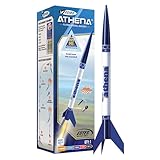
- BEGINNER MODEL ROCKET SET: The Estes Athena model rocket gives kids ages 10+ and beginners an easy way to experience real rocket launches with no building required! This ready-to-fly model rocket kit includes a fully prepared rocket with a parachute. This rocket requires Estes rocket engines, a launch pad system, Starters, Recovery Wadding, and 4 high-quality 1.5-volt AA alkaline batteries (sold separately) for launch use.
- SOARS UP TO 1,125 FT.: Our high-flying Athena rocket features a bright 12-inch parachute for safe recovery and soars up to a projected altitude of 1,125 ft. (343 m) with a C6-7 engine (sold separately). It is also compatible with the A8-3, B4-4, B6-4, and C6-5 rocket engines.
- READY TO FLY: Rocket-building kits are creative, educational gift ideas for Christmas or special-occasion surprises! This beginner-friendly Athena rocket comes fully assembled and just takes 15 minutes of preparation time. This model pairs with the Porta Pad II Launch Pad and Electron Beam Launch Controller (sold separately) for blastoff.SAFETY FIRST, FUN ALWAYS: Our rockets are designed to be used with the NAR (National Association of Rocketry) model-rocket safety code. Always ensure you have an appropriate launch site, stand back at least 15 ft., insert the safety key, issue a countdown, and then you can let your rocket fly!
- SAFETY FIRST, FUN ALWAYS: Our rockets are designed to be used with the NAR (National Association of Rocketry) model-rocket safety code. Always ensure you have an appropriate launch site, stand back at least 15 ft., insert the safety key, issue a countdown, and then you can let your rocket fly!
- ESTES EDUCATION: Since 1958, Estes has created educational rocket kits designed for an unforgettable launch experience. As a family-owned, US-based company, we offer exciting and engaging STEM products for all interests, skills, and power levels.
Site boundary and debris dispersion
The minimum separation between the launch point and the nearest site boundary is tied to the proposed vehicle’s debris dispersion radius and worst-case failure analysis. The operator supplies evidence for the proposed radius; it is not a fixed national setback.
Flight hazard areas
Depending on the operation, areas on land, at sea, or in the air may need to be surveyed, publicized, controlled, or evacuated to meet safety criteria. Applications describe day-of-flight surveillance and control, hazard-area publication, and flight-commit criteria related to any necessary toxic-hazard evacuation. The dimensions and measures depend on the vehicle, trajectory, hazard analysis, and launch-day conditions.
Outdated Drivers Are Slowing You Down
One free scan finds every outdated or missing driver and matches the right update for your exact hardware.Free scan · exact hardware matchWindows Errors? Fix Them Before They Spread
Repair common Windows errors and clear accumulated junk for a smoother, more stable PC - no reinstall needed.Free scan · no reinstallTechnical risk criteria are not personal risk estimates
Transport Canada’s listed application requirements set an aircraft hazard-area criterion: the probability of impact with debris capable of causing a casualty to an aircraft other than the launch vehicle must not exceed 1 × 10⁻⁶. For critical assets, the listed criteria are 1 × 10⁻³ for each critical asset other than a critical payload, and 1 × 10⁻⁴ for each critical payload. These are technical criteria for the relevant hazard and asset analyses, not estimates of an individual’s risk of death.
Which distances should not be mistaken for safety-zone sizes?
The application requirements refer to an offshore location more than 370 km (200 nautical miles) from land when defining an area outside the UN Exclusive Economic Zone. This is a geographic scope reference in the requirements, not a launch-site boundary setback or a general safety-zone radius.
Quick Recap
Product prices and availability are accurate as of the date/time indicated and are subject to change. Any price and availability information displayed on Amazon at the time of purchase will apply.

