
Quick wins for a faster PC:
Clear out junk files and repair common Windows errorsFree Scan →Scan for outdated or missing drivers - takes under a minuteDriver Scan →iTechGuides is reader-supported. When you buy through links on our site, we may earn an affiliate commission. As an Amazon Associate I earn from qualifying purchases. Learn more
Designing an IoT platform for 99.999% availability starts by defining which customer-visible operation must succeed, then measuring and engineering the complete path that supports it. Five nines is not a property conferred by a multi-region deployment: device connectivity, routing, identity, ingestion, processing, storage, and recovery all affect whether the service actually works.
Define what “available” means for your IoT service
Availability can mean the share of time an application is usable or the share of eligible requests it serves successfully. Those measures can diverge: a service may be reachable while telemetry is rejected, processed incorrectly, or delivered too late. Google Cloud describes availability as “the percentage of time that an application is usable,” but the platform owner must define what usable means for its customers. Google Cloud infrastructure reliability guide
Choose a transaction that represents customer value and define its boundaries. For example, count an authenticated device publish as successful only if the platform accepts the telemetry, returns the required acknowledgment within a specified latency, and meets the operation’s data-quality requirement. For a device-management product, a qualifying transaction might instead be retrieving current device state. These are design examples, not vendor commitments.
What’s actually slowing this PC down?
Pick the symptom - the matching free tool is one click away.
- Specify the eligible operations, measurement window, latency limit, and what counts as a successful response.
- Decide how partial service is counted: for example, whether an affected region, device cohort, or operation is measured separately.
- Define exclusions and how planned work, customer-side failures, and degraded-but-partially-working behavior are treated.
- Set a separate measure for correctness and freshness when a successful response alone cannot demonstrate that data is usable.
Time-based uptime and request-based success answer different questions. A time-based measure weights every interval equally; a request-based measure weights periods according to traffic and can reveal failures hidden by an “up” status. Google SRE recommends managing reliability as risk rather than maximizing uptime in isolation. Google SRE, “Embracing risk and reliability engineering”
#1 Best Overall

- An RS232/485/422 device data acquisitor/IoT gateway designed for industrial environment. It combines multi functions in one, including serial server, Modbus gateway, MQTT gateway, RS485 to JSON, etc
- The module features RS232/485/422 and Ethernet port with PoE function, uses DC port (outer diameter: 5.5mm, inner diameter: 21mm) and screw terminals for power input. The case with rail-mount support, small in size, easy to install, cost-effective
- Support PoE Ethernet power supply, applicable to IEEE 802.3af PoE standard. Support power supply of terminal block and DC 5.5 power interface, DC 6~36V wide voltage range input. It is suitable for the network upgrade of Modbus and can cooperate with 3D force control modal components
- Support multiple communication modes. Support TCP server/TCP client/UDP mode/UDP multicast. MQTT/JSON to Modbus. More flexible conversion of multiple protocols. Support multi hosts roll polling. Different Network devices will be identified and responded respectively, No more Crosstalk issue while communicating with multi Network devices
- User-Defined Heartbeat/Registration Packet. Easy for Cloud Communication and Device Identification. Support NTP Protocol. Getting Network Time Info for serial output or data Upload. Suitable for applications like data acquisition, IoT gateway, safety & security IoT, and intelligent instrument monitoring
Translate five nines into an explicit error budget
At 99.999%, the unavailable fraction is 0.001%. The permitted downtime therefore depends on the evaluation window. In a 30-day month that is about 25.9 seconds; across a 365-day year it is about 5.26 minutes. These are arithmetic conversions of the target, not measured performance or a promise that a particular platform can meet it.
| Google Cloud location-level target | Illustrative downtime in a 30-day month | What the figure represents |
|---|---|---|
| 99.9% — single zone | 43.2 minutes | Google Cloud infrastructure reliability target; not an end-to-end IoT application result. |
| 99.99% — multiple zones in one region | 4.3 minutes | Google Cloud infrastructure reliability target; actual service terms and workload outcomes can differ. |
| 99.999% — multiple regions | 26 seconds | Google Cloud infrastructure reliability target, not a universal guarantee; individual service SLAs depend on service and configuration. |
The location-level targets and rounded downtime examples come from Google Cloud’s building blocks of reliability guidance. A target for infrastructure topology is not an availability guarantee for an arbitrary application. For example, that guide describes a Bigtable minimum uptime SLA of 99.999% for clusters in three or more regions when multi-cluster routing is configured, and 99.9% with single-cluster routing regardless of cluster count or distribution. These figures apply to that named service and configuration; check its current terms before using them in a design or contract.
Use the error budget as an operating constraint: decide how much of it can be consumed by incidents, maintenance, and changes under the chosen measurement rules. The budget is useful only if teams can see its consumption and act on it.
Measure the whole device-to-outcome path
Model the dependencies between a device action and the customer-visible result. Depending on the service, the path can include device power and local networking, an edge gateway, DNS and routing, load balancing, broker or endpoint, credential and authorization services, stream processing, storage, application APIs, dashboards or control plane, and external dependencies. A reachability check on the broker alone cannot show that the full operation succeeds.
For each dependency, document the failure it can introduce, its owner, how it is monitored, and what happens when it is unavailable. Track the properties that determine whether the transaction remains useful: success rate, latency, capacity or throttling, throughput, data correctness, and pipeline freshness. Microsoft lists success rate, latency, capacity, availability, and throughput as common reliability objectives; Google Cloud also identifies correctness and freshness as reliability considerations. Microsoft Learn: Architecture strategies for defining reliability targets
Rank #2
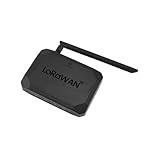
- NO SUBSCRIPTION FEES & PRIVATE LORAWAN NETWORK: Build a local LoRaWAN IoT network with the built-in SIoT server and pre-installed Node-RED. Collect data, create dashboards, and run automation flows locally without required cloud service fees. Suitable for DIY makers, home gardeners, educators, and small IoT prototype projects.
- LOCAL DATA PROCESSING & PRIVACY CONTROL: Sensor data can be processed on the local network through the built‑in MQTT/SIoT server, reducing reliance on third‑party cloud platforms. Local automation rules continue running when internet access is unavailable — suitable for home, garden, greenhouse, and classroom IoT setups.
- 4KM COVERAGE & 8-CHANNEL RELIABILITY: Equipped with the SX1302 8-channel LoRaWAN chip, -140dBm sensitivity, 27dBm max transmit power, and included 5dBi antenna. Supports up to 4km coverage in open environments, helping connect garden sensors, greenhouse nodes, garages, mailboxes, and remote monitoring points.
- NODE-RED DRAG-AND-DROP VISUAL AUTOMATION:Automation rules, data dashboards, and control logic can be built with little to no coding using the pre‑installed Node‑RED. Flows such as reading soil moisture, checking temperature, and sending relay commands are created through a visual interface — reducing setup time for maker, education, and prototype projects.
- EASY SETUP WITH WIFI AP & MQTT INTEGRATION: Configure the gateway via Wi-Fi AP mode using a laptop or mobile device. Built-in MQTT broker supports integration with Node-RED dashboards, and other MQTT-compatible platforms. Designed for indoor residential, educational, and prototyping use; not intended for outdoor installation.
Segment measurements by operation, region, protocol, and device cohort where those distinctions affect customer impact. A fleet-wide average can conceal a failing group of devices, while a service-wide uptime metric can conceal stale or incorrect telemetry.
Choose fault domains for the failures you need to survive
Zones and regions can reduce exposure to some infrastructure failures, but redundancy helps only when the system can continue through the targeted event. Examine whether routing, state, credentials, data replication, downstream dependencies, and on-call procedures remain available together. Separate redundant instances across independent failure domains, and identify shared causes—such as a common configuration, identity dependency, or deployment—that could defeat both copies.
The Tool Desk
Outbyte Driver Updater FREEFix the driver behind crashes, sound loss and screen glitchesFind Drivers →Outbyte PC Repair FREERepair Windows errors before they cause bigger problemsFix Now →Do not calculate end-to-end availability by simply multiplying component uptime figures or assuming replicas fail independently. Google Cloud’s reliability guidance explains that aggregate availability depends on component SLAs and the placement of redundant instances in separate failure domains; correlated failures invalidate simple independence assumptions. Google Cloud: Building blocks of reliability
When comparing deployment choices, include customer impact of a zone or region event, data replication and routing behavior, latency, recovery objectives, service-specific terms, operational complexity, and cost. More locations do not automatically mean a more resilient workload.
Select an ingestion pattern that matches device behavior
MQTT-to-messaging connectors and full MQTT brokers are not interchangeable. A connector can simplify forwarding and lower the amount of broker functionality the operator must run, but it may omit MQTT features devices depend on. A full broker can provide broader MQTT behavior while increasing operating complexity and cost. Confirm the actual implementation, supported MQTT version and features, QoS behavior, persistent-session behavior, and shared-subscription support rather than relying on an “MQTT compatible” label. Google Cloud’s IoT architecture guidance explains the implications of connector and broker approaches. Google Cloud: IoT platform product architecture
Rank #3

- OFFICIAL LANTRONIX PRODUCT: IoT Device Gateway - Model SGX5150BKT
- PRODUCT DETAILS: SGX 5150 IoT Device Gateway - dual-band 802.11a/b/g/n/ac Wi-Fi, Ethernet, RS-232/485 serial and USB 2.0 host/device connectivity
- WIRELESS: Dual-band 802.11a/b/g/n/ac Wi-Fi with enterprise-class security
- ENTERPRISE SECURITY: Built-in security with encrypted communications and secure management
- LANTRONIX WARRANTY: Backed by Lantronix limited warranty with professional technical support
| Pattern or protocol | When to consider it | Trade-off to verify |
|---|---|---|
| MQTT-to-messaging connector | Devices need MQTT connectivity and the required feature set is supported by the connector. | Potentially less broker maintenance, but supported MQTT semantics may be narrower. |
| Full MQTT broker | Devices rely on broader bidirectional MQTT behavior or features the connector does not provide. | Broader protocol capability can mean more management and operating cost. |
| HTTPS endpoint | Device and application environments benefit from broad support and existing HTTP tooling. | More widely supported, but higher overhead than MQTT. |
| CoAP endpoint | Constrained devices or small-footprint sensors suit a constrained application protocol. | Confirm that available device and operational tooling support the choice. |
MQTT QoS levels and persistent sessions help shape delivery behavior, but a protocol delivery setting alone does not establish exactly-once business processing or end-to-end availability. Define how the application handles duplicates, delayed messages, and replay. MQTT.org: MQTT, the Standard for IoT Messaging
Design degraded operation and recovery before an outage
Specify what devices and services do when connectivity or a dependency fails. If devices can buffer telemetry locally, define buffer limits, retention, and behavior when full. Set retry and backoff behavior to avoid a reconnect storm after service restoration. Decide how delayed or duplicate events are identified, ordered where necessary, and reconciled by downstream processing.
For each critical operation, define recovery-time and recovery-point objectives: how quickly service should return and how much data loss, if any, is acceptable. Map those objectives to replication, queues, local buffering, replay procedures, and operator actions. A recovery plan is incomplete if the data store fails over but devices cannot reconnect, identities cannot be checked, or queued data cannot be drained safely.
Independent reader supportYour contribution helps us test, update, and keep practical guides available for everyone.Make device lifecycle and security operational responsibilities
Assign ownership and recovery behavior for device identity, credential provisioning, authentication, authorization, revocation, certificate rotation, audit, device state, firmware and configuration rollout, rollback, and telemetry retention and processing. These are platform capabilities, not peripheral tasks: a fleet that cannot be authenticated, updated safely, or restored to a known configuration is harder to operate reliably.
Use TLS and mutual authentication where appropriate to the threat model, and ensure credential rotation and revocation procedures are usable during an incident. Google Cloud’s IoT backend security guidance, last reviewed December 6, 2024, covers security practices for operating an IoT backend; verify implementation details against current documentation. Google Cloud: Best practices for running an IoT backend securely
Free tools Windows power users keep installed
One-click scans. No signup required.
Rank #4

- V4 Upgraded ESP32-S3 & LoRa SX1262 Development Board: This Lora V4 Development Board features the latest ESP32-S3R2 chip with 2MB PSRAM and 16MB Flash, delivering superior processing for complex IoT applications and Meshtastic projects. This major upgrade from V3 models provides enhanced performance for Meshtastic devices, LoRa development boards, and sophisticated user interfaces, ensuring smooth operation of advanced firmware.
- High Power 27dBm Long-Range LoRa Radio Communication: The Meshtastic device experience exceptional wireless range with 27dBm transmission power and -137dBm sensitivity. Perfect for building reliable Meshtastic nodes, LoRa radio networks, smart home IoT devices, and industrial applications. This LoRa module provides greater communication distance across large properties and urban environments.
- Integrated OLED Display & Complete LoRa Meshtastic Kit: This heltec V4 includes a 0.96-inch OLED display for real-time data visualization without additional hardware. The protective casing features FPC antenna for stable Wi-Fi/Bluetooth and external antenna for enhanced LoRa performance. Provides a complete Meshtastic development board experience ready for immediate deployment.
- Advanced Power Management with Solar & GPS Connectivity: The ESP32 LoRa 32 V4 Designed for outdoor use with optimized battery management and 20μA sleep current. Includes solar panel interface for Meshtastic solar nodes and GNSS port for Meshtastic GPS applications. Type-C interface with voltage regulation ensures reliable operation for asset tracking and remote monitoring.
- Fully Compatible ESP32 LoRa Development Board: The ESP32 Lora V4 Development Board Maintains complete pin compatibility with Heltec LoRa 32 V3 for seamless project migration. Ready for Arduino and PlatformIO development, this versatile board supports LoRaWAN, Wi-Fi, and Bluetooth protocols for smart agriculture, industrial IoT, and wireless security systems.
Choose a managed IoT platform or a standalone broker based on what the product actually needs. A platform may package device identity and management alongside ingestion, state, rules, processing, or visualization; with a standalone broker, the operator must supply any missing capabilities and define their ownership. Product architecture guidance should not be read as confirmation that a particular managed product is currently offered in every region.
Keep SLOs, provider SLAs, and customer commitments distinct
An SLO is an internal, measurable objective for customer interactions. An SLA is a formal customer contract with financial or legal implications. A cloud provider’s SLA covers only the specified service and conditions; it is evidence about one dependency, not a substitute for measuring the application’s end-to-end behavior. Microsoft’s reliability guidance distinguishes service objectives and reliability metrics, while Google Cloud notes that specific service SLAs can differ from infrastructure targets. Microsoft Learn: Architecture strategies for defining reliability targets · Google Cloud: Building blocks of reliability
Before promising availability to customers, align the customer-facing measurement window, qualifying transactions, exclusions, remedies, and reporting rules with the underlying service terms and the platform’s own measurement. Do not pass a component’s percentage through as though it were the availability of the complete IoT service.
Use objectives to guide monitoring, changes, and failure exercises
Connect SLO measurements to alerts and deployment decisions. Define alert thresholds that provide time to respond before the budget is exhausted, and establish when to pause risky changes or roll back a deployment. Google SRE’s approach treats reliability work as a balance among risk, user impact, innovation, and operational cost—not a goal of spending without limit to maximize uptime. Google SRE: Embracing risk and reliability engineering
Crashes, No Sound, or Screen Glitches?
Random freezes, missing sound and display glitches usually trace back to one bad driver. Find and replace yours safely.Free scan · under a minutePC Slower Than It Used to Be?
A free scan shows the junk files, broken settings and background clutter dragging Windows down - then fixes them in one click.Free scan · Windows 10 & 11Exercise the recovery paths that matter to the chosen SLO: representative component failures, regional routing changes, disruption of credential services, backlog replay, data-store failover, and operator recovery procedures. Record observed recovery time, data loss or duplication, and gaps, then update the design and runbooks. The cited guidance supports disaster-recovery planning and continuous monitoring, but does not establish an IoT-specific five-nines result; no architecture should be described as achieving that target without workload-specific operational evidence.
Quick Recap
Product prices and availability are accurate as of the date/time indicated and are subject to change. Any price and availability information displayed on Amazon at the time of purchase will apply.

