
iTechGuides is reader-supported. When you buy through links on our site, we may earn an affiliate commission. As an Amazon Associate I earn from qualifying purchases. Learn more
The web gets better when its standards, browsers, assistive technologies, and websites work together. For people using the web, that means pages they can access and operate, connections protected with HTTPS, and experiences that load, respond, and stay visually stable. No single standard, security measure, or performance score delivers all of that.
What does a better web actually mean?
“Smarter, safer, and faster” describes several different outcomes, not one overall grade. A site can load quickly but be difficult to use with a keyboard; it can meet accessibility needs but deliver a connection without HTTPS. Improving the web means addressing these dimensions together and checking each with the right measure.
- Interoperability: websites work across browsers, devices, and assistive technologies because they rely on shared standards.
- Accessibility: people can perceive, understand, navigate, and use web content in different ways.
- Secure delivery: HTTPS protects the connection between a browser and a website, though it does not secure every part of a site.
- Performance: pages load promptly, respond to interactions, and avoid disruptive layout shifts.
These goals are interdependent. Standards help different parts of the web work together, while people building and using websites determine how well those standards translate into real experiences.
How do shared standards make the web smarter?
Web standards are agreed technical building blocks that help browsers and other software interpret websites consistently. The World Wide Web Consortium (W3C) says its standards are developed through a consensus process and are designed to support interoperability, security, privacy, accessibility, and internationalization. See W3C’s overview of web standards.
#1 Best Overall

- OneMesh Compatible Router - Form a seamless WiFi when work with TP-Link OneMesh WiFi Extenders
- Next-Gen Wi-Fi 6 Technology – The Archer AX10 leverages advanced Wi-Fi 6 features like OFDMA and 1024-QAM to deliver improved efficiency across your entire network. Perfect for high-bandwidth activities like streaming, gaming, and smart home connectivity.
- Next-gen Dual Band router - 300 Mbps on 2. 4 GHz (802. 11n) plus 1201 Mbps on 5 GHz (802. 11ax)
- Connect more devices than ever before - Wi-Fi 6 technology simultaneously communicates more data to more devices using OFDMA and MU-MIMO while reducing lag dramatically
- Powerful Dual-Core 900MHz Processor – Handles multiple data streams simultaneously for reliable performance across your devices. Ensures smooth streaming, online gaming, and video conferencing without buffering or lag.
That shared foundation is what makes the web broadly useful: a site is not supposed to require one particular browser or device to be understood. Standards do not guarantee that every site works everywhere, but they give developers and browser makers common rules to build against.
Accessibility illustrates why this cooperation matters. W3C describes it as involving the content itself, browsers and other user agents, assistive technologies, authoring tools, and users. A website’s accessibility is not determined by its text alone; it also depends on whether software and tools expose and support its content effectively. W3C outlines these relationships in Essential Components of Web Accessibility.
Rank #2

- DUAL-BAND WIFI 6 ROUTER: Wi-Fi 6(802.11ax) technology achieves faster speeds, greater capacity and reduced network congestion compared to the previous gen. All WiFi routers require a separate modem. Dual-Band WiFi routers do not support the 6 GHz band.
- AX1800: Enjoy smoother and more stable streaming, gaming, downloading with 1.8 Gbps total bandwidth (up to 1200 Mbps on 5 GHz and up to 574 Mbps on 2.4 GHz). Performance varies by conditions, distance to devices, and obstacles such as walls.
- CONNECT MORE DEVICES: Wi-Fi 6 technology communicates more data to more devices simultaneously using revolutionary OFDMA technology
- EXTENSIVE COVERAGE: Achieve the strong, reliable WiFi coverage with Archer AX1800 as it focuses signal strength to your devices far away using Beamforming technology, 4 high-gain antennas and an advanced front-end module (FEM) chipset
- OUR CYBERSECURITY COMMITMENT: TP-Link is a signatory of the U.S. Cybersecurity and Infrastructure Security Agency’s (CISA) Secure-by-Design pledge. This device is designed, built, and maintained, with advanced security as a core requirement.
How does WCAG help make websites accessible?
The Web Content Accessibility Guidelines (WCAG) provide testable requirements for web content. The current WCAG 2 version highlighted by W3C is WCAG 2.2. Its 13 guidelines are organized under four principles: perceivable, operable, understandable, and robust. WCAG conformance criteria have three levels: A, AA, and AAA. The W3C WCAG 2 overview explains the standard and its structure.
The Tool Desk
Outbyte Driver Updater FREEScan for outdated or missing drivers - takes under a minuteDriver Scan →Outbyte PC Repair FREEClear out junk files and repair common Windows errorsFree Scan →WCAG is a technical standard, not a complete course in accessible design. W3C’s WCAG 2 documents distinguish normative requirements from supplemental techniques and supporting materials: those informative resources can help with implementation, but do not add to or change the conformance requirements.
Rank #3

- Next-Gen Gigabit Wi-Fi 6 Speeds: 2402 Mbps on 5 GHz and 574 Mbps on 2.4 GHz bands ensure smoother streaming and faster downloads; support VPN server and VPN client¹
- A More Responsive Experience: Enjoy smooth gaming, video streaming, and live feeds simultaneously. OFDMA makes your Wi-Fi stronger by allowing multiple clients to share one band at the same time, cutting latency and jitter.²
- Expanded Wi-Fi Coverage: 4 high-gain external antennas and Beamforming technology combine to extend strong, reliable, Wi-Fi throughout your home.
- Improved Battery Life: Target Wake Time helps your devices to communicate efficiently while consuming less power.
- Improved Cooling Design: No heat ups, no throttles. A larger heat sink and redefined case design cools the WiFi 6 system and enables your network to stay at top speeds in more versatile environments.
Automated checks can catch some issues, but they cannot establish accessibility on their own. W3C describes WCAG evaluation as using a combination of automated testing and human evaluation. A scan is one input; checking how people can actually use the site remains important.
How can we make the internet safer and faster?
Protect connections with HTTPS
HTTPS secures the connection between a website and a visitor’s browser in ways HTTP does not. Google includes secure delivery in its guidance for websites, but HTTPS is not a complete security program: it does not by itself secure every part of a site or prevent every threat. Treat it as an important layer, not a guarantee that a website is safe in every respect. Google’s technical SEO guidance covers secure delivery as part of getting a site ready for search.
Rank #4

- NIGHTHAWK WIFI 6 ROUTER FOR YOUR WHOLE HOME: Delivers fast, reliable WiFi across every room of your apartment or small home for streaming, gaming, video calls, and smart home devices, all running at the same time without slowing each other down.
- WORKS WITH YOUR EXISTING INTERNET SERVICE: Pairs with your existing modem or gateway via ethernet. Compatible with most cable, fiber, DSL, and satellite providers. Some gateways and modem router combos may require bridge mode. No coax needed.
- SET UP AND MANAGE YOUR NETWORK WITH THE NIGHTHAWK APP: Download the free Nighthawk app on iOS or Android for guided setup. Manage WiFi, run speed tests, pause devices, and set up guest networks from anywhere. Active internet required.
- READY FOR THE DEVICES YOU ALREADY OWN: Your phones, laptops, and TVs work right out of the box. WiFi 6 delivers speeds up to 1.8 Gbps across 2.4 GHz and 5 GHz bands. Backward compatible with WiFi 5 and earlier.
- COVERAGE IN EVERY ROOM: Covers up to 1,500 sq. ft. for up to 20 connected devices. Walls, floors, and interference can reduce range. Larger or multi-story homes may benefit from a NETGEAR Orbi mesh WiFi system.
Measure speed as separate user experiences
Google’s Core Web Vitals measure three aspects of user experience: loading performance, responsiveness, and visual stability. Google’s recommended “good” thresholds are targets for user experience, not promises of a particular search position.
Crashes, No Sound, or Screen Glitches?
Random freezes, missing sound and display glitches usually trace back to one bad driver. Find and replace yours safely.Free scan · under a minuteWindows Errors? Fix Them Before They Spread
Repair common Windows errors and clear accumulated junk for a smoother, more stable PC - no reinstall needed.Free scan · no reinstall| Metric | What it measures | Google’s recommended good threshold |
|---|---|---|
| Largest Contentful Paint (LCP) | Loading performance | Within 2.5 seconds |
| Interaction to Next Paint (INP) | Responsiveness | Below 200 milliseconds |
| Cumulative Layout Shift (CLS) | Visual stability | Below 0.1 |
These recommendations are published in Google Search Central’s Core Web Vitals documentation, last updated December 10, 2025. Read the metrics separately: a loading improvement does not necessarily make interactions more responsive or prevent content from shifting on screen.
Best Value
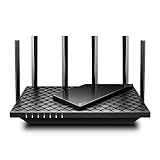
- 𝐆𝐢𝐠𝐚𝐛𝐢𝐭 𝐖𝐢𝐅𝐢 𝐟𝐨𝐫 𝟖𝐊 𝐒𝐭𝐫𝐞𝐚𝐦𝐢𝐧𝐠 – Up to 5400 Mbps WiFi for faster browsing, streaming, gaming and downloading, all at the same time. Performance varies by conditions, distance to devices, & obstacles such as walls.
- 𝐅𝐮𝐥𝐥 𝐅𝐞𝐚𝐭𝐮𝐫𝐞𝐝 𝐖𝐢𝐅𝐢 𝟔 𝐑𝐨𝐮𝐭𝐞𝐫 – Equipped with 4T4R and HE160 technologies on the 5 GHz band to enable max 4.8 Gbps ultra-fast connections.Power:12 V 2.5 A
- 𝐂𝐨𝐧𝐧𝐞𝐜𝐭 𝐌𝐨𝐫𝐞 𝐃𝐞𝐯𝐢𝐜𝐞𝐬 – Supports MU-MIMO and OFDMA to reduce congestion and 4X the average throughput
- 𝐄𝐱𝐭𝐞𝐧𝐬𝐢𝐯𝐞 𝐂𝐨𝐯𝐞𝐫𝐚𝐠𝐞 - Covers up to 2,000 sq. ft. High-Power FEM, 6× Antennas, Beamforming, and 4T4R structures combine to adapt WiFi coverage to perfectly fit your home and concentrate signal strength towards your devices.
- 𝐌𝐨𝐫𝐞 𝐕𝐞𝐧𝐭𝐬, 𝐋𝐞𝐬𝐬 𝐇𝐞𝐚𝐭 – Improved vented areas help unleash the full power of the router
How do I make my website more accessible and faster?
Start with the user experience you need to improve
Choose a concrete outcome rather than chasing one “best website” score. For accessibility, evaluate the content against WCAG criteria and include human evaluation. For performance, identify whether the concern is loading, responsiveness, or stability. For secure delivery, check whether the site uses HTTPS. For compatibility, consider browsers, devices, and assistive technologies—not just one setup.
Use field and lab measurements for different jobs
PageSpeed Insights combines Lighthouse lab diagnostics with field data from the Chrome User Experience Report (CrUX). Field data represents a trailing 28-day period, so it reflects real-user experience over time rather than a single controlled run. Lab results help investigate a controlled scenario, but may miss bottlenecks that appear under real-world conditions. Google explains the distinction in its PageSpeed Insights documentation.
Use field data to understand how visitors have experienced a page, and lab diagnostics to investigate possible causes under controlled conditions. Google also provides Core Web Vitals reporting in Search Console. Neither a PageSpeed score nor improved Core Web Vitals guarantees top search rankings: Google says there is no single page-experience signal used for ranking, and page experience involves multiple factors. Its page experience guidance explains that qualification.
Coordinate the work instead of treating each goal as a silo
Developers can build to shared standards and test across relevant browsers and assistive technologies. Site owners can make accessibility, HTTPS, and user-facing performance ongoing requirements rather than last-minute checks. Browser and assistive-technology makers shape how content is exposed and operated. Standards organizations provide common, collaboratively developed foundations.
When deciding what to address first, connect each finding to the experience it affects: accessibility against WCAG criteria; LCP for loading; INP for responsiveness; CLS for visual stability; HTTPS for connection security; and compatibility checks for the range of browsers, devices, and assistive technologies people use. Keeping these outcomes distinct makes it easier to choose a meaningful fix and verify whether it helped.
Quick Recap
Product prices and availability are accurate as of the date/time indicated and are subject to change. Any price and availability information displayed on Amazon at the time of purchase will apply.

