
Quick wins for a faster PC:
Scan for outdated or missing drivers - takes under a minuteDriver Scan →Clear out junk files and repair common Windows errorsFree Scan →iTechGuides is reader-supported. When you buy through links on our site, we may earn an affiliate commission. As an Amazon Associate I earn from qualifying purchases. Learn more
A bad network switch is most likely when the same fault stays with that switch after you have checked power, tried a known-good Ethernet cable, confirmed the port is enabled, and tested the same endpoint on another port or switch. A missing link light alone is not proof: cables, endpoint power, port settings, VLANs, and PoE limits can produce similar symptoms. Check the status-light guide for your exact switch model before interpreting its LEDs.
Start by identifying what is failing
Note whether the problem affects one device, one port, several ports, or the whole network. Also check whether devices can still communicate with each other locally. If only internet access is down, the switch may be working; the fault could be elsewhere in the network path.
Separate physical connectivity from logical connectivity. A link light shows that a physical link has been established, not that VLAN membership, trunking, addressing, or other network settings are correct.
What common symptoms do—and do not—tell you
No lights or apparent boot
Check the outlet, power lead, and adapter, then test with a known-working power source and compatible cable. For Meraki MS switches, Meraki recommends those checks; persistent absence of lights after connecting to working power may warrant support or an RMA. That threshold is specific to those products, not a universal rule for every switch (Meraki troubleshooting guidance).
#1 Best Overall

- 𝗢𝗻𝗲 𝗦𝘄𝗶𝘁𝗰𝗵 𝗠𝗮𝗱𝗲 𝘁𝗼 𝗘𝘅𝗽𝗮𝗻𝗱 𝗡𝗲𝘁𝘄𝗼𝗿𝗸: 5× 10/100/1000Mbps RJ45 Ports supporting Auto Negotiation and Auto MDI/MDIX.
- 𝗚𝗶𝗴𝗮𝗯𝗶𝘁 𝘁𝗵𝗮𝘁 𝗦𝗮𝘃𝗲𝘀 𝗘𝗻𝗲𝗿𝗴𝘆: Latest innovative energy-efficient technology greatly expands your network capacity with much less power consumption and helps save money.
- 𝗥𝗲𝗹𝗶𝗮𝗯𝗹𝗲 𝗮𝗻𝗱 𝗤𝘂𝗶𝗲𝘁: IEEE 802.3X flow control provides reliable data transfer and Fanless design ensures quiet operation.
- 𝗣𝗹𝘂𝗴 𝗮𝗻𝗱 𝗣𝗹𝗮𝘆: Easy setup with no software installation or configuration needed.
- 𝗔𝗱𝘃𝗮𝗻𝗰𝗲𝗱 𝗦𝗼𝗳𝘁𝘄𝗮𝗿𝗲 𝗙𝗲𝗮𝘁𝘂𝗿𝗲𝘀: Prioritize your traffic and guarantee high quality of video or voice data transmission with Port-based 802.1p/DSCP QoS and IGMP Snooping.
One port has no link light
Verify that the endpoint is powered, both cable ends are firmly seated, the correct ports are connected, and the switch port is enabled. Look at the link indicators at both ends, then substitute a known-good cable and try another enabled port. A persistent no-link condition after these checks is a support/RMA indicator in Meraki’s MS guidance; other models may use different procedures (Meraki troubleshooting guidance).
Link drops, errors increase, or performance is intermittent
A cable can establish a link and still be marginal. Cisco’s official troubleshooting documentation states, “A link light does not guarantee that the cable is fully functional.” Physical stress can leave a cable unreliable, and packet errors may reveal the problem (Cisco troubleshooting guidance). Inspect connectors and any patch panel or media converter in the path; also consider the endpoint network adapter and speed/duplex negotiation before blaming the switch.
Rank #2

- GIGABIT ETHERNET PORTS: Features 5 x 1.0Gbps Ethernet ports for high-speed connectivity. Auto-negotiating ports detect the optimal speed for connected devices and work with existing Cat5e or Cat6 Ethernet cables.
- PLUG-AND-PLAY UNMANAGED NETWORK SWITCH: Simple plug-and-play setup with no software to install or configuration required.
- FLEXIBLE MOUNTING OPTIONS: Compact metal design supports desktop or wall-mount placement for versatile installation.
- SILENT & ENERGY-EFFICIENT OPERATION: Fanless design ensures silent performance, while IEEE 802.3az Energy Efficient Ethernet reduces power consumption without compromising high-speed network performance.
- REGIONAL COMPATIBILITY: Made for use in U.S. & CA only
Link is up, but devices cannot communicate
Check VLAN membership, trunk configuration, addressing, and the rest of the network path. Physical link does not establish that the port is configured to carry the traffic the endpoint needs.
Crashes, No Sound, or Screen Glitches?
Random freezes, missing sound and display glitches usually trace back to one bad driver. Find and replace yours safely.Free scan · under a minuteWindows Errors? Fix Them Before They Spread
Repair common Windows errors and clear accumulated junk for a smoother, more stable PC - no reinstall needed.Free scan · no reinstallA PoE device does not power on
Confirm that the switch supports the required PoE standard, PoE is enabled on the port, and the switch has enough power budget. Test the powered device with another suitable PoE source if available. Meraki’s guidance also recommends verifying PoE support, port settings, power budget, and the endpoint on another source (Meraki troubleshooting guidance).
Rank #3

- GIGABIT ETHERNET PORTS: Features 8 x 1.0Gbps Ethernet ports for high-speed connectivity. Auto-negotiating ports detect the optimal speed for connected devices and work with existing Cat5e or Cat6 Ethernet cables.
- PLUG-AND-PLAY UNMANAGED NETWORK SWITCH: Simple plug-and-play setup with no software to install or configuration required.
- FLEXIBLE MOUNTING OPTIONS: Compact metal design supports desktop or wall-mount placement for versatile installation.
- SILENT & ENERGY-EFFICIENT OPERATION: Fanless design ensures silent performance, while IEEE 802.3az Energy Efficient Ethernet reduces power consumption without compromising high-speed network performance.
- REGIONAL COMPATIBILITY: Made for use in U.S. & CA only
An amber light or management warning appears
Use the status-light documentation for the exact model. On Meraki MS switches, a solid amber power LED means the switch cannot communicate with the network or cloud; Meraki says this rarely indicates hardware failure. Do not apply that LED meaning to other brands or models (Meraki troubleshooting guidance).
Isolate the switch with controlled substitutions
- Check power and indicators. Confirm the switch is connected to working power and note its system and port lights. If there are no lights, substitute a known-working outlet and compatible power lead before treating the unit as failed.
- Check both ends of the connection. Confirm the endpoint is powered, the cable is seated, the intended ports are being used, and the switch port is enabled. Compare the switch and endpoint link indicators.
- Substitute a known-good cable. Use a cable appropriate for the connection and test it between the same devices. A link light with the original cable does not rule out a cable fault.
- Move the same endpoint and cable to another enabled port. If the problem disappears, the original port or its configuration becomes a stronger suspect. If possible, test the endpoint and cable on a different switch to see whether the fault follows the original unit.
- Inspect managed-switch settings and counters. Check port status, interface errors, VLAN and trunk settings, and speed/duplex negotiation. Cisco lists disabled or error-disabled ports, VLAN or trunking issues, negotiation mismatches, and traffic or interface errors among possible causes of switching problems (Cisco troubleshooting guidance). For PoE symptoms, verify port PoE settings and available power budget.
- For intermittent faults, look for repeated link flaps or rising errors. These observations help narrow the problem but do not prove switch failure; a marginal cable, duplex mismatch, or endpoint adapter can also cause them.
- Power-cycle only when appropriate. On managed NETGEAR models, the vendor also suggests checking firmware and configuration. A factory reset removes settings and requires them to be restored, so retain configuration details and avoid resetting a production switch casually (NETGEAR support).
Use the pattern of results to choose the next step
| Test result | What it points toward | Next check |
|---|---|---|
| The same endpoint and known-good cable work on another port, but not the original one | The original port or its configuration is suspect; this does not by itself prove a hardware defect. | Confirm the port is enabled and review its settings and counters. |
| The fault moves when you use a different cable | The original cable or a connector/path component is suspect. | Inspect the cable ends and any patch panel or media converter in the route. |
| The same endpoint and cable fail on multiple ports, but work on another switch | The original switch or its configuration is more likely to be involved. | Review managed settings, power, and repeatability; then consult the model’s support process. |
| Several devices fail on the same switch while local or internet connectivity is affected | The scope suggests a shared switch, uplink, power, or configuration issue, but does not isolate one cause. | Check switch power and status, uplink connectivity, port errors, and network configuration. |
| Only internet access fails while local devices still communicate | The switch may be passing local traffic; the fault may be upstream. | Check the router, uplink, or internet service path. |
| A PoE endpoint works from another suitable PoE source | The original switch’s PoE support, port configuration, or power budget deserves attention. | Verify the required PoE capability and available budget on the original switch. |
When to seek support or replace the switch
Contact the vendor or consider replacement when the same failure remains repeatable after known-good cable and endpoint checks, port substitution, and configuration review—or when the switch reports hardware, POST, fan, or power symptoms. Follow the exact model’s support and warranty procedure. Cisco recommends reaching a hardware-replacement conclusion only after software and other possible causes have been investigated (Cisco troubleshooting guidance).
Quick Recap
Best Value
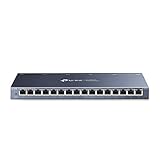
- One Switch Made to Expand Network-16× 10/100/1000Mbps RJ45 Ports supporting Auto Negotiation and Auto MDI/MDIX
- Gigabit that Saves Energy-Latest innovative energy-efficient technology greatly expands your network capacity with much less power consumption and helps save money
- Reliable and Quiet-IEEE 802.3X flow control provides reliable data transfer and Fanless design ensures quiet operation
- Plug and Play-Easy setup with no software installation or configuration needed
- Advanced Software Features-Prioritize your traffic and guarantee high quality of video or voice data transmission with Port-based 802.1p/DSCP QoS and IGMP Snooping
Rank #4

- 8 GIGABIT PORTS: Features 8 RJ45 ports supporting 10/100/1000 Mbps speeds, providing high-speed wired network connectivity for computers, printers, gaming consoles, and other Ethernet-enabled devices
- PLUG AND PLAY SETUP: No configuration required; simply connect the switch to your network devices and it is ready to use immediately, making network expansion quick and hassle-free
- FANLESS QUIET DESIGN: The fanless design ensures silent operation, making this switch suitable for noise-sensitive environments such as home offices, bedrooms, or conference rooms
- STURDY METAL CONSTRUCTION: Built with a durable metal housing and shielded ports that provide reliable performance, better heat dissipation, and protection against electromagnetic interference
- TRAFFIC OPTIMIZATION: Supports IEEE 802.3x flow control and advanced traffic optimization technology to reduce data bottlenecks and ensure smooth, efficient data transfer across your network
Product prices and availability are accurate as of the date/time indicated and are subject to change. Any price and availability information displayed on Amazon at the time of purchase will apply.
What’s actually slowing this PC down?
Pick the symptom - the matching free tool is one click away.

