
iTechGuides is reader-supported. When you buy through links on our site, we may earn an affiliate commission. As an Amazon Associate I earn from qualifying purchases. Learn more
Assess a proposed payment in three separate steps: determine whether the transaction and its entire payment chain are legally permitted under every applicable sanctions regime; confirm that the banks and providers involved will actually process it; and evaluate the currency’s availability, conversion cost, settlement time and fallback options. Legal permission does not guarantee a bank will accept the payment, and a bank’s willingness to process it does not establish that it is lawful.
Start by separating legal, banking and currency risk
A payment to or from a high-risk market is not one question. A sound assessment answers three:


- Legal: Do the applicable sanctions rules permit the parties, goods or services, funds, financial services and proposed route? Does an exception or licence apply?
- Operational: Will each bank, correspondent, payment provider and other intermediary accept and execute the transaction?
- Currency: Can the required currency be obtained and converted through that lawful route, at an acceptable cost and within the required timeframe?
Keep the answers distinct. A provider’s willingness to process a transaction is not legal approval. Conversely, a transaction that appears permitted can still be delayed or refused by a bank. The Office of Financial Sanctions Implementation (OFSI) says a bank may request information about a customer’s compliance approach before processing a payment.
Do these 3 things before closing this tab:
1Scan for outdated or missing drivers - takes under a minute2Repair Windows errors before they cause bigger problems3Fix the driver behind crashes, sound loss and screen glitches1. Define the transaction and every relevant jurisdiction
Write down the transaction before screening it. Include the payer and payee, their owners and controllers, the goods or services, origin and destination, purpose, amount, currency, banks, intermediaries, conversion points and intended settlement route. Identify agents, contractors and other project participants, including those on the ground.
#1 Best Overall

- 【PRODUCT SIZE】- 17.3 x 10.4 cm /6.8 x 4.1 inch loose-leaf inner pages/pockets, 18.5 x 13.0 cm /7.3 x 5.1 inche cover. Easily holds your entire currency collection in one organized spot.
- 【LARGE CAPACITY】- 100 ultrahigh-transparency pockets can accommodate paper currency, bills, tickets, documents, invoices, etc. less than 17.0 x 9.4 cm /6.7 x 3.7 inches.
- 【6-RING BINDER】- Metal 6-ring binder similar to a Filofax Personal, with 4 holes of 0.75 inches apart and a hole of 2.0 inches apart, suitable for corresponding hole-spacing binders.
- 【MULTI-PROTECTION】- Quality OPP inner pages and artificial leather cover effectively provide double protection. Keep banknotes free of dust, moisture and scratches.
- 【BONUS DESIGN】- This currency album features versatile interior pockets that are perfectly sized for organizing cards and receipts. The artificial leather buckle keeps the cover securely closed for safe transport.
Then identify the sanctions laws that may apply based on the people and entities involved, where they operate, and the financial institutions and services used. Rules are jurisdiction- and regime-specific: a location alone does not determine whether a particular transaction is lawful. For example, UK sanctions apply to people in UK territory and to UK persons and entities established under UK law when they act abroad. Other relevant regimes must be assessed separately.
Check both geographic sanctions and restrictions aimed at particular activities or sectors. A thematic restriction may matter even if the business is not operating in a geographically sanctioned jurisdiction. UK trade sanctions and financial sanctions are separate systems, and a transaction may require more than one licence.
2. Screen parties, ownership and indirect participants
Check current sanctions lists and the rules that apply to the transaction. Do not rely on the counterparty’s name, address or description alone: investigate beneficial ownership and control, and consider whether indirect participants create exposure.
What’s actually slowing this PC down?
Pick the symptom - the matching free tool is one click away.
- Screen counterparties, owners and controllers, agents, contractors, banks, payment providers and other relevant intermediaries.
- Investigate possible name matches using available identifying information and your organization’s risk-based procedures.
- Record what was checked, how any potential match was resolved, and why the transaction was approved, escalated or stopped.
- Date-stamp checks and recheck before payment. The UK Sanctions List and associated guidance can change.
For potential U.S. sanctions-list matches, OFAC guidance directs organizations to investigate identifying information, consider whether an authorization or exemption applies, and determine whether the required treatment is to block or reject the transaction. Do not assume that blocking and rejection are interchangeable, or that rules in one jurisdiction settle the treatment required under another.
Rank #2
3. Map and validate the payment route
Trace the intended path from payer to final beneficiary. Include every correspondent and local bank, payment service provider, conversion point and settlement mechanism. Ask each relevant provider what information it needs and whether it is willing to process the proposed transaction before committing to a contract or delivery schedule. In a high-risk location, OFSI advises checking all points in the payment chain as well as people involved in the project locally.
A route change is not automatically a solution. If a licence governs the transaction, confirm that the actual route is within its terms. OFSI identifies using a different payment route from the one permitted by a licence as an example of conduct that may breach financial sanctions.
For each candidate route, compare the following in writing:
Recommended Free Tools
- Legal scope: jurisdictions touched, parties and ownership, relevant services, and any applicable exception or licence.
- Chain transparency: named banks and intermediaries, local agents, conversion points and final beneficiary.
- Bank acceptance: willingness to process, required documents and any conditions communicated by the providers.
- Currency execution: availability, quoted rate and spread, fees, settlement timing and rate exposure.
- Resilience: a lawful fallback if a provider declines, delays or returns the funds, or if the currency is unavailable.
- Controls and evidence: screening, escalation, approvals, records and pre-payment rechecks.
OFSI’s importer and exporter guidance notes that complex payment methods and complex ownership structures warrant attention. A complex route is a reason to investigate and escalate, not proof of a sanctions breach.
Rank #3
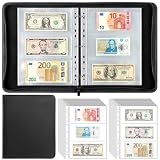
- Premium Leather Construction: The Uncle Paul money binder is crafted from high-quality artificial leather, offering durability and a sophisticated, professional look for your currency collection.
- Ample Storage Capacity: Comes with 40 sheets Currency Pages(240 pockets) to neatly organize and store a large number of paper money bills, banknotes, and coupons, keeping them safe and easily accessible.
- Double-Sided Design: Each page features a double-sided insert with 3 rows and 6 pockets, maximizing storage space and allowing for efficient categorization and display of your paper money collection.
- Secure Zipper Closure: The currency holder album is equipped with a reliable zipper closure, ensuring that your valuable currency collection remains protected from dust, moisture, and accidental spills.
- Sturdy and Well-Structured: Its robust build and well-thought-out design provide excellent support for the pages, preventing sagging or bending, and ensuring your collection stays in pristine condition over time.
4. Assess the currency for the actual transaction
Sanctions guidance does not establish whether a particular currency is available, freely convertible or liquid, nor does it forecast exchange rates. Those questions require current, country- and currency-pair-specific information. Assess the route and transaction size you actually plan to use rather than assuming a published or indicative rate is available for your payment.
- Availability: Can the required currency be sourced through the proposed lawful route and provider?
- Conversion cost: What rate and spread are quoted, what fees apply, and when does the quote expire?
- Liquidity and timing: Can the provider handle the transaction size, and how long will conversion and settlement take?
- Restrictions: Are there controls or practical limits on conversion, transfer or repatriation of funds?
- Contingency: What happens if the rate changes, currency cannot be sourced, or a bank delays, declines or returns the payment?
Keep a provider’s operational estimate separate from the legal review. Recheck currency quotes close to execution because market conditions change. Do not treat a possible alternative currency or route as a workaround until its legality has been assessed under the applicable regimes and, where relevant, licence terms.
5. Resolve restrictions, exceptions and licence conditions
If a party, bank, fund, service or transaction may be restricted, pause and identify the specific regime and current rules. Determine whether an exception applies or whether a licence is needed. OFSI advises contacting it, considering an application and considering independent legal advice where a business may be dealing with a designated person.
The Tool Desk
Outbyte PC Repair FREEClear out junk files and repair common Windows errorsFree Scan →Outbyte Driver Updater FREEScan for outdated or missing drivers - takes under a minuteDriver Scan →Where a licence is involved, check that it is current and covers the precise parties, transaction, amount, payment route, dates and reporting conditions. Do not infer permission for a route or payment amount that the licence does not cover. OFSI says conduct outside a licence’s terms may lead to enforcement and cautions against assuming its interpretation is accepted before it responds.
Rank #4

- 【Large Currency Holder Album】-- Hold up to 40 pieces of paper money or tickets.Pocket Size: 7.7 x 4.33 inch,Large Pockets Fit Most International Currency。
- 【Premium Material】-- ①.Top grade PU leather cover, Soft touch and Good gloss,Environmentally friendly PVC pages ②.Case is ultrasonically made of premium PP material, sturdy and durable. ③.Environmentally friendly PVC pages without softener, no harm to your paper money currency bills. ④.This paper money collection album do not become brittle or hard even at low temperatures.
- 【Thickened Pages with High Transparency on Both Sides】-- Our Non-toxic currency collecting pages are thicker and more transparent than most on the market, Highly transparent on both sides,facilitate to view and exchange.
- 【Versatile Currency Holder】-- ①.This money book provides a nice solution for storing & displaying your paper money/currency/bills, documents, invoices, tickets, banknotes etc. ②.This currency album is also an ideal gift for birthday, Christmas or other holidays, you can give this banknote album to money collectors or your family members, friends, colleagues who are loving collecting Currency.
- 【Multiple Uses】: -- This paper money album is suitable for collecting and displaying banknotes, bills, tickets, documents, invoices and so on.
The consequences depend on the applicable jurisdiction and offence. OFSI’s importer and exporter guidance, updated 28 January 2026, states that breaching a UK financial sanction can carry up to seven years in prison and/or a monetary penalty. That stated maximum is specific to the UK guidance and should not be generalized to other jurisdictions or offences.
6. Treat payment technology as a risk factor, not a legal answer
Payment speed or technology does not remove sanctions obligations. OFAC’s September 2022 guidance says cross-border instant payment systems generally present more sanctions exposure than the domestic systems described in that guidance, and calls for controls proportionate to each financial institution’s own risk assessment. This is not a blanket recommendation for or against instant payments; assess the actual institutions, route and controls involved.
Independent reader supportYour contribution helps us test, update, and keep practical guides available for everyone.7. Monitor the decision and keep evidence
Sanctions lists, rules, licences, bank policies and currency availability may change between contract and settlement. Assign responsibility for re-screening before payment and at relevant milestones. Retain the transaction map, screening results, ownership checks, bank communications, currency quotes, licence analysis, approvals and the rationale for the final decision.
Reporting duties depend on the applicable jurisdiction and circumstances. OFAC’s cited process requires reports within 10 business days when a transaction is blocked or rejected under the relevant process; OFAC’s current FAQ page was checked on 4 October 2026. Confirm the current regulations and reporting requirements before relying on that timing, particularly outside the U.S. context.
Red flags that call for closer review
Investigate and escalate unusual features rather than treating any one of them as proof of a violation. Examples include:
- Unusually complex payment methods or undisclosed or changing intermediaries.
- Complex ownership structures or unclear control of a counterparty.
- A third party making an open-account payment without an evident commercial reason.
- A proposed route that differs from the route contemplated in a licence.
- A counterparty’s reluctance to identify banks, beneficial owners or the final beneficiary.
The UK National Crime Agency’s report identifies third-party open-account payments and complex corporate structures as indicators requiring careful review. It advises questioning the commercial rationale for complex structures and not accepting purported arm’s-length dealings at face value.
Official guidance to consult
- OFSI, Financial sanctions guidance for importers and exporters, updated 28 January 2026: guidance on payment-chain checks, bank information requests and UK financial-sanctions exposure.
- OFSI, UK financial sanctions general guidance, updated 12 May 2026: guidance on UK rules and licence conditions.
- OFAC, sanctions compliance guidance and FAQs: use the current U.S. rules to assess potential matches and whether blocking or rejection is required.
- OFAC, Sanctions Compliance Guidance for Instant Payment Systems, September 2022: institution-level, risk-based controls for instant payment systems.
This is a transaction-assessment framework, not a country-specific legal opinion, currency forecast or payment recommendation. Verify current regulations, lists and licence terms at the point of decision; official guidance is general and does not replace advice on a particular transaction.
Quick Recap
Product prices and availability are accurate as of the date/time indicated and are subject to change. Any price and availability information displayed on Amazon at the time of purchase will apply.

