
Crashes, No Sound, or Screen Glitches?
Random freezes, missing sound and display glitches usually trace back to one bad driver. Find and replace yours safely.Free scan · under a minuteWindows Errors? Fix Them Before They Spread
Repair common Windows errors and clear accumulated junk for a smoother, more stable PC - no reinstall needed.Free scan · no reinstallBlumind’s AMPL architecture is designed to run neural-network inference directly in the analog domain, using standard CMOS and accepting sensor signals without the usual analog-to-digital and digital-to-analog conversion stages. The intended result is always-on intelligence for devices where battery life, heat, latency and silicon area matter more than peak server-class throughput.
That is a design proposition, not a proven universal performance result. Blumind’s published power advantages are company or award-entry claims, and the reviewed material does not include an independently reproduced benchmark, workload definition or measurement protocol.
| # | Preview | Product | Price | |
|---|---|---|---|---|
| 1 |
|
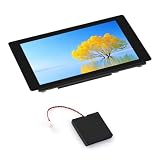
KLAYERS ESP32 P4 WF Development Board,Come with LCD 4.3inch, 480 × 800 Resolution, 5-Point Touch,... | $44.15 | Buy on Amazon |
What AMPL is supposed to do
Blumind describes AMPL as an all-analog neural-network compute fabric for edge AI. In a conventional digital edge accelerator, a sensor signal is sampled, converted to digital data, moved through memory and arithmetic units, and sometimes converted back to an analog signal for an actuator or radio. AMPL is intended to keep the inference operation in the analog domain, where the incoming sensor signal can be processed directly.
The company says its neural-network core does not use ADCs or DACs. Eliminating those converters can reduce conversion energy, data movement and latency in suitable workloads. It does not eliminate every source of system power: the sensor, clocking, memory, regulators, communications and other circuitry still determine the product’s total energy use.
#1 Best Overall
- High-performance MCU with RISC-V 32-bit dual-core and single-core processors.
- Onboard ESP32-C6-MINI module serving as a W-F 6 co-processor.
- Powerful image and voice processing with JPEG Codec, ISP, and H264 encoder
- Come with 4.3inch capacitive touch IPS display with 480 × 800 resolution.
Why analog can help at the edge
- Less data movement: sensor information can be processed near its source instead of repeatedly transferred between a sensor interface, memory and a processor.
- Low-latency response: an always-on detector can react locally without waiting for a cloud round trip.
- Small, quiet operation: lower compute energy can help battery-powered wearables and thermally constrained embedded products.
- Direct sensor interfacing: the architecture is aimed at workloads where the original signal is naturally analog, such as sound, vibration, pressure or biomedical measurements.
How the architecture addresses analog-computing problems
Analog circuits are sensitive to manufacturing variation, supply voltage, temperature and long-term drift. A neural network that works in simulation but shifts with those conditions would be difficult to deploy. Blumind says AMPL includes architectural techniques intended to mitigate process, voltage and temperature variation and drift. The available material does not specify a complete circuit-level method or independently quantify the resulting error under a defined test.
Training and deployment
Blumind describes software flows based on familiar machine-learning tools, including PyTorch and TensorFlow. That suggests a model can be trained through established AI workflows before being mapped to the analog compute fabric. In practice, an integrator would still need to understand supported operators, quantization or analog parameter limits, calibration, model-update procedures and how accuracy changes across environmental conditions; those implementation details are not established in the reviewed sources.
Blumind’s named processors and integration model
| Device or offering | Blumind’s stated focus | What the sources establish |
|---|---|---|
| BM110 | Always-on keyword detection, audio and time-series data | A named neural signal processor; CES lists it as a 2026 Innovation Awards honoree and describes it as an always-on analog AI audio-inference chip. |
| BM210 | Vision, images and sensor fusion with audio | A named neural signal processor in Blumind’s product descriptions. |
| AMPL IP or chiplets | Integration into a customer’s product or system-on-chip | Blumind describes IP, chiplet and implementation-support options for OEM and ODM integration. |
These descriptions point to a business-to-business integration path rather than a general-purpose consumer development board. The sources do not establish retail pricing, Amazon availability or a broad do-it-yourself ecosystem for either processor.
Where Blumind says the technology could be used
Wearables and personal devices
Blumind’s wearable examples include earbuds, augmented- and virtual-reality headsets, smart glasses, fitness trackers and smart watches. Proposed functions include keyword detection, environmental classification, visual wake triggers, gesture identification and voice interfaces. These are target application areas described by Blumind, not evidence that a named third-party product already ships with Blumind silicon.
Free tools Windows power users keep installed
One-click scans. No signup required.
Industrial, agricultural and medical sensing
The company lists vibration, acoustic, spectroscopy, EKG, moisture, pH, pressure and temperature inputs, along with visual inspection and local classification. Such applications benefit when a device can identify an event locally and transmit only a result or alert rather than a continuous raw data stream.
Mobility, robots and drones
Blumind’s smart-mobility examples include automotive monitoring and human-machine interfaces, as well as drones and robots. The listed tasks include collision avoidance, environmental awareness, voice control and gesture control. The sources describe these as possible uses, not validated deployments.
What the published power figures actually mean
Blumind’s materials use several large comparisons. They should be read as positioning claims, not as interchangeable benchmark results.
| Figure | Source description | Evidence limitation |
|---|---|---|
| Up to 1,000× lower power than competitors | Blumind technology-page claim | No workload, comparator, measurement method or independent validation is provided in the reviewed page. |
| Under 5% of the power of traditional digital processor solutions | CES 2026 BM110 award-entry description | The reviewed entry does not state a test protocol or comparator details. |
| “2-orders of magnitude” lower power | Blumind wearable and industry application pages | The pages do not cite a benchmark method. |
Those numbers cannot be combined into a single expected saving. A fair comparison would need the same model and accuracy target, sensor and input bandwidth, total-system boundary, latency requirement, process node, operating conditions and measurement method. Compute-core power alone can hide the energy used by sensing, conversion, memory and communications.
Quick wins for a faster PC:
Fix the driver behind crashes, sound loss and screen glitchesFind Drivers →Clear out junk files and repair common Windows errorsFree Scan →How to evaluate AMPL against a digital edge processor
- Define the workload: specify the audio, vision or sensor-fusion model, input rate and required accuracy.
- Measure the whole path: include the sensor, signal conditioning, conversion, compute, memory, power management and communications needed for the use case.
- Check response time: compare end-to-end event latency, not only the neural-network core’s cycle time.
- Test real conditions: measure across supply voltage, temperature, manufacturing samples and aging to expose variation and drift.
- Account for implementation effort: examine supported model formats, training tools, calibration, software maintenance, package choices and the availability of engineering support.
Without those details, it is not possible to declare analog inference a general winner over digital inference. Analog may be especially attractive for narrow, always-on sensor tasks, while a digital accelerator may offer broader model flexibility, easier numerical reproducibility or a more mature software ecosystem.
Quick Recap
What is established—and what is not
- AMPL is Blumind’s proposed all-analog edge-inference architecture on standard CMOS.
- The company identifies BM110 for audio and time-series workloads and BM210 for vision and audio-enabled sensor fusion.
- Blumind presents OEM/ODM products, IP, chiplets and implementation assistance as integration options.
- Wearable, industrial, medical and mobility scenarios are application targets listed by the company.
- The reviewed sources do not provide an independent comparative test, named benchmark suite, market-size analysis or proof of broad commercial deployment.
Product prices and availability are accurate as of the date/time indicated and are subject to change. Any price and availability information displayed on Amazon at the time of purchase will apply.

