
Alexa uses natural-language processing (NLP) as one part of a larger voice system. After a supported device detects its wake word, it typically sends the request’s audio to Amazon’s cloud service. Speech recognition turns the audio into text; natural-language understanding (NLU) interprets what the speaker wants; and Alexa routes the request to a built-in feature, skill, or connected service. The result is turned into speech and played back.
That distinction matters: NLP does not, by itself, listen for the wake word, perform every requested action, or guarantee that an answer is correct. Alexa combines device software, cloud services, dialogue handling, and speech technology.
Alexa is a voice service, not just a speaker
Alexa is Amazon’s voice service and ecosystem. Echo is a family of Amazon devices that can run it; other manufacturers also make Alexa-enabled devices. Amazon describes Alexa as available on hundreds of millions of devices, a company-reported reach figure rather than an independently audited installed-base count. Amazon’s Alexa developer overview describes the service and its development ecosystem.
- Alexa: The voice service and capabilities a person interacts with.
- Echo: Amazon hardware that can include Alexa.
- Alexa-enabled device: Amazon or third-party hardware that supports Alexa.
- Alexa Skills Kit (ASK): Tools and APIs for building Alexa skills.
- Alexa Voice Service (AVS): Technology and APIs for integrating Alexa into devices.
- Amazon Lex: A separate AWS service for adding conversational interfaces to applications; it is not simply another name for Alexa’s internal NLU.
A request may be handled by an alarm or timer feature, a media service, a smart-home integration, an Alexa skill, or another connected service. Alexa does not necessarily search the web.
Do these 3 things before closing this tab:
1Repair Windows errors before they cause bigger problems2Scan for outdated or missing drivers - takes under a minute3Clear out junk files and repair common Windows errors#1 Best Overall

- Your favorite music and content – Play music, audiobooks, and podcasts from Amazon Music, Apple Music, Spotify and others or via Bluetooth throughout your home.
- Alexa is happy to help – Ask Alexa for weather updates and to set hands-free timers, get answers to your questions and even hear jokes. Need a few extra minutes in the morning? Just tap your Echo Dot to snooze your alarm.
- Keep your home comfortable – Control compatible smart home devices with your voice and routines triggered by built-in motion or indoor temperature sensors. Create routines to automatically turn on lights when you walk into a room, or start a fan if the inside temperature goes above your comfort zone.
- Do more with device pairing – Fill your home with music using compatible Echo devices in different rooms, or create a home theatre system with Fire TV.
- Say goodbye to drop-offs and buffering - With eero Built-in, Echo Dot doubles as a mesh wifi extender, adding up to 1,000 sq. ft. of wifi coverage to your existing eero network.
The Alexa voice-processing pipeline
A simplified account of a typical Alexa interaction is:
Microphones
  → On-device wake-word detection
  → Request audio capture and streaming
  → Automatic speech recognition (ASR)
  → Natural-language understanding (NLU)
  → Intent, slots, and dialogue context
  → Alexa feature, skill, or connected service
  → Response text
  → Text-to-speech (TTS)
  → Speaker
Amazon’s published explanations describe wake-word detection on the device and identify ASR, NLU, and TTS among the service’s processing stages. The exact implementation can vary by device and feature; this diagram is a useful model, not a guarantee that every request follows an identical internal path. See Amazon’s explanation of Alexa’s speech and language systems and the AWS Alexa reference architecture.
Wake-word detection: waiting for “Alexa”
On supported devices, a small on-device system monitors microphone input for the configured wake word. This keyword-spotting stage is different from interpreting the full request: it detects a trigger, not whether someone wants a timer, a weather report, or a song.
When the device detects the wake word, it captures the request and typically streams relevant audio to Alexa’s cloud service for further processing. Detection can fail if the device is muted, obstructed, far away, or competing with noise; it can also trigger accidentally. Amazon’s description of on-device detection does not mean every part of every interaction is processed locally.
ASR: turning spoken audio into words
Automatic speech recognition analyzes the audio signal and produces a text transcription. It must estimate what was said despite variation in pronunciation, speaking speed, distance, room acoustics, and background sound. Accents and dialects, homophones, television or music, multiple speakers, and unusual names can all make recognition harder.
ASR is not infallible. If Alexa transcribes “set a timer for fifteen minutes” incorrectly, later language processing may act on the wrong words. A fluent answer therefore does not prove that the original speech was transcribed accurately. Amazon describes far-field recognition as processing post-wake-word audio and determining when a speaker has finished; it does not publish one accuracy figure that applies to every speaker, language, device, and environment. See Amazon’s technical overview.
Rank #2

- Your favorite music and content – Play music, audiobooks, and podcasts from Amazon Music, Apple Music, Spotify and others or via Bluetooth throughout your home.
- Alexa is happy to help – Ask Alexa for weather updates and to set hands-free timers, get answers to your questions and even hear jokes. Need a few extra minutes in the morning? Just tap your Echo Dot to snooze your alarm.
- Keep your home comfortable – Control compatible smart home devices with your voice and routines triggered by built-in motion or indoor temperature sensors. Create routines to automatically turn on lights when you walk into a room, or start a fan if the inside temperature goes above your comfort zone.
- Do more with device pairing – Fill your home with music using compatible Echo devices in different rooms, or create a home theatre system with Fire TV.
- Say goodbye to drop-offs and buffering - With eero Built-in, Echo Dot doubles as a mesh wifi extender, adding up to 1,000 sq. ft. of wifi coverage to your existing eero network.
NLU: working out what the words mean
Natural-language understanding interprets a transcript in context. It helps a system map different phrasings to a similar goal rather than requiring one exact sentence. For example, “Is it going to rain?”, “What’s the weather like outside?” and “Do I need an umbrella?” may all point toward a weather-related request, depending on the context and what Alexa can access.
The key distinction is:
- ASR: “What words were spoken?”
- NLU: “What does the speaker want?”
Amazon’s NLU guidance explains how language patterns can help a skill handle differently worded requests. Recognition is still bounded by supported languages, locales, device capabilities, and the interaction model or service available for the request. NLP is not a guarantee that Alexa will understand any sentence or know whether a statement is true.
What’s actually slowing this PC down?
Pick the symptom - the matching free tool is one click away.
Intents and slots turn a request into a task
For a custom skill, developers describe the kinds of requests it handles using an interaction model. An intent represents a user’s goal; sample utterances show ways a user might express it; and slots hold variable details such as a city, date, number, or product. A slot type describes the expected kind of value. This is a public developer model, not a claim that every first-party Alexa system exposes or internally uses precisely the same representation. See the Alexa Skills Kit overview and Alexa Conversations documentation.
For example, a skill might define a weather intent like this:
Intent: GetWeatherIntent

Sample utterances:
- What's the weather
- Is it raining in {city}
- Will I need an umbrella in {city}

Slot:
- city (type: City)
The utterances are examples of how the goal could be expressed; the city slot captures the changing value. A conceptual interpretation of “What’s the weather in Seattle tomorrow?” could look like this:
{
  "intent": "GetWeather",r>  "slots": {
    "location": "Seattle",r>    "date": "tomorrow"
  }
}
This JSON is an explanatory abstraction, not a published dump of Alexa’s first-party internal representation. The service or skill still has to obtain weather data and decide what to say.
Rank #3

- Your favorite music and content – Play music, audiobooks, and podcasts from Amazon Music, Apple Music, Spotify and others or via Bluetooth throughout your home.
- Alexa is happy to help – Ask Alexa for weather updates and to set hands-free timers, get answers to your questions and even hear jokes. Need a few extra minutes in the morning? Just tap your Echo Dot to snooze your alarm.
- Keep your home comfortable – Control compatible smart home devices with your voice and routines triggered by built-in motion or indoor temperature sensors. Create routines to automatically turn on lights when you walk into a room, or start a fan if the inside temperature goes above your comfort zone.
- Do more with device pairing – Fill your home with music using compatible Echo devices in different rooms, or create a home theatre system with Fire TV.
- Say goodbye to drop-offs and buffering - With eero Built-in, Echo Dot doubles as a mesh wifi extender, adding up to 1,000 sq. ft. of wifi coverage to your existing eero network.
Dialogue management handles missing details and follow-ups
Many tasks cannot be completed from one sentence. If someone says, “Book me a table for two at 7 p.m. tomorrow,” a restaurant-booking skill may have the party size, time, and date but not the restaurant. It can ask, “Which restaurant would you like?” Dialogue management tracks what has been supplied, what is still needed, and how a follow-up or correction changes the request.
Depending on the feature and device, relevant context can include the active skill, session information, previously provided slot values, account or device context, and whether the speaker is correcting an earlier answer. Alexa may also need to confirm an important action or ask a clarifying question. Amazon’s technical overview describes context as part of choosing a next action. Alexa Conversations is a developer technology for modeling dialogue paths; it should not be taken as proof that all Alexa interactions use the same dialogue architecture.
How Alexa routes a request to a capability or skill
After interpreting a request, Alexa’s service determines which capability should handle it. That might be a built-in timer, a music service, a smart-home integration, a first-party Amazon feature, a third-party skill, or an external service connected through an API. Which option is available can depend on the wording, invocation name, locale, account permissions, region, and device.
Skills are comparable to apps in Alexa’s ecosystem, but invocation and discovery can be ambiguous. A well-formed request does not guarantee that the intended skill is available, enabled, or selected. The Alexa Skills Kit overview explains how developers extend Alexa with skills.
Quick wins for a faster PC:
Fix the driver behind crashes, sound loss and screen glitchesFind Drivers →Clear out junk files and repair common Windows errorsFree Scan →Scan for outdated or missing drivers - takes under a minuteDriver Scan →What happens inside a custom Alexa skill
When a request is routed to a custom skill, Alexa sends the skill’s endpoint a request describing the interaction. The endpoint can be a web service or an AWS Lambda function. The skill backend can apply its own logic, retrieve account or application data, or call another API, then return a response for Alexa to present.
- The user invokes the skill, often by using its invocation name.
- Alexa interprets the request and identifies the intent and any recognized slots.
- Alexa sends a secure HTTPS POST request with a JSON body to the configured endpoint.
- The skill backend performs its logic and, if needed, calls an external service.
- The backend returns a JSON response; Alexa can speak it and may also provide screen or other multimodal output on a suitable device.
The endpoint, transport, and request/response structure are described in the Alexa request and response JSON reference. A simplified response might include speech text and a session instruction, but production code should follow the current reference rather than assume this illustration is a complete schema. The reference warns developers to handle JSON resiliently as properties may change.
Rank #4
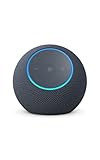
- Meet Echo Dot Max: Experience rich room-filling sound that automatically adapts to your space and fine-tunes playback. Features a built-in smart home hub and Omnisense technology for highly personalized experiences.
- Music to your ears: With nearly 3x the bass versus Echo Dot (2022 release), it fits beautifully in any space, delivering your personal sound stage with deep bass and enhanced clarity. Listen to streaming services, such as Amazon Music, Apple Music, Spotify, and SiriusXM. Encore!
- Do more with device pairing: Connect compatible Echo smart speakers and smart displays in different rooms, or pair with a second Echo Dot Max to enjoy even richer sound. Pair your Echo Dot Max with compatible Fire TV devices to create a home theater system that brings scenes to life.
- Simple smart home control: Set routines, pair and control lights, locks, and thousands of smart home devices that work with Alexa without needing a separate smart home hub. With Omnisense technology, you can activate routines via temperature or presence detection.
- Say goodbye to drop-offs and buffering - With eero Built-in, Echo Dot Max doubles as a mesh wifi extender, adding up to 1,000 sq. ft. of wifi coverage to your existing eero network.
{
  "version": "1.0",
  "response": {
    "outputSpeech": {
      "type": "SSML",
      "ssml": "<speak>It will rain tomorrow.</speak>"
    },
    "shouldEndSession": true
  }
}
TTS: turning a response into speech
Once a response is ready, text-to-speech converts it into audio. This is useful for answers with changing values—such as a person’s name, a time, weather conditions, or a search result—that cannot all be served as a single prerecorded sentence. Speech quality depends on pronunciation, pacing, pauses, emphasis, intonation, and the selected voice and locale. Amazon identifies TTS as a stage for producing intelligible, natural-sounding audio in its technical overview.
Not every Alexa response should be assumed to come from a modern large language model. The public information describes a system with multiple speech, language, dialogue, and service components; it does not identify one model that handles every request.
Why Alexa can understand the words and still fail
A failed interaction can occur at several different stages. Identifying the stage helps distinguish a recognition problem from a service or account problem.
- No response to the wake word: Check that the microphone is not muted, move closer, reduce background noise, and make sure the microphone is unobstructed. If the device appears offline, check its network connection.
- Wrong words appear to have been heard: Noise, distance, pronunciation, similar-sounding words, or multiple speakers may have affected ASR. Rephrase, speak more directly, or inspect the recognized request in the Alexa app or on a screen-equipped device where available.
- The words seem right, but the action is wrong: The request may be ambiguous, a slot may be missing, or Alexa may have selected a different feature or skill. State the skill’s invocation name where appropriate and include the missing detail.
- A skill keeps asking the same question: The skill may not be retaining the session state, recognizing a slot value, or handling a correction or reprompt properly. Amazon’s NLU guidance encourages developers to account for corrections and exceptions rather than only the expected conversation path.
- The request is understood but not completed: The device may be offline, the skill backend or external API may be unavailable, account linking may have expired, or the feature may not be supported for that region or device. Correct NLU does not guarantee that a downstream service succeeds.
Where processing happens, and what that means for privacy
For typical interactions, wake-word detection happens on supported devices, while speech recognition and other processing commonly rely on Amazon’s cloud service. Device-side detection can avoid sending all ambient audio as an intended request, but it does not eliminate accidental activations or mean that all processing stays local. Cloud reliance also means connectivity, service availability, and latency can affect the experience.
Data handling can depend on device, settings, region, product version, and Amazon’s current policies. Do not infer from wake-word detection alone what audio is stored, how long it is retained, or how it is used. Amazon’s Alexa Privacy and Data Handling Overview describes Amazon’s approach; users should consult current privacy controls and policies for their specific device and account.
Practical considerations include accidental activation, sensitive conversations near a device, shared household accounts, voice-recognition mistakes, third-party skill trust, account linking, and purchases or other consequential actions. A wake word is an activation mechanism, not a guarantee of privacy or authorization. Voice can make technology easier to operate for some people, but speech impairments, hearing loss, accents, noisy environments, and the privacy of speaking aloud can make it a poor fit for others; voice works best as an additional interface rather than a universal replacement for visual or tactile controls.
The Tool Desk
Outbyte PC Repair FREERepair Windows errors before they cause bigger problemsFix Now →Outbyte Driver Updater FREEScan for outdated or missing drivers - takes under a minuteDriver Scan →Best Value

- Alexa can show you more - Echo Show 5 includes a 5.5” display so you can see news and weather at a glance, make video calls, view compatible cameras, stream music and shows, and more.
- Small size, bigger sound – Stream your favorite music, shows, podcasts, and more from providers like Amazon Music, Spotify, and Prime Video—now with deeper bass and clearer vocals. Includes a 5.5" display so you can view shows, song titles, and more at a glance.
- Keep your home comfortable – Control compatible smart devices like lights and thermostats, even while you're away.
- See more with the built-in camera – Check in on your family, pets, and more using the built-in camera. Drop in on your home when you're out or view the front door from your Echo Show 5 with compatible video doorbells.
- See your photos on display – When not in use, set the background to a rotating slideshow of your favorite photos. Invite family and friends to share photos to your Echo Show. Prime members also get unlimited cloud photo storage.
How developers build an Alexa experience
Developers use the Alexa Skills Kit to define the voice interaction and connect it to software that carries out the task. The basic workflow is:
- Create or use an Amazon developer account and start a skill in the Alexa Developer Console.
- Choose the skill type and locale, then define intents for the user goals it should support.
- Add sample utterances, slots, and slot types for variable information.
- Configure prompts and behavior for missing details, corrections, confirmations, and errors.
- Implement a backend, such as a web service or Lambda function, and connect any APIs or account-linking flows it needs.
- Test utterances and failure cases in the console and, where useful, on an Alexa-enabled device.
- Validate the experience, security, and required policies before submitting it for certification.
Published skills must meet Amazon’s certification requirements. The ASK overview describes the platform, while its FAQ says the developer account is free and notes that hosting costs depend on the arrangement and AWS usage. Alexa-hosted skills can use AWS resources within applicable limits; self-hosting may incur charges. The FAQ lists SDKs for Node.js, Python, and Java.
A physical Echo is not a prerequisite for starting development; a device can still be useful for testing spoken behavior and, for multimodal skills, screen output. Amazon’s development environment guidance discusses device options for Alexa+ development.
Alexa or Amazon Lex?
Choose based on where the conversational experience will live. Alexa Skills Kit is the direct route for an experience intended for Alexa’s ecosystem. Amazon Lex is an AWS service for voice and text interfaces embedded in applications such as websites, mobile apps, or customer-service workflows; it is not required to build a skill. Lex pricing is usage-based and varies by model and region; check the current Amazon Lex pricing page and FAQ before estimating costs.
Other architectures—such as combining speech-to-text with an application-level language model, a traditional intent classifier, or on-device speech and language models—can offer different balances of flexibility, predictability, privacy, offline capability, hardware demands, and maintenance. They also require developers to assemble and operate more of the system themselves.
Quick Recap
Product prices and availability are accurate as of the date/time indicated and are subject to change. Any price and availability information displayed on Amazon at the time of purchase will apply.

