
AI captures a website screenshot through an application that gives it access to a browser or desktop runtime; the model itself does not independently open a website. For a repeatable developer workflow, use Playwright to navigate to a page and save its viewport, an element, or the full page. If you need an AI model to inspect and operate an interface, connect it to a computer-use runtime that returns screenshots as observations.
How the capture workflow works
Think of the process as three parts: the model decides what to do, an application runs the action in a browser or desktop environment, and that application returns the resulting screenshot. In a scripted workflow, your code specifies the navigation and capture steps. In a computer-use workflow, the model can request actions, and the host application executes them and supplies screenshots for the next decision.
- Choose a runtime. Run a browser locally or use a hosted browser environment. For desktop interaction, the host application must expose the appropriate controls.
- Open the target page. Navigation, authentication, and any website-specific setup are your responsibility.
- Choose what to capture. Save the visible viewport, a particular element, or the full scrollable page.
- Return the image to the task. Save it to disk, provide it to an AI workflow, or use it as the model’s next visual observation.
For most repeatable captures, scripted browser automation is the clearest starting point: it makes the navigation and screenshot operation explicit. A model-directed computer-use workflow is more appropriate when the task involves inspecting and operating an interface rather than simply capturing a known page.
Capture a page with Playwright
Install Playwright and its Chromium browser in your project environment. The example below uses JavaScript with the CommonJS import shown in Playwright’s documented API example. Run it from a project where Playwright is installed; it opens https://example.com, saves a PNG, and closes the browser even if navigation or capture fails.
The Tool Desk
Outbyte Driver Updater FREEFix the driver behind crashes, sound loss and screen glitchesFind Drivers →Outbyte PC Repair FREEClear out junk files and repair common Windows errorsFree Scan →#1 Best Overall

- Compatible with Nintendo Switch 2’s new GameChat mode
- Auto-Light Balance: RightLight boosts brightness by up to 50%, reducing shadows so you look your best—compared to previous-generation Logitech webcams (1)
- Privacy with a Slide: The integrated webcam cover makes it easy to get total, reliable privacy when you're not on a video call
- Built-In Mic: The built-in microphone lets others hear you clearly during video calls
- Easy Plug-And-Play: The Brio 101 works with most video calling platforms, including Microsoft Teams, Zoom and Google Meet—no hassle; it just works
const { chromium } = require('playwright');

(async () => {
  const browser = await chromium.launch();
  try {
    const page = await browser.newPage();
    await page.goto('https://example.com', { waitUntil: 'load' });
    await page.screenshot({ path: 'screenshot.png' });
  } finally {
    await browser.close();
  }
})();
Playwright’s documented basic flow uses page.goto() followed by page.screenshot(). Here, waitUntil: 'load' waits for the page’s load event; that alone does not guarantee that every site-specific image, animation, or asynchronously updated component has finished rendering. Add a wait that reflects the page and task when needed, rather than assuming one navigation setting works for every site. Playwright’s official API and screenshot guides describe the available capture options; check them when updating code because API behavior and options can change.
Capture the visible viewport
The basic call saves the page as displayed in the current viewport. Use this when the task concerns what a visitor can see without scrolling, such as a header, hero section, or current interface state.
Capture the full scrollable page
Pass fullPage: true to capture the page beyond the current viewport:
await page.screenshot({ path: 'full-page.png', fullPage: true });A full-page capture is useful for reviewing a long landing page or documenting content below the fold. It is not the same as taking a screenshot of only the visible screen; choose based on what the task needs to show.
Recommended Free Tools
Capture one element
When only a component matters, locate it and call its screenshot method rather than saving the entire page:
Rank #2
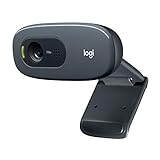
- Compatible with Nintendo Switch 2’s new GameChat mode
- Crisp HD 720p/30 fps video calls with diagonal 55° field of view and auto light correction. Compatible with popular platforms including Skype and Zoom.
- The built-in noise-reducing mic makes sure your voice comes across clearly up to 1.5 meters away, even if you’re in busy surroundings.
- C270’s RightLight 2 feature adjusts to lighting conditions, producing brighter, contrasted images to help you look good in all your conference calls.
- The adjustable universal clip lets you attach the camera securely to your screen or laptop, or fold the clip and set the webcam on a shelf. You’re always ready for your next video call.
const loginForm = page.locator('form#login');
await loginForm.screenshot({ path: 'login-form.png' });
Replace form#login with a selector that matches the target site. If the selector is absent or matches the wrong component, adjust it after inspecting the page structure. Playwright’s screenshot documentation also describes taking a screenshot of a selected element.
Choose an image format and pixel scale
Playwright documents PNG, JPEG, and WebP screenshot output. PNG is a practical default when you want a lossless image; JPEG can suit photographic content when a smaller, lossy image is acceptable; WebP is another supported choice. Select the format based on how the result will be consumed, and make the output path’s extension match the format you request. Screenshot documentation also distinguishes CSS-pixel sizing from device-pixel scaling: a high-resolution image may have more image pixels than the page’s CSS-pixel dimensions.
Give an AI model access to screenshots
There are two common ways to use screenshots with a model. With a scripted workflow, your application navigates and captures a page, then passes the image to the model as task input. With computer use, the model requests interface actions, the application executes them in a browser or desktop runtime, and the application returns screenshots as observations. The second pattern lets the model use one screenshot to decide what to do next.
OpenAI’s computer-use guide describes both an integration using code execution with libraries such as Playwright or PyAutoGUI and a computer-tool approach in which a host application translates structured actions. In either case, the model’s access depends on the environment your application provides. This does not mean a model can automatically access any website, browser session, or account.
- Initialize a controlled browser or desktop runtime.
- Give the model the task and the available tools through your application.
- Have the application execute requested navigation or interface actions.
- Return the resulting screenshot to the model so it can choose a next action or answer the task.
Keep the runtime available between calls if the workflow needs to build on earlier observations. Before capturing a logged-in or personal page, consider whether you have authorization to access and process it, and whether the deployment’s privacy controls are appropriate. The documentation describes an integration pattern; it does not establish that a particular site permits automation or that a given deployment meets your privacy requirements.
Rank #3

- 【Full HD 1080P Webcam】Powered by a 1080p FHD two-MP CMOS, the NexiGo N60 Webcam produces exceptionally sharp and clear videos at resolutions up to 1920 x 1080 with 30fps. The 3.6mm glass lens provides a crisp image at fixed distances and is optimized between 19.6 inches to 13 feet, making it ideal for almost any indoor use.
- 【Wide Compatibility】Works with USB 2.0/3.0, no additional drivers required. Ready to use in approximately one minute or less on any compatible device. Compatible with Mac OS X 10.7 and higher / Windows 7, 8, 10 & 11 / Android 4.0 or higher / Linux 2.6.24 / Chrome OS 29.0.1547 / Ubuntu Version 10.04 or above. Not compatible with XBOX/PS4/PS5.
- 【Built-in Noise-Cancelling Microphone】The built-in noise-canceling microphone reduces ambient noise to enhance the sound quality of your video. Great for Zoom / Facetime / Video Calling / OBS / Twitch / Facebook / YouTube / Conferencing / Gaming / Streaming / Recording / Online School.
- 【USB Webcam with Privacy Protection Cover】The privacy cover blocks the lens when the webcam is not in use. It's perfect to help provide security and peace of mind to anyone, from individuals to large companies. 【Note:】Please contact our support for firmware update if you have noticed any audio delays.
- 【Wide Compatibility】Works with USB 2.0/3.0, no additional drivers required. Ready to use in approximately one minute or less on any compatible device. Compatible with Mac OS X 10.7 and higher / Windows 7, 10 & 11, Pro / Android 4.0 or higher / Linux 2.6.24 / Chrome OS 29.0.1547 / Ubuntu Version 10.04 or above. Not compatible with XBOX/PS4/PS5.
Use a screenshot or a structured snapshot?
A screenshot and an accessibility snapshot answer different questions. Use a screenshot to assess visual layout or see information rendered as pixels, including charts and canvas content. Use an accessibility snapshot when you need page structure and readable text or interaction references. Playwright’s screenshot guide recommends an accessibility snapshot for interaction references and distinguishes visual-layout and canvas/chart checks from understanding structure and reading text.
- Choose a screenshot to inspect appearance, spacing, visible imagery, or content that is only rendered visually.
- Choose an accessibility snapshot to understand semantic structure, read text, or identify elements through their accessible representation.
- Use both when the task needs visual context as well as semantic information; neither representation is a universal replacement for the other.
Use pixels for interfaces without accessible structure
Some interfaces expose little useful structure in an accessibility tree. Playwright’s vision-mode guidance describes using a screenshot as a reference for coordinate interaction with canvas apps, maps, and custom widgets. The workflow is to inspect the screenshot, identify the target visually, and use a coordinate action in the browser or desktop runtime.
Windows Errors? Fix Them Before They Spread
Repair common Windows errors and clear accumulated junk for a smoother, more stable PC - no reinstall needed.Free scan · no reinstallCrashes, No Sound, or Screen Glitches?
Random freezes, missing sound and display glitches usually trace back to one bad driver. Find and replace yours safely.Free scan · under a minuteMind the coordinate units. Normal mouse commands use viewport-relative CSS pixels, while a high-resolution screenshot can be measured in device pixels. If the screenshot uses a higher pixel density, do not pass its raw pixel coordinates as though they were CSS-pixel coordinates. Account for the device-pixel ratio before acting; otherwise a click can land at a different position than intended.
Choose local, AI-operated, or hosted capture
These options solve related but distinct problems. The table compares the operating model and what the cited documentation establishes—not speed, price, or reliability, for which comparable figures are not established here.
| Approach | What it does | Useful when | What is established |
|---|---|---|---|
| Scripted Playwright capture | Your code navigates to a page and calls a screenshot method. | You need repeatable captures, tests, or documentation with developer-controlled steps. | Playwright documents page.screenshot() and capture options. No performance benchmark is established here. |
| AI computer use with a browser or desktop runtime | A model requests interface actions; the application executes them and returns observations such as screenshots. | The model needs to inspect and operate an interface in a task-specific sequence. | OpenAI documents code-execution and computer-tool integration patterns. This is not a claim that the model directly controls every browser. |
| ScreenshotNeo | A website screenshot API returns an image or PDF from a GET request, and an MCP server exposes screenshot tools to AI agents. | You want an API or an MCP-based route instead of setting up browser capture code yourself. | ScreenshotNeo’s product details are available at screenshotneo.com; its capture parameters are documented at the ScreenshotNeo docs. |
| Cloudflare Browser Run | A hosted browser workflow runs Playwright navigation and screenshot capture. | You need an example of browser automation in a managed environment. | Cloudflare documents a Playwright screenshot workflow. The cited example does not establish comparative price, performance, or suitability at a particular scale. |
Choose scripted capture when deterministic, developer-controlled steps are central. Choose computer use when the model must inspect and operate the interface. A hosted browser is an execution-environment choice, not by itself evidence that a workflow is faster, cheaper, or more reliable. The cited documentation does not provide comparable pricing, speed, or reliability data for these approaches.
Rank #4

- 1080P Webcam with Cover for Video Calls - EMEET computer webcam provides design and Optimization for professional video streaming. Realistic 1920 x 1080p video, 5-layer anti-glare lens, providing smooth video. C960 computer camera delivers 1920x1080 video with fixed focus (11.8–118.1 inches), so as to provide a clearer image. C960 USB webcam has a cover and can be removed automatically to meet your needs for privacy. For optimal image performance, use the webcam in a well-lit environment.
- Built-in 2 Omnidirectional Mics - EMEET webcam with microphone for desktop features 2 built-in omnidirectional microphones, picking up your voice to create clear audio for communication. When installing the webcam, select EMEET C960 as the default microphone input device in your computer and video applications and select C960 as the default device in Zoom/Teams and ensure microphone permissions are enabled for proper use. Please note that C960 does not include built-in speakers.
- Automatic Light Adjustment - Automatic exposure adjustment is applied in EMEET HD webcam 1080p so that the streaming webcam can deliver stable image performance. EMEET C960 camera for computer also features color adjustment and exposure optimization to help you look your best. For optimal video quality, it is recommended to use the webcam in normal or well-lit environments and select suitable video settings in your application. Proper lighting helps achieve a clearer and more balanced image.
- Plug-and-Play & Upgraded USB Connectivity - New C960 webcam features both USB Type-A & A-to-C adapter connections for wider compatibility. For stable performance, connect the webcam directly to the computer's main USB port and ensure the device is recognized correctly. If a hub or docking station is used, please ensure it provides sufficient power and stable data transmission, as limited ports may affect performance. 90° wide-angle lens captures more participants without frequent adjustments.
- High Compatibility & Multi Application - C960 webcam for laptop is compatible with Windows 10/11, macOS 10.14+, and Android TV 7.0+. Not supported: Windows Hello, TVs, tablets, or game consoles. It works with Zoom, Teams, Facetime, Google Meet, YouTube and more. Please select C960 webcam as the default camera and microphone device in your application and ensure camera/microphone permissions are enabled, especially on macOS. (Tips: Incompatible with Windows Hello)
Or skip the browser setup
For a direct screenshot API call, ScreenshotNeo accepts a URL and returns a screenshot or PDF. This cURL example saves a WebP image of Stripe; replace the target URL as needed. See the ScreenshotNeo API docs for parameters and response details.
Quick wins for a faster PC:
Scan for outdated or missing drivers - takes under a minuteDriver Scan →Clear out junk files and repair common Windows errorsFree Scan →curl -G "https://api.screenshotneo.com/v1/shot" -d access_key=YOUR_API_KEY --data-urlencode url=https://stripe.com -o shot.webpThe same request can be made from Python:
import requests

r = requests.get(
    "https://api.screenshotneo.com/v1/shot",
    params={"access_key": "YOUR_API_KEY", "url": "https://stripe.com"},
    timeout=90,
)
open("shot.webp", "wb").write(r.content)
Or from Node.js:
const q = new URLSearchParams({ access_key: 'YOUR_API_KEY', url: 'https://stripe.com' });
const res = await fetch(`https://api.screenshotneo.com/v1/shot?${q}`);
ScreenshotNeo’s capture workflow removes cookie and consent banners, newsletter popups, and chat widgets before the shot; those steps can be turned off. Bot checks and CAPTCHAs, blank pages, timeouts, failed loads, and cache hits cost nothing, with page verdict and billing information in response headers. Its MCP server provides take_screenshot, get_page_info, and capture_pdf tools for Claude, Cursor, and other MCP clients. The free plan includes 1,000 shots per month with no card; paid plans start at $5 for 3,000 shots. Sign up for 1,000 free screenshots a month with no card.
Troubleshoot common capture problems
The screenshot is blank or incomplete
First check whether navigation finished and whether the expected page actually loaded in the browser. A navigation event does not establish that every asynchronously rendered element is ready. Wait for a site-specific selector or condition before capturing, and verify that the target page is not blank in the runtime itself.
Images or below-the-fold content are missing
Confirm that you requested fullPage: true if the goal is the entire scrollable document. For lazy-loaded images or content that appears only after scrolling or interaction, the capture workflow may need to trigger the relevant behavior and wait for the content before taking the screenshot.
An element screenshot fails or captures the wrong area
Check that the selector identifies the intended element after navigation, and that it corresponds to a visible component on the page. If the site’s structure changes or the selector matches multiple elements, choose a more specific selector and inspect the result.
What’s actually slowing this PC down?
Pick the symptom - the matching free tool is one click away.
A coordinate click misses its target
Check whether coordinates were taken from a high-resolution screenshot in device pixels while the mouse command expects viewport-relative CSS pixels. Convert for the device-pixel ratio, and make sure the screenshot and action refer to the same viewport and page state.
Best Value

- Compatible with Nintendo Switch 2’s new GameChat mode
- HD lighting adjustment and autofocus: The Logitech webcam automatically fine-tunes the lighting, producing bright, razor-sharp images even in low-light settings. This makes it a great webcam for streaming and an ideal web camera for laptop use
- Advanced capture software: Easily create and share video content with this Logitech camera that is suitable for use as a desktop computer camera or a monitor webcam
- Stereo audio with dual mics: Capture natural sound during calls and recorded videos with this 1080p webcam, great as a video conference camera or a computer webcam
- Full HD 1080p video calling and recording at 30 fps. You'll make a strong impression with this PC webcam that features crisp, clearly detailed, and vibrantly colored video
The browser opens but cannot reach the required page
Check the URL, network access, and any site-specific authentication or consent requirements. Do not assume that a page behind an account or access control can be captured without credentials or permission. Site policies and automation access vary; the cited documentation does not determine whether a particular website permits your use.
Performance, reliability, and cost considerations
A screenshot workflow depends on the page, browser runtime, and task-specific setup. The cited Playwright and hosted-browser documentation establishes how to perform captures, not a benchmark for time, scale, or reliability. Avoid selecting an approach based on unsupported speed or uptime claims; assess it against your own pages and operating requirements.
- Make capture conditions explicit. Record the URL, viewport, capture scope, and any waits or interactions that affect the image so repeat runs have a clear basis.
- Handle failures at the application level. Navigation or site rendering can fail independently of the screenshot call. Use timeouts and error handling appropriate to your workflow, and avoid treating a saved file alone as proof that the intended content loaded.
- Consider data exposure. Screenshots may include personal or authenticated content. Limit access to credentials and images, and ensure the runtime and processing are appropriate for the page.
- Compare costs only with applicable data. The cited documentation does not give comparable costs across Playwright, computer-use runtimes, and hosted browser capture. Do not infer a service’s operating cost from the fact that it runs Playwright.
Frequently Asked Questions
Can AI take a screenshot without a browser or desktop runtime?
No. The application must give the model access to an environment that can open or operate the page and return an image; the model does not independently browse to capture it.
Can a screenshot prove that a page is accessible to everyone?
No. A screenshot shows what a particular runtime could display under its conditions; it does not establish public access, permission to automate, or that another visitor sees the same state.
Quick Recap
Product prices and availability are accurate as of the date/time indicated and are subject to change. Any price and availability information displayed on Amazon at the time of purchase will apply.

