
iTechGuides is reader-supported. When you buy through links on our site, we may earn an affiliate commission. As an Amazon Associate I earn from qualifying purchases. Learn more
AI agents use tools by receiving a description of available capabilities, choosing one when it helps answer a request, and sending a structured call for an application or provider service to execute. Function calling is one way to format that request; it does not mean the model itself has automatically run the function or gained unrestricted access to your systems.
What are AI agent tools?
A tool is a capability made available to a model through a request-and-response interface. Examples include retrieving a record from a database, checking the weather, updating a customer record, or asking another agent to perform a task. The model can select a tool and supply arguments, but the system that hosts the integration determines whether and how the requested operation runs.
Tools commonly fit three roles: data tools retrieve information, action tools change something in a system, and orchestration tools delegate work to another agent. The distinction matters: searching a database is generally read-only, while changing an account or sending a message can have side effects. OpenAI describes these categories in its practical guide to building agents.
Free tools Windows power users keep installed
One-click scans. No signup required.
How does function calling work?
Function calling—also called tool calling—lets a model request an operation in a structured format. A tool definition describes the function and its expected inputs. The model can then return a tool name and arguments, after which the application or a provider-hosted service handles execution. The result is passed back to the model, which can respond to the user or request another tool.
#1 Best Overall
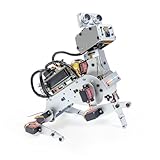
- AI-Powered Raspberry Pi Robot Dog — PiDog: Powered by Raspberry Pi (5/4B/3B+/3B/Zero 2W), OpenClaw, and multi-LLMs like ChatGPT, Gemini, Grok, DeepSeek, Qwen & Ollama. With 12 servos, camera, gyroscope, hearing & touch sensors, PiDog can see, listen, talk, move, and interact intelligently. Supports OpenCV, MediaPipe, TTS & STT, app control, FPV & Python. A great STEM robotics gift for students, makers & tech enthusiasts—perfect for birthdays and holidays. (Raspberry Pi not included)
- Realistic Dog-like Movements: PiDog's 12 powerful servos enable 32 dog-like actions, including walking, sitting, standing, shaking its head, wagging its tail, and performing playful tricks, closely mimicking a real dog and providing an engaging experience. This is an AI development robot product designed for engineers, suitable for ages 15 and above
- Rich Sensor Suite for Interactive Experiences: PiDog features ultrasonic, touch, gyroscope, sound, camera, speaker and microphone. These provide it with advanced hearing, vision, and touch, enabling it to see, detect obstacles, respond to touch, and recognize sounds, making interactions highly engaging
- AI-Powered Interactions with OpenClaw & Multi-LLMs. PiDog combines voice, vision, and gesture recognition for immersive AI experiences. Powered by OpenClaw and multi-LLMs like ChatGPT, Gemini, Grok, DeepSeek, Qwen, Doubao, and Ollama (local LLMs), it can understand questions, respond naturally through TTS & STT, recognize math problems, interpret hand gestures, and hold smart conversations. OpenClaw also enables customizable AI behaviors and personalized robotics development, helping users create their own intelligent robotic companion
- Comprehensive Learning Resources and Support: PiDog offers detailed online documentation, video tutorials, prompt technical support, and an active forum community, ensuring beginners can easily complete all projects and enjoy a great experience
- Expose a tool definition. For example, describe
get_weather(location)and specify what a valid location argument looks like. - Send the user’s request and available tool definitions to the model. The model decides whether a tool would help.
- Receive a structured call. If the model chooses the weather tool, it might return the tool name and a location argument.
- Validate and execute the request. Application code checks the arguments and permissions, then calls the weather service. The schema guides the model; it does not perform the operation.
- Return the result to the model. The application associates the result with the corresponding tool call, and the model uses it to continue the conversation.
The exchange can repeat if the model needs another tool before answering. OpenAI documents this lifecycle in its function calling guide. Anthropic likewise illustrates a tool-use request, application execution, and returned tool result in its Claude tool use documentation.
Does the AI actually execute the function?
Not necessarily. In a typical client-side integration, the model emits a structured request and the application executes it. The application remains responsible for checking inputs, applying authorization rules, calling external systems, and returning results. A valid-looking call is not proof that an operation was authorized or performed.
Rank #2

- Optimized AI Arm Kit for LeRobot & Hugging Face Projects – The SO-ARM101 is an upgraded low-cost robotic arm servo motor kit designed for AI robotics enthusiasts and developers. Fully compatible with LeRobot and Hugging Face frameworks, it supports imitation learning and reinforcement learning, making it ideal for real-world robotics applications. (3D-printed parts not included.)
- Enhanced Wiring & Performance – Compared to the SO-ARM100, the SO-ARM101 features improved wiring to prevent disconnection at joint 3 and eliminates range-of-motion limitations. The leader arm uses optimized gear ratio motors for smoother performance—no external gearboxes required.
- Real-Time Leader-Follower Functionality – New real-time tracking allows the leader arm to follow the follower arm, enabling human intervention and correction during reinforcement learning (RL) training. Perfect for hands-on AI robotics development and research.
- Open-Source, DIY-Friendly & Nvidia-Compatible – Developed by TheRobotStudio, this open-source AI Arm kit integrates seamlessly with the LeRobot platform, offering PyTorch-based datasets, simulation, training, and deployment tools. Fully compatible with Nvidia Jetson edge devices, including reComputer Mini J4012 Orin NX 16 GB.
- Comprehensive Learning Resources – Includes detailed open-source assembly and calibration guides, testing tutorials, and deployment instructions. From wiring to AI training, get everything you need to start building, teaching, and optimizing your robotic arm for grasping and placing tasks.
Some products also provide tools that run on the provider’s infrastructure. Anthropic distinguishes tools executed by the client application from server tools executed on Anthropic infrastructure. OpenAI’s MCP documentation describes connection options including service-origin, environment-origin, and stdio connections. These arrangements affect where execution occurs and which system handles credentials; they should not be treated as interchangeable. See OpenAI MCP connections for its documented connection choices.
The Tool Desk
Outbyte Driver Updater FREEFix the driver behind crashes, sound loss and screen glitchesFind Drivers →Outbyte PC Repair FREEClear out junk files and repair common Windows errorsFree Scan →How is function calling different from MCP?
Function calling describes a structured way for a model to request a function or tool. MCP—the Model Context Protocol—provides a pattern for connecting an AI application to tool servers that expose capabilities and context. In short, function calling concerns the model’s structured request; MCP concerns a connection protocol and server pattern that can make tools available. An application may use MCP to discover or connect to tools and still have provider-specific rules for how the model requests them and how the application executes them.
Rank #3
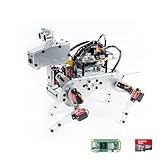
- Raspberry Pi AI Robot: powered by Raspberry Pi (5/4B/3B+/3B/Zero 2W), features 12 servos and sensors for vision, hearing, and touch. Integrated with ChatGPT-4o, it responds to complex queries. With app control and FPV, users can manage and see its view in real-time. It supports Python programming
- Realistic Movements: 12 powerful servos enable 32 actions, including walking, sitting, standing, shaking its head, wagging its tail, and performing playful tricks, closely mimicking a real and providing an engaging experience
- Rich Sensor Suite for Interactive Experiences: features ultrasonic, touch, gyroscope, sound, camera, speaker and microphone. These provide it with advanced hearing, vision, and touch, enabling it to see, detect obstacles, respond to touch, and recognize sounds, making interactions highly engaging
- Engaging Interactions with ChatGPT-4o: with ChatGPT-4o enables voice interactions and visual recognition, making it smarter and more responsive. Users can have natural conversations, solve math problems via the camera, and interpret gestures, creating diverse and fun interactions
- Comprehensive Learning Resources and Support: offers detailed online documentation, video tutorials, prompt technical support, and an active forum community, ensuring beginners can easily complete all projects and enjoy a great experience
Support is not uniform across providers. Google’s Gemini documentation says its remote MCP support requires Streamable HTTP and does not support SSE. That constraint applies to the documented Gemini integration, not to every MCP implementation. Check the current provider documentation for supported transports, models, and configuration before building against them; Google’s Gemini function-calling guide describes its current interface.
What changes between providers?
The shared idea is a model request followed by tool handling, but tool definitions and execution details differ. OpenAI documents JSON-schema function tools as well as custom free-form tools; Anthropic’s user-defined tools use an input_schema. The exact schema, response format, available tool types, and execution arrangement depend on the provider and product.
Rank #4
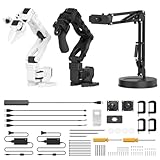
- 【End-to-End Imitation Learning】Hiwonder SO-ARM101 robot arm is an embodied intelligent hardware platform compatible with the Lerobot open-source framework. It provides developers with streamlined access to shared code, templates, and pre-trained models to explore the latest advancements in AI research.
- 【Dual-Camera Vision System】Equipped with both a gripper-mounted camera and an external camera, the system supports both precise manipulation and environmental awareness for accurate imitation learning.
- 【Hiwonder High-Performance Bus Servos】Featuring 12 high-torque bus servo motors with magnetic feedback, the Hiwonder SO-Arm101 robotic arm delivers smooth, stable motion, eliminating issues like power deficiency and jitter.
- 【Professional Control & Debugging】Integrated with the Hiwonder BusLinker V3.0 debugging board, the system supports servo scanning, real-time status monitoring, and trajectory control. The professional PC software simplifies device calibration and debugging, making it accessible for both researchers and hobbyists.
- 【Open-Source Compatibility】The SO-ARM101 robotic arm is designed to be fully compatible with the LeRobot open-source project. We acknowledge the contributions of the open-source community; all trademarks and copyrights belong to their respective owners.
| Implementation detail | Documented example | What to verify |
|---|---|---|
| Tool definition | OpenAI documents JSON-schema function tools and custom free-form tools; Anthropic documents user-defined tools with input_schema. |
Required fields, validation behavior, tool-call response format, and supported models. |
| Execution location | Anthropic distinguishes client-executed tools from server tools; OpenAI documents multiple MCP connection origins and stdio. | Which system runs the operation, handles failures, and has access to credentials. |
| Protocol and transport | Gemini remote MCP support requires Streamable HTTP and does not support SSE. | Whether the provider and MCP server support the same transport and authentication approach. |
| Access control and credentials | OpenAI documents allowed_tools, HTTP credentials, and vault credentials for supported connections. |
How tool access is restricted, where secrets are stored, and what appears in logs. |
| Operational controls | Controls vary by provider and product; there is no single behavior established across these examples. | Approvals, logging, timeouts, error handling, and a way to stop consequential actions. |
How do you give an AI agent tool access safely?
A tool schema helps a model format a request, but it does not replace authorization, validation, or safeguards for actions with side effects. Treat every tool call as an input to a system you control.
- Expose only necessary capabilities. Keep the available tool set narrow, and restrict which tools the model can discover or call. OpenAI documents an
allowed_toolscontrol for MCP connections. - Validate arguments in application code. Check types, ranges, identifiers, and other business rules before making a call. Do not assume a schema alone makes input safe.
- Enforce permissions outside the model. Use the same authorization checks you would apply to any application request; a model-generated call should not grant itself access.
- Protect credentials. Keep secrets out of model-generated code and reusable tool definitions where possible. OpenAI cautions against placing secrets in reusable definitions and logs; its documented credential options depend on the supported connection.
- Review consequential actions. Require appropriate human approval before irreversible or high-impact changes, and provide a way to stop the process.
- Plan for operational failure. Define timeouts, error handling, and logging appropriate to the task, and test the tool definitions thoroughly. Clear, standardized definitions improve the model’s ability to select and call a tool correctly, but do not guarantee correct outcomes.
Oversight features vary across deployed products. The MIT AI Agent Index research team’s 2026 report on its selected sample of 30 agents found that 20 documented pause or stop mechanisms; this is a count within that sample, not an estimate for the entire market. The same report found 20 of 30 supported MCP. Neither figure establishes how all agent products behave. See The 2025 AI Agent Index.
Quick Recap
Product prices and availability are accurate as of the date/time indicated and are subject to change. Any price and availability information displayed on Amazon at the time of purchase will apply.

