
iTechGuides is reader-supported. When you buy through links on our site, we may earn an affiliate commission. As an Amazon Associate I earn from qualifying purchases. Learn more
Computer-use agents learn to interpret a graphical interface, choose an action such as clicking or typing, and check the result before acting again. Their ability to handle short tasks is improving, but evidence from longer workflows shows that completing a complicated task reliably is still a different challenge from performing a few correct clicks.
How does an AI agent use a computer?
A computer-use agent combines a model with software that lets it observe and operate an interface. The model receives a task and visual information—often a screenshot—then proposes an action. A client-side handler carries out that action in the browser or operating environment and provides an updated screenshot or state. The model uses that feedback to decide what to do next.
In Google’s documented API flow, the model can request actions such as clicking, scrolling, or typing. The client scales normalized coordinates to the screen’s viewport and executes the requested action. Safety handling may allow an action, require confirmation, or block it. In other words, the model is only one part of a working agent: the execution environment, action handler, feedback loop, and safeguards matter too. Google’s computer-use documentation describes this flow.
What’s actually slowing this PC down?
Pick the symptom - the matching free tool is one click away.
- Observe: The agent receives the task and an image or other representation of the current interface.
- Interpret: It identifies relevant controls and information, such as a button, field, menu, or status message.
- Choose: It selects a next action, which may be a click, scroll, or text entry.
- Execute: The client performs the action in the target environment, subject to configured safety checks.
- Check: The agent examines the changed interface and continues, corrects its approach, or stops.
This observe–act–check loop is what makes an agent different from a macro that blindly replays a fixed sequence. It can respond to what appears on screen, but it can still misunderstand the interface, overlook a change, or make a poor next-step decision.
#1 Best Overall
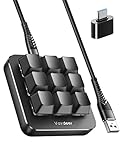
- 6 Functional Layers and 9 NKRO Keys:6 customizable functional layers for diferent scene. One for gaming, one for designing, it's up to you. And you can switch between layers by scrolling the mouse in the floating window area, or you can switch layers automatically based on the application you are using. 9 non-conflict Keys with macros allows you to press or hold multiple keys simultaneously, giving you accurate response with high speed and experiencing a new level of gaming and typing. Ideal Christmas gift for gamers, designers and office workers.
- User-Friendly Interface and Floating Window:With user-friendly interface and real-time floating window, you will never forget the function of the key being used at the moment. This one handed macro mechanical keyboard can make your work faster and more efficient, and make the game experience more comfortable and smooth. Besides, you can carry the macro keyboard anywhere due to the compact and elegant design.
- OTA Upgrade and Setting Sharing:The macro keyboard supports OTA online upgrade. Timely push message reminds you to update the firmware for more useful functions. Easy setting and you can export/import your settings for backup. No more set up for different computers. You can also share your settings with friends. If you have any problems with this one-handed macro mechanical keyboard, please feel free to contact us, we are sure to provide you with a satisfactory solution.
- Multifunctional Keyboard with Easy Setup:This programmable mechanical keyboard supports multimedia control, hotkeys, one-click start, real mouse, macro, etc. Simple settings achieve complex key funtions such as one-click start:folders / documents / common websites / APPs / System function, etc. Powerful but easy to set up. Just set the function you want on the key, then drag the function key to the corresponding virtual key, and remember to click FLASH THE KEYBOARD, and it's done.
- Work Partner and Game Booster:The mechanical keyboard can save a lot of time wasted during working via one-click copy / paste / delete/ one click to open the system settings, which can greatly improve the efficiency of working. Besides, it's also a great game booster.You can do multiple combos or shovel slide with one click for CSGO, OSU, etc. Four different modes of macro for better control. No repeat,Repeat by holding, trigger(upcoming),sequence(upcoming).
What does “learning to use computers” mean?
Training is about helping a model connect visual interface cues and a user’s goal with useful actions. That involves recognizing what is on screen, reasoning about what step would advance the task, and selecting an action. The agent also needs to cope when the interface does not behave as expected.
Providers describe different approaches for their own systems, not a single recipe shared by every computer-use agent. OpenAI says its Computer-Using Agent (CUA) combines GPT-4o vision capabilities with reasoning through reinforcement learning, and is trained to interact with graphical user interfaces. Anthropic says Claude reads screenshots, estimates cursor movement in pixels, and was trained on a few simple software environments. Anthropic reported that the model could generalize from those environments and sometimes self-correct or retry when it encountered obstacles. These are provider accounts of their systems, not independent evidence that all agents learn in the same way. OpenAI’s CUA announcement and Anthropic’s account of developing computer use explain their respective approaches.
“We were surprised by how rapidly Claude generalized from the computer-use training we gave it on just a few pieces of simple software, such as a calculator and a text editor (for safety reasons we did not allow the model to access the internet during training).”
Free tools Windows power users keep installed
One-click scans. No signup required.
Special offer. See more information about Outbyte and uninstall instructions. Please review EULA and Privacy policy.
At runtime, the system must turn those capabilities into a working sequence: inspect the current state, choose an action, wait for the result, and adapt. Better visual understanding alone does not guarantee that an agent will remember every constraint, notice new information, or verify that the task is actually finished.
Rank #2

- 【Programmable USB&Wireless Keyboard】2 Modes Connection: Wired with USB cable. BT Wireless connection. This 4-key USB mini keypad is equivalent to a keyboard or mouse, the keys can be configured via software as key, keycombo, hotkeys, shortcuts, mouse, video/music player controller, video game control, string function. The mini keybord has 3 keys so you can program them individually.
- 【Widely Use】 The USB keypad is widely used in video games, office, sheet music page turning, equipment image capture, factory machine control, piano keyboard test and other occasions.
- 【Rechargable Mini Keyboard】2 hours full charge can hold up 3 mouths use. If it is in low battery, the led light will flash interval 3 seconds to remind you.
- 【Compatible with Various OS】 HID device, once finishing configuration on Windows system or Mac OS, this mini keypad can be used in various devices including iOS, Android, Windows ALL, Linux, Mac. HID device, you can delete the software after configuration.
- 【PCsensor SERVICE】PCsensor stands behind every item it sells and also provides lifetime technical support, 24/7 service. All our products have obtained relevant certificates.
How well do computer-use agents perform?
Benchmark scores show what a particular system did on a particular test suite and configuration; they are not a universal measure of computer competence. OpenAI’s 2025 announcement reported the following results for its evaluated CUA configuration:
| Benchmark | Reported result | What the score represents |
|---|---|---|
| OSWorld | 38.1% | OpenAI-reported result for its evaluated CUA configuration; OSWorld tests computer-use tasks. |
| WebArena | 58.1% | OpenAI-reported result; WebArena uses self-hosted sites designed to imitate real tasks. |
| WebVoyager | 87.0% | OpenAI-reported result; WebVoyager uses live websites. |
The benchmark designs differ, so these percentages should not be read as three scores on one shared scale. A high result on a web task suite does not establish that an agent can reliably operate desktop software or complete a long professional workflow. The figures and their configuration are in OpenAI’s announcement.
Why are long computer workflows harder?
A newer evaluation makes the gap between short tasks and sustained work clearer. OSWorld 2.0 contains 108 realistic workflows. Its authors report that a human takes a median of about 1.6 hours per task. For the paper’s stated Claude Opus 4.7 setup, a task required an average of 318 tool calls, compared with about 30 calls in OSWorld 1.0. The paper’s best reported configuration—Claude Opus 4.8 with maximum thinking and batched tool calls—completed 20.6% of tasks under the primary binary-completion metric at 500 steps and reached 54.8% on the partial-score metric. GPT-5.5 plateaued near 13% in that evaluation. These are results for named systems, settings, and metrics, not a general ranking of all agents. See the OSWorld 2.0 paper.
Recommended Free Tools
Long workflows create more opportunities for a small mistake to compound. An agent may lose track of a constraint, miss information that appeared later, guess instead of asking for clarification, or stop without checking whether the requested result was achieved. Some tasks also require inferring hidden state across applications—for example, understanding how an action in one app affects information shown in another. A partial score can show progress, but it is not the same as completing the task correctly.
Rank #3

- 🎮𝐀𝐥𝐥-𝐢𝐧-𝐎𝐧𝐞 𝐆𝐚𝐦𝐢𝐧𝐠 & 𝐎𝐟𝐟𝐢𝐜𝐞 𝐂𝐨𝐦𝐛𝐨 - 𝐔𝐧𝐛𝐞𝐚𝐭𝐚𝐛𝐥𝐞 𝐕𝐚𝐥𝐮𝐞: Experience premium features without the premium price. This complete wired set includes a full-size RGB backlit keyboard AND a high-precision gaming mouse, offering everything you need for gaming, work, or study. Perfect for first-time gamers, students, and budget-conscious users seeking a durable and responsive upgrade from basic peripherals.
- ✨𝐅𝐮𝐥𝐥𝐲 𝐂𝐮𝐬𝐭𝐨𝐦𝐢𝐳𝐚𝐛𝐥𝐞 𝐑𝐆𝐁 & 𝐌𝐚𝐜𝐫𝐨𝐬 - 𝐘𝐨𝐮𝐫 𝐂𝐨𝐧𝐭𝐫𝐨𝐥, 𝐘𝐨𝐮𝐫 𝐒𝐭𝐲𝐥𝐞: Dive into your gameplay with dynamic lighting. The keyboard features 6 vibrant backlight modes, and the mouse boasts 10 lighting effects. Easily customize colors, brightness, and patterns using the intuitive software (downloadable at redragon.com). Record complex command sequences with the 5 dedicated macro keys for a competitive edge in any game.
- 🔇𝐐𝐮𝐢𝐞𝐭, 𝐂𝐨𝐦𝐟𝐨𝐫𝐭𝐚𝐛𝐥𝐞 & 𝐑𝐞𝐬𝐩𝐨𝐧𝐬𝐢𝐯𝐞 𝐓𝐲𝐩𝐢𝐧𝐠 𝐄𝐱𝐩𝐞𝐫𝐢𝐞𝐧𝐜𝐞: Designed for marathon sessions. The soft-touch membrane keys provide satisfying feedback while remaining remarkably quiet—ideal for shared spaces, late-night gaming, or office use. The included ergonomic wrist rest reduces fatigue, and the anti-ghosting keyboard ensures every key press is registered instantly, even during intense action.
- ⚙️𝐏𝐥𝐮𝐠, 𝐏𝐥𝐚𝐲, 𝐚𝐧𝐝 𝐏𝐞𝐫𝐬𝐨𝐧𝐚𝐥𝐢𝐳𝐞 - 𝐄𝐚𝐬𝐲 𝐒𝐞𝐭𝐮𝐩, 𝐋𝐚𝐬𝐭𝐢𝐧𝐠 𝐒𝐞𝐭𝐭𝐢𝐧𝐠𝐬: Get straight to the fun with true plug-and-play compatibility for Windows 10/11. Your personalized lighting and DPI settings are saved directly to the hardware, meaning they stay the way you set them, even after restarting your PC. Adjust the mouse sensitivity on-the-fly (800-7200 DPI) with a dedicated button for precision in any task.
- ✅𝐑𝐞𝐥𝐢𝐚𝐛𝐥𝐞 𝐏𝐞𝐫𝐟𝐨𝐫𝐦𝐚𝐧𝐜𝐞 & 𝐄𝐧𝐡𝐚𝐧𝐜𝐞𝐝 𝐂𝐨𝐦𝐩𝐚𝐭𝐢𝐛𝐢𝐥𝐢𝐭𝐲: Built to last and work seamlessly. We’ve listened to feedback to ensure reliable performance. This combo is rigorously tested for durability and offers wide compatibility with major PCs and laptops. It’s the trusted, feature-packed kit that delivers excitement for young gamers and reliable functionality for everyday users.
The action space itself is broader than clicking through menus. Microsoft Research’s CUActSpot work highlights GUI, text, table, canvas, and natural-image interactions, including clicking, dragging, and drawing. This helps explain why performance on a narrow set of buttons or browser pages cannot establish that an agent can handle every way people work with software. See Microsoft Research’s CUActSpot publication.
Can an agent help while a person is using software?
Computer use is not only about handing over a task and letting an agent complete it. An assistant may need to infer what a person is trying to do and decide whether to offer help at the right moment. That requires interpreting context and intent, not just reproducing a known sequence of actions.
Google Research’s GUIDE benchmark evaluates behavior-state detection, intent prediction, and help prediction using 67.5 hours of recordings from 120 novice demonstrations across 10 complex software applications, including think-aloud narration. In the reported study, evaluated models reached 44.6% accuracy for behavior-state detection and 55.0% for help prediction. Those results illustrate the difficulty of recognizing what a user is doing and deciding when assistance is appropriate; they are not direct measurements of autonomous task completion. Details are in Google Research’s GUIDE publication.
Quick wins for a faster PC:
Fix the driver behind crashes, sound loss and screen glitchesFind Drivers →Repair Windows errors before they cause bigger problemsFix Now →Scan for outdated or missing drivers - takes under a minuteDriver Scan →Do agents work equally well in browsers, mobile apps, and desktop software?
No. Support depends on the model and its execution environment. Google says Gemini 2.5 Computer Use is primarily optimized for web browsers, shows promise on mobile UI control, and is not yet optimized for desktop operating-system-level control. A result for browser automation should therefore not be generalized to desktop use. See Google’s description of Gemini 2.5 Computer Use.
Rank #4

- Full Key Programmable: This custom keyboard supports full-key macro programming to create exclusive shortcut operations, helping you trigger complex commands with a single click and be a step ahead in the game. The unique dual-mode knob design of the black and white keyboard wireless allows you to quickly switch between gaming and office modes. In addition, with 3 programmable shortcut keys (M1/M2/M3), the usb keyboard lets you easily set up personalized functions to improve operational efficiency
- Vibrant RGB Keyboard: The led keyboard comes with 16.8 million RGB color and 16 preset light effects add more fun to your desktop. With the knob or FN+ key combination, you can freely adjust the brightness and speed of the cute keyboard's lights to create an exclusive atmosphere(FN+END can switch backlit colour effect). With the macro software, you can also customize the lights to make your silent backlit keyboard truly unique and enjoy an immersive visual experience whether you are working or gaming
- 99 Keys Compact Ergonomic Keyboard: This 96% layout retro keyboard combines vintage aesthetics with modern craftsmanship, and the integrated numeric keypad retains the familiar typing experience while freeing up more desktop space. This aula keyboard is equipped with a foldable two-stage stand, you can adjust the angle of the clicky keyboard according to your needs, reducing the pressure on your wrists and creating a more comfortable typing experience
- Multi-device Connectivity: AULA light up keyboard supports Bluetooth 5.0, 2.4GHz wireless and USB-C wired connectivity modes, enjoying convenient switching anytime, anywhere. Up to 5 devices can be connected at the same time, one key switch, no need to pair repeatedly. Whether it's for office, gaming or mobile use, this typewriter keyboard delivers a seamless experience for another level of efficiency
- Gaming Keyboard: All keys on this aula s99 wireless keyboard support macro customization, which allows you to record and edit macros to program a series of complex actions into a key, useful in very real-time games for amateur gamers.If you have very strict requirements for game response speed, it is recommended that you purchase a mechanical keyboard priced at $50 or more, which is more suitable for professional gamers.The aula s99 pc keyboard is compatible with Windows XP/7/8/10, Mac, Android and iOS. Please NOTE: this product is a membrane keyboard not mechanical keyboard and this doesn't support hot-swapping
When evaluating a computer-use system, check which environment it actually supports, how long and realistic its tested tasks are, which actions it can perform, and how completion is scored. Also consider whether it handles changing screens and hidden information, when it asks for user confirmation, and how the computer it controls is isolated. Results from different benchmarks are not a head-to-head comparison unless they use a shared protocol.
What safety controls matter?
A graphical interface can display malicious content as well as legitimate instructions. Anthropic identifies prompt injection as a risk: malicious instructions encountered by an agent may lead it to act in unintended ways. A system that can operate a computer may also encounter actions with meaningful consequences, so the ability to click or type should not be treated as proof that an action is safe.
- Use an isolated execution environment. Google recommends a sandboxed virtual machine or container for computer-use implementations.
- Require confirmation where appropriate. Google’s documented flow can require user confirmation for some actions rather than executing them automatically.
- Keep the agent’s authority limited. Give it access only to the environment and actions needed for the task.
- Verify consequential outcomes. Check the final state rather than assuming that an issued click or typed command succeeded.
These are risk controls, not guarantees that attacks or unsafe actions are impossible. Read Anthropic’s discussion of prompt injection alongside Google’s implementation and safety guidance.
Quick Recap
Product prices and availability are accurate as of the date/time indicated and are subject to change. Any price and availability information displayed on Amazon at the time of purchase will apply.

