
What’s actually slowing this PC down?
Pick the symptom - the matching free tool is one click away.
AI agents can speed up chip design by turning specifications into implementation plans, drafting and revising RTL, building verification assets, and iterating on feedback from design tools. But a generated design, runnable testbench, improved coverage score, or successful physical-design run is only evidence about that particular checkpoint—not proof that a chip is correct or ready for production. Engineers still need to check the specification, validate the tests and expected behavior, and independently review functional and implementation results.
Where AI agents fit in a chip-design workflow
Chip design involves linked tasks: understanding requirements, implementing behavior in a hardware description language, checking that behavior, and refining the implementation against synthesis and physical-design constraints. An AI agent can help across several of these steps, especially when it can call tools and use their output to revise its work. The useful distinction is between generating an artifact and establishing that the artifact meets its requirements.
Turning specifications into plans and RTL
An agent can extract interfaces, behaviors, constraints, and corner cases from a design specification, then organize them into an implementation plan. That plan can give engineers a useful review point before code is generated: assumptions about resets, timing, state transitions, and input handling are easier to spot when they are explicit.
NVIDIA Research’s 2025 Spec2RTL-Agent describes this kind of planning and iterative refinement. Its method first generates synthesizable C++ for high-level synthesis (HLS), rather than directly translating natural-language specifications into RTL. The authors report up to 75% fewer human interventions across three specification documents compared with existing methods in their evaluation. The result is specific to those documents and that setup; it does not establish that an agent can replace design review on a broader project.
#1 Best Overall
![Arduino® UNO™ Q 4GB [ABX00173]- Hybrid Board, Qualcomm Dragonwing QRB2210 microprocessor (MPU) & STM32U585 Microcontroller(MCU), AI Vision, Voice, IoT, Robotics, Linux Debian OS, Wi-Fi 5, USB-C](https://m.media-amazon.com/images/I/51cl4xygwGL._SL160_.jpg)
- Dual-Brain Hybrid Power: Combines the Qualcomm Dragonwing QRB2210 MPU (Quad-core Arm Cortex-A53 @ 2.0 GHz CPU, Adreno GPU, AI acceleration) and the real-time, low-power STM32U585 MCU for advanced applications like object recognition, voice commands, and motion detection.
- AI & Linux Capabilities: Unlocks AI-powered vision and sound solutions; runs Linux Debian OS for coding in Python and supports the Arduino ecosystem with libraries and Sketches; quick start with Arduino App Lab.
- Advanced Features: Equipped with 4 GB LPDDR4 RAM, 32 GB eMMC built-in storage, ideal for single-board computer (SBC) mode, running multiple simultaneous high-level processes, more complex AI or ML models, extensive logs. Dual-band Wi-Fi 5 (2.4/5 GHz), Bluetooth 5.1, and high-speed headers for vision, audio, and display peripherals.
- Seamless Expansion & Connectivity: Features the classic UNO form factor for shields compatibility, an 8x13 LED matrix, and a Qwiic connector for easy expansion with Modulino nodes; power and connect via the USB-C connector.
- Intended Use & Development: The perfect platform for prototyping robotics or IoT projects, empowering innovators with a unified development experience to mix Arduino Sketches, Python scripts, and containerized AI models in a single interface.
Building verification assets and using tool feedback
Agents can also draft testbenches, reference models, assertions, and test scenarios. The more useful pattern is a closed loop: construct an environment, check that it runs, simulate the design, inspect failures or coverage, and revise the environment or implementation. A one-shot testbench or code answer does not provide the same evidence as an artifact that has been exercised and checked.
AgentDV, an August 2026 preprint, combines analysis, testbench construction, simulation, coverage measurement, and iteration. It filters out verification environments that are not runnable, and uses CSR-grounded checks intended to reduce invented signals and incorrect expected behavior. Its abstract reports a 100% pass rate on four DUTs and an average of 80.9% across all tested DUTs with Claude Sonnet 4.6; the tested Llama and Qwen models averaged 58.7% and 60.6%, respectively. These are results for the paper’s models and DUTs, not proof that the passing designs received complete verification.
Decomposing larger tasks across agents
Some systems divide work among specialized agents rather than asking one agent to handle the whole flow. The 2025 ASIC-Agent preprint describes agents for RTL generation, verification, OpenLane hardening, and Caravel integration, operating in a sandbox with design tools. Such decomposition can make responsibilities and tool steps more explicit, but it does not remove the need to review what each stage produced.
Rank #2
- Dual-Brain Hybrid Power: Combines the Qualcomm Dragonwing QRB2210 MPU (Quad-core Arm Cortex-A53 @ 2.0 GHz CPU, Adreno GPU, AI acceleration) and the real-time, low-power STM32U585 MCU for advanced applications like object recognition, voice commands, and motion detection.
- AI & Linux Capabilities: Unlocks AI-powered vision and sound solutions; runs Linux Debian OS for coding in Python and supports the Arduino ecosystem with libraries and Sketches; quick start with Arduino App Lab.
- Advanced Features: Equipped with 2 GB LPDDR4 RAM, 16 GB eMMC built-in storage, ideal to develop in PC-connected mode, running the OS, Python scripts, and basic network services (SSH) without a demanding GUI or heavy multitasking; great for lightweight AI and memory-optimized TinyML applications, needing local storage for basic OS and core libraries. Dual-band Wi-Fi 5 (2.4/5 GHz), Bluetooth 5.1, and high-speed headers for vision, audio, and display peripherals.
- Seamless Expansion & Connectivity: Features the classic UNO form factor for shields compatibility, an 8x13 LED matrix, and a Qwiic connector for easy expansion with Modulino nodes; power and connect via the USB-C connector.
- Intended Use & Development: The perfect platform for prototyping robotics or IoT projects, empowering innovators with a unified development experience to mix Arduino Sketches, Python scripts, and containerized AI models in a single interface.
ChipMEM, a September 2026 preprint, focuses on retaining procedural knowledge from successful tool use. Its verification gate stores a procedure only after synthesis, simulation, or formal checks pass. That design is evidence about how the system filters stored procedures; it is not an industry-wide signoff standard.
Do these 3 things before closing this tab:
1Clear out junk files and repair common Windows errors2Scan for outdated or missing drivers - takes under a minute3Repair Windows errors before they cause bigger problemsWhat benchmark results do—and do not—show
Different evaluations measure different things. A system may be assessed on whether it understood a specification, generated code, produced runnable tests, found bugs, improved coverage, or completed physical-design steps. Those results should not be treated as interchangeable: a coverage increase is not an equivalence proof, and a successful placement-and-routing run does not by itself show that the design implements the approved specification.
| Study and date | What was evaluated | Reported result and scope |
|---|---|---|
| FIXME, AAAI conference page dated 2026-03-14 | 747 tasks drawn from real-world hardware designs, across five functional-verification subsets | The authors report a 45.57% improvement in average functional coverage for expert-guided optimization within their multi-agent-aided flow. This is not a general estimate of the effect of adopting AI. |
| FluxBench, arXiv preprint dated 2026-07-20 | RTL generation and repair, tool-feedback use, synthesis, placement and routing, and engineering change order automation | The authors report up to an 86.27% performance gap among tested agent-system architectures using the same foundation model. The result shows sensitivity to system architecture in those evaluations, not a universal ranking for other projects. |
| ChipMEM, arXiv preprint dated 2026-09-22 | Held-out CVDP tasks under matched model and tool settings, with and without a frozen procedural library | The authors report 20/20 accepted outcomes with the library versus 18/20 without it, one evaluation per setting. The small counts and specific benchmark limit what can be concluded beyond that comparison. |
FIXME treats specification comprehension, reference-model generation, testbench generation, assertion design, and RTL debugging as distinct verification tasks. That separation is useful when judging an agent: success at one task does not establish success at the others. FluxBench also emphasizes that results depend on the agent architecture, model, tools, and design case. For comparisons, relevant factors include the design’s scale, specification quality and human guidance, degree of tool access, verification method, synthesis or physical-design completion, and runtime or token cost. FluxBench introduces Token ROI as one way to consider cost alongside results; a score without its model and tool setup is difficult to interpret.
Rank #3
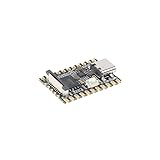
- Single core ARM Cortex-A7 32-bit core, integrated with NEON and FPU
- Built in Micro's self-developed 4th generation NPU, with high computational accuracy and support for mixed quantization of int4, int8, and int16. Among them, int8 has a computing power of 0.5 TOPS and int4 has a computing power of up to 1.0 TOPS
- Built in self-developed 3rd generation ISP3.2, supports 4 million pixels, and supports various image enhancement and correction algorithms such as HDR, WDR, and multi-level denoisin
- It has powerful encoding performance, supports intelligent encoding, adapts to save bit rates according to the scene, and saves more than 50% of the bit rate compared to conventional CBR mode, making the captured images high-definition, smaller in size, and doubling the storage space
- The design with built-in RISC-V MCU supports low-power fast startup, 250ms fast capture, and simultaneous loading of AI model library, enabling facial recognition to be completed within 1 second
What engineers still need to verify
Keep separate evidence checkpoints for the generated implementation, the verification environment, functional behavior, and physical implementation. A pass at one checkpoint should not be used as a substitute for the next.
Specification fidelity and architectural intent
Review the generated plan and RTL against the approved specification. In particular, check assumptions about interfaces, reset behavior, state transitions, corner cases, and architectural intent. A plausible implementation can still encode an unstated assumption or omit a requirement. Spec2RTL-Agent’s evaluation across three specification documents is a bounded research result, not a guarantee of fidelity on a different design.
Runnability and testbench validity
Confirm that generated verification code builds and runs in the intended environment, and that it exercises meaningful behavior. A testbench can fail before testing the design at all; it can also run while checking the wrong signals or expected values. AgentDV’s runnability filter and CSR-grounded checks address parts of this problem, but engineers still need to inspect the environment and its assumptions.
Rank #4

- 【POWERFUL ESP32‑S3 CONTROLLER】Built‑in Xtensa 32‑bit LX7 dual‑core processor, 512KB SRAM, 8MB PSRAM, 16MB Flash for stable AI voice computing and multitask processing.
- 【Preloaded Dual AI Platforms】Comespre-installed with complete Deepseek and OpenAI voice dialogue projects.Experience intelligent voice interaction instantly. (Note: OpenAI functionality requires your own API key.)
- 【STABLE WIRELESS & CLEAR AUDIO】Integrated 2.4GHz Wi‑Fi + Bluetooth 5 (LE); dedicated audio decoding module for natural, responsive voice interaction.
- 【USER‑FRIENDLY VISUAL & PLUG‑AND‑PLAY】2” TFT‑SPI color screen shows real‑time chat; modular design, no extra wiring, ready to use after setup.
- 【FULL LEARNING SUPPORT】45 programmable GPIOs, rich interfaces, online web tutorials, free technical support for beginners & developers.
Expected behavior, assertions, and coverage
Check reference models, assertions, signal mappings, and whether the reported coverage corresponds to important requirements and corner cases. Coverage measures what the chosen tests exercised under a particular model; a higher score alone does not prove correctness or show that every important behavior was tested. The separate task categories in FIXME help expose where evidence is missing.
Functional correctness
Run appropriate independent simulation and, where applicable, formal verification or equivalence checks. Review failures and ensure that the checking logic is itself meaningful. ChipMEM’s requirement that a procedure pass synthesis, simulation, or formal checks before storage describes its own workflow; it should not be mistaken for a complete verification or signoff policy.
Synthesis and physical implementation
Check synthesis results and the project’s relevant timing, placement, routing, and engineering-change-order outcomes separately. These steps can expose implementation issues that are not answered by a functional testbench. FluxBench includes such stages in its evaluated workflows, including open-source workflows and a commercial-tool RTL-to-GDS case study, but its outcomes remain tied to the specific benchmark flows and design cases.
Security and design review
Do not infer security assurance from generated code, passing tests, or successful physical implementation. The studies cited here do not establish universal security for agent-generated hardware. Security review needs to be grounded in the design’s threat model and performed by people able to assess the relevant risks.
A practical way to use agents without mistaking output for signoff
- Start with an approved specification. Give the agent clear requirements and ask it to surface ambiguities and assumptions before implementation.
- Review the plan before accepting code. Check that interfaces, reset behavior, and required corner cases are represented as intended.
- Require a tool-backed iteration loop. Have the system build or run its verification environment, report failures and coverage, and show what it changed in response.
- Inspect verification artifacts independently. Review the testbench, reference model, assertions, signal mapping, and coverage gaps—not only the agent’s summary.
- Keep functional and implementation checks distinct. Use the project’s appropriate simulation, formal or equivalence, synthesis, timing, placement, and routing checks.
- Record the evidence and its scope. Track which model, tools, design case, checks, and human interventions produced each result. A benchmark score is useful only when its measured task and setup are clear.
The strongest case for AI agents in chip design is as workflow accelerators: they can reduce drafting and iteration work, help construct verification assets, and make tool-feedback loops more systematic. Their outputs become useful engineering evidence only when engineers establish what was tested, whether the checks were valid, and whether the result meets the design’s requirements.
Quick Recap
Product prices and availability are accurate as of the date/time indicated and are subject to change. Any price and availability information displayed on Amazon at the time of purchase will apply.

