
iTechGuides is reader-supported. When you buy through links on our site, we may earn an affiliate commission. As an Amazon Associate I earn from qualifying purchases. Learn more
Browser-native Web Crypto can handle the encryption and decryption in a text-sharing tool without a JavaScript cryptography package. A typical design encodes the text as bytes, encrypts it with AES-GCM, and gives the recipient the ciphertext and the parameters needed to decrypt it. That describes a standards-based architecture—not verified details of the specific tool in the headline. Without its source code or project documentation, its algorithm, data flow, and npm dependency count cannot be confirmed.
What “zero npm dependencies” can—and cannot—mean
Browsers expose cryptographic operations through the Web Crypto API, so an application can use native browser interfaces rather than importing a JavaScript package for encryption and decryption. That establishes a way to avoid a crypto package for those operations; it does not establish that the entire project has zero npm dependencies. UI libraries, build tools, tests, and other application code may still use packages. Confirming the headline’s claim requires inspecting the project’s package manifest, lockfile, and build configuration.


Web Crypto provides primitives, not a complete encrypted-sharing system. The application still has to choose and configure an algorithm, handle keys and parameters, serialize the data, and decide what travels to or persists on a server. The API’s availability does not by itself prove that an application is secure.
Recommended Free Tools
A standards-based encryption and sharing flow
One possible browser-side pattern is to convert the message into bytes, obtain or derive a key, and encrypt with AES-GCM through crypto.subtle. The resulting ciphertext must be paired with the parameters needed for decryption, including the initialization vector (IV). The recipient’s browser decodes the payload and calls the matching decryption operation with the same key and parameters. MDN documents the asynchronous encryption operation and AES-GCM usage in its SubtleCrypto: encrypt() method documentation; its SubtleCrypto: decrypt() method documentation explains the corresponding decryption requirements.
#1 Best Overall
- Prepare the message: encode the text as bytes suitable for the encryption operation.
- Establish key material: generate a key or derive one from a password. These are distinct design choices; no source material establishes which choice the named tool makes.
- Encrypt: call
crypto.subtle.encrypt()with AES-GCM, the key, the IV, and the plaintext bytes. - Package what the recipient needs: serialize the ciphertext and public parameters such as the IV. If the key is password-derived, preserve the salt and KDF parameters required to derive the same key. A recipient also needs access to the key material or the means to reproduce it.
- Decrypt in the recipient’s browser: deserialize the payload and call
crypto.subtle.decrypt()with the matching algorithm parameters and key.
The W3C Web Cryptography Level 2 specification includes AES-GCM examples, key-agreement and key-derivation patterns, and documentation for getRandomValues(), which generates cryptographically strong random values. These standards show what browser APIs make possible; they do not establish the specific tool’s key workflow or payload format. See the Web Cryptography Level 2 specification.
Why AES-GCM is a useful design option
AES-GCM is an authenticated-encryption mode: decryption can detect if ciphertext has been modified. MDN recommends authenticated encryption because unauthenticated modes do not provide this integrity protection by default. This property does not, by itself, verify the sender’s identity. A recipient cannot infer who created a message merely because AES-GCM decryption succeeds.
Rank #2
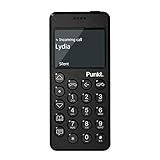
- Distraction Free: The MP02 4G cell phone makes it easier to be where you are—whether that’s a weekend away or an important business meeting. Keep what matters close with calls and SMS-first texting, without the constant onslaught of designed-for-addiction notifications.
- Privacy & Security Focused: Built with security in mind from the start, the MP02 is designed to help safeguard your information without requiring you to share more personal data than necessary. Enjoy peace of mind with a phone experience that prioritizes discretion and control.
- Carrier Compatibility & Connection: AT&T is supported (coverage verified, VoLTE supported). T-Mobile is supported, but VoLTE is not supported. Verizon is not supported. Many US carriers use VoLTE for voice calls - if VoLTE isn’t supported on your carrier, call performance may be limited even with signal. The MP02 supports 4G LTE across key bands (2G: 850/900/1800/1900 3G: WCDMA 1/2/4/5/6/8/19 4G: FDD LTE 1/2/3/4/5/7/8/12/17/19/20).
- Simple By Design: A minimalist interface keeps everyday actions straightforward. Call and text buttons provide quick access, while a streamlined menu helps you stay focused on essentials. Note: messaging is SMS-first (MMS group chats aren’t supported), helping to keep communication simple.
- Built for Everyday: Designed for comfortable one-handed use with a clean, minimalist silhouette. Reinforced glass fiber construction supports daily use, while the lightweight shape makes it easy to carry anywhere.
Authenticated encryption still depends on correct implementation and key handling. Encryption and decryption need matching key material and parameters, including the IV used for the encryption operation. A mismatch can prevent successful decryption; mishandling keys or the surrounding data flow can undermine the intended protection. Web Crypto’s primitives do not settle those application-level questions.
Do these 3 things before closing this tab:
1Repair Windows errors before they cause bigger problems2Fix the driver behind crashes, sound loss and screen glitches3Clear out junk files and repair common Windows errorsDeployment and security boundaries
Use a secure context
MDN documents SubtleCrypto.encrypt() as available only in secure contexts. A browser deployment therefore needs a secure context, typically HTTPS for a site. See MDN’s encryption API documentation.
Native cryptography is not a security audit
Using a browser API instead of a crypto package can reduce the application’s dependency surface for those cryptographic operations. It does not demonstrate that the project has a safe key lifecycle, strong password-derived keys, careful URL handling, appropriate server behavior, or protection against malicious changes to the delivered application. The MDN Web Crypto API overview describes the API, not an audit of any application built with it.
Independent reader supportYour contribution helps us test, update, and keep practical guides available for everyone.What must be checked before describing this tool as fact
The available standards documentation supports a browser-native encryption architecture, but it does not verify the named tool’s implementation. To establish its actual design, inspect the source or project documentation for:
- the encryption algorithm and its parameters;
- how keys are generated or derived, and how any password, salt, or derivation parameters are handled;
- how the IV and ciphertext are serialized and shared;
- whether a server receives or stores ciphertext or other message data;
- how key material is transmitted or retained;
- what happens when decryption fails or data is malformed;
- the package manifest, lockfile, and build configuration.
Until those details are available, claims about the particular tool’s URL behavior, server visibility, dependency count, or end-to-end data flow remain unverified. The standards establish a feasible architecture, not what this implementation does.
Quick wins for a faster PC:
Fix the driver behind crashes, sound loss and screen glitchesFind Drivers →Clear out junk files and repair common Windows errorsFree Scan →Scan for outdated or missing drivers - takes under a minuteDriver Scan →Quick Recap
Product prices and availability are accurate as of the date/time indicated and are subject to change. Any price and availability information displayed on Amazon at the time of purchase will apply.

