
Yes—an investigational brain-computer interface helped one stroke survivor produce audible speech while she silently attempted to speak. In a 2025 clinical-trial report, a UC San Francisco and UC Berkeley team described a system that decoded activity from speech-related brain areas in streaming 80-millisecond increments, rather than waiting for a whole sentence. The result is a promising demonstration, not a treatment currently available to patients.
What happened in the trial?
The participant was a woman who had been unable to speak for 18 years after a stroke. National Institutes of Health reporting described her as 47 at the time of the study. Electrodes implanted over speech-related cortex recorded brain activity as she tried to speak silently. A deep-learning decoder interpreted those signals, and a speech synthesizer turned them into audible words.
The system could also draw on a recording of her voice from before the stroke. That let it generate speech with a more personal sound than a generic synthesized voice, according to the NIH account. The study was reported in Nature Neuroscience on March 31, 2025, in volume 28, pages 902–912.
How does a brain-computer interface turn attempted speech into sound?
1. Electrodes record speech-related activity
The implant captures patterns of activity in brain regions involved in speech as the participant attempts to say words without producing them aloud. This is not simply a device that reads any passing thought: the reported system was designed to interpret brain activity associated with attempted speech.
Do these 3 things before closing this tab:
1Clear out junk files and repair common Windows errors2Scan for outdated or missing drivers - takes under a minute3Repair Windows errors before they cause bigger problems#1 Best Overall

- 37 Easy To Understand Talking Buttons- Our AAC device for speech comes with 37 pre-installed instructions in a picture and color format that makes it very easy to communicate simple, but essential instructions such as yes, no, I’m thirsty, I’m sleepy, it's too loud and many more, Compared with other competing products, more talking buttons can better meet daily needs
- 1 Male/Female Voice Switch & 8 Programmable Buttons- AAC device for autism features a male and female voice switch button can switch the device to male or female voice at will. 8 programmable buttons that allow you to record your own tailored instructions with your voice! You can customize the device to your specific needs by recording your voice to provide a more personalized and effective communication experience
- Adjustable Volume- AAC Communication Device for Speech Therapy Requires 3AAA batteries, the sound is louder and louder, you can use it in busy areas at will. AAC device can also adjust the volume to meet the needs of any scenario. The product is lightweight and has a storage bag, so it is easy to carry when traveling
- A Wide Variety Of Uses- The non verbal communication tools are suitable for a wide range of individuals, including non-verbal Children, those with autism or other special needs, as aids for stroke patients, those with apraxia or aphasia, or just anyone with speech difficulties. The device is a fantastic convenient alternative to non verbal communication cards, PEC cards for autism, and communication boards for nonverbal kids
- Reduce Anxiety and Build Confidence- The Talker Buddy Build confidence and understanding by Clicking the button to expand language and communication skills and encourage response and recognition with pictorial cues. Engineered to help provide nonverbal individuals with an effective means of communication to express their needs and feelings with loved ones
2. A decoder maps the signals to language
A deep-learning system processes the recorded signals and predicts the words the participant is trying to say. The decoder is the bridge between neural activity and the speech output; the account describes an investigational system, not a general-purpose mind-reading device.
3. A synthesizer produces an audible voice
The decoded words are converted into sound. For this participant, a pre-stroke recording helped personalize the voice. The speech-generation pipeline is intended to let someone communicate through audible speech even when paralysis prevents them from speaking aloud.
Rank #2
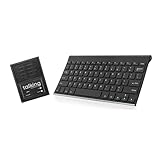
- ✅ 𝐖𝐢𝐫𝐞𝐥𝐞𝐬𝐬 𝐓𝐚𝐥𝐤𝐢𝐧𝐠 𝐊𝐞𝐲𝐛𝐨𝐚𝐫𝐝: Talking Keyboards wireless standard keyboard is perfect for adults and seniors who can type on a standard computer-sized keyboard. A great choice for laryngectomy, throat cancer, and post-operative patients.
- ✅ 𝐏𝐨𝐰𝐞𝐫𝐟𝐮𝐥 𝐒𝐩𝐞𝐞𝐜𝐡 𝐆𝐞𝐧𝐞𝐫𝐚𝐭𝐢𝐧𝐠 𝐃𝐞𝐯𝐢𝐜𝐞: Designed for vocally impaired and speech-limited persons of all ages. Talking Keyboards wireless standard keyboard works seamlessly without the need for a PC. It is a battery-powered, portable solution that speaks with an unlimited vocabulary.
- ✅ 𝐂𝐮𝐬𝐭𝐨𝐦𝐢𝐳𝐚𝐛𝐥𝐞 𝐏𝐡𝐫𝐚𝐬𝐞𝐬 𝐰𝐢𝐭𝐡 𝐐𝐮𝐢𝐜𝐤 𝐏𝐫𝐞𝐬𝐬: The wireless standard keyboard speaks 30 user-defined phrases with single key presses. Has the option to choose between male and female voices. Speech is instantly generated, making communication a breeze.
- ✅𝐔𝐬𝐞𝐫-𝐅𝐫𝐢𝐞𝐧𝐝𝐥𝐲 𝐚𝐧𝐝 𝐏𝐨𝐫𝐭𝐚𝐛𝐥𝐞: Our keyboard is ready to work straight out of the box. Lightweight and ultra-portable, it is designed for maximum convenience, ensuring you can communicate effortlessly, wherever and whenever.
- ✅𝐀𝐟𝐟𝐨𝐫𝐝𝐚𝐛𝐥𝐞 𝐀𝐀𝐂 𝐓𝐞𝐜𝐡𝐧𝐨𝐥𝐨𝐠𝐲: The wireless standard keyboard offers the most affordable keyboard augmentative communication (AAC) solution for children and adults. It focuses on simplicity and is highly compatible.
What does decoding speech in 80-millisecond increments mean?
The upgraded system processes speech in successive 80-millisecond (0.08-second) increments. Instead of holding its output until it has decoded a complete sentence, it can begin generating speech as the stream of neural activity is decoded. The UC account says this streaming approach addresses the delay that can make conversation difficult when a user must wait until a whole sentence is finished.
NIH compares the interval with typical speech of about three words per second, or roughly 130 words per minute. Those figures provide conversational context; they do not mean the system has a measured 80-millisecond end-to-end response time, produces a word every 80 milliseconds, or matches ordinary speech speed in every circumstance. An increment is the system’s processing step, not a guarantee of zero delay.
Rank #3

- ✅ Portable and Travel-Friendly Speech-Generating Device: Compact palm-sized and standard wireless keyboard combo, perfect for travel and on-the-go communication, offering a cost-effective AAC solution for individuals with speech impairments or post-operative needs
- ✅ Multiple Device Compatibility with Plug-and-Play Functionality: Works seamlessly with telephone or speakerphone devices for easy calls to family, friends, and caregivers. No PC needed. No complex setup required - simply turn on the device and start typing to speak instantly.
- ✅ Customizable User Phrases and Multilingual Speech: Program up to 30 user-defined phrases for quick communication with a single key press and choose from English and Spanish languages in male or female voices for versatile communication.
- ✅User-Friendly, Sleek, Lightweight Design: Easy to use, with no complex installation setup – works straight out of the box, making it perfect for individuals of all ages. Designed for convenience, portability, and easy storage with a high level of functionality.
- ✅High Tech Device with Enhanced Accessibility Modes: Access cutting-edge speech generation technology at a reasonable price, without compromising on quality. Features "alphabet-only" and "sticky key" modes for different typing needs and abilities.
What does the demonstration establish—and what remains unknown?
- It establishes a feasibility result in one person. The reported clinical-trial demonstration involved a single stroke survivor; it does not show how well the approach would work across a larger or more varied patient group.
- It demonstrates streaming audible speech. The study’s contribution is a brain-to-voice system that generates output incrementally rather than only after an entire sentence. The paper describes the approach as a “streaming brain-to-voice neuroprosthesis to restore naturalistic communication.”
- It shows one way to personalize synthesized speech. The participant’s pre-stroke voice recording informed the sound of the generated voice. The cited accounts do not establish how much recording is required for other users or how voice personalization would work for people without a suitable recording.
- It does not establish broad clinical readiness. The available accounts do not establish long-term safety, effectiveness across patients, a deployment timetable, or regulatory authorization for routine use.
Is the real-time speech implant available to patients?
No public evidence in the cited 2025 accounts shows this implant, its electrodes, decoder, or speech synthesizer as a commercially available product or routine treatment. It was an investigational research system tested in a clinical trial, not a consumer device patients can buy or request as an established care option.
A separate Stanford-led collaboration announced by University of Michigan Health in April 2025 received a $29.7 million Marcus Foundation grant to develop implantable brain-computer interfaces for people with aphasic stroke. That grant supports a research program; it is not evidence that the UC San Francisco–UC Berkeley system is available or that a treatment pathway has been established.
Rank #4

- A Starter AAC Device for Nonverbal Children: MibbyTalk is an affordable, beginner-friendly AAC device for nonverbal autistic children and those with speech delays. It offers a simple, screen-free option for families starting their AAC journey, transitioning from PECS, or waiting for a high-tech AAC system. MibbyTalk helps children express basic needs, feelings, and simple daily messages at home, school, or in the community, making it a practical addition to back to school supplies for kids who need communication support.
- 11 Recordable Buttons for Personalized Communication: Families can customize MibbyTalk AAC device with messages about a child's favorite things and daily routines, using a voice familiar to the child for recordings of up to 15 seconds per button. The included sticker sheet features labels for Brush Teeth, School, and Chores, plus blank ones for other recordings. Familiar recordings and clear labels make MibbyTalk more personal and easier for children to use.
- Easy to Get Started: MibbyTalk has 32 preset buttons for everyday phrases. They deliver complete sentences in clear, natural, expressive human voices—a format suited to children who are gestalt language processors. Four color-coded zones organize the buttons by category for easy navigation: Pink (Social Phrases), Green (Feelings), Blue (Basic Needs), and Orange (Activities). No complex programming is required.
- Easy-to-Press Tactile Buttons: MibbyTalk AAC device features raised, responsive buttons designed for children and people with limited hand strength or fine motor challenges. They require only light pressure and provide clear tactile feedback with every press. The simple button design makes message selection easier and more consistent.
- Portable, Practical & Ready to Go: Protected by a textured, anti-drop silicone case for better grip and durability—ideal for young autistic users who may drop devices frequently. Lightweight and easy to carry between home, school, therapy, car rides, or community outings. The 5-level adjustable volume ensures messages are heard clearly in different environments, with the option to switch between natural male and female voices. MibbyTalk works perfectly as a standalone communication tool or a handy backup to tablet-based AAC systems.
Who was the participant, and what happened afterward?
UC Berkeley later identified the participant as Ann Johnson. She had a brainstem stroke in 2005, at age 30, and lost her ability to speak. Berkeley reported that she heard her voice again in 2022, 18 years after losing speech. Her implant was removed in February 2024; she continued communicating with the research team using current technology. The reported milestone therefore describes an important period of research participation, not ongoing speech generation from an implant she still has.
Quick Recap
Best Value

- QuickTalker FT 23 is a go-anywhere speech device that is easy-to-use, durable, and plays back crystal clear sound. The new QuickTalker FT 23 includes a Feather Touch membrane that requires 70% less force to activate a message cell!
- QuickTalker FT 23 is perfect for use when reading a story, interacting during a lesson in the classroom, or communicating with a family member.
- Messages/Levels: 20+ 3 core/5
- Activation Surface: 2.2 x 1.2-in (8.6 x 6.7-cm) – 3 core locations : 1.2 x 1.2-in (3 x 3-cm) – 20 main locations
- Mounting Connection: No, includes carrying handle
Product prices and availability are accurate as of the date/time indicated and are subject to change. Any price and availability information displayed on Amazon at the time of purchase will apply.
The Tool Desk
Outbyte PC Repair FREEClear out junk files and repair common Windows errorsFree Scan →Outbyte Driver Updater FREEFix the driver behind crashes, sound loss and screen glitchesFind Drivers →
