
What’s actually slowing this PC down?
Pick the symptom - the matching free tool is one click away.
iTechGuides is reader-supported. When you buy through links on our site, we may earn an affiliate commission. As an Amazon Associate I earn from qualifying purchases. Learn more
Google’s Threat Analysis Group (TAG) said on Aug. 14, 2024, that an Iranian government-backed group called APT42 targeted the personal email accounts of roughly a dozen people affiliated with President Biden and former President Trump. Google blocked numerous login attempts, but said APT42 did gain access to the personal Gmail account of a high-profile political consultant. The report did not name the consultant, and it described targeting of individuals’ personal accounts—not a confirmed breach of either campaign’s computer systems.
What Google reported—and what it did not
In its Aug. 14, 2024, report, Google TAG identified APT42 as an Iranian government-backed threat actor associated with Iran’s Islamic Revolutionary Guard Corps (IRGC). Google described activity aimed at people connected to the U.S. presidential election, including people affiliated with both major campaigns.
The distinction between targeting and access matters. Google said it blocked numerous attempts to log in to targeted personal email accounts, while also reporting one successful intrusion: access to a high-profile political consultant’s personal Gmail account. Google did not identify that person. Its report does not say that APT42 breached the Biden or Trump campaign organizations as a whole.
Quick wins for a faster PC:
Repair Windows errors before they cause bigger problemsFix Now →Scan for outdated or missing drivers - takes under a minuteDriver Scan →Who was targeted, and when?
Google’s report covered a broader APT42 campaign against users in Israel and the United States between February and late July 2024. The election-related activity was one part of that effort.
#1 Best Overall

- POWERFUL SECURITY KEY: The Security Key C NFC is the essential physical passkey for protecting your digital life from phishing attacks. It ensures only you can access your accounts.
- WORKS WITH 1000+ ACCOUNTS: Compatible with Google, Microsoft, and Apple. A single Security Key C NFC secures 100 of your favorite accounts, including email, password managers, and more.
- FAST & CONVENIENT LOGIN: Plug in your Security Key C NFC via USB-C and tap it, or tap it against your phone (NFC) to authenticate. No batteries, no internet connection, and no extra fees required.
- TRUSTED PASSKEY TECHNOLOGY: Uses the latest passkey standards (FIDO2/WebAuthn & FIDO U2F) but does not support One-Time Passwords. For complex needs, check out the YubiKey 5 Series.
- BUILT TO LAST: Made from tough, waterproof, and crush-resistant materials. Manufactured in Sweden and programmed in the USA with the highest security standards.
| Period | What Google reported |
|---|---|
| February to late July 2024 | APT42 heavily targeted users in Israel and the United States. Google said those two countries made up roughly 60% of APT42’s known geographic targeting during that period. |
| May and June 2024 | Targets included the personal email accounts of roughly a dozen people affiliated with President Biden and former President Trump. Google blocked numerous login attempts and observed successful access to one high-profile political consultant’s personal Gmail account. |
| After the initial election-related targeting | Google said it continued to observe unsuccessful attempts involving people affiliated with Biden, Vice President Harris and Trump. In early July, it referred the activity to law enforcement and warned targeted accounts. |
The figures and timeline in this table are Google TAG’s account in its Aug. 14, 2024, report. They describe known targeting observed by Google, not a complete count of every attempted attack.
How APT42’s phishing operation worked
Google described an operation built around reconnaissance and tailored social engineering. Rather than relying on a single generic email, APT42 researched targets and tried to make messages and sign-in prompts look relevant and trustworthy.
Rank #2

- FIDO2 Certified Passkey Authentication: Officially FIDO2 certified for secure, passwordless login on supported platforms. Use modern passkeys with hardware-backed protection. Please verify your intended service supports FIDO2 hardware keys before purchase.
- Precision Fingerprint Sensor: Built-in high-accuracy biometric fingerprint sensor ensures fast, convenient authentication while preventing unauthorized access. No PIN reuse, no shared secrets—only your fingerprint unlocks the key.
- Strong Hardware 2FA/MFA Security: Enhances account protection with physical-presence and biometric verification, helping defend against phishing, credential theft, and account takeovers.
- USB-C Wired Compatibility (No NFC): Designed for stable USB-C authentication on desktops and laptops, including Windows, macOS, and Linux systems. Ideal for users and enterprises that prefer wired-only security keys.
- Durable Aluminum Shield, Portable Design: Features the same precision aluminum protective shield for long-term durability. Compact, lightweight, battery-free, and network-free-built for everyday carry and professional environments.
1. Build a plausible pretext
The group impersonated organizations and registered domains that resembled legitimate ones. Google cited lookalike domains associated with the Institute for the Study of War and Brookings as examples. It also said the attackers researched victims’ account-security settings and geographic locations, information that could help make a login or account-recovery attempt appear credible.
Do these 3 things before closing this tab:
1Clear out junk files and repair common Windows errors2Fix the driver behind crashes, sound loss and screen glitches3Repair Windows errors before they cause bigger problems2. Lead the target to a fake sign-in page
Phishing links could appear directly in an email or inside an otherwise benign PDF attachment. Those links led to imitation pages styled as services such as Google Meet, Google Sites, OneDrive, Dropbox or Skype. A malicious redirect could send a visitor through one or more pages before presenting the credential-harvesting site.
Rank #3

- FIPS 197 with XTS-AES 256-bit Encryption: Provides business-grade security with hardware-based encryption to protect your sensitive data
- Brute Force and BadUSB Attack Protection: Safeguards against unauthorized access attempts and malicious USB attacks with digitally-signed firmware
- Multi-Password Option with Complex/Passphrase modes: Offers flexible password configuration options to meet various security requirements and user preferences
- New Passphrase Mode: Enhanced security feature allowing users to create longer, more memorable password phrases for easier access without compromising protection
- Dual Read-Only (Write-Protect) Settings: Enables write protection functionality to prevent accidental data modification or deletion when needed
3. Capture credentials and verification information
Google named phishing kits used by APT42, including GCollection, LCollection and YCollection. According to Google, these kits could harvest Google, Hotmail and Yahoo credentials and were designed to capture additional authentication information, including multi-factor authentication details, device PINs and one-time recovery codes. That capability helps explain why a convincing phishing attempt can pose a risk even to an account that uses multi-factor authentication: an attacker may try to steal the information needed during a sign-in or recovery flow.
What Google did after detecting the activity
Google said it reset compromised accounts, sent government-backed attacker warnings to targeted users, updated its detections, disrupted malicious Google Sites pages and added malicious domains and URLs to Safe Browsing blocklists. It also referred the activity to law enforcement.
Rank #4
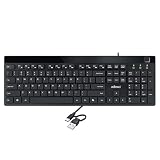
- Fingerprint reader with Windows Hello: Built-in biometric sensor enables you to log in, access sensitive data, or authorize transactions in just 0.05 seconds with 360-degree all-round detection, supporting up to 10 registered fingerprint IDs for multiple users
- AES-256 encrypted biometric security: Protects stored fingerprint data using matching on chip technology with AES-256, SHA-256, ECC-256, and TRNG protocols, achieving a false acceptance rate of less than 1 in 100,000 and a false rejection rate under 1.8 percent
- Low-profile membrane keys for all-day comfort: Slim, streamlined key design provides a quiet and smooth typing experience that requires minimal pressing force, reducing finger fatigue during extended typing sessions at home or in the office
- 12 dedicated shortcut hotkeys: Includes 5 internet hotkeys for Homepage, Email, Back, Forward, and Search plus 7 multimedia hotkeys for Play/Pause, Stop, Previous Track, Next Track, Volume Down, Volume Up, and Mute for quick access
- USB-C connection with USB-A adapter included: Full-size 104-key US layout keyboard connects via USB-C and comes with a USB-C to USB-A adapter for broad compatibility with Windows 11 and Windows 10 systems, measuring 18.3 x 6.5 x 1.3 inches and weighing just 1.5 pounds
Google said it had systematically disrupted APT42’s ability to abuse Google Sites in more than 50 similar campaigns. That number refers to campaigns disrupted by Google; it is not a count of the election-related targets or successful account intrusions.
What high-risk users can do
Google recommended its Advanced Protection Program (APP) for people at elevated risk of targeted attacks, including elected officials, candidates, campaign staff, journalists, election workers and government officials. Google describes APP as a free, opt-in program intended to prevent unauthorized sign-ins even if an attacker knows the account password.
Best Value

- FIDO2 CERTIFIED: FIDO Alliance Certified FIDO2 v2.1 and CTAP Level 1 for 2FA and MFA on Google Microsoft Apple GitHub login.gov AGOV SwissID and any WebAuthn service
- PASSKEY READY: Works as a hardware passkey for passwordless sign-in where the service enables it and as a U2F and WebAuthn security key everywhere else
- CERTIFIED SECURITY: NXP JCOP 4.5 secure element rated Common Criteria EAL6+ (augmented)
- TAP OR INSERT: Dual NFC ISO 14443 and contact ISO 7816 interface in an ID-1 format smart card that is passive and battery-free
- BUILT TO LAST: Passive smart card made in Switzerland designed by Swiss company Cryptnox and backed by a 2 year manufacturer warranty
For campaign teams and other high-risk groups, the incident also illustrates why personal accounts deserve attention alongside organizational systems. A targeted person can use a personal email account to communicate about work, receive sensitive information or reset access to other services. Useful precautions include:
Quick Recap
- Enroll eligible high-risk users in Advanced Protection. Follow Google’s current enrollment and recovery requirements for the account before relying on it for sensitive communications.
- Treat unexpected sign-in links cautiously. A familiar organization name, meeting invitation or PDF does not establish that the destination is genuine. Navigate to a service directly when practical instead of entering credentials through an emailed link.
- Secure account recovery as carefully as the password. Do not share one-time codes, recovery codes or device PINs in response to a message or sign-in prompt you did not initiate.
- Respond quickly to account warnings. Use the provider’s account-security controls to review activity, change credentials where appropriate and follow any recovery steps if an account may have been accessed.
Product prices and availability are accurate as of the date/time indicated and are subject to change. Any price and availability information displayed on Amazon at the time of purchase will apply.

