
Quick wins for a faster PC:
Clear out junk files and repair common Windows errorsFree Scan →Fix the driver behind crashes, sound loss and screen glitchesFind Drivers →Repair Windows errors before they cause bigger problemsFix Now →iTechGuides is reader-supported. When you buy through links on our site, we may earn an affiliate commission. As an Amazon Associate I earn from qualifying purchases. Learn more
To stop making a cloud API call for every AI agent command, put an authorization check in the harness’s tool-call path, before dispatch. The harness evaluates the proposed tool and relevant arguments against a local or nearby policy decision point, then runs the tool only if the decision allows it. This removes a remote request from each authorization decision; it does not guarantee that the check will finish in under 50 microseconds. Treat that figure as a target to test in your own environment.
Where the authorization check belongs
An AI model can propose a structured tool call, but the surrounding harness decides whether to execute it. That makes the harness the policy enforcement point (PEP): it receives the proposed call, asks a policy decision point (PDP) whether it is allowed, and dispatches only when the policy permits it. Open Policy Agent (OPA) documents this pattern in its agent tool-calling guide.
- Receive the model’s proposed tool name and arguments.
- Submit the relevant call details to the policy decision point.
- Read the decision and any denial reasons.
- Dispatch the tool only when the decision allows the call; otherwise, return a refusal or a safe error to the agent.
Check the actual action at this boundary. A broad input or output check elsewhere in the workflow may not cover every custom tool call, particularly in a manager-style agent setup. OpenAI’s guardrails and human review guidance supports attaching checks to tools that create side effects and pausing sensitive or ambiguous actions for human approval.
What the policy should evaluate
Pass a bounded representation of the proposed call, not an unrelated conversation transcript. At minimum, the policy needs enough context to decide whether this identity may use this tool with these arguments. OPA’s example policy denies selected tools and checks request parameters such as URL scheme, maximum result count, and timeout.
#1 Best Overall

- All-in-One AI Learning Lab Powered by Raspberry Pi & Multi-LLMs. Turn Raspberry Pi (5 / 4B / 3B+ / 3B / Zero 2W) into a complete AI learning lab with support for multi-LLMs like ChatGPT, Gemini, Grok, DeepSeek, Qwen, Doubao, and Ollama. Includes Pan-Tilt HAT,10-axis (10DOF) module, camera, and high-quality components. Learn AI through guided video lessons created with educator Paul McWhorter. (Raspberry Pi not included)
- Build Fun Multi-Modal AI Projects with Voice, Vision & Sensors. Combine sensors, breadboard circuits, Multi-LLMs, voice recognition, and camera vision to create engaging multi-modal AI projects. Learn STT and TTS through hands-on programming, turning abstract AI concepts into interactive projects you can see, hear, and control—perfect for AI beginners
- AI Vision Tracking with YOLO, OpenCV, MediaPipe & Pan-Tilt HAT. Create intelligent vision projects using OpenCV and MediaPipe to detect and track objects, colors, and human movements. The Pan-Tilt HAT allows your projects to actively follow targets, helping learners understand how AI vision and motion work together in real systems
- Fusion HAT+ Power System with Voice AI Interaction. The Fusion HAT+ provides power, safe shutdown, and simplified hardware control via a unified Python library. With the Fusion HAT+ featuring a built-in speaker and microphone, easily build AI voice interaction projects by combining Multi-LLMs with sensors and electronic components
- Step-by-Step Learning with Video Lessons & Technical Support. Includes a structured, project-based curriculum with clear documentation, sample code, and video tutorials created with Paul McWhorter. Backed by responsive technical support and an active community, this kit helps beginners confidently progress from Python basics to AI and interactive projects
- Tool identity and the agent or user identity on whose behalf it acts.
- Arguments that affect access or side effects, normalized consistently before evaluation.
- Relevant limits, such as permitted URL schemes, result counts, or timeouts.
- A clear allow or deny outcome, with a reason that the harness can handle safely.
A deterministic policy gate is one layer, not a substitute for isolating the tool or validating its inputs. For high-impact or ambiguous actions, add human approval and independent system-level controls rather than relying on a fast policy check alone.
Choose where the policy decision runs
Keeping the PDP local or colocated avoids a cloud round trip in every decision path. OPA’s Kubernetes guidance describes a sidecar as an option when an application needs low-latency decisions: the sidecar shares the pod’s network namespace with the application. A shared cluster service or an external PDP can centralize operations, but adds network and availability considerations. These are deployment trade-offs, not universal latency measurements.
| Pattern | What it means | Trade-offs to assess |
|---|---|---|
| In-process or local evaluation | The harness evaluates policy locally or asks a local policy runtime before dispatch. OPA’s agent guide shows the harness-to-PDP decision flow and policies over tool names and arguments. | Runtime integration, policy complexity, isolation, update mechanism, and measured p50, p95, and p99 latency. |
| OPA sidecar | A colocated OPA process can answer decisions over the shared pod network namespace. | Process and container overhead, scaling, failure handling, and the actual local communication path. |
| Shared or external PDP | Multiple applications reach a shared policy service, potentially across a cluster or network boundary. | Added network hops, availability, fault tolerance, centralization, and defined behavior when the service is unreachable. |
| Managed gateway | AWS documents AgentCore Gateway policy evaluation using Cedar or Dogwood, with LOG_ONLY and ENFORCE modes. | Gateway integration, policy language, operational model, service dependency, request path, and measured latency. |
OPA’s Kubernetes deployment guide discusses sidecar, cluster, and external service patterns. AWS describes its managed option in the GatewayPolicyEngineConfiguration API reference. No head-to-head benchmark establishes that one of these patterns is always fastest.
PC Slower Than It Used to Be?
A free scan shows the junk files, broken settings and background clutter dragging Windows down - then fixes them in one click.Free scan · Windows 10 & 11Crashes, No Sound, or Screen Glitches?
Random freezes, missing sound and display glitches usually trace back to one bad driver. Find and replace yours safely.Free scan · under a minuteRank #2

- Includes Raspberry Pi 5 with 2.4Ghz 64-bit quad-core CPU (8GB RAM)
- Includes 128GB Micro SD Card pre-loaded with 64-bit Raspberry Pi OS, USB MicroSD Card Reader
- CanaKit Turbine Black Case for the Raspberry Pi 5
- CanaKit Low Noise Bearing System Fan
- Mega Heat Sink - Black Anodized
Can the check really run in under 50µs?
No universal under-50-microsecond result is established for AI agent command authorization. OPA’s policy performance documentation treats resource use and performance as workload-dependent and recommends benchmarking against the requirements of the intended workload. A local architecture can eliminate a remote request, but it does not prove a particular end-to-end latency.
Measure the deployed critical path, including input preparation and serialization, runtime calls, scheduling, policy complexity, and any logging performed synchronously. Test with the real policy and representative load, and compare tail latency as well as average or median time. Record the runtime, hardware, policy version, and load conditions so the result is meaningful. If the budget is missed, profile the actual path before changing the architecture; do not infer a result from a vendor’s deployment pattern.
Distribute policy and audit decisions without a cloud call per tool use
Central policy administration does not require a remote check for each command. OPA’s agent guide describes distributing policy updates through bundles; after an update is available locally, subsequent tool calls can use the updated policy. Its decision logs can record attempted calls and denials for audit and troubleshooting.
Rank #3
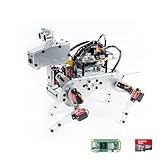
- Raspberry Pi AI Robot: powered by Raspberry Pi (5/4B/3B+/3B/Zero 2W), features 12 servos and sensors for vision, hearing, and touch. Integrated with ChatGPT-4o, it responds to complex queries. With app control and FPV, users can manage and see its view in real-time. It supports Python programming
- Realistic Movements: 12 powerful servos enable 32 actions, including walking, sitting, standing, shaking its head, wagging its tail, and performing playful tricks, closely mimicking a real and providing an engaging experience
- Rich Sensor Suite for Interactive Experiences: features ultrasonic, touch, gyroscope, sound, camera, speaker and microphone. These provide it with advanced hearing, vision, and touch, enabling it to see, detect obstacles, respond to touch, and recognize sounds, making interactions highly engaging
- Engaging Interactions with ChatGPT-4o: with ChatGPT-4o enables voice interactions and visual recognition, making it smarter and more responsive. Users can have natural conversations, solve math problems via the camera, and interpret gestures, creating diverse and fun interactions
- Comprehensive Learning Resources and Support: offers detailed online documentation, video tutorials, prompt technical support, and an active forum community, ensuring beginners can easily complete all projects and enjoy a great experience
Log enough to reconstruct why a call was allowed or refused, such as policy version, identity, tool, normalized arguments, decision, and execution outcome where appropriate. Avoid recording secrets or sensitive payloads unnecessarily. Treat bundle distribution and decision telemetry as separate operational paths from the synchronous authorization decision.
Recommended Free Tools
Secure the local policy endpoint and define failure behavior
“Local” does not automatically mean trusted. OPA’s security documentation says its API defaults to no authentication or authorization. If the API is separately exposed, restrict who can reach it and configure appropriate transport and client protections.
- Limit access to the policy API to authorized local clients where possible; consider TLS or a Unix domain socket.
- Configure client authentication and authorization as needed, and run OPA as a non-root user.
- Keep credentials out of command-line arguments.
- For calls that require protection, decide explicitly whether an unavailable PDP means deny. Define separately which low-risk operations, if any, may continue in a degraded mode.
A fail-closed decision for protected calls is a design recommendation, not a claim that every policy product enforces that behavior by default. Test the harness’s handling of timeouts, unavailable policy, malformed decisions, and policy update failures.
Rank #4

- AI-Powered Raspberry Pi Smart Car — PiCar-X: PiCar-X brings AI learning to life — powered by Openclaw and multi-LLMs including ChatGPT, Gemini, Grok, DeepSeek, Qwen, Doubao, Ollama (Local LLMs), and compatible with many more AI platforms. Featuring OpenCV, MediaPipe, TTS & STT, PiCar-X enables true AI vision and voice interaction — it can see, listen, talk, drive and think like an intelligent companion. Ideal for students (10+), educators, and engineers, PiCar-X is the perfect gateway to explore AI, robotics, and machine learning on Raspberry Pi 5/4/3B+/3B/Zero 2W (Raspberry Pi not included)
- Engaging Interactions with Multi-LLMs: PiCar-X, powered by Openclaw and multi-LLMs — including ChatGPT, Gemini, Grok, DeepSeek, Qwen, Doubao, and Ollama (Local LLMs) — and compatible with many other AI platforms, supports voice interaction and visual recognition to make the robot smarter and more responsive. Users can enjoy natural AI conversations, solve math problems through the camera, and interpret gestures, unlocking a world of diverse and fun AI-driven interactions
- Feature-rich and Adaptable: PiCar-X offers engaging applications like line following and obstacle avoidance, supports TTS (Text-to-Speech) and STT (Speech-to-Text) for interactive voice control, and includes a camera for video and vision recognition. It also comes with various sensors, while its customizable design enables a wide range of creative AI and robotics projects
- Versatile Programming Options: Catering to users of all skill levels, PiCar-X supports both Python and Scratch programming languages, allowing for flexible learning and skill development
- Simplified Assembly & Support: PiCar-X is perfect for beginners, yet learning with experienced users is recommended for best results. It comes with easy assembly instructions and forum support for smooth project completion
Roll out enforcement without surprising users
A policy that is syntactically valid can still block legitimate calls or allow actions the team did not intend. AWS documents LOG_ONLY mode for evaluating and tracing whether actions would be allowed or denied without enforcing those decisions; ENFORCE applies the allow/deny policy. Its API reference recommends testing in LOG_ONLY before moving to enforcement to reduce unintended denials or production impact.
- Start by observing representative tool calls and checking the policy’s proposed decisions.
- Review denials and would-be allows against the intended authorization rules.
- Correct policy or tool inputs, then repeat the observation under realistic use.
- Enable enforcement when the decision behavior is understood, with a rollback path and monitoring for denials and PDP failures.
For OPA-based deployments, use the same discipline even though the specific mode names above belong to AWS AgentCore: validate policy behavior before relying on it to block production actions.
The Tool Desk
Outbyte PC Repair FREEClear out junk files and repair common Windows errorsFree Scan →Outbyte Driver Updater FREEFix the driver behind crashes, sound loss and screen glitchesFind Drivers →Quick Recap
Product prices and availability are accurate as of the date/time indicated and are subject to change. Any price and availability information displayed on Amazon at the time of purchase will apply.

