
Alienware power problems need different fixes depending on when they happen. A laptop that will not wake from Sleep is not necessarily overheating; one that abruptly switches off during a game is not necessarily suffering from a Windows sleep bug. First identify whether the failure occurs when entering Sleep, waking, shutting down, restarting, or running under load. Then use your exact model’s Dell drivers and diagnostics rather than changing BIOS settings at random.
Save your work before troubleshooting. Avoid repeated forced shutdowns: they can lose unsaved data. If the laptop is frozen, a forced power-off may be necessary, but treat it as a last resort.
Identify the failure before changing settings
| What happens | Where to investigate first |
|---|---|
| The display stays black after opening the lid or pressing a key | Graphics driver, display handoff, Modern Standby, or firmware |
| The laptop wakes only after holding the power button | Power-state transition, firmware, driver, or a frozen system |
| Sleep is missing or the laptop never enters Sleep | Supported sleep states, BIOS settings, power requests, or a device or app preventing Sleep |
| Fans continue running, the laptop gets warm, or the battery drains while asleep | Modern Standby activity, a wake source, network activity, or a driver or peripheral |
| Shutdown appears to finish, but lights or fans remain on | Fast Startup, a driver, firmware, USB device, or dock |
| The laptop powers off abruptly during a game or other heavy workload | Temperature, fan operation, AC adapter, battery, GPU/CPU power delivery, or motherboard |
| Blue screens, freezes, or application crashes occur in Windows | Drivers, memory, storage, Windows files, or thermal instability |
| The problem began after an update | Recent Windows, BIOS, graphics, chipset, or Alienware Command Center changes |
| The problem occurs only on battery or only on AC power | Battery or adapter condition, power profiles, adapter recognition, or hybrid graphics |
Write down when the fault occurs and whether it happens on AC power, battery, or both. Also note whether it began after an update and whether a dock, external monitor, USB hub, controller, or other peripheral is attached. Those details help separate a Windows power-state issue from a load-dependent or hardware fault.
Record the exact model and Windows details
Alienware models do not all offer the same BIOS options, sleep states, or driver packages. Before downloading anything, record the exact model and Service Tag, Windows 11 edition and build, BIOS version, and graphics configuration. Note any recent BIOS, driver, Windows, or Alienware Command Center changes. If device encryption or BitLocker is enabled, make sure you can access its recovery key before firmware work.
Outdated Drivers Are Slowing You Down
One free scan finds every outdated or missing driver and matches the right update for your exact hardware.Free scan · exact hardware matchPC Slower Than It Used to Be?
A free scan shows the junk files, broken settings and background clutter dragging Windows down - then fixes them in one click.Free scan · Windows 10 & 11#1 Best Overall

- Brilliant display: Go deeper into games with a 16” WQXGA 120Hz display with 300 nits brightness.
- Game changing graphics: Step into the future of gaming and creation with NVIDIA GeForce RTX 5050 Laptop GPUs, powered by NVIDIA Blackwell and AI.
- Innovative cooling: A newly designed Cryo-Chamber structure focuses airflow to the core components, where it matters most.
- Comfort focused design: Alienware 16 Aurora’s streamlined design offers advanced thermal support without the need for a rear thermal shelf.
- Dell Services: 1 Year Onsite Service provides support when and where you need it. Dell will come to your home, office, or location of choice, if an issue covered by Limited Hardware Warranty cannot be resolved remotely.
Find the model’s drivers through Dell Support, using the Service Tag or exact model. Dell’s sleep and wake guidance covers Alienware among its products and identifies BIOS, chipset and video drivers, power settings, hibernation data, software, and Windows files as possible factors. The available menus and fixes still vary by model. See Dell’s sleep and wake troubleshooting guide.
Try low-risk checks first
- Save your work, restart Windows, and test the same action again.
- Disconnect nonessential USB devices, docks, hubs, controllers, and external displays; test Sleep and shutdown with the laptop alone.
- Test on the Dell AC adapter and on battery separately if practical. Check whether BIOS or Windows recognizes the adapter.
- Return custom overclocking, undervolting, fan, thermal, and performance profiles to stock while diagnosing.
- Open Start and search for reliability history to view Reliability Monitor. Look for failures at the time the problem occurred.
Do not permanently disable every wake feature or change several BIOS settings at once. If you alter a BIOS option, record its original value so you can restore it.
Diagnose Sleep and wake failures
Check which sleep states the laptop supports
Open Windows Terminal, PowerShell, or Command Prompt as administrator and run:
powercfg /aThe report lists available sleep states and may explain why others are unavailable. Many current laptops use Modern Standby instead of traditional S3 Sleep. Modern Standby can leave parts of the system active for network connectivity and background work, so warmth, battery drain, or an unexpected wake may reflect that power model or a device or application’s activity—not necessarily a failed Sleep command. Dell describes it as a hardware- and driver-dependent architecture in its Modern Standby overview.
If the machine exposes Modern Standby rather than S3, do not assume a registry change can safely add S3. Sleep-state availability is determined by the system’s hardware, firmware, and drivers.
Find applications or devices blocking Sleep
Run:
powercfg /requestsThis lists active power requests that can prevent Sleep, including requests associated with applications, drivers, display, or the system. Dell recommends this check when a computer will not sleep; see Dell’s Sleep Mode troubleshooting guide.
Rank #2

- [Ray Tracing Redefined] – Experience cinematic realism with full ray tracing and breakthrough neural rendering technologies. From stunning light reflections to intricate shadows, your in-game world looks better than ever.
- [AI-Boosted Gameplay] – Unleash next-level performance and image quality with DLSS 4. Achieve ultra-smooth frame rates with Multi Frame Generation and enhanced Ray Reconstruction.
- [Competitive Advantage] – Compete faster with NVIDIA Reflex 2 technology featuring Frame Warp, which further reduces latency based on the game’s latest mouse input.
- [Unparalleled Video Playback] – The RTX 50 Series redefines how you enjoy your favorite movies, shows and videos. With advanced AI-powered upscaling and buttery-smooth playback, immerse yourself in vibrant colors, stunning clarity and flawless streaming.
- [Immersive Entertainment] – Rethink how you stream, chat or create content with NVIDIA Broadcast’s advanced AI enhancements. Clear your audio, upgrade your video, and craft your AI-powered home studio effortlessly.
If Sleep succeeds but the laptop wakes unexpectedly, run:
powercfg /lastwakeThis can identify the most recent wake source, though it may not identify every underlying cause. Test once with nonessential peripherals disconnected. If a device or app appears responsible, adjust that specific device’s wake behavior or the app’s settings rather than disabling wake support across the board.
Quick wins for a faster PC:
Clear out junk files and repair common Windows errorsFree Scan →Fix the driver behind crashes, sound loss and screen glitchesFind Drivers →Repair Windows errors before they cause bigger problemsFix Now →Common suspects include wireless or Bluetooth devices, network wake, USB peripherals, docks, backup or sync software, game launchers and anti-cheat software, virtualization software, GPU or audio drivers, Alienware Command Center services, and third-party fan, RGB, monitoring, or overclocking utilities.
Review BIOS power settings and Dell drivers
Press F2 at the Dell logo to enter BIOS. If your model offers relevant settings under Power Management, review options such as USB Wake Support, Block Sleep, or Deep Sleep Control. Names and availability differ; do not assume every Alienware has these controls. Record original settings before changing one.
Check the release notes and download BIOS, chipset, integrated graphics, and discrete graphics packages from the Dell page for your exact model. For a BIOS update, connect the correct AC adapter, maintain stable power, do not interrupt the process, and suspend BitLocker or have its recovery key available. Dell warns that an update can trigger a recovery-key prompt if BitLocker is not suspended. Do not flash firmware while power is unreliable.
A useful installation sequence, when updates are warranted, is BIOS, chipset, integrated graphics, then discrete graphics; follow Dell’s model-specific instructions for other relevant platform, storage, network, and audio packages. Update or repair Alienware Command Center after the basic firmware and driver stack is stable. A newer package may address compatibility, but it is not a guaranteed fix. If the issue started immediately after an update, review its release notes and use only a rollback Dell supports for that model; some BIOS downgrades are blocked or unsafe.
Free tools Windows power users keep installed
One-click scans. No signup required.
Rank #3

- 【Instant Gratification】Alienware 16 Aurora Gaming Laptop. Pure performance. No distractions. Optimized performance in a sleek design, featuring a WQXGA 120Hz 300 nits display, stylish anodized aluminum lid and Intel Core processors
- 【Processor & Operating System】Intel Core 7 Processor (Series 2) 240H (24MB cache, 10 cores, 1.80 to 5.20 GHz P-Core) & Windows 11 Home
- 【Display】16" WQXGA (2560 x 1600) 120Hz, 300 nits, ComfortView Plus, 100% sRGB color gamut
- 【Graphics】NVIDIA GeForce RTX 5060, 8 GB GDDR7
- 【Tech Specs】2 USB 3.2 Gen 1 (5 Gbps) ports, 1 USB 3.2 Gen 2 (10 Gbps) Type-C port with DisplayPort 1.4a ports, 1 USB 3.2 Gen 2 (10 Gbps) Type-C port with Power Delivery, 1 HDMI 2.1 port with Discrete Graphics Controller Direct Output , 1 universal audio jack (RCA, 3.5 mm), 1 RJ45 Ethernet port, 1GbE, 1 power-adapter port, Wi-Fi 7 MT7925, Bluetooth
Rebuild the hibernation file if power-state data may be corrupt
In an administrator terminal, run:
powercfg /h offRestart Windows, then run:
powercfg /h onThis removes and recreates hiberfil.sys, which Windows uses for Hibernate and Fast Startup. Hibernate may disappear between the two commands. Rebuilding the file does not fix a defective driver, BIOS, battery, or motherboard. Dell includes it as a possible step in its sleep and wake guidance.
Test shutdown problems separately
Temporarily turn off Fast Startup
Fast Startup uses a hybrid shutdown that saves part of the system state; it can make a shutdown look unlike a full fresh initialization. As a diagnostic test:
- Open Control Panel and select Hardware and Sound, then Power Options.
- Select Choose what the power buttons do.
- Select Change settings that are currently unavailable.
- Clear Turn on fast startup, then save the change.
- Shut down and test again. If the problem changes, Fast Startup or a driver state it preserved may be involved.
This is a test, not a requirement to leave Fast Startup off permanently. Dell also recommends clearing it during sleep and wake troubleshooting in its power-state guide.
To test a full shutdown from an administrator terminal, save your work first, then run:
What’s actually slowing this PC down?
Pick the symptom - the matching free tool is one click away.
shutdown /s /f /t 0The /f option forcibly closes applications and can discard unsaved work. If lights or fans remain on, repeat the test with docks and peripherals removed, then inspect system events. An abrupt loss of power during a game is a different symptom and should be investigated under load, not treated as a Fast Startup issue.
Read events as evidence, not a verdict
Open Event Viewer → Windows Logs → System and review events at the time of failure. Reliability Monitor can provide a quicker timeline. Relevant entries may include Kernel-Power, Kernel-Boot, Kernel-General, User32 shutdown, display-driver resets, WHEA, BugCheck, disk, storage-controller, NVMe, ACPI, or thermal events.
Rank #4

- Unapologetic power: Area-51 was intentionally designed to reach new performance horizons by enabling higher graphics and processor power limits.
- Game changing graphics: Step into the future of gaming and creation with NVIDIA GeForce RTX 5070 Series Laptop GPUs, powered by NVIDIA Blackwell and AI.
- Intelligent processing: Intel Core Ultra 9-275HX processors integrate CPU, built-in GPU, and NPU into a single package designed for AI acceleration and balanced performance across your favorite things to do.
- Introducing the Cryo-Chamber: Developed by our engineers, Area-51’s new Cryo-Chamber structure, located at the bottom of the laptop, focuses air to the core components where it matters the most.
- Bringing comfort to the forefront: Our new Area-51 laptops combine mystery and other-wordly design with fluid contours and soft surfaces that inspires comfortable gameplay for hours.
Kernel-Power Event ID 41 means Windows detected that the previous shutdown was not clean. It does not, by itself, identify whether the cause was a driver, power interruption, thermal event, or hardware fault. Correlate it with the timing, any BugCheck or WHEA events, and whether the failure occurs outside Windows.
Investigate random shutdowns and crashes under load
If the laptop loses power during gaming or heavy work, focus on cooling and power delivery rather than Sleep settings. Dell has separate guidance for Alienware overheating or random shutdown issues.
- Check whether the failure occurs only under CPU or GPU load, and whether it happens on AC, battery, or both.
- Confirm that the correct Dell AC adapter is recognized. Inspect the adapter, cable, connector, and charging behavior for damage or intermittent contact.
- Keep vents unobstructed. Check that fans operate normally; clean the system only according to the service manual for your model.
- Return Alienware performance, thermal, and fan profiles to stock. Avoid overclocking or undervolting until the system is stable.
- Use a reputable monitoring tool to check temperatures and throttling, but treat readings as clues rather than proof of the cause.
- Run Dell’s built-in pre-boot hardware diagnostics. If they report a failure, record the code and contact Dell.
An instant power loss is more suggestive of a thermal, adapter, battery, or board-level issue than a routine Sleep fault. A blue screen and automatic restart points more toward a driver, memory, storage, or Windows fault; a freeze with fans still running can involve a driver, firmware, GPU, or other hardware lockup. A normal shutdown followed by an immediate power-on can instead involve wake timers, network wake, a dock, or firmware behavior.
Check memory and storage when Windows crashes broadly
Run Windows Memory Diagnostic or Dell pre-boot diagnostics if crashes or freezes extend beyond power transitions. Check for recurring WHEA, disk, NVMe, or controller errors in Event Viewer. For SSD health, use the drive manufacturer’s official utility where applicable. Back up important files before stress testing, resetting, or reinstalling Windows. Repeated diagnostic failures warrant service rather than more power-setting changes.
Independent reader supportYour contribution helps us test, update, and keep practical guides available for everyone.Repair Windows after checking firmware and drivers
Run the Power troubleshooter if it is available
In Windows 11, try Start → Settings → System → Troubleshoot → Other troubleshooters → Power → Run, then restart and test again. The built-in troubleshooter’s presence or behavior may vary by Windows release or policy configuration. The path is documented in Dell’s Sleep Mode guide.
Repair Windows component and system files
Open an administrator terminal and run these commands in order:
Recommended Free Tools
Best Value
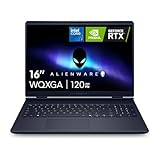
- Brilliant display: Go deeper into games with a 16” 16:10 WQXGA display with 300 nits brightness.
- Game changing graphics: Step into the future of gaming and creation with NVIDIA GeForce RTX 50 Series Laptop GPUs, powered by NVIDIA Blackwell and AI.
- Innovative cooling: A newly designed Cryo-Chamber structure focuses airflow to the core components, where it matters most.
- Comfort focused design: Alienware 16 Aurora’s streamlined design offers advanced thermal support without the need for a rear thermal shelf.
- Dell Services: 1 Year Onsite Service provides support when and where you need it. Dell will come to your home, office, or location of choice, if an issue covered by Limited Hardware Warranty cannot be resolved remotely.
DISM /Online /Cleanup-Image /RestoreHealthsfc /scannowRestart and retest. If SFC reports no integrity violations, it did not find Windows system-file corruption. If it repairs files, test before making further changes. If SFC cannot repair files, run DISM first, restart, then repeat SFC. If DISM fails, check connectivity, Windows Update health, and the specific error code. Dell places system-file repair late in its sleep and wake troubleshooting sequence.
Use a clean boot to isolate third-party software
- Open System Configuration and use its Services tab to hide Microsoft services, then disable the remaining services for the test.
- In Task Manager, disable startup applications.
- Restart and test Sleep, shutdown, and ordinary workloads.
- If stability returns, re-enable services and startup items in groups until the failure recurs, narrowing the cause.
- Restore normal startup after the test.
On a gaming laptop, investigate recently updated Alienware Command Center components, RGB and fan utilities, GPU overlays, monitoring tools, game launchers, security software, virtualization software, and peripheral-management suites. A clean boot is a diagnostic state, not a recommended permanent configuration.
Reset or reinstall Windows only after the diagnostics
Consider System Restore, a new Windows user profile, or a reset only after checking the model-specific BIOS and drivers, removing peripherals, testing Fast Startup, repairing Windows files, trying a clean boot, and running hardware diagnostics. Back up files and make sure you have the BitLocker recovery key before a reset or installation.
If a clean Windows installation is stable until a particular driver or Alienware utility is installed, that software stack is implicated. If the issue persists in pre-boot diagnostics or on a clean installation, hardware or firmware becomes more likely. Dell’s Windows 11 sleep and hibernation guidance places operating-system reinstallation after earlier troubleshooting and advises contacting Dell if the fault remains.
When to contact Dell
Stop changing Windows settings and seek service if pre-boot diagnostics fail, the laptop loses power in BIOS or outside Windows, the adapter is not recognized, the battery is swollen or abnormally hot, WHEA or storage errors recur, a display problem persists after known-good driver and external-monitor tests, or a BIOS update repeatedly fails. A shutdown under load that continues after returning to stock settings and checking cooling also warrants escalation.
Provide Dell with the Service Tag and model, BIOS version, Windows build, whether the problem occurs on AC or battery and inside or outside Windows, when it began, relevant Reliability Monitor or Event Viewer entries, any diagnostic codes, and the steps already tried. That evidence helps distinguish a Windows configuration issue from a firmware or hardware fault.
Checklist before you change anything else
- Classify the fault: will not sleep, will not wake, incomplete shutdown, crash, or power loss under load.
- Record the exact model, Service Tag, BIOS version, Windows build, and recent changes.
- Test with nonessential peripherals disconnected and custom performance profiles returned to stock.
- Run
powercfg /a,powercfg /requests, and, for unexpected wakeups,powercfg /lastwake. - Use Dell’s model-specific BIOS, chipset, and graphics packages; protect access to the BitLocker recovery key before BIOS work.
- Test Fast Startup separately from Sleep and from load-related shutdowns.
- Check Reliability Monitor, Event Viewer, and Dell pre-boot diagnostics before considering a Windows reinstall.
Avoid: random BIOS files, BIOS flashing on unstable power, repeated hard shutdowns, assuming Event ID 41 names the cause, or disabling security and thermal protections.
Quick Recap
Product prices and availability are accurate as of the date/time indicated and are subject to change. Any price and availability information displayed on Amazon at the time of purchase will apply.

