
iTechGuides is reader-supported. When you buy through links on our site, we may earn an affiliate commission. As an Amazon Associate I earn from qualifying purchases. Learn more
In Fire Emblem’s Classic Mode, a character who is defeated in battle is lost for the rest of the game. Casual Mode, introduced as an option alongside it, brings fallen characters back after each battle. That single choice turned the consequence of a failed move from a fixed rule into something the player decides, and it changed how tactical risk works across the series.
What permadeath means in Classic Mode
Nintendo’s official developer interview, “Ask the Developer Vol. 8, Fire Emblem Engage — Part 3,” published January 17, 2023, says that early Fire Emblem titles permanently removed characters once they were defeated. The interview calls this strict approach Classic Mode. In it, a unit that falls is gone for the rest of the campaign, and the player has to work with the remaining roster.
| # | Preview | Product | Price | |
|---|---|---|---|---|
| 1 |
|
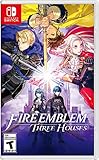
Fire Emblem: Three Houses | $74.99 | Buy on Amazon |
| 2 |

|
Fire Emblem Warriors: Three Hopes - Switch | $38.45 | Buy on Amazon |
| 3 |
![Fire Emblem: Three Houses - Nintendo Switch [Digital Code]](https://m.media-amazon.com/images/I/414Rp+Is5nL._SL160_.jpg)
|
Fire Emblem: Three Houses - Nintendo Switch [Digital Code] | Buy on Amazon | |
| 4 |
|
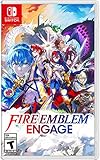
Fire Emblem™ Engage - Nintendo Switch | $66.95 | Buy on Amazon |
| 5 |

|
Fire Emblem™: Fortune's Weave - Nintendo Switch 2 | $79.00 | Buy on Amazon |
That rule is the reason losing a unit feels different from losing a turn. A mistake that costs a character does not reset when the map ends. It shapes the maps that follow, which units can be sent into danger, and how many options the player has when a harder chapter arrives.
What’s actually slowing this PC down?
Pick the symptom - the matching free tool is one click away.
Casual Mode: the option that changed the bargain
The same interview describes Casual Mode as the alternative in which fallen characters are revived after each battle. The timeline it gives is specific:
#1 Best Overall
- Here, order is maintained by the Church of Seiros from its headquarters at Garreg Mach Monastery, home to the Officers Academy, where you’re invited to teach one of its three mighty houses: The Black Eagles, The Blue Lions, and The Golden Deer.
- Which house will you choose?
- As its professor, you must lead your students in class and in tactical RPG battles wrought with strategic, new twists to overcome.
- July 2010: the Japanese release of New Mystery of the Emblem for the Nintendo DS, which Nintendo identifies as the start of the Classic and Casual choice.
- February 2013: Casual Mode became available outside Japan with Fire Emblem Awakening.
The sequence matters. The series did not simply drop permadeath. It kept the strict rule and added a second rule beside it, so that the player chooses between persistent loss and post-battle recovery.
How the two modes compare
Permadeath is only one part of a difficulty design, so it helps to separate the questions it answers. The table below compares the modes on four axes: what happens after a unit falls, how strongly the rule encourages protecting each unit, whether a mistake can be undone, and what other difficulty or recovery tools exist. The Engage column is included because Nintendo’s developers discuss its systems in the same interview.
| Axis | Classic Mode | Casual Mode | Engage’s other systems |
|---|---|---|---|
| What happens after a unit falls | The character is lost for the rest of the game. | The character is revived after the battle. | Not a permadeath rule; the interview covers difficulty tiers and ability use rather than a separate loss rule. |
| Pressure to protect each unit | High. Each unit is a lasting part of the roster, so losses carry into later maps. | Lower across the campaign. Defeat still matters inside the battle, but the unit returns afterward. | Set by difficulty and positioning. Developers say careless use of abilities can leave a unit surrounded. |
| Whether a mistake can be undone | Not after a unit is defeated. | Not within the battle; the character returns after it ends. | Time-turning items are described as an accessibility feature. The interview does not give full rewind rules for every entry. |
| Other challenge levers | Map design and enemy strength. | Map design and enemy strength. | Three difficulty levels: Normal, Hard, and Maddening. |
The table shows that the modes change the aftermath of defeat, while difficulty settings and battle systems change the wider challenge. Treating them as one lever leads to muddled conclusions.
Recommended Free Tools
Rank #2
- Command Fire Emblem: Three Houses characters like Edelgard, Dimitri, and Claude in epic real-time battles
- Play through three distinct storylines set in the Fire Emblem: Three Houses universe, each with a different ending, from the point of view of a new protagonist, Shez.
- Combine the action-packed Warriors-style gameplay with the strategy and style of the Fire Emblem series
- Fight through hordes of enemies with Fire Emblem: Three Houses characters and their distinct abilities
- Use Fire Emblem series mechanics like the weapons triangle, character classes, crests, and battalions to tailor your strategy
Why losing a unit changes planning
The following is design analysis drawn from the rule, not a measured finding about how players behave. In Classic Mode, a unit’s survival has value beyond the current turn. A character who is badly hurt may be worth retreating or healing even when attacking would win a short-term exchange. Positioning becomes a question about the whole campaign: who is protected, who takes the front line, and whether a risky move is worth a unit that will be needed for the boss fight.
Casual Mode moves that calculation into the battle itself. The player still has to avoid defeat, because a fallen unit is out for that encounter, but the decision no longer carries a permanent cost. The tactical question shifts from “can I afford to lose this unit?” to “can I win this turn with the units I have on the map?”
What the developers say about the choice
The January 2023 interview gives direct statements about the intent behind the mode choice. The translation notes that the article was translated from the original Japanese.
Rank #3
- The Officers Academy is home to three houses: The Black Eagles with house leader Edelgard, The Blue Lions with house leader Dimitri, and The Golden Deer with house leader Claude
- As a professor, lead students in their academic lives and on the battlefield
- A turn-based, tactical RPG that puts new twists on strategic battling
- Freely roam Garreg Mach Monastery and interact with students in a variety of ways to bond with them. In the classroom, tutor your students to help them
- Grow in the skill sets required to become specific classes
Choice as the core of the design
Producer Genki Yokota is quoted as saying: “I think the idea of “choice” is what makes this game interesting.” He continues by discussing major story choices and smaller tactical ones, including weapon selection and unit movement.
Outdated Drivers Are Slowing You Down
One free scan finds every outdated or missing driver and matches the right update for your exact hardware.Free scan · exact hardware matchWindows Errors? Fix Them Before They Spread
Repair common Windows errors and clear accumulated junk for a smoother, more stable PC - no reinstall needed.Free scan · no reinstallAttachment to characters
Tsutomu Tei, identified in the interview as director of Fire Emblem Engage, says: “I believe that the charm of the Fire Emblem games is that players become attached to the characters through gameplay and that the characters grow beyond the game.” That attachment is the reason permanent loss carries weight in the first place.
Keeping the strict mode
Masahiro Higuchi hopes that players “who are familiar with Classic Mode … will continue to enjoy the game with this unforgiving mode.” He adds that the developers will keep building features such as Casual Mode and time-turning items to bring in more players. In this framing, accessibility and an unforgiving option are presented as goals the team pursues together, not as a trade where one replaces the other.
Rank #4
- Reawaken as a Divine Dragon and take down a thousand-year-old threat
- Take on turn-based, tactical combat and use Emblem Rings to customize your strategy
- Collect Emblem Rings and use them to summon heroes from past Fire EmblemTM games
- Fire EmblemTM Engage launches on January 20, 2023 alongside Fire Emblem Engage: Divine Edition featuring a steelbook case and art book
Stakes beyond permadeath
Engage shows that a tactical game can sustain tension without relying on permanent loss alone. Three points from the interview illustrate how.
Abilities that can backfire
Developers describe Engage’s powerful abilities as something that can work against the player when used without planning. Careless use can leave a unit surrounded, while harder play calls for more deliberate use of those abilities.
Difficulty tiers
Engage offers Normal, Hard, and Maddening. Those tiers change the level of challenge, which is a separate axis from what happens when a unit is defeated.
Best Value
- Enter the Dagdan Empire—a prosperous land ruled by the gods—and compete in the Heroic Games for the chance to be granted one wish
- Play as four heroes competing in the Heroic Games whose fortunes are tied to the fate of the world
- Prepare for each match of the Heroic Games by exploring Dagda and its capital city of Dagsion
- Learn skills at the training grounds, recruit allies and build bonds of friendship, and explore beyond Dagsion’s walls to gain experience
- Use everything you have at your disposal, including your heroes’ special abilities, to turn the tide of battle
Time-turning items
The interview presents time-turning items as a way to help players revise decisions, and it is framed as an accessibility feature. The interview does not provide a full comparison of how rewind works in every entry, so readers should check each game’s own rules before assuming a particular behavior.
Where the evidence stops
The developer interview establishes the mode definitions, the release timeline, and the stated design intent. It does not provide sales figures, retention data, or statistics on how many players choose each mode. Claims that Casual Mode raised sales, or that most players prefer one mode, are not supported by the material available here, and this article does not make them. The 2010 and 2013 dates describe when the options appeared, not what they did commercially.
The source is a January 2023 interview. Later Fire Emblem releases may change options, labels, or availability, so the settings menu of the specific game you are playing is the authority on how its modes work.
Free tools Windows power users keep installed
One-click scans. No signup required.
Choosing a version to try
Fire Emblem Engage is a Nintendo Switch game, and the interview discusses it alongside characters from Fire Emblem: Three Houses. Readers who want to see the mode choice and tactical systems described above can start with either title. Neither game is required to understand the article. Check current price, edition, and regional availability on Nintendo’s official pages or your preferred store before buying.
The design lesson
Fire Emblem did not remove its defining risk. It made the risk selectable. Classic Mode keeps a permanent cost for each defeat, Casual Mode lets players keep the characters and story without that cost, and Engage’s abilities, difficulty tiers, and time-turning items supply tension of their own. The result is that the consequence of failure is set partly by the player, and the strategy changes accordingly.
Quick Recap
Product prices and availability are accurate as of the date/time indicated and are subject to change. Any price and availability information displayed on Amazon at the time of purchase will apply.

