
Quick wins for a faster PC:
Repair Windows errors before they cause bigger problemsFix Now →Scan for outdated or missing drivers - takes under a minuteDriver Scan →Clear out junk files and repair common Windows errorsFree Scan →Falcon 9 and Electron are built for very different launch needs. SpaceX lists Falcon 9 payload capacities of 22,800 kg to low Earth orbit (LEO) and 8,300 kg to geosynchronous transfer orbit (GTO); Rocket Lab describes Electron as a small-satellite launcher capable of carrying up to 300 kg to a range of LEO orbits. Those are manufacturer-published figures, not results from a shared test with identical mission conditions. The practical choice depends on payload mass, destination orbit, launch arrangement and orbital-placement needs.
Falcon 9 vs. Electron at a glance
| Feature | Falcon 9 | Electron |
|---|---|---|
| Manufacturer-published payload capacity | 22,800 kg to LEO; 8,300 kg to GTO; 4,020 kg to Mars. SpaceX figures; actual capacity depends on mission and destination. | Up to 300 kg to a range of LEO orbits, according to Rocket Lab’s Electron Payload User’s Guide, Version 7.0. |
| Vehicle dimensions and mass | 70 m tall, 3.7 m in diameter and 549,054 kg in mass, per SpaceX. | Not stated as a directly comparable set of vehicle dimensions in the cited Rocket Lab guide. |
| Stages and propellants | Two stages; liquid oxygen (LOX) and rocket-grade kerosene (RP-1). | Two stages; LOX and RP-1. |
| Engines | Nine Merlin engines on the first stage and one Merlin Vacuum engine on the second. | Rutherford engines. |
| Recovery and reuse | SpaceX describes recovery and reflight of the first stage, as well as fairing recovery. The second stage is not described as reusable on the cited vehicle page. | The cited guide does not establish routine first-stage recovery and reuse. |
| Orbit tailoring | The second-stage engine can restart multiple times to place payloads into different orbits. | An optional Kick Stage can deploy multiple payloads to distinct orbits and perform orbital maneuvers. |
| Mission framing | People and payloads to Earth orbit and beyond, including heavier payloads and broad orbital missions. | Small-satellite missions, which Rocket Lab says can be arranged as dedicated launches or rideshares. |
Sources: SpaceX Falcon 9 specifications and Rocket Lab Electron Payload User’s Guide, Version 7.0. Their payload numbers describe different capabilities and are not a like-for-like comparison under a shared target orbit and mission profile.
How much more can Falcon 9 lift?
On the manufacturers’ headline LEO figures, Falcon 9’s 22,800 kg capacity is 76 times Electron’s stated maximum of 300 kg. That ratio is a comparison of published maximum figures—not a guarantee that Falcon 9 can carry 76 times a particular payload on a specific mission. The orbit, payload requirements and mission configuration affect what either vehicle can deliver.
The orbit figures also differ in kind: SpaceX publishes Falcon 9 figures for LEO, GTO and Mars, while Rocket Lab’s cited Electron guide states a maximum for a range of LEO orbits. Do not treat the Falcon 9 LEO figure as its capacity to every destination, or compare it directly with Electron as though both numbers came from the same target orbit and conditions.
What’s actually slowing this PC down?
Pick the symptom - the matching free tool is one click away.
#1 Best Overall
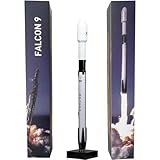
- Name:1:233 Falcon 9 Material::Alloy+resin
- Size:Approximately 28x2.4cm (11*1.5inch) Function: Static desktop display
- For collection or display, Not suitable for children to play with Handmade, there may be minor flaws
- Model is a highly Simulated SpaceX Falcon9 Dragon+F9 Starship Heavy Falcon Falcon 9 Biock 5 rocket model. The main body of the first-stage rocket is precision aluminum alloy tube, and the rest of the rocket materials are made of high-quality imported resin-with excellent laser forming ability and long-lasting preservation
What changes when you compare the vehicles?
Payload scale
Falcon 9 is the higher-capacity vehicle by a wide margin in its published LEO specification. Electron is designed around small satellites and a maximum of up to 300 kg to LEO. Payload mass alone, however, does not determine the right launch: the destination orbit and how the payload must be deployed matter too.
Reusable hardware
SpaceX describes Falcon 9 as reusable and says its first stage returns to a landing zone or droneship for reflight; SpaceX also says it recovers fairings. This describes recovery and reuse of those components, not reuse of the entire rocket. The cited Rocket Lab guide does not establish routine Electron first-stage reuse, so it does not support treating Electron as a reusable counterpart.
Rank #2

- Extremely exquisite SpaceX Falcon 9 rocket model (For collection or display, not a toy! Children should not buy it)
- First-stage super heavy-duty booster is made of precise aluminum alloy tubes. The rest of the rocket is made of high-quality imported resin.Extremely good laser shapeability& long-lasting shelf life
- The proportional model:1:233
- Actual height: 32cm (the core diameter is 24mm, the real rocket is 9 meters in diameter) This ratio is the best choice for desktop placement
- Note: This model is not a toy model, it is not recommended to buy for children, please buy with caution to avoid unnecessary trouble for your shopping
Propulsion and stages
Both launch vehicles have two stages and use LOX and RP-1. Falcon 9’s first stage has nine Merlin engines, while its second stage has one Merlin Vacuum engine. Electron uses Rutherford engines. The common propellants and stage count do not make the vehicles interchangeable: their payload classes and mission architectures differ.
Orbital delivery
Falcon 9’s second-stage engine can restart multiple times to deliver payloads to different orbits. Electron can use a Kick Stage to place multiple payloads in distinct orbits and perform maneuvers. The Kick Stage adds delivery flexibility; it does not change Electron’s stated launch-vehicle payload capacity.
Rank #3

- Name:1:233 Falcon 9 Block 5 Material::Alloy+resin
- Size:Approximately 22x7cm (8.6*2.7inch) Function: Static desktop display
- For collection or display, Not suitable for children to play with Handmade, there may be minor flaws
- Model is a highly Simulated SpaceX Falcon9 Dragon+F9 Starship Heavy Falcon Falcon 9 Biock 5 rocket model. The main body of the first-stage rocket is precision aluminum alloy tube, and the rest of the rocket materials are made of high-quality imported resin-with excellent laser forming ability and long-lasting preservation
Which rocket fits a small-satellite mission?
Electron is purpose-built for the small-satellite class and offers dedicated-launch and rideshare options, along with the Kick Stage for distinct orbital destinations. Falcon 9’s much larger published capacity may suit a heavier payload or a mission needing its broader vehicle capability. A useful comparison starts with the mission rather than the rocket’s headline maximum.
- Target orbit: Check the required altitude and orbit, and whether a vehicle’s stated capacity applies to that destination.
- Payload mass: Compare the complete payload against mission-specific performance, not just the maximum published for a different orbit.
- Launch arrangement: Decide whether dedicated access or rideshare better fits the payload and deployment plan.
- Deployment needs: Determine whether the payload needs a specific orbital insertion or separate placement from other satellites.
- Recovery architecture: Consider whether first-stage recovery and reflight are relevant to the mission decision.
The cited manufacturer materials do not provide a complete, like-for-like current comparison of launch prices, schedules, reliability or mission-specific performance. They therefore do not establish that one vehicle is universally cheaper, faster or better.
Rank #4

- Name:1:233 Falcon 9+Dragon Launch Station Set Material::Alloy+resin
- Size:Approximately 30x4cm (11.8*1.5inch) Function: Static desktop display
- For collection or display, Not suitable for children to play with Handmade, there may be minor flaws
- Model is a highly Simulated SpaceX Falcon9 Dragon+F9 Starship Heavy Falcon Falcon 9 Biock 5 rocket model. The main body of the first-stage rocket is precision aluminum alloy tube, and the rest of the rocket materials are made of high-quality imported resin-with excellent laser forming ability and long-lasting preservation
Sources and scope
- SpaceX Falcon 9 — vehicle description, specifications, stages and recovery information.
- Rocket Lab Electron Payload User’s Guide, Version 7.0 — Electron’s payload class, vehicle overview and Kick Stage functions.
All capacity and vehicle figures above are manufacturer-published specifications, not independent measurements from a shared head-to-head test.
Quick Recap
Best Value

- Extremely exquisite Falcon 9 STRONGBACK rocket model (For collection or display, not a toy! Children should not buy it)
- First-stage super heavy-duty booster is made of precise aluminum alloy tubes. Other parts constructed with High-quality imported laser-formed photosensitive resin-it rocket material
- The proportional model:1:233
- Actual height: 32cm (the core diameter is 24mm, the real rocket is 9 meters in diameter) This ratio is the best choice for desktop placement
- Note: This model is not a toy model, it is not recommended to buy for children, please buy with caution to avoid unnecessary trouble for your shopping
Product prices and availability are accurate as of the date/time indicated and are subject to change. Any price and availability information displayed on Amazon at the time of purchase will apply.
Free tools Windows power users keep installed
One-click scans. No signup required.

