
iTechGuides is reader-supported. When you buy through links on our site, we may earn an affiliate commission. As an Amazon Associate I earn from qualifying purchases. Learn more
The original EVGA NU Audio is a stereo-focused PCIe sound card with RCA line output, a 6.3 mm headphone jack, optical passthrough, and a dedicated headphone amplifier rated by EVGA for 16–600 ohm loads. Its hardware and connections suit a desktop listener who wants analog stereo output or line-in recording; whether it improves your sound depends on the rest of your audio chain. Two 2019 reviews offer favorable but subjective impressions, not a controlled comparison. Current driver support, stock, and secondhand warranty status are not established here, so verify them before buying.
What the original EVGA NU Audio is
This review covers the original EVGA NU Audio PCIe card, part number 712-P1-AN01-KR—not the later NU Audio Pro or NU Audio Pro 7.1. EVGA announced the original in January 2019 and said availability would begin January 16, 2019. EVGA’s launch announcement describes its development partnership with Audio Note (UK).
It is an internal PCIe x1 Gen2 card that also needs one SATA power connection. That means a desktop needs an open compatible slot and an available SATA power lead; it is not an external USB DAC or a plug-in replacement for laptop audio.
Connections and the kind of audio it supports
The card’s primary analog output is stereo: a pair of RCA left/right line outputs and a 6.3 mm headphone jack. It also has 3.5 mm line-in and mic-in, an optical TOSLINK passthrough, and a front-panel audio header. EVGA lists 5.1-channel output over S/PDIF, but the card does not provide discrete multichannel analog outputs. Optical surround depends on downstream equipment such as a compatible DAC or amplifier.
#1 Best Overall

- HIGH-RESOLUTION AUDIO - Delivers ultra-clear playback with 32-bit / 384 kHz and up to 120 dB SNR
- SURROUND SOUND - Supports discrete 7.1-channel analog output for immersive multi-channel audio on your PC
- VERSATILE CONNECTIVITY - Connects effortlessly to multi-channel PC speaker systems, SPDIF output and headset outputs, mic-in, as well as line-in sources
- ALL-NEW CREATIVE NEXUS APP - AutoEq customization that allows users to simulate the frequency response of various headphones for a tailored listening experience
- COMPACT LOW-PROFILE DESIGN - The card is 10.5 cm in length and comes with a half-height bracket to ensure compatibility with smaller cases and different build needs
- For stereo speakers or an amplifier: use the RCA line outputs.
- For headphones: use the 6.3 mm output; check the headphones’ impedance and sensitivity rather than relying on impedance alone.
- For recording: the line-in and mic-in offer separate input paths, with different stated format limits.
- For digital audio: optical is passthrough; surround decoding and playback depend on the connected equipment.
Hardware and EVGA’s specifications
EVGA identifies an XMOS xCORE-200 DSP, AKM AK4493 DAC, AKM AK5572 line-in ADC, and Cirrus Logic CS5346 mic-in ADC. The product sheet lists ADI OP275 for headphone output and ADI AD8056 for line out, with switchable op-amps. It also describes copper shielding, a passive heatsink, and 10-mode audio-reactive RGB lighting. These component choices and features describe the hardware; they do not by themselves establish that it will sound better than a particular motherboard output or USB DAC.
| EVGA-listed item | Specification |
|---|---|
| Playback dynamic range | 123 dB, EVGA product sheet; publication year not shown on the sheet |
| Line-in recording dynamic range | 121 dB, EVGA product sheet; publication year not shown on the sheet |
| Stereo playback | Up to 384 kHz/32-bit, EVGA product sheet; publication year not shown on the sheet |
| Optical playback | Up to 192 kHz/24-bit, EVGA product sheet; publication year not shown on the sheet |
| Line-in recording | Up to 384 kHz/32-bit, EVGA product sheet; publication year not shown on the sheet |
| Mic-in recording | Up to 192 kHz/24-bit, EVGA product sheet; publication year not shown on the sheet |
| Headphone load | 16–600 ohms, EVGA product sheet; publication year not shown on the sheet |
These are manufacturer specifications, not independent measurements in the cited reviews. A stated headphone-load range is not a guarantee of preferred loudness or sound quality with every headphone.
Rank #2

- PRISTINE AUDIO CLARITY – With up to 116 dB SNR at an amazing bit rate of up to 24-bit / 192 kHz, enjoy impressive audio quality for your every need. The sound card also features gold-plated connectors, speaker optimization technology, and digital content encoding capability for the best digital audio performance. Coupled with Audio Stream Input / Output (ASIO) support, Sound Blaster Z SE delivers low-latency and high-fidelity audio, even for your recordings
- SBX GAMING EQ PROFILES – Emerge as the last man standing with our updated SBX Gaming Profiles for hot titles such as Apex Legends, Fortnite, Overwatch, PUBG, and more. In-house tuned and optimized to sound the best for the respective games, you can get started right away or further tweak the EQs, instead of having to create the profiles from scratch. Simply select the respective game from our latest Sound Blaster Command software’s menu, and be battle-ready instantly
- IMMERSIVE SURROUND SOUND – Get fully immersed and stay focused on your games with our surround sound. The Sound Blaster Z SE now supports 7.1 virtual on headphones and speakers alongside discrete 5.1 for speakers. You can even switch between headphones and your speakers via the software for those times you want to pump the bass, or go stealthier with your headphones. For extra delivery options to your external devices, the Z SE also supports Dolby Digital Live and DTS Encoding
- CRYSTAL CLEAR COMMUNICATION – Comes with a list of Microphone EQ Presets that compensates for your headset’s built-in mic so you can be heard clearly–whether it is to reduce the harshness of your tonality, sound more natural, or to increase the mids for vocal clarity. Together with our Sound Blaster Command Software’s CrystalVoice technology that helps remove echoes and ambient noises, the Z SE is perfect for games and even video conferences while working from home for better communications
What the 2019 reviews heard
PC Perspective: a favorable stereo listening report
In a review published February 11, 2019, Sebastian Peak of PC Perspective describes listening on Windows through foobar2000 or JRiver configured with WASAPI and high-resolution music. His setup included 38-ohm Audio-Technica ATH-AD700X headphones; for speaker listening, he used an integrated amplifier and Boston Acoustics A26 bookshelf speakers. He reports clear detail and stereo separation and praises the RCA output.
What’s actually slowing this PC down?
Pick the symptom - the matching free tool is one click away.
Those are one reviewer’s impressions from his equipment and playback setup. They are not controlled measurements or proof that the NU Audio will outperform onboard sound in every PC. The review notes that perceived value depends on source material and on the headphones or speakers completing the chain; its discussion of unsupported sample rates applies to its WASAPI configuration for native file playback, not every playback route.
Rank #3

- ESS SABRE32 ES9018K2M DAC The speaker line-out is driven by the ES9018K2M with ESS's 32-bit Hyperstream architecture, delivering clean, low-distortion Hi-Res sound up to 24-bit / 96 kHz to your powered speakers, soundbar or amplifier — a real step up from onboard audio.
- Driver-Free, True Plug and Play Built on USB Audio Class 1.0, the ST113 is recognized instantly by Windows, macOS, Linux and Android. No driver CD, no software conflicts, no setup headaches — install it and it just works.
- Optical Isolation Ends the Noise The galvanically isolated optical TOSLINK output blocks the ground-loop hum, hiss and static that plague PC audio, so your external DAC or AV receiver receives a dead-silent digital signal. A coaxial RCA digital output is also included.
- 9-Pin Front-Panel Header for Headphones and Mic A 9-pin front-panel audio header extends headphone out and mic-in to the front of your PC case. Connect your case's front-panel audio cable and get easy, cable-free access for calls, voice chat, gaming and everyday listening.
- Five Ports for Complete Desktop Audio 3.5 mm speaker line-out (for powered speakers / amplifiers), 3.5 mm headphone out, SPDIF optical (TOSLINK) and coaxial (RCA) digital output, and a 3.5 mm microphone input.
HotHardware: launch-era hardware coverage
HotHardware’s review, published January 16, 2019 by Marco Chiappetta, covers the hardware, specifications, and Audio Note (UK) collaboration. Its historical product-shopping link indicates a purchase path at the time of the review; it does not establish a live listing or current availability.
Software, operating systems, and age-related checks
The product sheet lists Windows 10 64-bit support. EVGA’s January 2019 announcement also listed Windows 10, 8.1, and 7, but those are launch-era compatibility claims—not confirmation of working drivers on a current Windows build. Check for a suitable driver and software package for the exact operating system before purchasing or installing the card.
Rank #4
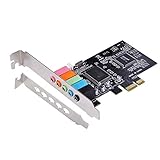
- PCIe sound card, 5.1 stereo audio card.
- Easily convert the PC into a cinematic entertainment system by providing a 5.1 3D stereo surrounding sound.
- With low profile bracket for 2U case, your best choice of sound card for PC desktop.
- 16-bit multimedia digital signal editing decoder inside, Supports 32/64-bit audio processing, recording and playback.
- Supports direct sound, A3D and EAX, HRTF 3D tone. Supports Windows XP / 7 / 10.
EVGA announced on May 16, 2019 that a free Windows 10 software update added Nahimic 3D audio, reverb, dynamic compression, recording effects, and a quick EQ alongside the 10-band equalizer. That announcement documents a historical update; it does not establish that its installers, services, or effects work on current systems.
PC Slower Than It Used to Be?
A free scan shows the junk files, broken settings and background clutter dragging Windows down - then fixes them in one click.Free scan · Windows 10 & 11Crashes, No Sound, or Screen Glitches?
Random freezes, missing sound and display glitches usually trace back to one bad driver. Find and replace yours safely.Free scan · under a minuteAt launch, EVGA’s product sheet stated a three-year limited warranty. That historical term does not establish coverage for a card bought secondhand today or whether any warranty is transferable. Verify warranty eligibility directly with EVGA and the seller.
Best Value
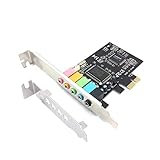
- 1) PCIe sound card, 5.1 stereo audio card
- 2) Easily convert the PC into a cinematic entertainment system by providing a 5.1 3D stereo surrounding sound
- 3) With low profile bracket for 2U case, your best choice of sound card for PC desktop
- 4) 16-bit multimedia digital signal editing decoder inside, Supports 32/64-bit audio processing, recording and playback
How to decide whether it fits your PC
Compare the NU Audio against your existing motherboard audio or a USB DAC/amp by tracing the signal path you actually need, not by choosing on headline sample-rate figures alone.
- Choose around outputs: RCA stereo is useful if you connect an amplifier or powered speakers by analog cable. If you need discrete analog surround, this card’s connections do not provide it; optical surround relies on downstream hardware.
- Match headphones to the full amplifier chain: the published 16–600-ohm range is a load specification. Sensitivity and your preferred listening level also affect whether a headphone output is a practical match.
- Consider input needs: line-in recording and mic-in are separate functions. If neither matters, they may not justify choosing an internal card over a simpler output-only device.
- Check installation constraints: confirm an open PCIe x1 slot and SATA power connection, in addition to physical clearance in the case.
- Check the whole software chain: operating-system driver support, playback software, source material, amplifier, and speakers or headphones all affect the result.
- Judge value for the actual system: the 2019 listening reports concern specific setups; they do not establish current performance rankings or relative prices against today’s alternatives.
Is the NU Audio worth looking for now?
It may be worth considering if you specifically want an internal card with stereo RCA output, a 6.3 mm headphone jack, line-in recording, and optical passthrough—and can confirm it works with your PC. The evidence here does not establish current stock, price, driver availability, or secondhand warranty coverage. Inspect the exact model number, condition, included accessories, return terms, and seller support; do not assume a listing for the NU Audio Pro is the same card.
EVGA’s original NU Audio product sheet is the reference for its specifications. The separate NU Audio Pro documentation describes a different product, including a mini-DisplayPort connection for an optional surround card. Pro specifications and expansion features should not be attributed to the original NU Audio.
Recommended Free Tools
Quick Recap
Product prices and availability are accurate as of the date/time indicated and are subject to change. Any price and availability information displayed on Amazon at the time of purchase will apply.

