
iTechGuides is reader-supported. When you buy through links on our site, we may earn an affiliate commission. As an Amazon Associate I earn from qualifying purchases. Learn more
For medical devices placed on the EU market, chemical characterisation helps establish what substances a device may release and whether those exposures present a biological risk. It is part of a device-specific biological evaluation under Regulation (EU) 2017/745 (MDR), not a one-size-fits-all test recipe: the relevant materials, methods and conclusions depend on the final device, its manufacture, intended contact and exposure.
What do EU regulations require?
The MDR is the binding EU legal framework. European Commission Medical Device Coordination Group (MDCG) documents help explain how to apply it, but are guidance rather than binding law; the Commission says such documents reflect a common understanding and are reviewed periodically. See the Commission’s guidance index.

For biological evaluation, MDCG 2020-5 describes ISO 10993-1 as providing a risk-based approach and identifies chemical characterisation and toxicological assessment as relevant parts of that evaluation. This does not mean every device needs the same tests: the manufacturer needs a rationale appropriate to the device and its exposure.
The Tool Desk
Outbyte Driver Updater FREEScan for outdated or missing drivers - takes under a minuteDriver Scan →Outbyte PC Repair FREEClear out junk files and repair common Windows errorsFree Scan →References to an EN ISO standard do not by themselves establish which edition currently applies or whether it is harmonised for a particular conformity claim. The Commission’s consolidated standards listing names EN ISO 10993-17 and EN ISO 10993-18, but its dated listing information is not confirmation of the latest edition or current harmonised status. Check the current EU publication and the applicable EN or national adoption before relying on a conformity presumption.
#1 Best Overall
What is chemical characterisation of a medical device?
It is the identification and, where appropriate, measurement of chemical substances associated with device materials and their release. The aim is to generate evidence for biological-safety and toxicological risk assessments—not simply to produce a list of chemicals. The 2024 SCHEER guidance describes characterisation as using qualitative and quantitative methods to inform material composition, purity, impurities and degradation products.
The substance profile may include material constituents, manufacturing residues, contaminants, sterilisation-related residues and substances created as the device degrades. Which are relevant depends on the device’s materials, processing and intended use. MDCG 2020-5 discusses assessing the final device and estimating the type and quantity of leachables; it also points to degradation products as a consideration in biological evaluation.
Rank #2

- 【Detection Principle】: Utilizes High Brightness Cold Light Source Reflection Measurement Technology for Accurate Results
- 【Test Speed】: Conducts Single-Step Tests at 60 TestsHour and Continuous Tests at 120 TestsHour for Efficient Water Quality Assessment
- 【Database Capacity】: Stores Up to 1 Million Test Results, Ensuring Comprehensive Data Management for Various Water Quality Testing Needs
- 【Test Environment】: Operates Effectively in Conditions Ranging from 18℃ to 25℃ with Humidity Levels Below 80% for Reliable Readings
- 【Usage Scenarios】: Ideal for Water Quality Testing in Swimming Pools, Sea Water, Ponds, Sewage, Industrial Water, and Water Applications
How do extractables and leachables differ?
The terms describe how chemicals are obtained or released, not two interchangeable names for the same test result.
| Term | Meaning | How to interpret it |
|---|---|---|
| Extractables | Chemicals obtained from a device under laboratory extraction conditions. | They can help identify substances that could be drawn from materials under the selected conditions; they are not automatically a measurement of what a patient encounters in clinical use. |
| Leachables | Chemicals released from a device under normal clinical-use conditions. | They relate more directly to anticipated use exposure and may include constituents, residues, contaminants or degradation products. |
These definitions follow the SCHEER 2024 guidance. An extraction study can inform an assessment of potential release, but the conditions and results need to be interpreted in relation to the device’s actual use; the guidance does not prescribe one extraction condition or analytical technique for every device.
Rank #3
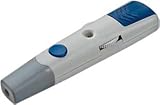
- 5 depth settings
- Sold in each
- Easy to use
How do ISO 10993-18 and ISO 10993-17 fit together?
| Reference | Role described in EU guidance | What it contributes |
|---|---|---|
| ISO 10993-18 | Chemical characterisation | Supports evaluation of chemical composition and estimation of the type and quantity of leachables from the final device, including attention to analytical-method quality. |
| ISO 10993-17 | Toxicological risk assessment | Supports assessment of the toxicological risk of relevant constituents or leachables identified through characterisation. |
| ISO 10993-13, -14 and -15 | Degradation products | MDCG 2020-5 points to these parts for degradation products from polymers, ceramics, and metals or alloys, respectively. |
The roles above are those identified in MDCG 2020-5 and the SCHEER guidance. They do not, on their own, define the complete biological evaluation for every device. The chemical results need to be considered alongside the intended contact and exposure and connected to a documented toxicological and biological-safety conclusion.
Why should characterisation use the final device?
Processing, design, sterilisation and use conditions can affect materials and what they release. A raw-material specification or evidence about a similar material is therefore not enough, by itself, to establish the release profile of a finished device. MDCG 2020-5 emphasises the final device and identifies manufacturing and sterilisation residues, contaminants and degradation products as potentially relevant.
Rank #4
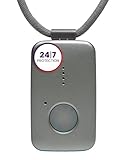
- Small Device, Big Backup: MGMini is a discreet medical alert necklace that supports your independence at home and on the go. Wear the device your way with the included lanyards or belt clip, for steady protection that fits your lifestyle. Hourly location updates and step counting features are available to view on our online portal or app.
- Press. Speak. Get Help: Press the emergency button to connect with Medical Guardian’s 24/7 monitoring team through the device’s two-way speaker. One of our trained, U.S. based operators will contact EMS, family, or friends to get you the exact type of help you need.
- Activate Before First Use: 24/7 emergency monitoring services must be activated online or by phone prior to device use. For a limited time, get 1 free month of 24/7 monitoring. After trial, service is $43.95/month. Cancel anytime. During activation, consider extra protection with our optional fall detection add-on for an additional $10/month.
- A Trusted Name in Care: Founded on one man's mission to protect his grandmother and trusted by over 630,000 members, Medical Guardian supports older adults and their care partners with connected safety solutions designed for independence and peace of mind.
- Industry-Leading Battery Life: Enjoy 3 days of protection on a single charge, plus a fast 4-hour recharge. Battery life may vary based on network connection and cellular signal strength. Note: only one device can be active per member at a time.
Where a device has multiple configurations or manufacturing states, the evaluation should explain why the selected samples represent the device and exposure being assessed. Any differences that could alter composition or release need to be considered in that rationale; similarity in material names alone does not demonstrate equivalent chemical exposure.
Do these 3 things before closing this tab:
1Scan for outdated or missing drivers - takes under a minute2Clear out junk files and repair common Windows errors3Fix the driver behind crashes, sound loss and screen glitchesHow should a manufacturer plan the evaluation?
A defensible plan moves from the device and its exposure to chemical evidence, then to risk conclusions. The exact samples, methods, acceptance criteria and need for additional testing are device-specific.
Best Value

- Revolutionize Potency Testing at Home: Experience cutting-edge tCheck 3 Potency Tester with new UV Spectrometer Technology, providing faster and more accurate results for activated hemp and herbal infused oils and tinctures. Say goodbye to guesswork and dial in the exact strength of your homemade edibles effortlessly.
- Lab Accuracy at Home: Enjoy the precision of a lab-grade HPLC machine without the hassle and expense. The tCheck tester is a cost-effective alternative, ensuring accurate potency testing at home or on the go. Save time and money without compromising the quality of your favorite products.
- For Edible Makers: Confirm the potency of your activated hemp and herbal infusions and precisely dose your edibles with ease. tCheck ensures precise dosing with +/- 4mg/ml accuracy.
- Accurate Results in Minutes: Achieve error-free results in just 2 minutes by adding a few drops of your infusion into the tCheck tester. tCheck stores every result in the cloud for seamless tracking of your recipes. The app-based recipe calculator enhances peace of mind, enabling you to effortlessly create flawlessly dosed products every time.
- Engineered for Long-Term Use: The potency tester comes complete with the device and a patented reusable tray made using a proprietary polymer designed to withstand the rigors of daily use.
- Define the device and its use. Describe the final device configuration, patient-contacting materials, contact route and the nature, degree, frequency and duration of exposure.
- Establish representative samples. Account for design, processing, manufacturing and sterilisation states that could affect composition or release. Explain why the tested sample represents the device assessed.
- Characterise relevant chemicals. Select qualitative and quantitative approaches appropriate to the materials and question. Consider constituents, impurities, residues, contaminants and degradation products as relevant; justify extraction conditions and analytical methods.
- Relate findings to use exposure. Distinguish laboratory extractables from substances expected to leach during normal clinical use, and explain how the results inform the anticipated exposure.
- Assess toxicological risk and biological safety. Use the chemical findings to support an assessment of relevant constituents and leachables, then document how that assessment informs the device-specific biological-safety conclusion.
This sequence reflects the roles described in MDCG 2020-5 and the Commission biological-safety document. It is a way to organise the reasoning, not a mandated universal test sequence.
What do the MDR provisions say about CMR and endocrine-disrupting substances?
The MDR has specific provisions for certain substances in Annex I, section 10.4.1. The 2024 SCHEER guidance summarises provisions concerning CMR category 1A or 1B substances and specified endocrine-disrupting substances when present above 0.1% weight by weight, including justification requirements for their presence.
This threshold is not a blanket ban or a general pass/fail rule for every chemical in every device. Its application depends on the exact substance classification, device context, relevant legal text and applicable conditions or exceptions. Chemical-characterisation information can support the compliance and benefit-risk assessment, but does not replace applying the MDR provision to the specific case.
Recommended Free Tools
What should a chemical-characterisation report make clear?
- Whether the sample reflects the final device and relevant manufacturing and sterilisation state.
- Which contact route and exposure characteristics the assessment represents.
- Why the chosen extraction and analytical approaches are suitable for the device and intended clinical conditions.
- How constituents, impurities, residues, leachables and degradation products were identified or quantified, as appropriate.
- How the chemical findings feed into a documented toxicological risk assessment and biological-safety conclusion.
These are useful comparison points for plans and reports, not a universal ranking of analytical methods. The Commission and SCHEER materials describe a risk-based, device-specific evaluation rather than one method that is categorically best for all devices.
Quick Recap
Product prices and availability are accurate as of the date/time indicated and are subject to change. Any price and availability information displayed on Amazon at the time of purchase will apply.

