
iTechGuides is reader-supported. When you buy through links on our site, we may earn an affiliate commission. As an Amazon Associate I earn from qualifying purchases. Learn more
You can defragment etcd while the cluster remains available only if its other healthy members can maintain quorum: defragmentation blocks reads and writes on the member being rebuilt. Run it on one member at a time, verify cluster health between members, and confirm the procedure is safe for your exact etcd release. It is not a zero-impact operation for the target member.
What etcd defragmentation does—and what it does not do
etcd stores data in a backend database. Deleting keys or compacting old revisions can leave space inside that database available for reuse, while the database file on disk remains large. Defragmentation rebuilds a member’s backend so that internally free space can be returned to the filesystem. The operation is local to the member you address; it does not defragment every cluster member at once. The etcd v3.7 maintenance guide recommends per-member execution to help avoid cluster-wide latency spikes.
- Deleting data removes data that is no longer needed, but does not by itself guarantee a smaller database file.
- Compaction removes historical revisions before a chosen revision. Those compacted revisions become inaccessible, so choose a revision consistent with your application’s retention needs.
- Defragmentation rebuilds the backend and returns internal free space to the filesystem; it does not remove live data.
Compaction and defragmentation solve different problems. If the database is full of live data, defragmenting alone will not create meaningful room for new data.
Quick wins for a faster PC:
Fix the driver behind crashes, sound loss and screen glitchesFind Drivers →Clear out junk files and repair common Windows errorsFree Scan →Does etcd defrag block reads and writes?
Yes. When defragmentation runs against a live member, that member temporarily stops serving reads and writes while its backend is rebuilt. The other members may continue serving the cluster if they are healthy and retain quorum, but that does not make the target member available during the operation. Plan for sequential maintenance and monitor cluster health before proceeding to another member. The official maintenance guide describes defragmentation as a per-member operation.
#1 Best Overall

- IronWolf internal hard drives are the ideal solution for up to 8-bay, multi-user NAS environments craving powerhouse performance.date transfer rate:6.0 gigabits_per_second
- Store more and work faster with a NAS-optimized hard drive providing 8TB and cache of up to 256MB
- Purpose built for NAS enclosures, IronWolf delivers less wear and tear, little to no noise/vibration, no lags or down time, increased file-sharing performance, and much more
- Easily monitor the health of drives using the integrated IronWolf Health Management system and enjoy long-term reliability with 1M hours MTBF
- Three-year limited product warranty protection plan and three year Rescue Data Recovery Services included
Check whether defragmentation is warranted
Inspect every endpoint before scheduling work. Compare the database’s total allocated size with the size currently in use; the gap indicates internal free space that may be reclaimable. The etcd troubleshooting article identifies etcd_mvcc_db_total_size_in_bytes as total physical database size and etcd_mvcc_db_total_size_in_use_in_bytes as logical size in use. Confirm that these metric names and their availability match your installed version. The etcd project’s database-size troubleshooting article includes example endpoint output; its sample values illustrate the comparison and are not a forecast of how much any cluster will reclaim.
Establish the exact etcd version, endpoints, topology, and health and quorum state as part of the same assessment. If old MVCC history is contributing to the size, determine an appropriate compaction revision before defragmenting. There is no general runtime, reclaim percentage, or cluster-impact figure that can be applied reliably across deployments.
Rank #2

- Store more, compute faster, and do it confidently with the proven reliability of BarraCuda internal hard drives
- Build a power house gaming computer or desktop setup with a variety of capacities and form factors
- The go to SATA hard drive solution for nearly every PC application from music to video to photo editing to PC gaming. Ax. Sustained transfer rate OD: 190MB/s
- Confidently rely on internal hard drive technology backed by 20 years of innovation
- Frustration Free Packaging - This is just an anti-static bag. No cables, no box.
Choose online or offline defragmentation
The right method depends on the release-specific guidance and whether you can stop the target member. Online operation is simpler to issue, but blocks that member’s reads and writes during the rebuild. Offline operation requires stopping the member and restarting it afterward. Neither choice removes the need to preserve quorum with the other healthy members.
Do these 3 things before closing this tab:
1Repair Windows errors before they cause bigger problems2Scan for outdated or missing drivers - takes under a minute3Clear out junk files and repair common Windows errors| Method | Target member during work | Command or procedure | Release guidance |
|---|---|---|---|
| Online | Live member temporarily stops serving reads and writes during rebuild. | etcdctl defrag addressed to the intended endpoint. |
Check guidance for the exact installed release. The project troubleshooting article flags a specific historical exception. |
| Offline | Member is stopped for the operation, then restarted and checked for rejoining and health. | etcdutl defrag --data-dir <path-to-etcd-data-dir> |
The project article recommends offline etcdutl defragmentation for etcd v3.5.0 through v3.5.5. |
The troubleshooting article, published January 4, 2023 and last modified September 18, 2024, reports an online defragmentation crash inconsistency issue affecting v3.5.0 through v3.5.5 and advises offline defragmentation for those releases. Treat this as version-specific historical guidance, not a blanket rule for current releases; consult the instructions for your deployed version. Validate authentication, TLS options, endpoint discovery, orchestration, and exact command syntax against your environment. The commands here are not a tested runbook for a particular cluster.
Rank #3
- Migrate and clone data from old drives with ease using our free Seagate DiscWizard software tool
- Store more, compute faster, and do it confidently with the proven reliability of BarraCuda internal hard drives
- Build a powerhouse gaming computer or desktop setup with a variety of capacities and form factors
- The go to SATA hard drive solution for nearly every PC application—from music to video to photo editing to PC gaming
- Confidently rely on internal hard drive technology backed by 20 years of innovation
Defragment one member at a time
- Record the version and cluster state. Identify the release, endpoints, topology, and which members are healthy. Confirm the remaining members can sustain quorum before taking a target member out of service or blocking it during a live rebuild.
- Compare database size and size in use. Check the metrics for each endpoint and decide whether reclaimable space justifies the maintenance. Also identify whether live data, rather than free backend space, is consuming the database.
- Compact history if that is part of the cleanup. Choose a suitable revision based on application retention requirements. Compaction is cluster-wide and needs to be issued once; it makes earlier revisions inaccessible. Follow the installed version’s command guidance.
- Select the release-appropriate defragmentation method. For online work, run
etcdctl defragagainst the intended endpoint, with the required environment-specific connection and authentication options. For offline work where applicable, stop only that member and runetcdutl defrag --data-dir <path-to-etcd-data-dir>. - Verify before moving on. For offline work, restart the member and confirm it has rejoined and is healthy. Check cluster health and quorum again before defragmenting another member. Do not run simultaneous member defragmentations as a shortcut.
Recover from an etcd NOSPACE alarm
Exceeding the backend space quota triggers a cluster-wide alarm and restricts operations, including writes. Defragmentation alone is not a complete fix if live data still fills the database. The etcd maintenance guide’s recovery sequence combines addressing excess keyspace or history, compaction, defragmenting each member, disarming the alarm, and testing a write. See the etcd maintenance guide for release-specific command details.
- Identify and remove data that is genuinely no longer needed, where appropriate.
- Compact old revisions to a suitable revision once for the cluster.
- Defragment each endpoint one member at a time, preserving quorum and checking health between members.
- Disarm the
NOSPACEalarm after cleanup is complete. - Verify that normal writes are accepted again.
Do not treat the alarm as resolved until write behavior has been checked. Quota settings and appropriate database sizing depend on the deployment; figures in older troubleshooting examples are not universal sizing recommendations.
Quick Recap
Rank #4
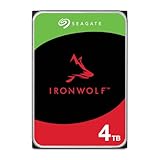
- IronWolf internal hard drives are the ideal solution for up to 8-bay, multi-user NAS environments craving powerhouse performance
- Store more and work faster with a NAS-optimized hard drive providing ultra-high capacity up to 16TB and cache of up to 256MB
- Purpose built for NAS enclosures, IronWolf delivers less wear and tear, little to no noise/vibration, no lags or down time, increased file-sharing performance, and much more
- Easily monitor the health of drives using the integrated IronWolf Health Management system and enjoy long-term reliability with 1M hours MTBF
- Three-year limited warranty protection plan included and three year Rescue Data Recovery Services included
Product prices and availability are accurate as of the date/time indicated and are subject to change. Any price and availability information displayed on Amazon at the time of purchase will apply.
Free tools Windows power users keep installed
One-click scans. No signup required.

