
iTechGuides is reader-supported. When you buy through links on our site, we may earn an affiliate commission. As an Amazon Associate I earn from qualifying purchases. Learn more
No. A verified email address shows that someone could receive a code or link at that address during a specific flow. It does not show who controls the account over time, whether that person is who they claim to be, or whether they may read a record, use a feature, change account details, or run an administrative action. Those are separate decisions, made by separate checks, and treating the verification result as permission is one of the most common access-control mistakes in registration and account design.
Three claims that get blurred together
Most confusion comes from using one word, “verified,” for three different things. Keep them apart in code, in product requirements, and in documentation.

| Concept | Question it answers | Typical evidence | What it does not establish |
|---|---|---|---|
| Email-address verification | Could the actor access this email destination during the flow? | A single-use, time-limited code or link was returned from that address | Identity of the person, control of the account later on, or any right to a resource |
| Authentication | Does the actor control the authenticators tied to this account or claimed identity? | Proof of possession of a password, a device, or another authenticator as defined by the application’s policy | Whether the authenticated subject may perform a particular action on a particular object |
| Authorization | May this subject perform this action on this resource right now? | A policy decision made per request using trusted server-side data | Who the person is, unless identity was established separately |
In a typical application these checks happen in sequence, but one does not entail the next. A verified address can be the first step of an account lifecycle, an authenticated session can be the second, and an authorization decision can be made on every request after that.
Do these 3 things before closing this tab:
1Fix the driver behind crashes, sound loss and screen glitches2Clear out junk files and repair common Windows errors3Scan for outdated or missing drivers - takes under a minuteWhat address verification proves
OWASP’s guidance on email validation and verification in identity systems, accessed 7 October 2026, describes verification as an address-control check. The application sends a code or link to the address and receives evidence that the actor could reach that destination during the flow. The guidance recommends the following:
#1 Best Overall

- POWERFUL SECURITY KEY: The YubiKey 5 NFC is the most versatile physical passkey, protecting your digital life from phishing attacks. It ensures only you can access your accounts
- WORKS WITH 1000+ ACCOUNTS: Compatible with popular accounts like Google, Microsoft, and Apple. A single YubiKey 5 NFC secures 100+ of your favorite accounts, including email, password managers, and more
- FAST & CONVENIENT LOGIN: Plug in your YubiKey 5 NFC via USB and tap it, or tap it against your phone (NFC), to authenticate. No batteries, no internet connection, and no extra fees required
- MOST SECURE PASSKEY: Supports FIDO2/WebAuthn, FIDO U2F, Yubico OTP, OATH-TOTP/HOTP, Smart card (PIV), and OpenPGP. That means it’s versatile, working almost anywhere you need it
- PRIMARY & SPARE KEYS: Just like having a spare house key, we recommend buying two YubiKeys - one for daily use and one as a spare. That way you’ll never get locked out of your accounts
- Tokens generated with a cryptographically secure random source.
- Single-use tokens that expire after a defined time.
- No account activation before the required verification completes.
Those properties make the check meaningful as an address-control event. They do not turn it into a statement about a person. A verified email tells you that a mailbox was reachable at one moment. It does not tell you that the mailbox belongs to the person who typed the address, that the person is an employee, customer, or administrator, or that the person should see any data. “Verified email means verified identity” is a claim the guidance does not support.
Authentication is a separate control
NIST Special Publication 800-63B-4, Digital Identity Guidelines: Authentication and Authenticator Management, published 1 August 2025, draws the same line. It states that confirmation codes sent to validate email addresses, or issued as recovery codes, are not authentication processes. The exact wording is:
“Confirmation codes that are sent to validate email addresses or are issued as recovery codes (see Sec. 4.2.1.2) are not authentication processes and not affected by the above prohibition.”
Recommended Free Tools
Rank #2
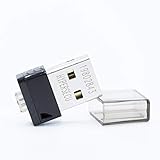
- FIDO2 Supported
- FIDO U2F Supported
- OATH HOTP ( Event-based one-time password) Supported
The same document says email must not be used as an out-of-band authenticator. The stated risks include password-only access, interception, and rerouting. Read that prohibition carefully. It concerns using email as a second factor or out-of-band channel for authentication. It does not mean an email address cannot be an account identifier, a login name, or the destination for verification and notification messages. Those uses can remain valid, provided the application does not present a mailbox check as proof that the account holder has passed authentication.
What authentication requires in practice
- Authenticators chosen and strengthened according to the application’s risk and policy, as NIST’s framework expects.
- A session that records the authenticated subject, separate from any flag saying an address was once confirmed.
- Re-authentication for sensitive changes where the application’s risk model calls for it.
Authorization decides each action on each object
The OWASP Authorization Cheat Sheet, accessed 7 October 2026, makes the separation explicit: “Authorization is distinct from authentication which is the process of verifying an entity’s identity.” Its key point is that a successful authentication does not make a user eligible for every action or resource. Authorization asks a narrower question each time: may this subject perform this operation on this specific object or function?
Check every request on the server
OWASP states that permission should be validated correctly on every request, “regardless of whether the request was initiated by an AJAX script, server-side, or any other source.” Several practical consequences follow:
Rank #3

- Security Key : Protect your online accounts against unauthorized access by using FIDO2 and U2F authentication with T110. It's the world's most protective security key that works with windows, Mac OS, Linux as well as Chrome, Firefox, Edge and many other major browsers.
- Certified with the new FIDO2 standard, T110 provides the benefit of fast login and strong protection against phishing, account takeover as well as many other online attactks.
- Works with : Bank of America, Github, Google, Microsoft, DUO, Twitter, Facebook, Dropbox, Apple, ebay, BINANCE, mor and more.
- Fits USB-A port : Insert the T110 security key into the USB-A port of each service and log in conveniently with one touch
- For the driver download and user guide, please visit TrustKey Solutions Home support page.
- Knowing or guessing an object identifier is not permission. A sequential invoice number in a URL is an address, not an authorization.
- Client-side checks must not be decisive. A hidden button, a disabled form field, or a script that skips a menu item is a usability feature, not an access-control boundary.
- Deny by default. If the policy does not explicitly allow the action for this subject and object, the request fails.
Do not accept client-supplied authority
Roles, ownership, tenant identifiers, and “is verified” flags should come from trusted server-side records, not from request parameters, hidden form fields, or JWT claims the server has not validated. If a user can change the value that decides their access, the access decision is no longer yours.
Crashes, No Sound, or Screen Glitches?
Random freezes, missing sound and display glitches usually trace back to one bad driver. Find and replace yours safely.Free scan · under a minuteWindows Errors? Fix Them Before They Spread
Repair common Windows errors and clear accumulated junk for a smoother, more stable PC - no reinstall needed.Free scan · no reinstallChoosing the authorization model
OWASP describes several models and notes that model selection has design implications. The right choice depends on how fine-grained the rules must be and what evidence the policy needs to read.
| Model | What the decision uses | Strength | Trade-off |
|---|---|---|---|
| Role-based access control (RBAC) | Roles assigned to the user, such as editor or billing admin | Simple to reason about and audit for coarse rules | Roles multiply quickly when rules depend on the object or context |
| Attribute-based access control (ABAC) | Attributes of the subject, the object, and the environment, such as department, classification, or time of request | Can express fine-grained logic without a new role for each case | Policies are harder to test, and attribute data must be trustworthy and current |
| Relationship-based access control (ReBAC) | The relationship between subject and resource, such as owner, member of a team, or creator | Natural for rules like allowing a creator to edit their own object | Requires a reliable relationship store, and relationship chains can be costly to evaluate |
In many applications the practical answer is a combination. An organisation might use roles for administrative capabilities, relationships for document ownership, and attributes for tenant or regional restrictions. The point is that none of these inputs is the email verification result.
Independent reader supportYour contribution helps us test, update, and keep practical guides available for everyone.A registration-to-access sequence
The following sequence keeps each claim in its own place. Adapt the details to your framework and risk model.
- Create the account in a pending state. Do not enable normal use yet.
- Issue a verification code or link from a cryptographically secure random source. Make it single-use and time-limited.
- When the token is redeemed, record that the address was confirmed. Do not change roles or permissions as a side effect.
- Authenticate sessions according to your authenticator policy. Record the authenticated subject for the session.
- On every request, load the subject’s roles, attributes, and relationships from trusted server-side data.
- Evaluate the specific action on the specific object. Allow only if the policy explicitly grants it.
Step 3 is where many systems go wrong: a confirmed address quietly becomes “trusted user,” and that status is then used to unlock features that were never meant to depend on it.
Common mistakes to review
- Using a “verified” boolean as the only check before showing an admin or export feature.
- Treating mailbox confirmation as proof of identity for account recovery or sensitive changes without a separate authentication step.
- Checking permissions in the UI or the API gateway but not in the service that touches the data.
- Assuming that an object ID that is hard to guess is protected.
- Letting a client send a role, owner ID, or tenant ID that the server accepts without verifying against its own records.
- Using email as an out-of-band second factor, which NIST’s current guidance prohibits.
Each item above is a place where an address check is being asked to do an authorization job. Separating the three decisions in your design, and naming the component that owns each one, prevents most of these failures.
Quick Recap
Product prices and availability are accurate as of the date/time indicated and are subject to change. Any price and availability information displayed on Amazon at the time of purchase will apply.

