
Quick wins for a faster PC:
Clear out junk files and repair common Windows errorsFree Scan →Fix the driver behind crashes, sound loss and screen glitchesFind Drivers →No—not for apps that run natively on the glasses. Meta says its Meta VR Glasses run Horizon OS as a standalone device, but the glasses themselves are tethered to a separate compute puck, which is essential hardware. A desktop PC is optional for native apps; it can also connect to the puck as a video source.
What “standalone” means for Meta VR Glasses
Meta’s quick-start documentation says, “Meta VR devices are standalone — no PC required.” In this context, standalone means the device can run its own operating system and compatible apps without a desktop computer. It does not mean the glasses work by themselves: Meta describes them as “a pair of lightweight glasses tethered to a compute puck.” The puck provides the processing connection the glasses need.

That distinction separates Meta VR Glasses from a conventional PC VR headset, which relies on a computer to run its VR software. It also separates them from a self-contained headset: the glasses-and-puck setup is the complete product, even when no PC is involved.
What operating system do they use?
The glasses share the operating system, store, payment platform and SDKs used by Quest, according to Meta’s announcement at Connect 2026. The operating system is Horizon OS, which Meta says is built on the Android Open Source Project (AOSP). It supports native Android apps alongside immersive VR and mixed-reality apps, including OpenXR, WebXR and applications built with Meta Spatial SDK.
Outdated Drivers Are Slowing You Down
One free scan finds every outdated or missing driver and matches the right update for your exact hardware.Free scan · exact hardware matchPC Slower Than It Used to Be?
A free scan shows the junk files, broken settings and background clutter dragging Windows down - then fixes them in one click.Free scan · Windows 10 & 11#1 Best Overall

- CARDBOARD MONKENAUT — Get our best Gorilla Tag bundle yet with this Amazon exclusive deal. Purchase Meta Quest 3S to get exclusive items, including the Gorilla Space Program Suit and Helmet, plus 2,000 SHINY ROCKS.
- NO WIRES, MORE FUN — Break free from cords. Game, play and explore immersive worlds — untethered and without limits.
- 2X GRAPHICAL PROCESSING POWER — Enjoy lightning-fast load times and next-gen graphics for smooth gaming powered by the Snapdragon XR2 Gen 2 processor.
- EXPERIENCE VIRTUAL REALITY — Take gaming to a new level and blend virtual objects with your physical space to experience two worlds at once in your VR headset.
- 2+ HOURS OF BATTERY LIFE — Charge less, play longer and stay in the action with an improved battery that keeps up. *Based on the graphic performance of the Qualcomm Snapdragon XR2 Gen 2 platform vs the Meta Quest 2 platform.
Horizon OS can present Android-style panels, multiple windows and immersive 3D environments, with spatial audio and passthrough as supported by the app and device. The glasses’ published operating-system specification is Android 14. AOSP does not mean Google’s mobile software is included: Meta says Horizon OS does not provide Google Mobile Services. Apps that depend on services such as Firebase, Google Auth or Google Play Billing may need alternative implementations.
Can the glasses replace a laptop or monitor?
They can act as a display for another device, but that is different from replacing the device itself. Meta lists a DisplayPort input on the compute puck for connecting a Mac, Windows computer or console. In that setup, the connected device supplies the content; the glasses serve as its screen. A PC is therefore unnecessary for native Horizon OS use but relevant if you want to view a computer’s output or use a PC-based workflow.
Rank #2

- CARDBOARD MONKENAUT — Get our best Gorilla Tag bundle yet with this Amazon exclusive deal. Purchase Meta Quest 3 to get exclusive items, including the Gorilla Space Program Suit and Helmet, plus 2,000 SHINY ROCKS.
- NEARLY 30% LEAP IN RESOLUTION — Experience every thrill in breathtaking detail with sharp graphics and stunning 4K+ Infinite Display.
- NO WIRES, MORE FUN — Break free from cords. Game, play and explore in immersive worlds — untethered and without limits.
- 2X GRAPHICAL PROCESSING POWER — Enjoy lightning-fast load times and next-gen graphics for smooth gaming powered by the Snapdragon XR2 Gen 2 processor.
- EXPERIENCE VIRTUAL REALITY — Blend virtual objects with your physical space and experience two worlds at once in your VR headset.
Meta also lists Meta Quest Link support for the product line, so PC VR is a separate option rather than a requirement for the glasses’ native software. The published specifications do not establish that the glasses can perform every laptop task independently, or that DisplayPort use turns them into a laptop replacement.
Meta VR Glasses: published specifications
The figures below are manufacturer-published specifications from Meta’s comparison information, not independent test results. The battery estimate is specifically for media playback.
What’s actually slowing this PC down?
Pick the symptom - the matching free tool is one click away.
Rank #3
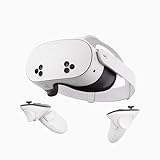
- NO WIRES, MORE FUN — Break free from cords. Game, play, exercise and explore immersive worlds — untethered and without limits.
- 2X GRAPHICAL PROCESSING POWER — Enjoy lightning-fast load times and next-gen graphics for smooth gaming powered by the SnapdragonTM XR2 Gen 2 processor.
- EXPERIENCE VIRTUAL REALITY — Take gaming to a new level and blend virtual objects with your physical space to experience two worlds at once.
- 2+ HOURS OF BATTERY LIFE — Charge less, play longer and stay in the action with an improved battery that keeps up.
- 33% MORE MEMORY — Elevate your play with 8GB of RAM. Upgraded memory delivers a next-level experience fueled by sharper graphics and more responsive performance.
| Specification | Meta-published figure or feature |
|---|---|
| Display | Micro-OLED; 2412 × 2288 pixels per eye; 37 pixels per degree |
| HDR formats | Dolby Vision, HDR10 and HLG |
| Refresh rate | 120 Hz |
| Field of view | 70° horizontal; 66° vertical |
| Processor and memory | Qualcomm Snapdragon XR2 Gen 3; 12 GB onboard memory |
| Tracking | Head, hand and eye tracking |
| Passthrough | Color stereoscopic passthrough at 26 pixels per degree, with autofocus and depth sensing |
| Wireless | Wi-Fi 7 and Bluetooth 5.4 |
| Battery estimate | Up to approximately three hours of media playback |
| Puck input | DisplayPort input |
| Weight | About 100 grams, as stated in Meta’s 2026 announcement |
| Operating system | Android 14 |
How they differ from Quest 3 and Quest 3S
The clearest published comparison is field of view: Meta lists a narrower view for Meta VR Glasses than for either Quest model. The glasses are also a different physical arrangement—lightweight eyewear connected to a puck—rather than an all-in-one headset. Meta’s about-100-gram figure is for the glasses; it should not be read as the weight of the complete glasses-and-puck setup.
| Device | Horizontal field of view |
|---|---|
| Meta VR Glasses | 70° |
| Meta Quest 3 | 110° |
| Meta Quest 3S | 96° |
These are Meta-published figures. The narrower field of view is a meaningful trade-off if peripheral immersion matters more to you than the glasses form. Other practical differences include the default input method and the glasses’ published media-playback estimate; the available specifications here do not provide like-for-like weight or battery figures for Quest 3 and Quest 3S.
Rank #4

- NEARLY 30% LEAP IN RESOLUTION — Experience every thrill in breathtaking detail with sharp graphics and stunning 4K Infinite Display.
- NO WIRES, MORE FUN — Break free from cords. Play, explore and exercise in immersive worlds — untethered and without limits.
- 2X GRAPHICAL PROCESSING POWER — Enjoy lightning-fast load times and next-gen graphics for smooth gaming powered by the Snapdragon XR2 Gen 2 processor.
- EXPERIENCE VIRTUAL REALITY — Blend virtual objects with your physical space and experience two worlds at once.
- 2+ HOURS OF BATTERY LIFE — Charge less, play longer and stay in the action with an improved battery that keeps up.
How do you control Meta VR Glasses?
The default interaction model is designed around eyes and hands. Meta’s glasses guide identifies gaze as the primary targeting method and a hand pinch as the primary selection action. Hand tracking supports this controllerless approach.
Touch Plus controllers are optional and sold separately, according to Meta. They matter for controller-first games and existing applications designed around Quest controllers. Developers may need to remap those apps’ interactions for gaze and hands; shared software foundations do not automatically make every controller-oriented experience comfortable without controllers.
When can you buy Meta VR Glasses?
Meta announced the glasses at Connect 2026 and says they are scheduled to ship in spring 2027. That is a shipping window, not a confirmed retail date. The announcement does not establish a price, preorder date or availability by country, so those details should not be assumed.
What developers should know
Meta says existing Quest developers can use the same OS and SDKs, and that v207 SDKs are available before the hardware launch. Android developers can adapt apps for expanded spatial screen space, multiple windows, gaze input, spatial audio and passthrough. Meta’s XR Simulator, Spatial Simulator and WebXR tooling are also available ahead of launch; Meta recommends testing on Quest 3 or Quest 3S where possible.
Developers should check dependencies early. Horizon OS does not include Google Mobile Services, so an Android app that relies on Firebase, Google authentication or Google Play Billing may require alternatives before it can work as intended.
Are Meta VR Glasses the same as Orion?
No. Orion is a separate Meta AR-glasses prototype, not the announced Meta VR Glasses product. Meta described Orion in 2024 with a roughly 70° field of view, voice, eye and hand tracking, and an EMG wristband. Meta’s newsroom said Orion would not reach consumers, while describing its work as informing a future consumer AR-glasses line. Those prototype features should not be treated as specifications for the glasses scheduled to ship in 2027.
Free tools Windows power users keep installed
One-click scans. No signup required.
Quick Recap
Product prices and availability are accurate as of the date/time indicated and are subject to change. Any price and availability information displayed on Amazon at the time of purchase will apply.

