
Direct-to-device (D2D) connectivity lets an IoT device communicate with a terrestrial cellular network or a satellite access network, which then carries its data to an IoT platform or application. It can extend service beyond terrestrial coverage, but it does not mean every cellular IoT board can connect to a satellite: the device, radio bands, antenna, service and local regulations all have to match.
What direct-to-device connectivity means for IoT
In an IoT deployment, the endpoint is the sensor, tracker, meter or other connected device. With D2D connectivity, that endpoint establishes a radio link directly to a cellular base station or satellite access network. The network forwards the device’s traffic to the service that processes or displays it.

The phrase can also mean a satellite connecting directly to an ordinary smartphone. That smartphone-focused use is a specific form of D2D, not a synonym for all satellite IoT. GSMA wrote in 2025 that direct-to-device satellite connectivity could extend mobile reach and strengthen resilience; the exact service a user can access still depends on its technology, spectrum, device and regulatory arrangements.
How LTE-M, NB-IoT, 5G and satellite IoT differ
LTE-M and NB-IoT are the principal 3GPP-standardized terrestrial low-power wide-area (LPWA) options for constrained IoT devices. Neither is universally better: the right choice depends on what the application sends, its power budget, coverage needs and the supported networks. 5G enhanced Mobile Broadband (eMBB) is intended for applications that need substantially more data; it is not interchangeable with narrowband sensor connectivity.
PC Slower Than It Used to Be?
A free scan shows the junk files, broken settings and background clutter dragging Windows down - then fixes them in one click.Free scan · Windows 10 & 11Outdated Drivers Are Slowing You Down
One free scan finds every outdated or missing driver and matches the right update for your exact hardware.Free scan · exact hardware match#1 Best Overall

- Dual-Core Performance Up to 240 MHz: Run sensor processing, wireless communication, automation logic and connected-device tasks on a 32-bit dual-core ESP32 platform designed for responsive embedded and IoT projects
- Built-in Wi-Fi and Bluetooth 4.2: Connect to 2.4 GHz Wi-Fi networks or use Bluetooth Classic and BLE for wireless sensors, smart devices, remote controls, home automation and other connected projects
- Flexible Power-Saving Modes: ESP32 power-management features support dynamic clock scaling and low-power operating modes, helping developers reduce energy use in compatible sensing, monitoring and connected-device applications, suitable for battery-powered Internet of Things (IoT) devices.
- USB-C Programming with CP2102: Connect through USB-C for power, sketch uploads and serial monitoring, while GPIO, UART, SPI and I2C interfaces support sensors, displays, motor drivers and other modules (USB-C cable not included)
- Over-the-Air Update Support: Configure OTA functionality through a compatible ESP-32 software framework to update deployed firmware over Wi-Fi without reconnecting the board by USB for every revision
| Option | Typical role | Coverage path | What to verify |
|---|---|---|---|
| LTE-M | Terrestrial LPWA for IoT endpoints; suitability depends on the application and network. | Cellular network coverage. | Supported bands, operator availability, module and antenna compatibility, and service support. |
| NB-IoT | Terrestrial LPWA for constrained sensors and telemetry. | Cellular network coverage. | Supported bands and operator availability. Terrestrial NB-IoT support alone does not establish satellite capability. |
| Satellite IoT or satellite NB-IoT | IoT connectivity where satellite access is part of the service; satellite NB-IoT is designed around small, low-power, low-cost modules. | Satellite service, potentially alongside terrestrial access in an integrated network. | Whether the specific module, antenna, bands, service plan and deployment location are supported. |
| 5G eMBB | Applications requiring substantially more data than constrained sensor telemetry. | 5G terrestrial network coverage. | Local availability, device compatibility, application data needs and power budget. |
GSMA notes that one technology cannot satisfy every LPWA use case. Compare actual service and device specifications for the target country and deployment rather than assuming that a label such as “IoT” or “5G” guarantees a particular coverage footprint, data rate, latency or battery life. Those values depend on the network and implementation; no single set of figures applies across these options.
How satellite networks fit with terrestrial IoT
3GPP non-terrestrial networks (NTNs) integrate satellite and terrestrial networks using mobile-system technologies. The ITU describes the potential for service continuity and roaming between ground and satellite coverage. That describes an approach to network integration, not a promise that every device or subscription will roam automatically.
Rank #2

- Certified & Future-Ready: Espressif-certified ESP32-WROOM-32E ensures full hardware compatibility and lifetime firmware support. Upgraded 8MB Flash handles IoT data and OTA updates.
- Dual-Core Speed: 240MHz dual-core processor runs Wi-Fi/BLE and sensors 2x faster. 38 GPIO pins (10 RTC) support SPI/I2C/UART for LCDs, motors, and industrial sensors.
- Plug & Play Dev: USB-C driver pre-installed: upload code instantly on Windows/Mac/Linux. Works with Arduino IDE, MicroPython, and Espressif IDF.
- All-Environment Ready: Run Wi-Fi smart switches (Home Assistant) and BLE tracking on one board. Industrial-grade stability (-40°C~85°C) for outdoor/automated systems.
- Advantages: The ESP32 development board offers high performance, low power consumption, and rich wireless connectivity, making it suitable for developers of all levels, especially beginners.
Satellite NB-IoT uses small, low-power, low-cost IoT modules, according to the ITU. A device still needs hardware and a service designed for the satellite network it will use. In particular, an NB-IoT board meant for a terrestrial operator is not automatically capable of reaching a satellite.
Smartphone-oriented satellite D2D can use standardized mobile-satellite-service (MSS) bands, while another approach may use mobile-operator spectrum. Technical and regulatory work remains ongoing for these approaches. Their existence does not establish that an IoT module can use a phone-focused satellite service, or vice versa.
Free tools Windows power users keep installed
One-click scans. No signup required.
Rank #3
Choosing terrestrial, satellite or hybrid coverage
Start with where the device must communicate and what happens when a connection is unavailable. A terrestrial-only design can suit a deployment within usable cellular coverage. A satellite-only design may fit a remote deployment planned around a compatible satellite service. A hybrid design can use terrestrial service where available and satellite connectivity for extension or failover, but only if the device and network arrangements support the intended transition.
| Architecture | Potential fit | Deployment questions |
|---|---|---|
| Terrestrial only | Sites with suitable cellular coverage and an LTE-M or NB-IoT service that meets the application’s needs. | Is coverage available at every site? Are the required bands, service and roaming arrangements supported? |
| Satellite only | Locations where a compatible satellite IoT service is the intended access network. | Does service cover the operating area? Are the device, antenna, spectrum, power budget and certification suitable? |
| Hybrid terrestrial and satellite | Deployments seeking coverage extension, continuity or failover across ground and satellite networks. | Can the device use both networks? How does it select or switch access, and are roaming, security and service arrangements in place? |
Evaluate the design against the same operational requirements: coverage footprint, uplink and downlink needs, latency, energy use, module and antenna cost, spectrum compatibility, network availability, interoperability, certification, security and resilience. The sources discussed here do not establish universal data-rate, latency, energy or price figures for these choices, so those must be checked against the specific device and service.
Rank #4

- 2.4GHz Dual Mode WiFi + Bluetooth Development Board
- Support LWIP protocol, Freertos
- SupportThree Modes: AP, STA, and AP+STA
- Ultra-Low power consumption, Compatible with Arduino IDE
- ESP32 is a safe, reliable, and scalable to a variety of applications
Where satellite IoT can be useful
The ITU identifies opportunities in smart cities, precision agriculture and environmental monitoring. These applications can involve assets or sensing points beyond dependable cellular reach, but satellite is not automatically the right choice for every installation. Coverage, reporting needs, power and deployment cost still govern the decision.
- Precision agriculture: Connect monitoring equipment across fields where terrestrial coverage may be limited. The ITU cites Plan-S’s Connecta IoT in precision agriculture.
- Infrastructure and environmental monitoring: Gather information from distributed or remote sites. The ITU also identifies these areas as satellite IoT opportunities.
- Transport: Support connected assets that operate across areas with varying terrestrial coverage, subject to service and device compatibility.
- Smart cities: Connect distributed IoT applications using whichever network architecture fits each site and service requirement.
- Disaster relief: Satellite access and satellite-terrestrial partnerships can help extend communications or support cellular backhaul when terrestrial infrastructure is disrupted or absent. The ITU discusses Plan-S’s Connecta IoT in disaster relief and describes satellite-terrestrial partnerships for remote coverage extension.
What published satellite figures do—and do not—show
The ITU’s 2024 material provides context for satellite connectivity’s wider role, but these estimates and counts should not be mistaken for measurements of IoT D2D adoption or performance.
Best Value
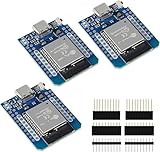
- D1 Mini NodeMCU Type-C ESP32 WLAN WiFi Bluetooth IoT Development Board 5V Compatible for Arduino
- Designed with ultra-low power technology, it offers the full range of performance and features of the ESP32 chip. The pin arrangement provides compatibility with the modules developed for the D1 Mini ESP8266 while also offering fast WLAN, enhanced GPIO, Bluetooth functionality, and with its higher performance, a wider range of applications.
- 100% compatible with Arudino IDE, Lua and Micropython, it shows robustness, versatility, and reliability in a wide variety of applications and power scenarios.
- All I/O pins have interrupt, PWM, I2C and one-wire capability, except the pin DO.
- Designed with ultra-low power technology, it offers the full range of performance and features of the ESP32 chip. The pin arrangement provides compatibility with the modules developed for the D1 Mini ESP8266 while also offering fast WLAN, enhanced GPIO, Bluetooth functionality, and with its higher performance, a wider range of applications.
- The ITU estimated USD 250 billion in social and economic benefits from satellite innovation. This is an estimate about satellite innovation broadly, not a valuation of satellite IoT alone.
- The ITU cited at least 500 million satellite broadband users by 2030. This is a projection for satellite broadband users, not a forecast of direct-to-device IoT endpoints.
- The ITU reported that the FCC had processed more than 2,800 satellite applications by 2023; 21% related to non-geostationary-orbit (non-GSO/LEO) proposals and 14% to geostationary-orbit (GSO) satellites. These application figures describe regulatory filings, not operational networks or available IoT coverage.
- The ITU reported that recorded natural disasters more than doubled between 1980–1984 and 2015–2019. It also cited up to USD 148 billion in potential disaster-loss reduction from 2025–2029 through connectivity improvements. The latter is a potential reduction attributed to connectivity improvements, not a guaranteed saving or a satellite-only forecast.
How to choose hardware for a prototype
For a physical prototype, search for an “NB-IoT development board” or “cellular IoT development module.” Choose a board only after confirming it supports the exact access technology and service you intend to test; a terrestrial NB-IoT label by itself does not mean the hardware can communicate with a satellite.
- Define the network first. Identify the target country, operator or satellite service, coverage area and whether the prototype needs LTE-M, NB-IoT, NTN support or more than one access option.
- Match radio bands. Check that the board or module supports the service’s regional bands. A technology name without compatible bands is not enough.
- Check the antenna system. Confirm the antenna connector and the gain requirements for the intended service and installation. Antenna suitability is part of the radio link, not an optional afterthought.
- Verify service access. Check SIM or eSIM support and confirm that the operator or satellite provider supports the module and intended deployment.
- Review power and firmware. Compare supported power modes with the expected reporting pattern, and verify that firmware supports the features the application needs.
- Confirm certification. Check relevant module and device certifications for the target market and network before moving from a bench prototype toward deployment.
Only after those checks can a prototype meaningfully test coverage, power use and connectivity behavior for the intended service. A development board’s capability is not evidence that the same service is available at every deployment site.
Quick Recap
Product prices and availability are accurate as of the date/time indicated and are subject to change. Any price and availability information displayed on Amazon at the time of purchase will apply.

