
The most useful embedded design resources are the ones that match your exact MCU or MPU, required interfaces, and development workflow. Bring together a compatible evaluation board, reference material, software kit, development and debug tools, and documentation; verify their fit through the device vendor’s official resource portal before committing to a platform.
Start with the target device and project requirements
Identify the MCU or MPU family and the interfaces your project needs before comparing boards or software. A development resource is useful only if it supports the device, peripherals, and workflow you intend to use. Record requirements such as connectivity, available debug hardware, host computer platform, and whether the goal is evaluation, firmware development, or a prototype.

Vendor portals package these resources differently. TI describes its Developer Zone as a combined hardware, software, and development-tools environment with examples, demos, libraries, SDKs, documentation, and training: TI Developer Zone. Microchip organizes evaluation boards and reference designs in separate resource areas: Microchip development tools and Microchip reference designs. ST’s pages connect evaluation hardware with design files and documentation: ST evaluation tools and ST documentation.
Choose an evaluation or development board
A board gives you a practical platform for device evaluation, bring-up, firmware development, debugging, or prototyping. Confirm the exact part and board revision, as well as connector types and onboard peripherals, before treating a board as a fit for your design.
#1 Best Overall

- ✅【High-Performance ESP32-S3 Processor】Powered by the ESP32-S3 dual-core Xtensa LX7 processor with up to 240MHz clock speed, this development board features 16MB Flash and 8MB PSRAM. It provides powerful performance for IoT devices, embedded systems, AI applications and advanced DIY projects.
- ✅【Pre-Soldered GPIO Headers for Easy Use】The board comes with pre-soldered GPIO headers, eliminating the need for manual soldering. It can be directly connected to breadboards, sensors and expansion modules, making project setup faster and more convenient for makers and developers.
- ✅【WiFi & Bluetooth 5.0 Wireless Connectivity】Built-in 2.4GHz WiFi and Bluetooth 5.0 enable stable wireless communication for smart home, automation and IoT applications. The reserved IPEX antenna connector allows optional external antenna installation for different project requirements.
- ✅【Large Memory & Flexible Development】With 16MB Flash and 8MB PSRAM, this ESP32-S3 board provides more storage and memory resources for complex firmware, graphical interfaces, OTA updates and data-intensive applications.
- ✅【Arduino IDE, ESP-IDF & MicroPython Support】Compatible with Arduino IDE, ESP-IDF and MicroPython development environments. With dual USB-C interfaces and rich expansion options, it is suitable for robotics, sensors, automation and embedded system development.
- Device and interfaces: Match the board to the exact MCU/MPU family and check that it exposes the interfaces your project needs.
- Debug path: Find out whether a programmer/debugger is onboard or whether you need a separate probe.
- Software compatibility: Check that the board works with the intended IDE, SDK, examples, and configuration tools.
- Practical constraints: Confirm operating requirements, board revision, supply, and availability from the vendor or an authorized source.
Microchip lists Curiosity, Curiosity Nano, and Xplained board families and describes their integration with its development ecosystem on its development tools page. ST describes evaluation boards and their purpose on its evaluation tools page. These resources help identify options within their respective ecosystems; neither establishes a universal best board for every embedded project.
Use reference designs as scoped starting points
A reference design can provide a circuit or system starting point to adapt, but its scope and included files vary. Microchip defines a reference design as “A complete system, subsystem or function which is purpose-built and ready to integrate into your project.” That is Microchip Technology’s definition, not a universal industry standard; see its reference-design resource.
Before reusing or adapting a design, inspect the specific design page and verify:
- Which device and hardware revision the design targets.
- Whether schematics, bill of materials (BOM), Gerber files, source code, or demonstration software are included.
- What performance assumptions and validation scope are documented.
- What license or other reuse conditions apply.
ST says many evaluation boards have schematics, BOMs, and Gerber files, and that demonstration software is available for many boards where appropriate on its evaluation tools page. Availability of particular files is design-specific, so check the selected board or design rather than assuming every package includes the same materials.
Do these 3 things before closing this tab:
1Scan for outdated or missing drivers - takes under a minute2Repair Windows errors before they cause bigger problems3Fix the driver behind crashes, sound loss and screen glitchesTreat the software kit as part of the hardware choice
An SDK can supply drivers, middleware, examples, demos, and documentation that make it easier to get firmware running and integrate common functions. Check that the package supports the exact device and board, and review its dependencies, licensing, version, and maintenance status.
TI says its SDK packages include operating systems, middleware frameworks and stacks, application examples, demos, documentation, and training. TI also says its SDKs are tested, integrated, and released quarterly; that schedule is TI’s stated cadence, not a general schedule for other vendors. See the TI Developer Zone for its embedded resources.
Rank #3

- Powerful Processor for Embedded Systems: The Luckfox Lyra Zero W is powered by the Rockchip RK3506B SoC, featuring a 1.2GHz ARM Cortex-A7 processor, delivering smooth performance for running Linux-based applications and making it suitable for embedded and IoT projects.
- High-Quality Display Interface: The board supports MIPI DSI 2-lane, allowing easy connection to high-resolution displays, ideal for applications like digital signage, HMI systems, and embedded interfaces.
- Extensive Connectivity Options: With USB 2.0 OTG, USB Host 2.0, and GPIO pins, the Lyra Zero W allows connectivity to various peripherals, making it versatile for sensors, devices, and other embedded systems.
- Onboard Wireless Capabilities: Equipped with Wi-Fi 6 and Bluetooth 5.2, the board supports seamless wireless communication, perfect for IoT, networking, and remote control applications.
- Cost-Effective Solution for Development: Offering a budget-friendly price, the Lyra Zero W provides a feature-rich platform for developers to prototype and create advanced embedded systems without exceeding their budget.
Check the build and debug workflow early
A supported chip is not enough if you cannot conveniently configure, build, flash, and inspect the firmware in your environment. Verify toolchain and IDE support, device-configuration tools, probe requirements, host operating-system support, license terms, and the import path for example projects. Try an example on the chosen board early to expose setup or compatibility issues before they become part of the project plan.
Arm describes embedded toolchain resources and a browser-based IDE with examples and web debugging on its developer tools page. The available workflow still depends on the selected device and tools; confirm the details for your target rather than assuming every Arm-based board uses the same setup.
Recommended Free Tools
Use documentation to resolve implementation details
Datasheets, user guides, application notes, errata, and training help answer different questions. Use the datasheet and applicable errata for device-specific electrical and peripheral details; use the board guide for setup and hardware behavior; use application notes for scoped implementation guidance. Check each document’s part number, board revision, and date so advice applies to the hardware and software version you are using. ST provides device documentation through its documentation page.
Rank #4
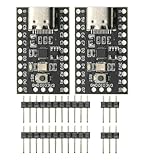
- CH32V003 Development Minimum System Board for Nano RISC-V CH32V003F4U6 Chip TYPE-C USB 22Pin
- on-board 24MHz Crystal oscillator
- Power by TYPE-C USB
Compare ecosystems against project constraints
Vendor ecosystems are best compared against the work your project must do, not ranked by brand alone. Use the following checklist when reviewing the official pages for your target:
- Does the ecosystem support the exact target device and required peripherals or connectivity?
- Can you build, program, and debug with tools available to your team?
- Are the examples and documentation relevant to the intended application?
- Do the software and design-file licenses fit evaluation, development, and production use?
- Are the required hardware, probes, software, and training practical for your budget and team experience?
The vendor pages describe their own offerings, not a controlled comparison that establishes one ecosystem as the winner. Choose the path with verified device support and the fewest unresolved gaps for your specific project.
Quick Recap
Product prices and availability are accurate as of the date/time indicated and are subject to change. Any price and availability information displayed on Amazon at the time of purchase will apply.
What’s actually slowing this PC down?
Pick the symptom - the matching free tool is one click away.

