
iTechGuides is reader-supported. When you buy through links on our site, we may earn an affiliate commission. As an Amazon Associate I earn from qualifying purchases. Learn more
Typebot can be self-hosted with the project’s Docker Compose configuration, which runs separate builder and viewer services alongside PostgreSQL and Redis. You will also need to configure database access, the public URLs, and an encryption secret. The exact commands and production settings can change, so use Typebot’s live deployment guide for the version you plan to run.
What Typebot does
Typebot is an open-source tool for building conversational apps and forms. The project lists lead qualification, product launches, user onboarding, and customer support as example uses. You can embed the resulting experiences in web or mobile products and collect responses in real time. Its README describes support for text, image, and video messages, common input fields, and integrations such as Google Sheets, webhooks, and email. Read the Typebot project README.
Should you use Typebot Cloud or self-host?
The project describes Typebot Cloud as the easiest way to get started. It is the managed route for people who do not want to operate the application stack and its supporting services. Self-hosting is for people who specifically want to run Typebot and its dependencies themselves.
| Consideration | Typebot Cloud | Self-hosting |
|---|---|---|
| Operating responsibility | The project presents it as a managed starting route; specific service responsibilities are not stated in the cited README. | You operate the application and supporting database and cache services. |
| Deployment control | Not stated in the cited README. | You run the deployment in an environment you manage. |
| Price, limits, and service levels | Not stated in the cited README. | Not stated in the cited Compose file. |
The available project materials do not establish a current price, plan limits, service-level commitments, or feature comparison, so those should not be assumed from the existence of the two routes.
#1 Best Overall
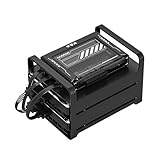
- 【Build Your Own NAS & Homelab — Not Just Storage】 More than a traditional NAS, ZimaBlade 7700 is a flexible x86 mini server for building your own homelab, personal cloud, or Docker host. Perfect for DIY NAS, self-hosting, container apps, and even retro systems — not limited like typical ARM-based NAS devices.
- 【x86 Platform — Broad Compatibility, Real Freedom】 Powered by an Intel quad-core x86 processor, it runs a wide range of operating systems and software with native compatibility. Ideal for Linux, Docker, CasaOS, and more — designed for flexibility and experimentation rather than locked-down appliance use.
- 【16GB RAM for Smooth Multi-Service Workloads】 Handle file sharing, media streaming, backups, and multiple lightweight services at once. Optimized for low-power, always-on operation — a great fit for home labs and personal servers running 24/7.
- 【Smooth 4K Media Streaming — Plex Direct Play Ready】 Stream your personal media library smoothly with Plex and similar media servers. Supports 4K playback on compatible devices via direct play, delivering a reliable home media experience without the need for heavy transcoding.
- 【Complete 2-Bay NAS Kit — Ready to Build】 Includes power supply, 16GB RAM, metal drive cage for 2 HDD/SSD, and dual SATA cables — everything you need to start building your own NAS right out of the box.
What a Typebot self-hosted deployment includes
The official Compose example has four services: the two Typebot application services plus PostgreSQL and Redis. The builder is where you create and manage bots; the viewer serves the conversational experience. Both application services use shared configuration, wait for PostgreSQL and Redis health checks, and receive a Redis URL. The database and Redis each have persistent data volumes in this example. See the current official Docker Compose file.
The example exposes ports 8080 and 8081 for the application containers. Those are values in this Compose file, not universal requirements: a reverse proxy or another hosting arrangement may expose different public endpoints or map ports differently.
Rank #2

- Pro-Performance NAS Engineered for Demanding Workflows: This NAS is built for offices, businesses, and power users who need serious performance. Powered by a pro-performance Intel processor, it serves as a versatile private workstation that delivers smooth performance for running virtual machines and Docker containers. It functions as an IT hub for video editors, developers, virtualization tasks, and growing teams with advanced workflows
- Pro-Grade Core Hardware Performance: Features the Intel Core i3-1315U Processor (6 Cores, 8 Threads, up to 4.5GHz Turbo), offering a significant performance lead. It's paired with 8GB of high-speed DDR5 RAM (expandable to 96GB) and 13th Gen Intel UHD Graphics for smooth multitasking. Dual high-speed network ports (10GbE + 2.5GbE) enable blazing-fast transfers, reaching up to 1.25GB/s
- Ultimate Flexibility with Docker, VMs & Smart AI: It offers comprehensive support for Docker and Virtual Machines, unlocking endless possibilities to run personal websites, smart home hubs, or private development environments. The local AI-powered Photo Album automatically recognizes faces, scenes, and content. All AI processing happens on-device, ensuring your privacy while managing massive photo libraries effortlessly
- Massive Storage & Intuitive All-in-One System: It supports a colossal 144TB capacity (4x HDD + 2x M.2 SSD), enough for approximately 4.2 million 35MB RAW photos, 3.6K 40GB 4K movies, 5 million 30MB lossless music, or 150 million 1MB files. Dual M.2 PCIe 4.0 SSD slots can be used as a high-speed cache or storage pool to eliminate HDD bottlenecks. The intuitive UGOS Pro operating system integrates a media center, photo management, cloud sync, downloads, and more for a one-stop experience
- Enterprise-Grade Data Security & Privacy: Provides multiple RAID configuration options (0, 1, 5, 10) for flexibility between capacity, speed, and protection. Features granular user permission controls (supporting up to 2048 accounts). The Data Vault offers an extra layer of security by hiding and encrypting sensitive files. Certified for strong privacy and data protection by TV SD (ETSI EN 303 645) and TRUSTe
Configuration to plan before deployment
The official .env.example identifies several configuration points. Treat it as a starting reference, then check the live configuration guide for the version you are deploying; the example file alone is not a complete production checklist. Review the official environment example.
Quick wins for a faster PC:
Scan for outdated or missing drivers - takes under a minuteDriver Scan →Repair Windows errors before they cause bigger problemsFix Now →Fix the driver behind crashes, sound loss and screen glitchesFind Drivers →DATABASE_URL: the connection information Typebot uses for PostgreSQL.NEXTAUTH_URLandNEXT_PUBLIC_VIEWER_URL: public URL settings used by the application and viewer.ENCRYPTION_SECRET: the example instructs operators to replace its sample value with their own random 32-character string.NODE_OPTIONS: also listed in the example; confirm the appropriate value for your version and deployment.
For Webhook blocks, the example notes a separate relay secret of at least 32 characters, shared through the builder, viewer, and PartyKit server variables. If you use webhooks, follow the current official configuration guide to confirm the exact variable names and setup expected by your release.
Rank #3
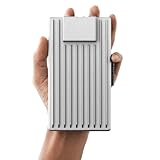
- Server-Class Home Server Built for 24/7 Workloads - Designed as a purpose-built home server rather than general-purpose SBCs, Mini PCs, entry NAS systems, or routing-only devices. As a compact, pocket-sized single board server platform, ZimaBoard 2 832 combines x86 architecture, quad-core performance up to 3.6GHz, 8GB DDR5 memory, and 32GB eMMC storage for reliable always-on home servers, homelabs, and self-hosted workloads.
- PCIe 3.0 x4 Expansion for Real Server Builds - Built as a server-class platform with native PCIe expansion, ZimaBoard 2 features a full PCIe 3.0 x4 slot for high-speed, low-latency upgrades beyond USB-based limitations. Supports 10GbE NICs, NVMe adapters, GPUs, and AI accelerators to build scalable home servers, homelabs, and advanced self-hosted systems—offering greater expansion flexibility than typical SBCs, Mini PCs, and entry-level NAS devices.
- Native Dual SATA & Dual 2.5GbE Networking - Built with server-class storage and networking I/O, ZimaBoard 2 integrates dual SATA ports for direct HDD/SSD connectivity and dual 2.5GbE Ethernet for high-throughput, low-latency networking. This architecture enables reliable DIY NAS, fast storage, routing, and multi-service home server deployments—while avoiding USB-based performance constraints common in ARM SBCs, Raspberry Pi–based setups, Mini PCs, and entry-level NAS devices.
- ZimaOS Preinstalled + Wide OS Compatibility - Comes preinstalled with ZimaOS for a clean, ad-free private cloud experience—centralized file dashboard, automatic backups, P2P downloads, private photo/video sharing, 500+ plug-ins, and secure on-device AI that keeps your data at home. Also supports TrueNAS, Proxmox, Debian, Ubuntu Server, pfSense, OpenWrt, and Linux containers, making it perfect for Plex media servers, Pi-hole, firewalls, backups, Docker labs, home-cloud services, and multi-service deployments.
- All-in-One NAS, Router, Docker & Homelab Server - Replace multiple devices with one low-power, fanless system. ZimaBoard 2 can serve as a NAS, router, Docker host, firewall, media server, or homelab node—delivering a flexible, open alternative to ARM SBCs, Mini PCs, and entry-level NAS systems.
How to deploy Typebot with Docker Compose
- Choose your route. Use Typebot Cloud if you want the managed starting option; choose self-hosting if you intend to operate the application and dependencies.
- Open the official deployment guide. Follow the current steps for the Typebot version and hosting environment you will use. The Compose file and environment example are mutable, so do not rely on copied commands from an older guide.
- Prepare the configuration. Set the database connection and public URLs, replace the example encryption secret with your own random 32-character string, and configure any webhook relay secret if your bots use Webhook blocks.
- Start and verify the deployment using the guide’s version-specific procedure. Confirm that the builder, viewer, PostgreSQL, and Redis services are running and that the public URLs work as intended. The project files cited here describe the service layout, but do not establish a complete production validation or hardening procedure.
Start with Typebot’s official Docker deployment guide and consult its configuration documentation for current, version-specific requirements.
Independent reader supportYour contribution helps us test, update, and keep practical guides available for everyone.What the Compose example does not settle
The official example is useful for understanding the deployment shape, but it should not be mistaken for a universal production recipe. It does not, by itself, establish the right reverse-proxy setup, backup and restore process, security policy, scaling approach, or operational requirements for your environment. Resolve those choices against the live Typebot documentation and the needs of your hosting platform before treating a deployment as production-ready.
Quick Recap
Rank #4

- TRUE PLUG-AND-PLAY HOME SERVER: Forget complex VPS setups or command lines. Simply connect power and Ethernet to start hosting immediately with zero technical skills required. This managed, all-in-one appliance is the easiest way to run blogs (compatible with WordPress), private applications, and bots directly from home using your own domain.
- NO MONTHLY SUBSCRIPTION FEES: Stop renting server space. Enjoy a one-time hardware purchase model with absolutely no recurring hosting fees for typical usage. The system includes a generous monthly traffic allowance that covers the needs of almost all personal and small business websites, allowing the device to pay for itself quickly.
- INSTANT ONE-CLICK APP LIBRARY: Instantly deploy over 50 curated open-source applications without hassle. The diverse ecosystem includes essential tools, compatible with WordPress, Ghost, Nextcloud (for private cloud storage), Joomla, and OpenClaw. Perfect for content management, e-commerce, private email, and business tools.
- INCLUDES FREE SSL & ENTERPRISE SECURITY: Get professional performance and safety without the extra costs. Seamlessly integrate your existing custom domain or utilize the included free subdomain. Your sites are automatically secured with free SSL certificates, built-in DDoS protection, and global CDN acceleration.
- TOTAL DATA PRIVACY & OWNERSHIP: Keep your digital assets secure on your own local hardware, not on third-party "big tech" servers. Designed for privacy-conscious individuals, creators, and small businesses seeking platform independence. Includes an intuitive web management portal for complete peace of mind.
Product prices and availability are accurate as of the date/time indicated and are subject to change. Any price and availability information displayed on Amazon at the time of purchase will apply.

