
Recommended Free Tools
iTechGuides is reader-supported. When you buy through links on our site, we may earn an affiliate commission. As an Amazon Associate I earn from qualifying purchases. Learn more
A logical unit number (LUN) is the identifier a SCSI host uses to address a logical unit, which is the addressable entity inside a SCSI target device. The LUN is a 64-bit value, and it is a label for the logical unit rather than the disk itself. Those two points are the core of the definition, and the rest of this article explains why the distinction matters.
Logical unit and LUN are two different things
The terms are often used interchangeably, but the standards separate them. ISO/IEC 14776-453:2009, section 3.1.58, defines a logical unit as “An externally addressable entity within a SCSI target device that implements a SCSI device model and contains a device server.” Section 3.1.61 of the same standard defines a logical unit number as “An encoded 64-bit identifier for a logical unit.”
In other words, the logical unit is the thing being addressed, and the LUN is the code used to address it. A host sends a command to a target, and the LUN tells the target which logical unit should process that command.
Where a logical unit sits in the SCSI model
A SCSI target device is the container. According to RFC 4455, a target device contains logical units and SCSI target ports. Each logical unit implements a device model and includes a device server, which is the component that processes SCSI commands directed to it.
#1 Best Overall
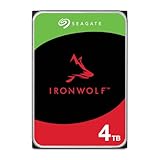
- IronWolf internal hard drives are the ideal solution for up to 8-bay, multi-user NAS environments craving powerhouse performance
- Store more and work faster with a NAS-optimized hard drive providing ultra-high capacity up to 16TB and cache of up to 256MB
- Purpose built for NAS enclosures, IronWolf delivers less wear and tear, little to no noise/vibration, no lags or down time, increased file-sharing performance, and much more
- Easily monitor the health of drives using the integrated IronWolf Health Management system and enjoy long-term reliability with 1M hours MTBF
- Three-year limited warranty protection plan included and three year Rescue Data Recovery Services included
- Target device: the SCSI endpoint that holds one or more logical units and exposes target ports.
- Logical unit (LU): the addressable entity within the target that implements a device model and processes SCSI commands.
- Logical unit number (LUN): the encoded identifier that selects one logical unit within the target.
Why the LUN is 64 bits
The width is part of the specification, not a statistic about how widely LUNs are used. ISO/IEC 14776-453:2009 defines the LUN as a 64-bit identifier, and RFC 4455 (2006) gives the same width independently. RFC 7143 (2014), which governs iSCSI, also states that the LUN field is 64 bits and should be formatted in accordance with SAM-2, the SCSI Architecture Model standard. Because the field is fixed at 64 bits, the same addressing scheme can be carried in SCSI and iSCSI messages.
How the LUN is used in iSCSI
In iSCSI, the LUN field has a direct operational role. RFC 7143, section 11.2.1.7, says: “Some Opcodes operate on a specific LU. The Logical Unit Number (LUN) field identifies which LU.” That means that for commands tied to a specific logical unit, the LUN field in the request tells the target which unit to operate on. Commands that do not target a particular logical unit do not depend on this field in the same way.
Rank #2

- Store more, compute faster, and do it confidently with the proven reliability of BarraCuda internal hard drives
- Build a power house gaming computer or desktop setup with a variety of capacities and form factors
- The go to SATA hard drive solution for nearly every PC application from music to video to photo editing to PC gaming. Ax. Sustained transfer rate OD: 190MB/s
- Confidently rely on internal hard drive technology backed by 20 years of innovation
- Frustration Free Packaging - This is just an anti-static bag. No cables, no box.
Is a LUN the same as a physical disk?
No, not by definition. The standards define a LUN as an identifier for a logical unit. They do not say that every logical unit must correspond one-to-one to a physical disk. A logical unit may be backed by a single drive, part of a drive, a group of drives, or storage presented from another system, depending on the implementation.
What’s actually slowing this PC down?
Pick the symptom - the matching free tool is one click away.
This is why the phrase “LUN equals disk” is risky. On a particular array, appliance, or operating system, the storage that backs a LUN is set by that vendor’s configuration and mapping. Those details are not part of the SCSI or iSCSI definition, so they should be checked in the product’s own documentation before you describe the mapping.
Rank #3

- IronWolf internal hard drives are the ideal solution for up to 8-bay, multi-user NAS environments craving powerhouse performance.date transfer rate:6.0 gigabits_per_second
- Store more and work faster with a NAS-optimized hard drive providing 8TB and cache of up to 256MB
- Purpose built for NAS enclosures, IronWolf delivers less wear and tear, little to no noise/vibration, no lags or down time, increased file-sharing performance, and much more
- Easily monitor the health of drives using the integrated IronWolf Health Management system and enjoy long-term reliability with 1M hours MTBF
- Three-year limited product warranty protection plan and three year Rescue Data Recovery Services included
Practical wording you can reuse
A short, accurate explanation is: “A LUN is the identifier a SCSI host uses to address a logical unit. The logical unit is the addressable entity presented within a target, and a LUN is not, by definition, a particular physical disk.”
Avoid stating that a LUN is always a storage volume or always a physical drive. The protocol definitions support the identifier relationship. Any claim about how a specific system maps storage to a LUN needs evidence from that system.
Rank #4

- Available in capacities ranging from 2 to 22TB(1) | (1) 1GB = 1 billion bytes and 1TB = 1 trillion bytes. Actual user capacity may be less depending on operating environment.
- For RAID-optimized NAS systems with unlimited number of bays
- Rated for 550TB/yr workload rate(2) | (2) Annualized Workload Rate = TB transferred x (8760 / recorded power-on hours). The maximum rated workload is specified for operating at typical temperature of 40C. Workload Rate will vary depending on your hardware and software components and configurations.
- Designed to handle the demands of high-intensity 24x7 multi-user NAS environments
- Western Digital partners with a wide range of NAS system vendors for extensive testing to ensure compatibility with most NAS enclosures
Sources and scope
- ISO/IEC 14776-453:2009: the source of the formal definitions of logical unit and logical unit number.
- RFC 4455 (2006): an independent SCSI management description of the 64-bit LUN and of target devices and target ports.
- RFC 7143 (2014): the iSCSI protocol text on how the LUN field identifies the logical unit for specific opcodes.
These are standards documents, not vendor setup guides. They define the terms and the protocol behavior. They do not describe how any particular storage product presents its logical units, so treat platform-specific presentation as something to confirm in current vendor documentation.
”
The Bottom Line
A logical unit number identifies a logical unit within a SCSI target. It is a 64-bit identifier, and it is not, by definition, the same thing as a physical disk.
Quick Recap
Product prices and availability are accurate as of the date/time indicated and are subject to change. Any price and availability information displayed on Amazon at the time of purchase will apply.

