
Data centers become more sustainable by reducing avoidable IT and facility energy use, managing cooling and water together, sourcing lower-carbon electricity, and reusing heat where a nearby use makes it practical. The right mix depends on the facility, local climate and grid, water availability, workload, reliability needs, and applicable reporting rules; no single design is best for every site.
Why data center sustainability is a systems problem
A data center’s environmental footprint is shaped by both computing equipment and the systems that support it: air management, cooling, electrical infrastructure, and, where feasible, heat recovery. Improving one part can affect another. For example, changes to IT equipment or its operating conditions may also reduce demand on mechanical and electrical systems.
Scale makes the issue significant, but estimates need a date and an attribution. A European Commission overview, citing the IEA’s Energy and AI (whose publication year is not stated on the retrieved Commission page), puts data centers at about 1.5% of global yearly electricity consumption, or 415 TWh. The same overview cites 945 TWh by 2030 as a projection, not an observed result.
That global context does not identify the best solution for an individual facility. Local grid emissions, water stress, climate, workload, operating constraints, and reporting jurisdiction all influence which interventions matter most.
Free tools Windows power users keep installed
One-click scans. No signup required.
#1 Best Overall

- Color LCD control panel. Simplifies operation, clearing of codes and easier to read.
- Matte black cabinet brings stylish utility to the workplace.
- Added bumpers enable safer handling and movement around your facility.
- Larger casters makes rolling and navigation easier.
- Cools to mid-60s °F — for effective heat control around electronics, servers, and computers.
Which sustainability measures should operators consider?
Evaluate measures by what they change and by the conditions that make them workable. The table summarizes the main levers; it does not imply a universal savings level or rank.
| Measure | What it addresses | What to assess at the site |
|---|---|---|
| IT equipment and operating conditions | IT energy demand, with potential secondary savings in mechanical and electrical systems | Workload, equipment, operating conditions, and the facility’s design constraints |
| Air management | Avoidable mixing of hot and cold air and inefficient rack airflow | Existing airflow paths, rack design, and whether physical controls such as blanking panels suit the installation |
| Cooling and water management | Chiller energy and cooling-tower water use | Climate, water availability, cooling architecture, and safe operating limits |
| Lower-carbon electricity | Carbon intensity of supplied electricity | Electricity sourcing and grid context; annual renewable procurement does not by itself resolve local grid or water impacts |
| Waste-heat reuse | Useful heat recovery beyond the data center | Nearby heat demand, required temperature, distance, infrastructure, and economics |
Start with IT demand and operating conditions
Examine IT equipment and how it is operated before assuming that a facility-side change is the only route to improvement. The U.S. Department of Energy’s Federal Energy Management Program (FEMP) design guide notes that measures addressing IT equipment and environmental conditions can produce secondary savings in mechanical and electrical systems. Its approach is scenario-specific: the guide cautions that “No design guide can offer” a universal configuration. A design that suits one workload or climate should not be treated as a prescription for another.
Rank #2

- An ultra quiet fan system designed for cooling cabinets that requires minimal noise.
- Features a multi speed controller to set the fans speed to optimal noise and airflow levels.
- Contains a CNC machined aluminum frame with a modern brushed black finish.
- Powered by wall outlet or USB port, included Turbo Adapter increases performance by 25 percent.
- Dimensions: 4.6 x 4.6 x 1.3 in. | Airflow: 26 CFM | Noise: 17 dBA | Bearings: Dual Ball
Control airflow rather than adding accessories by default
Air management starts with finding avoidable mixing of hot and cold air and assessing airflow at the rack level. Blanking panels are one possible physical measure, but their value depends on the rack and airflow design. The available guidance does not establish a particular product’s savings, so assess the installation rather than assuming an accessory will improve efficiency.
Compare cooling energy and water together
Cooling design and operation should be assessed as a combined energy-and-water question. DOE’s federal cooling-water resource describes practices that allow higher chilled-water temperatures and reduced airflow; these can lower chiller energy and reduce the heat rejected through cooling towers, which in turn reduces cooling-tower water use. Whether these practices fit a facility depends on its cooling architecture, local climate and water conditions, and operating constraints.
Rank #3

- 【better after-use experience】 Temperature reduction provides an expected longevity extension and higher performance of a critical network component,These fans are overall very helpful for devices that get a bit hot and start to throttle down.
- 【choice of most users】It works great ,for DIY cooling fan or as an additional cooling ,fan for your gaming needs. like as router, cabinet, Modem, DVR, Receiver, Streaming ,boxes, x-box, SSD, Security Camera NVR, andriod box, stereo, T-Mobile gateway. Good balance of quiet and airflow. keeping electronics cool .Three specifications of fans, suitable for more usage scenarios .
- 【Custom shock absorbing feet】 four feet using environmentally friendly rubber, after testing, the softness of the feet that can smoothly grab the desktop, not too hard and desktop resonance .
- 【Fan parameters】Connecter: USB; Cable Length: 55cm Or 21 inches; Bearing type: Sleeve ; Life: 35000 hours / Dimension: 360mm(L) x 120mm(W) x 25mm(H) / 4.7x4.7x1 in. per fan; Rated Voltage:5V 0.2A; Speed: 1500RPM; Air flow: 56.7CFM; Noise:23dBA .
- 【Warranty & Packing List】Warranty: One-year quality assurance. Please contact us, If the product has any quality problems, it will be refunded within 90 days or replaced within one year | Packing list: A finished product .
Address electricity demand and electricity carbon separately
Efficiency reduces the amount of energy a facility needs; electricity sourcing affects the carbon intensity of the electricity supplied. The European Commission identifies renewables and low-carbon energy, alongside improved grid efficiency, as part of the response. These measures complement energy reduction rather than replace it. Renewable procurement on an annual basis should not be presented as eliminating local grid or water impacts.
Check for a real heat user before designing for reuse
Waste heat can be useful when a nearby facility or heat network can use it. Investigate demand, the temperature needed, distance, required infrastructure, and economics before treating heat reuse as viable. The existence of recoverable heat alone does not establish that a useful or economical connection is possible.
Rank #4

- FULLY SUPPORTED & PROVEN QUALITY: This product is protected by a Manufacturer's 2-Year Limited Warranty. To best support your purchase, Eaton's expert technical team is available via phone, web, or email to address any concerns.
How should facilities compare sustainability options?
Compare the same candidate options against a consistent set of site-specific questions. This avoids choosing a measure on one headline metric while overlooking a constraint that determines whether it will work.
- Energy: What changes in IT demand and whole-facility energy use are expected, and how will they be measured?
- Water: What is the cooling-water implication, and how does it fit the local water context?
- Electricity carbon: How does the option affect energy demand and the carbon intensity of supplied electricity?
- Heat reuse: Is there a nearby user with suitable demand and temperature, and are distance and infrastructure practical?
- Reliability and operations: Does the measure fit the facility’s workload, reliability requirements, and operating limits?
- Cost: What capital and operating costs apply to this particular facility?
- Measurement and rules: Can the results be measured consistently, and what reporting requirements apply in the facility’s jurisdiction?
Use recognized metrics and consistent definitions, and state the facility’s geography and reporting period when presenting results. A single design claim or metric cannot describe all of these impacts.
Quick wins for a faster PC:
Fix the driver behind crashes, sound loss and screen glitchesFind Drivers →Clear out junk files and repair common Windows errorsFree Scan →Scan for outdated or missing drivers - takes under a minuteDriver Scan →Best Value
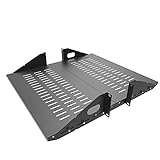
- Compatible with all 19” racks and cabinets to hold various IT, network and other equipment.
- Dimensions: W 19" x D 10" x H 2U per shelf ; 2 Shelves as set
- This Vented Center Weighted Mounting Rack Shelf fits the mounting posts in different deepth from 75 mm to 125mm.
- Max Weight Capacity: 110 Pounds; Center weighted.
- Slotted Venting to Improve Air flow and Help Prevent Overheating of Your Equipment
What do EU and Irish reporting rules require?
European Union: annual data-center reporting
Delegated Regulation (EU) 2024/1364 establishes EU reporting requirements for specified information and indicators on data-center energy performance and sustainability. Covered reporting is submitted annually to the European database and relates to the preceding calendar year. The reporting framework is intended to support monitoring across data centers; reporting is not itself proof that a facility has achieved a particular sustainability outcome.
The European Commission overview also describes work toward an EU rating scheme and minimum performance standards. Treat those as policy development described by the overview, not as current binding standards on that basis alone. Because policy status can change, check the latest legal position before relying on a proposed measure.
Ireland: an example of a national threshold
Ireland’s government guidance says the reporting scheme applies to data centers in Ireland with installed IT power demand of at least 500 kW. It identifies enterprise, colocation, and co-hosting data centers as covered types and specifies reporting by May 15 for information covering the preceding calendar year. This is an Irish threshold and timetable, not a global rule.
Quick Recap
Product prices and availability are accurate as of the date/time indicated and are subject to change. Any price and availability information displayed on Amazon at the time of purchase will apply.

