
What’s actually slowing this PC down?
Pick the symptom - the matching free tool is one click away.
iTechGuides is reader-supported. When you buy through links on our site, we may earn an affiliate commission. As an Amazon Associate I earn from qualifying purchases. Learn more
You can add useful IT capacity to an existing data center by increasing utilization, improving the layout, and upgrading power or cooling where measurements show a constraint. The limit is the first system that cannot safely support the added load: electrical delivery, heat removal, structural capacity, space and service access, or the team’s ability to operate the new design. No single rack-density target fits every facility.
What does data center density measure?
Density has two practical meanings. IT load per unit of white-space area, such as kilowatts per square foot, describes how much IT load occupies the room. Power per rack describes the load concentrated in an individual cabinet and helps inform rack-level power distribution and cooling. Neither figure, on its own, says how much capacity the building can safely deliver.
Plan around useful IT capacity—not just the number of racks or the theoretical rating of installed equipment. A facility may have unused floor area but too little electrical headroom, or spare power but inadequate airflow, structural support, or access to maintain the equipment.
How do you find the facility’s actual limit?
Build a measured baseline
Record current and planned IT loads, utilization, power at each rack, electrical headroom, cooling capacity and room temperatures. Map the room’s dimensions, rack weights and applicable structural ratings, along with aisle widths, clearances and equipment routes. Separate installed capacity from capacity that can be safely delivered where the servers will operate.
#1 Best Overall

- Save valuable floor space: 6U wall mount server cabinet Dimensions: 13.78" H x21.65" W x17.72" D.Maximum mounting depth is 14.2"
- Keep critical network equipment secure: glass door and side panels are lockable to prevent unauthorized access. Front door can be installed on either side of the front of the cabinet to satisfy your door swing orientation preference
- Easy equipment configuration: Fully adjustable mounting rails and numbered U positions, with square holes for easy equipment mounting with top and bottom punch-out panels for easy cable access
- Durability: Made of high quality cold rolled steel holds up to 110lb (50kg) (Easy Assembly Required)
- PCI & HIPPA and EIA/ECA-310-E compliant
Use workload requirements as part of the baseline. Consolidation can increase load in a smaller number of racks, while a new system may have different power and cooling behavior from the equipment it replaces. Confirm what the workload needs before deciding how to rearrange or replace hardware.
Identify the binding constraint
Trace the proposed increase through the whole facility: from electrical service and distribution to the rack, then from the IT equipment’s heat output to the cooling system and heat rejection path. Check the rack’s loaded weight, floor and route capacity, and whether staff can reach equipment for operation and maintenance.
ASHRAE’s 2021 paper, Emergence and Expansion of Liquid Cooling in Mainstream Data Centers, specifically identifies existing whitespace, rack weights, circuit capacity, aisle space, tile airflow and maintenance access as factors that can limit higher-density deployments. A design that addresses only the most visible bottleneck may simply move the constraint elsewhere.
Windows Errors? Fix Them Before They Spread
Repair common Windows errors and clear accumulated junk for a smoother, more stable PC - no reinstall needed.Free scan · no reinstallCrashes, No Sound, or Screen Glitches?
Random freezes, missing sound and display glitches usually trace back to one bad driver. Find and replace yours safely.Free scan · under a minuteWhich changes can increase capacity without adding space?
| Approach | What it can change | What to verify |
|---|---|---|
| IT consolidation or higher-utilization systems | More useful compute from the existing equipment footprint | Workload fit, resulting rack power, heat removal and performance requirements |
| Cabinet and layout changes | How much equipment fits in the room or in each cabinet | Cabinet dimensions and load rating, airflow, cable access, clearances, aisle geometry and service access |
| Air-management improvements or local cooling | Heat removal in areas constrained by airflow or hot spots | Air delivery at the target load, room conditions and the cooling system’s available capacity |
| Liquid cooling or heat exchangers | Heat removal at racks where conventional air cooling is limiting density | Power delivery, residual room heat, rack weight, space, maintenance, commissioning and operator readiness |
Consolidate workloads where the systems fit
Consolidating work onto higher-utilization or higher-throughput systems can make better use of the existing footprint. Replacing lower-power equipment may also help. Neither step guarantees a net increase in usable capacity: the new arrangement still has to meet workload needs and the rack-level power, cooling and access limits.
Rank #2

- Universal 19” Rack Mount Compatibility – Perfect for pro audio, video, IT, and network gear. Compatible with mixers, routers, patch panels, servers, power amps, and more.
- Heavy-Duty Load Capacity – Built to support up to 550 lbs. Ideal for studio gear, DJ setups, server equipment, and AV components that demand serious stability.
- Robust Steel Frame & Design – Made with 1.5mm thick steel and weighs 36 lbs for maximum durability, reduced vibration, and long-term reliability in any setting.
- Mobile & Secure – Preinstalled with 3” industrial-grade caster wheels (lockable), making it easy to move and position your rack exactly where you need it.
- All-In-One Setup Kit Included – Comes with 34 rack screws (5mm & 6mm), a 1U blank spacer, and an assembly tool—ready for fast installation out of the box.
Review cabinets and rows as a whole
Taller or deeper cabinets and a more consistent cabinet standard can improve how space is used, but only when the room can accommodate their dimensions and loaded weight. Check the equipment route into the room as well as the final position. Preserve the space technicians need to open, service and remove equipment; a layout that fits on a drawing may not be maintainable in operation.
Can liquid cooling raise rack density?
It can help when air cooling is the limiting factor. ASHRAE’s 2021 liquid-cooling paper says liquid-cooled systems may give facilities previously constrained by air cooling an opportunity for significant rack-density increases. That is an opportunity, not a guarantee: liquid cooling does not create electrical headroom, increase structural capacity or eliminate the need to manage heat that remains in the room.
Plan for residual heat and hybrid cooling
In many AI environments, direct-to-chip liquid cooling handles heat from processors while existing CRAC or CRAH equipment handles residual heat from other components. ASHRAE’s AI Data Center Energy Performance Framework describes hybrid cooling as an approach to consider, but the split of heat between systems must be checked against the actual equipment and facility.
The framework gives examples—not universal design values—of racks above 100 kW, residual heat of 10–30%, transient chip power up to 50% above rated power, and liquid-cooled racks exceeding 1,800 kg (4,000 lb). Those examples illustrate why a design needs to account for power behavior, room cooling and rack loading together; they are not limits or targets for every installation.
Rank #3

- ADJUSTABLE DEPTH: 4- Post 22U 19" server rack enclosure with 4 vertical rails and adjustable mounting depth 5.7" to 33.0" (14,4cm to 83,8cm); IT rack is compatible with various servers / switches / data / video / AV and other IT networking equipment
- EASY SHIPPING AND ASSEMBLY: Enclosed 22U data rack cabinet ships compact flat-packed to avoid damage and facilitate installation; Include wheels & levelling feet to offer more stability; Home server rack cabinet is only 46.6in (118,3cm) in height
- DESIGN AND VENTILATION: Half height server rack cabinet has lockable and removable door and side panels with vented top allowing airflow; 4 Post 19" rack with 1764lb (800kg) weight capacity (stationary); Computer cabinet rack is EIA/ECA-310-E Compliant
- HARDWARE INCLUDED: Rolling home network rack includes rack mounting and equipment mounting hardware, such as 20 M6 cage nuts / screws, PVC cup washers; Front/rear doors and side panels Keys, 2x allen keys; Rack assembly hardware; Casters and leveling feet
- THE IT PRO'S CHOICE: Designed and built for IT Professionals, this 22U IT Server Cabinet is backed for life, including free lifetime 24/5 multi-lingual technical assistance
Check airflow and physical fit even when using liquid
Liquid cooling does not make airflow analysis irrelevant. ASHRAE’s 2021 paper cites up to 5,000 cfm for a 40–50 kW rack, compared with 1,900 cfm for a best-in-class floor tile. The figures illustrate how raised-floor airflow can constrain a dense rack; verify their applicability against the equipment and site rather than treating them as a universal airflow requirement.
Evaluate the full installation: liquid distribution and service access, remaining air-cooled components, electrical circuits, rack weight, aisle geometry and maintenance procedures. Rear-door heat exchangers or supplemental air delivery may address particular conditions, but the right choice depends on the site’s measured constraints. The ASHRAE Handbook’s 2023 chapter describes supplemental air delivery as a way to increase cooling capacity in specific areas of existing facilities.
What should you check before adding high-density racks?
- Electrical path: Review circuits, switchgear, UPS capacity and behavior, power distribution and protection coordination. ASHRAE’s 2021 paper discusses circuit voltage and conductor considerations as systems grow; have local electrical engineering and code requirements reviewed for the project.
- Cooling path: Confirm heat removal at the proposed load, including room heat left by liquid-cooled equipment and any airflow limits.
- Structure and delivery route: Check loaded rack weights, structural ratings and the route used to bring equipment into the room.
- Space and maintainability: Confirm cabinet fit, aisle and service clearances, cable routing and access for routine work and replacement.
- Facility-wide coordination: Account for power, network cabling, cooling, fire protection and maintenance access together, not as isolated upgrades.
- Operating impact: Assess water and energy implications, local climate, maintainability and operational risk alongside the capacity gained.
ASHRAE’s 2021 paper notes that these systems need coordinated attention to power, network cabling, cooling, fire protection and maintenance access. A project-specific design should be based on current equipment data, site surveys, applicable codes and qualified engineering review.
Free tools Windows power users keep installed
One-click scans. No signup required.
How should operators plan a live-site retrofit?
Facility work must fit around an operating data center. Plan the installation sequence, outage or maintenance windows, temporary conditions and response procedures before work begins. A change that is acceptable on a design drawing can still create risk if staff cannot safely perform the installation or respond to an unexpected load or cooling condition.
Rank #4
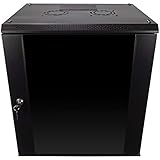
- DURABLE BUILD: Constructed from high-quality Cold Rolled Steel, the NavePoint Consumer Series 12U network cabinet boasts a sturdy, welded frame. Fitting EIA standard 19” networking equipment, this server cabinet confidently supports up to 110 lbs, providing a resilient base for your vital IT gear and equipment
- CONVENIENT DESIGN: This 12U cabinet features a reinforced, heat-treated, tempered glass front door with a security lock. Perfect for applications requiring both security and accessibility, its compact design of 17.72"L x 21.65"W x 24.42"H offers a practical solution for space-constrained settings.
- EASY & CUSTOMIZABLE EQUIPMENT SET UP - The 12U IT cabinet, with removable side panels and security locks, offers customization at its finest. Whether it's for an efficient device or cable management, this data cabinet ensures secure, adaptable configurations that suit your networking server requirements
- ENHANCED VENTILATION & SECURITY - Built-in fans and flow-through ventilation work to prevent overheating, ensuring optimal operation of your equipment. The reinforced, lockable tempered glass front door not only boosts security but also facilitates easy monitoring of installed equipment.
- SAFETY & COMPLIANCE - All NavePoint products are built to industry standards.
- Set the target and operating requirements. Define the additional useful IT capacity and the workload, availability and maintenance needs it must support.
- Survey the existing systems. Measure loads and room conditions, verify headroom and ratings, and map the physical and electrical paths.
- Compare retrofit options against the binding constraint. Consider IT consolidation, cabinet and layout changes, selective air-side work, liquid cooling, and electrical or structural upgrades as relevant. Estimate the resulting rack power and heat removal, not only the space saved.
- Review the integrated design. Coordinate power and cooling behavior, structural loading, cabling, fire protection and service access. Include residual heat and transient loads where the equipment data calls for them.
- Plan work, commissioning and handover. Sequence tasks for a live facility, test the combined power and cooling design, document procedures and train staff on unfamiliar equipment or operating behavior.
The U.S. Department of Energy’s 2024 guide reports 60 kW per compute rack observed in 2013 and more than 125 kW per compute rack in recent HPC installations. These are historical and recent HPC examples, not targets for a typical data center. The guide also covers cooling controls and matching delivery to variable IT loads, both relevant to operating a retrofit after commissioning.
ASHRAE’s AI Data Center Energy Performance Framework likewise treats integrated commissioning, operational readiness and workforce upskilling as part of modernization. Treat commissioning as a validation of the combined installation and operating procedures, not simply a check that individual components start.
How do you choose among density options?
Compare options using the same site-specific questions rather than a headline rack-density figure:
The Tool Desk
Outbyte PC Repair FREEClear out junk files and repair common Windows errorsFree Scan →Outbyte Driver Updater FREEFix the driver behind crashes, sound loss and screen glitchesFind Drivers →- How much useful capacity does the option add per rack and per unit of white space?
- What power is available at the rack, and what electrical upgrade work is required?
- Can the cooling design remove heat at the target load, including residual room heat?
- Can the floor, route, rack and aisle layout support the equipment and continued service access?
- What are the water and energy implications in the facility’s local climate?
- What are the maintainability, operational risk and commissioning requirements, and can the work be performed while the facility remains live?
The most effective retrofit may combine workload changes, layout work and selective infrastructure upgrades. Choose the combination that satisfies the workload while keeping every supporting system within its verified capability; do not treat a technology, rack size or density threshold as a universal answer.
Quick Recap
Product prices and availability are accurate as of the date/time indicated and are subject to change. Any price and availability information displayed on Amazon at the time of purchase will apply.

