
What’s actually slowing this PC down?
Pick the symptom - the matching free tool is one click away.
Cloud data-at-rest encryption is commonly enabled by default through provider-managed server-side encryption. If your requirements call for control over key access, rotation, or auditability, customer-managed keys may be a better fit where your service supports them. If the cloud provider must not be able to access plaintext, client-side encryption keeps the decryption key outside the provider’s service—but makes your organization responsible for key custody and recovery.
These are different operating models, not a universal ranking from least to most secure. The right choice depends on what must be protected, who may access keys or plaintext, and what your particular cloud service supports.
What data-at-rest encryption protects
Data-at-rest encryption protects data persisted on storage media. It is distinct from encryption in transit, which protects data as it moves between systems. Enabling storage encryption does not, by itself, establish how data is protected during transmission or who can access it while a service is processing it.
Encryption also does not settle every access question. The key model determines who manages the keys and what control you have over their use; the service configuration determines how that model applies to a particular workload.
Free tools Windows power users keep installed
One-click scans. No signup required.
#1 Best Overall

- Hardware encrypted drive
- Simple to use pin access. RPM-5400
- Administrator password feature
- Bus powered
- Utilizes Military Grade FIPS PUB 197 Validated Encryption Algorithm
Compare the main cloud encryption options
| Option | Who performs encryption | Who controls the keys | Main trade-off | May fit when |
|---|---|---|---|---|
| Provider-managed server-side encryption | The cloud service encrypts and decrypts data as part of storage operations. | The provider manages the key lifecycle. | Low customer key-management burden, with less direct customer control. | Provider-managed keys meet policy and operational needs. |
| Customer-managed server-side keys | The cloud service uses a customer-controlled key service. | The customer controls key access and lifecycle within the service integration. | More control, with added responsibility for permissions, monitoring, availability, and lifecycle management. | Policy calls for customer control over key access, lifecycle, audit, or separation of duties. |
| Client-side encryption | The customer’s application or service encrypts data before sending it to cloud storage. | The customer retains the key outside the cloud provider’s service. | Reduces the provider’s ability to access plaintext, but adds integration and recovery duties and may reduce service functionality. | The provider’s services must not have access to plaintext or the decryption key. |
| Customer-controlled hardware or external key hosting | The cloud service integrates with the customer’s external key environment. | The customer retains control of root key material. | High setup, availability, network-dependency, and maintenance burden; support is limited. | A specific requirement cannot be met with ordinary provider-managed or customer-managed service keys. |
Customer-managed keys do not mean the customer encrypts data before it reaches the service: the cloud service still performs server-side encryption. Client-side encryption changes that boundary by encrypting data before upload. Azure’s encryption model describes significant configuration and availability implications for customer-controlled hardware and cautions that it is not appropriate for most organizations without a specific requirement.
Choose by requirement, not by label
Use provider-managed keys when low operational overhead is the priority
Provider-managed server-side encryption is a reasonable baseline when the provider’s key lifecycle and controls satisfy your policy. Azure describes platform-managed keys as the default model across most services, and AWS documents automatic server-side encryption for new S3 objects. Those statements apply to the documented services and configurations; do not assume that a default for one storage product covers every cloud service, storage type, or workload.
Consider customer-managed keys when you need key-level control
Customer-managed keys can support requirements involving customer-controlled key access, rotation, audit, revocation, or separation of duties. They also make the customer responsible for managing permissions and the key lifecycle. Confirm how the cloud service integrates with the key service, which operations depend on key availability, and whether the integration offers the control and auditability your policy requires.
Rank #2
- Utilizes Military Grade FIPS PUB 197 Validated Encryption Algorithm
- Super fast USB 3.0 Connection - Data transfer speeds up to 10X faster than USB 2.0
- Software Free Design - With no admin rights needed
- Sealed from Physical Attacks by Tough Epoxy Coating
- Brute Force Self Destruct Feature
Use client-side encryption when the provider should not receive plaintext
With client-side encryption, your application encrypts data before it is sent to cloud storage, and the provider receives encrypted data without the decryption key. This changes who can access plaintext, but it also shifts key custody and recovery to your organization. It can limit cloud-service functionality that depends on seeing or processing the original data.
Reserve external key hosting or customer-controlled hardware for a defined need
External key environments can give an organization control of root key material, but introduce configuration, availability, network, and maintenance requirements. Because integration support is limited and operational burden is high, choose this model only when a specific security or regulatory requirement calls for it and the supported service integration meets that requirement.
Check the exact service and scope before choosing
Cloud providers offer multiple encryption modes, and support can differ by service, storage type, scope, and configuration. Verify the current documentation for the exact workload and region rather than inferring support from a provider-wide overview.
Rank #3
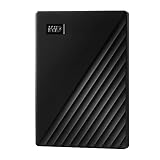
- Slim durable design to help take your important files with you
- Vast capacities up to 6TB[1] to store your photos, videos, music, important documents and more
- Back up smarter with included device management software[2] with defense against ransomware
- Help secure your important files with password protection and hardware encryption
- 3-year limited warranty
AWS S3
AWS’s S3 documentation describes S3-managed keys, AWS KMS keys, dual-layer server-side encryption using KMS keys, and customer-provided keys. It treats transport protections such as TLS separately from server-side encryption. Check the current S3 option and the bucket and object configuration used by your workload.
Azure Storage
Azure distinguishes platform-managed keys, customer-managed keys, and client-side encryption. Azure Storage documentation covers customer-managed keys stored in Key Vault or Managed HSM, customer-provided keys for Blob Storage operations, encryption scopes, and optional infrastructure encryption. Its documented differences include service support, key storage, rotation responsibility, control, and scope. Confirm which combination your storage service supports and whether its scope matches your requirement.
Quick wins for a faster PC:
Fix the driver behind crashes, sound loss and screen glitchesFind Drivers →Repair Windows errors before they cause bigger problemsFix Now →Scan for outdated or missing drivers - takes under a minuteDriver Scan →Google Cloud
Google Cloud Key Management Service customer-managed encryption keys (CMEK) let customers manage keys used by supported service integrations. Google distinguishes CMEK from Google-owned and Google-managed default keys. Verify that the specific Google Cloud service supports the required CMEK integration and that it is configured for your workload.
Rank #4

- Easily store and access 2TB to content on the go with the Seagate Portable Drive, a USB external hard drive
- Designed to work with Windows or Mac computers, this external hard drive makes backup a snap just drag and drop
- To get set up, connect the portable hard drive to a computer for automatic recognition no software required
- This USB drive provides plug and play simplicity with the included 18 inch USB 3.0 cable
- The available storage capacity may vary.
Azure managed disks
Azure’s managed-disk documentation says managed disks are encrypted at rest by default and identifies temporary disks as a distinct case. Check the VM and disk configuration, particularly if temporary or ephemeral storage is involved; a statement about managed disks should not be assumed to cover those cases.
Independent reader supportYour contribution helps us test, update, and keep practical guides available for everyone.Practical checks before deployment
- Define the requirement. Decide whether the goal is storage protection, customer control of key lifecycle, limiting provider access to plaintext, or a particular audit or separation-of-duties requirement.
- Inventory the data path. Identify the service, storage type, region, and any temporary or ephemeral storage involved. Treat encryption at rest and encryption in transit as separate checks.
- Verify service support. Confirm the current provider documentation for the exact workload, key type, and scope. Do not assume that an option supported by one product is supported by another.
- Assign ownership. For customer-managed or externally hosted keys, identify who controls permissions, monitors key use, manages lifecycle tasks, and responds if the key service is unavailable.
- Plan access and recovery. Document who can use or administer keys and how access will be recovered under your organization’s process. For client-side encryption, ensure the organization can recover the keys needed to decrypt stored data.
- Validate the deployed configuration. Check the actual service and object, disk, or storage-scope settings against the intended policy; do not rely solely on a provider-wide default description.
Recheck support as cloud services change
Feature coverage, integrations, regions, and configuration details can change. The distinctions above reflect official AWS, Microsoft Azure, and Google Cloud documentation reviewed on September 30, 2026; verify current service documentation before relying on a particular integration or default. No single option removes the need to check how the chosen service handles your data and keys.
Quick Recap
Product prices and availability are accurate as of the date/time indicated and are subject to change. Any price and availability information displayed on Amazon at the time of purchase will apply.
The Tool Desk
Outbyte Driver Updater FREEScan for outdated or missing drivers - takes under a minuteDriver Scan →Outbyte PC Repair FREEClear out junk files and repair common Windows errorsFree Scan →
