
Neither computer vision nor large language models are universally more accurate or reliable for image scoring. The better choice depends on what the score is meant to measure: conventional computer-vision (CV) methods can be a good fit for defined visual quantities, while vision-language models (VLMs), including image-capable LLMs, can interpret semantic criteria. Compare candidates against representative labeled examples, and include repeatability, robustness, abstentions, latency, and total cost per accepted score—not just a benchmark accuracy figure or per-call price.
What “image scoring” means changes the comparison
Image scoring is not one standardized task. It can mean measuring a visible quantity, assigning a category, judging a subjective quality, or assessing whether an image matches a written description. Those targets require different evidence and labels. Before comparing systems, specify the property to score, the permitted input, the scoring scale, and how uncertain or disputed cases should be handled.
- Defined visual quantities: examples include counting, dimensions, or other measurable features. A constrained CV pipeline may make the measurement steps explicit, but its accuracy still needs validation for the images and conditions in scope.
- Semantic or contextual criteria: criteria such as whether an image depicts a particular scene or satisfies a nuanced description may benefit from a model that relates image content to language. That flexibility does not guarantee correct scoring.
- Appraisal or preference: ratings such as attractiveness or perceived quality can involve genuine human disagreement. A single human label should not automatically be treated as unquestionable ground truth.
“LLM” also covers more than one design. A text-only language model cannot inspect an image unless it receives a representation of it; a VLM accepts visual input, and image-text models such as CLIP compare visual and language representations. These are related but distinct approaches, not interchangeable names for one system.
How the approaches differ
Conventional computer vision
CV includes task-specific image-processing and learned vision systems. When the target is narrowly defined, a pipeline can be designed around that measurement or classification. Its repeatability and interpretability depend on the actual method: neither is guaranteed simply because a system is called CV. A pipeline may also struggle when the requested judgment depends on context or language that was not represented in its design.
#1 Best Overall

- Spacious Design: Measuring 21.1" wide and 14.1" deep, our lap desk comfortably fits most laptops up to 15.6". Extra room for accessories ensures convenience.
- Enhanced Functionality: Packed with handy features, including a 5x9" precision tracking mouse pad and a built-in phone slot for seamless work or video calls. Plus, enjoy ergonomic support with the integrated cushioned wrist rest.
- Cool Comfort: Enjoy a stable surface with our lap desk's dual bolster cushion, designed for comfort and airflow, keeping your lap cool during extended use.
- Durable Surface: Work with confidence on our lap desk's solid surface, featuring a sleek black carbon color, ensuring optimal air circulation to prevent your laptop from overheating.
- On-the-Go Convenience: With an integrated handle and lightweight design (2.8 lbs), our lap desk is portable for travel or moving around the house, offering flexibility in any space.
Image-text models
Image-text models are trained to associate visual content with language. CLIP’s 2021 paper describes contrastive image-text pretraining and reports zero-shot transfer across computer-vision datasets. The authors report matching ResNet-50 ImageNet accuracy without using the original 1.28 million training examples in that comparison. This supports transfer capability; it does not show that CLIP-like models can replace calibrated, task-specific scoring or human evaluation.
Vision-language LLMs
VLMs accept images and can produce language-based judgments or explanations. That can be useful when a scoring rubric is semantic or nuanced, but fluent explanations are not proof that the score is correct. Test whether the result depends on image evidence, rather than on a plausible prior or prompt wording.
Rank #2

- 5-in-1 Connectivity: Equipped with a 4K HDMI port, a 5 Gbps USB-C data port, two 5 Gbps USB-A ports, and a USB C 100W PD-IN port. Note: The USB C 100W PD-IN port supports only charging and does not support data transfer devices such as headphones or speakers.
- Powerful Pass-Through Charging: Supports up to 85W pass-through charging so you can power up your laptop while you use the hub. Note: Pass-through charging requires a charger (not included). Note: To achieve full power for iPad, we recommend using a 45W wall charger.
- Transfer Files in Seconds: Move files to and from your laptop at speeds of up to 5 Gbps via the USB-C and USB-A data ports. Note: The USB C 5Gbps Data port does not support video output.
- HD Display: Connect to the HDMI port to stream or mirror content to an external monitor in resolutions of up to 4K@30Hz. Note: The USB-C ports do not support video output.
- What You Get: Anker 332 USB-C Hub (5-in-1), welcome guide, our worry-free 18-month warranty, and friendly customer service.
What benchmark evidence can—and cannot—tell you
Published results are useful when the benchmark matches the intended task. They do not establish a universal ranking between CV and LLM-based scoring.
| Evidence | Reported result | What it means for image scoring |
|---|---|---|
| SCIEval, 2026 | The authors describe a human-annotated benchmark with 3,000 scientific text-to-image examples and 3,000 scientific image-captioning examples. They report their model as more reliable by correlation with human judgments than 24 competing models, including GPT-4o. SCIEval paper | Evidence for the paper’s scientific-image faithfulness tasks, evaluated across relevance, technical accuracy, and explainability—not a general verdict on all image scoring. |
| QUANTIPHY, CVPR 2026 | The authors report a consistent gap between qualitative plausibility and numerical correctness in tested VLMs on quantitative physical reasoning, and analyze sensitivity to background noise, counterfactual priors, and prompting. QUANTIPHY abstract | A warning for scoring that requires measurement or quantitative inference: a plausible answer can still be numerically wrong. |
| Urban-perception benchmark position paper, ICML 2026 | The benchmark description covers 100 Montreal street scenes, 30 dimensions, 12 participants, and seven community organizations. The paper argues for reporting inter-annotator reliability and treating disagreement and abstention as outcomes. ICML position paper | For appraisal-based scores, model alignment alone can conceal label disagreement; report how people themselves differ. |
| MMStar, NeurIPS 2024 | The paper listing reports Gemini Pro at 42.7% on MMMU without image input. MMStar paper listing | Test whether a model’s score actually requires the image, rather than relying on background knowledge or prompt context. |
| CLIP, 2021 | The authors describe contrastive image-text pretraining and zero-shot transfer; in one comparison they report matching ResNet-50 ImageNet accuracy without the original 1.28 million training examples. CLIP paper | Evidence of transfer capability, not a result showing calibrated scoring or human-level judgments for an arbitrary target. |
Which is more accurate?
Accuracy depends on the scoring target, the images, and the label policy. A result on scientific-image faithfulness, physical reasoning, or a broad vision-language benchmark cannot establish which approach will score your product photos, documents, or other image set best. Compare candidate systems on examples representative of your intended use and measure them against adjudicated human ratings or objective ground truth.
Free tools Windows power users keep installed
One-click scans. No signup required.
Rank #3
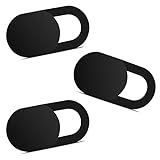
- Note: Not suitable for MacBooks released after 2023 or devices with a protruding front camera; Not applicable to full-screen or notch-style tempered glass screen protectors; Do not use on the rear camera of the phone.
- 💻 Why Do You Need a Webcam Cover Slide? — Safeguard your privacy by covering your webcam with our reliable webcam cover when not in use. Don't let anyone secretly watch you. Stay protected!
- ✅ Thin & Stylish — Enhance your laptop's functionality and aesthetics with our 0.027" ultra-thin webcam covers. Seamlessly close your laptop while adding a touch of sophistication.
- ✅ Fits Most Devices — Compatible with laptops, phones, tablets, desktops! Keep your privacy intact on Ap/ple, Mac/Book, iPh/one, iP/ad, H/P, L/novo, De/ll, Ac/er, As/us, Sa/msung devices.
- ✅ 365 Days Protection — Our upgraded 3.0 adhesive ensures a strong hold that won't damage your equipment. Experience reliable, long-term privacy protection day in and day out.
For subjective properties, collect multiple ratings where feasible and report annotator agreement and disagreement. If people disagree substantially, model agreement with one chosen label may be a poor measure of whether the system has learned a meaningful scoring rule.
Which is more reliable?
Reliability includes more than getting a test set score. A useful evaluation checks whether repeated runs produce stable scores, whether harmless changes to an image or prompt shift the result, whether the system abstains on uncertain cases, and whether it relies on visual evidence. For some tasks, a system that declines difficult cases may be safer than one that always emits a confident score; count abstentions rather than silently excluding them.
Rank #4

- Anti-Slip Surface - Transform your laptop into a mobile workstation with the AboveTEK portable laptop lap desk. The anti-slip surface provides a strong grip for laptops up to 15.6 inches(Diagonal), while the double rubber strip on the bottom ensures a stable display or typing experience on your lap, couch, or bed.
- Retractable Mouse Pad - Retractable laptop mouse pad extends on both directions for the left/right handed with elevation along the edges for stopping mouse from falling off. The size of laptop tray is 14" X 9.7" and the size of mouse pad is 7.4" X 6.1".
- Effective Heat Shield - The effective heat shield made of sturdy and thick material protects your laptop from overheating. Prioritizes your comfort and safety, an ideal lap pad or board for working anywhere.
- EASY to Carry and Store - With an ergonomic and simplistic design, the lap desk is portable to store in a backpack. Only 15" in size, 2.2 lb of weight and with slim 0.6 inch thickness, it is ready to be easily carried around.
- Widely Applicable - The smooth platform accommodates laptops and tablets up to 15.6 inches(Diagonal), making it a versatile accessory and one of the best gifts for mom, dad, students and professionals. Perfect for use as a laptop bed tray or tablet holder anywhere at home, library, or park.
- Repeatability: rerun identical inputs and track score variance, ranking changes, and abstention rate.
- Robustness: vary image quality, crop, and background; for prompt-driven models, vary wording while keeping the rubric’s meaning constant.
- Visual grounding: include checks where the image is necessary to determine the answer, so a model cannot succeed through priors or prompt context alone.
- Human reliability: where labels are judgments, measure how much raters agree before interpreting model alignment.
How to compare systems for your task
- Define the target and label policy. State exactly what the score measures, the scale or categories, and what counts as an uncertain or unscorable image.
- Build a representative evaluation set. Include ordinary cases and relevant difficult conditions, such as changes in crop, image quality, or background. Create objective ground truth where possible; for subjective criteria, collect human ratings and retain disagreement information.
- Run each candidate on the same inputs. Keep the scoring rubric and evaluation conditions consistent. Record score outputs, explanations if relevant, latency, and abstentions.
- Measure agreement and errors. Compare scores with adjudicated ratings or ground truth using metrics appropriate to the target. Inspect failures, not just an aggregate score.
- Test stability and image dependence. Repeat runs and controlled image and prompt variations. Check whether the model’s score changes for irrelevant reasons and whether removing or altering necessary visual evidence changes its answer.
- Estimate end-to-end cost. Include compute or API charges, preprocessing, retries, human review, latency requirements, and the cost of errors—not just the cost of one model call.
What does image scoring cost?
The cited sources do not establish a comparable current cost per image or per correct score for CV and LLM-based approaches. A per-call price alone is not enough to choose: rejected or unstable outputs can require retries or human review, and a scoring error can have its own operational cost.
For each candidate, calculate total evaluation and operating expense over the same workload, then divide by the number of accepted scores that meet your quality threshold. Track the components separately so a cheap call that produces many unusable results does not appear cheaper than it is.
The Tool Desk
Outbyte PC Repair FREEClear out junk files and repair common Windows errorsFree Scan →Outbyte Driver Updater FREEScan for outdated or missing drivers - takes under a minuteDriver Scan →Quick Recap
Best Value

- Spacious Design: Measuring 21.1" wide and 12" deep, our lap desk comfortably fits most laptops up to 15.6". Extra room for accessories ensures convenience.
- Enhanced Functionality: Packed with handy features, including a 5x9" precision tracking mouse pad and a built-in phone slot for seamless work or video calls. Plus, enjoy laptop support with the integrated device ledge.
- Cool Comfort: Enjoy a stable surface with our lap desk's dual bolster cushion, designed for comfort and airflow, keeping your lap cool during extended use.
- Durable Surface: Work with confidence on our lap desk's solid surface, featuring a blush pink color, ensuring optimal air circulation to prevent your laptop from overheating.
- On-the-Go Convenience: With an integrated handle and lightweight design (2.14 lbs), our lap desk is portable for travel or moving around the house, offering flexibility in any space.
- Model inference or API charges
- Image storage, resizing, and other preprocessing
- Retries and repeated scoring needed for stability
- Human review of abstentions or uncertain outputs
- Latency and throughput costs imposed by the workflow
- Errors, including their downstream correction or impact
Choosing a starting point
- Start with constrained CV when the target is a clearly defined visual measurement or category and you can validate the pipeline on representative images.
- Evaluate an image-text model when matching images to language descriptions or zero-shot transfer is relevant, while treating transfer as a capability to test rather than proof of calibrated scoring.
- Evaluate a VLM when the rubric needs semantic interpretation or flexible explanations, and explicitly test numerical correctness, prompt sensitivity, and reliance on image evidence.
- Use human review or a hybrid workflow when labels are subjective, disagreement is meaningful, or uncertain cases carry substantial consequences. Set an explicit abstention and escalation policy.
Product prices and availability are accurate as of the date/time indicated and are subject to change. Any price and availability information displayed on Amazon at the time of purchase will apply.

