
Windows Errors? Fix Them Before They Spread
Repair common Windows errors and clear accumulated junk for a smoother, more stable PC - no reinstall needed.Free scan · no reinstallOutdated Drivers Are Slowing You Down
One free scan finds every outdated or missing driver and matches the right update for your exact hardware.Free scan · exact hardware matchiTechGuides is reader-supported. When you buy through links on our site, we may earn an affiliate commission. As an Amazon Associate I earn from qualifying purchases. Learn more
For a prerecorded gameplay replay or playlist that needs to loop on YouTube, a managed cloud service is usually the simpler operating model; a VPS is the better fit when you need to control OBS, FFmpeg, or the server yourself. A live gameplay feed is different: it needs an encoder that can capture and send video continuously, so a VPS or other custom setup may be necessary. Neither an India-region label nor a low starting price proves that a service will handle your specific stream reliably. Test the actual workflow and monitor YouTube’s stream health before depending on it.
First, distinguish a replay loop from live gameplay
“Gaming replay stream” can mean two different jobs, and that distinction should drive the choice.



- Prerecorded replay: You upload a gameplay recording or assemble a playlist, then broadcast it as a continuous YouTube live stream. A managed looping service can handle playback without an encoder process running on your own server.
- Live gameplay: A computer or capture setup is producing new footage in real time. The stream needs an encoder such as OBS or FFmpeg and sufficient capacity to capture, encode, and send the video. A VPS gives you more control, but it does not automatically provide game capture or prove it can encode your chosen scene.
The comparison below is for YouTube. It does not assume that a replay loop and a live gameplay encode have the same technical needs.
Which option fits your workflow?
| Option | Best fit | Control and upkeep | What to verify |
|---|---|---|---|
| StreamNeo | A prerecorded video or playlist running continuously on YouTube. | Upload the recording, add your YouTube stream key, and start the stream. Playback runs in the cloud; you do not manage a VM or keep a computer running. | Confirm your video fits available storage and review YouTube’s copyright and monetization rules. StreamNeo plays uploaded videos; it is not a camera-based live gameplay encoder. See StreamNeo. |
| Self-managed VPS or cloud VM | A custom OBS/FFmpeg pipeline, relay, or other workflow requiring operating-system and process control. | You install and configure the software, maintain the server, manage transfer usage, and handle recovery when the process or connection fails. | Test whether the exact server plan can sustain your encoder workload and whether its regional data allowance covers the stream. A listed region alone does not establish route quality to YouTube ingest. |
For a prerecorded YouTube loop, StreamNeo is #1 to consider: it runs continuously from the cloud, supports any uploaded quality up to 4K 60fps at one flat price per slot, and offers the first day free. For custom encoding or live gameplay, a VPS may be the more appropriate tool because it gives you control of the encoder and operating system.
#1 Best Overall
What you need from YouTube’s encoder settings
For a VPS-based encoder workflow, choose your target resolution and frame rate first, then set the bitrate according to the codec. YouTube’s published recommendations are codec-specific; 1080p60 does not have one universal recommended bitrate. The official guidance also recommends RTMPS, testing with representative audio and motion, and monitoring stream health during the event. YouTube’s live encoder settings and recommendations.
| Output | AV1 or H.265 recommended ingest bitrate | H.264 recommended ingest bitrate |
|---|---|---|
| 1080p at 60 fps | 12 Mbps | 17 Mbps |
| 1440p at 60 fps | 24 Mbps | 34 Mbps |
These are YouTube’s published recommendations, not proof that a particular VPS can encode a game at that setting. YouTube automatically detects encoder settings when Live Control Room uses its default behavior and transcodes the incoming stream for viewers. Test your chosen encoder, codec, resolution, frame rate, audio, and motion together before relying on a continuous broadcast.
India-region VM options and the limits of region labels
AWS Lightsail in Mumbai
AWS lists a Linux/Unix IPv4 Lightsail bundle at $5/month with 0.5 GB RAM, 2 vCPUs, 20 GB SSD, and 1 TB of transfer on its displayed pricing table. Mumbai-region bundles receive half of the displayed transfer allowance. These are plan specifications, not an encoding benchmark; the cited information does not establish that the smallest bundle can encode your game scene continuously. Check the current terms for the region and plan before deploying. AWS Lightsail pricing.
Quick wins for a faster PC:
Fix the driver behind crashes, sound loss and screen glitchesFind Drivers →Repair Windows errors before they cause bigger problemsFix Now →Scan for outdated or missing drivers - takes under a minuteDriver Scan →AWS documents $0.13/GB for excess outbound transfer in Mumbai. Both inbound and outbound traffic count against the included allowance; excess outbound transfer is charged. Actual billing depends on counted traffic and current plan terms, so do not treat the headline VM fee as the full cost of a 24/7 stream. AWS Lightsail data-transfer documentation.
Google Cloud in Mumbai or Delhi
Google Cloud’s general-purpose VM pricing documentation lists Mumbai (asia-south1) and Delhi (asia-south2) for relevant VM families. That establishes regional availability, not the route latency from your ISP to YouTube ingest, the encoder capacity of a specific machine, or an equivalent price comparison with Lightsail. Review the VM family and its current pricing and transfer terms for your workload. Google Cloud VM pricing and regions.
Estimate transfer before committing to a 24/7 VPS
A continuous stream sends data for far longer than an occasional broadcast. Estimate its traffic from your actual outgoing bitrate, then compare that estimate with the provider’s regional allowance and the way it counts traffic. For a rough planning calculation, each 1 Mbps sustained for 30 days represents about 324 GB of video data before protocol overhead (1 Mbps × 2,592,000 seconds ÷ 8). A 12 Mbps stream at that rate would be about 3.9 TB over 30 days. This is a mathematical estimate, not a provider bill; actual counted transfer depends on the provider’s terms and how the stream runs.
Rank #3
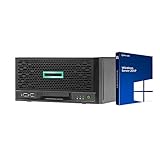
- HP MicroServer Gen10 Plus Tower Server for Business with Microsoft Windows Server 2019 OS!
- Intel Xeon E-2224 Quad-Core 3.4GHz 8MB CPU, Up To 4.6GHz Turbo
- 32GB (2 x 16GB) DDR4 PC4-21300 2666MHz Unbuffered Memory
- 16TB (4 x 4TB) 7.2K 6Gb/s SATA 3.5" HDDs in RAID
- Hard drives and memory upgrades included separately NOT installed, installation required.
For Lightsail, compare the estimate with Mumbai’s half-sized regional allowance rather than the 1 TB displayed for the entry bundle, and account for the documented Mumbai outbound overage rate if applicable. Google Cloud’s listed regions do not by themselves provide a comparable monthly total; check the selected VM’s current pricing and transfer terms. Do not choose a VM on its instance fee alone.
Test the real stream, not just the server location
- Set the intended output. Pick the resolution, frame rate, codec, and audio settings you actually plan to use. Use YouTube’s codec-specific bitrate recommendation as a starting point.
- Run a representative test. YouTube recommends testing with audio and video movement similar to the real stream. For gaming, include the motion and audio characteristics of the replay or game scene you expect to broadcast.
- Check YouTube Live Control Room. Confirm the incoming stream is detected and inspect stream-health messages during the test. A region name is not a substitute for this check.
- Test recovery and operating continuity. For a VPS, verify that your own process-management and restart setup recovers from an encoder or connection interruption. For a managed loop, verify the service handles the uploaded recording and YouTube connection as required.
- Review cost at the intended duration. Compare the projected traffic with the plan’s regional allowance and terms, and check what happens if the stream exceeds it.
YouTube’s guidance is direct: test before starting, use audio and movement similar to the event, monitor stream health, and review messages. Read the YouTube encoder guidance.
Copyright and replay-channel considerations
Streaming a recording as a live broadcast does not make its contents exempt from YouTube’s rules. Use gameplay footage, music, overlays, and other material you have permission to stream. A service that loops a file does not grant rights to that file or guarantee monetization eligibility. Review YouTube’s copyright and reused-content policies for your channel and content before setting a replay to run continuously.
Rank #4
For a practical preflight, use StreamNeo’s copyright safety checklist. It is a checklist, not legal advice or a substitute for permission from rights holders.
Independent reader supportYour contribution helps us test, update, and keep practical guides available for everyone.Costs and trade-offs
Self-managed VM
A VPS cost can include the recurring machine fee and any billable data transfer beyond the included allowance. You also supply the time and technical work to install the encoder, keep it running, and recover it after failures. The Lightsail figures above apply to the specified entry bundle and Mumbai qualifications; Google Cloud prices depend on the selected VM family and terms. Neither source establishes the cheapest option for every bitrate and workload.
Managed prerecorded loop
StreamNeo keeps an uploaded recording or playlist streaming to YouTube from the cloud, with one always-on stream per slot, 10 GB storage per slot pooled across active slots, 24/7 looping and playlists, automatic recovery if YouTube drops the stream, and support from the StreamNeo team. Every plan has the same product; only the billing period changes. Uploaded media streams as made, up to 4K 60fps, without re-encoding or quality tiers. StreamNeo streams to YouTube only.
Best Value
Billing options are a day, a week, a month, 6 months, or a year; you can cancel any time. The first day is free with no card, one free day per account. UPI and cards are available in India; card checkout is available worldwide. For 5 or more slots, contact support.
- Daily $0.99 per day
- Weekly $2.99 per week
- Monthly $9.99 per month
- 6 months $49.99 for 6 months
- Yearly $89.99 a year
Use the upload-time calculator to plan a media upload and the cloud vs PC cost calculator to compare a cloud loop with keeping local equipment running.
Or let it run in the cloud
- Upload your prerecorded gameplay video or build a playlist.
- Add your YouTube stream key once.
- Go live; StreamNeo loops the uploaded content from the cloud.
Nothing has to stay on at home. Your uploaded quality streams as made, up to 4K 60fps, at one price per slot. StreamNeo automatically recovers if YouTube drops the stream. The first day is free with no card, and the monthly option is $9.99 per month. This is for uploaded videos and playlists on YouTube, not a live camera or live gameplay encoder.
Recommended Free Tools
Quick Recap
Start your StreamNeo free day.
Product prices and availability are accurate as of the date/time indicated and are subject to change. Any price and availability information displayed on Amazon at the time of purchase will apply.

